The Nativity of Christ is the central event in human history. It is enough to say that world history is divided into two periods: “Before Christ” (B.C.) and “Anno Domini” (A.D.), meaning “in the year of our Lord” in Latin.
Christmas is also the most widespread holiday in the world. It is celebrated even in non-Christian countries, such as Vietnam, Malaysia, Morocco, Saudi Arabia and Japan.
In the history of certain nations, Christmas was once officially banned, and authorities punished those who celebrated it. This primarily occurred in Protestant countries, where Christmas was viewed as either a Catholic holiday or a celebration associated with excessive revelry, contrary to the strict Protestant ethic. It was banned in England under Oliver Cromwell (1647–1660), in Scotland (starting in 1640, and the ban was not formally lifted until 1958), and in the American colony of Massachusetts (1659–1681).
However, the most massive ban, applied to the largest territory and affecting the greatest number of people, was the prohibition of Christmas in the Soviet Union.
It was formally banned in 1929 as part of Stalin’s plan for accelerated industrialization and collectivization. This plan also called for a cultural revolution, which meant the prohibition of religion. Traditional Christianity was to be replaced by a new secular version of religion: a vulgar form of Soviet Marxism in which religion was proclaimed the “opium of the people” and was to be rooted out as a “bourgeois remnant.”
To achieve this, beginning in the mid-1930s, Christmas was replaced by the official celebration of the New Year with a traditional tree in the Kremlin, and Ded Moroz [lit. Grandfather Frost — Ed.] with Snegurochka [lit. Snow Maiden — Ed.] becoming the central figures instead of the Holy Family. Similarly, the lyrics of Ukrainian Christmas carols were altered to sound Soviet: instead of the Son of God, they sang of Lenin, instead of the Star of Bethlehem, they sang of the red star atop the Kremlin.
The Soviet New Year developed its own rituals to provide a sense of elevation and joy. Like the Christmas table, the New Year’s feast featured special dishes rarely eaten on work days, such as the mandatory Olivier salad and champagne. A series of special programs was produced, notably the televised Goluboy Ogonyok [Little Blue Light in Russian — Ed.], featuring famous artists. Broadcast across the entire USSR, these shows were designed to create a festive mood. In the postwar years, with the spread of radio and the advent of television, Soviet leaders established the tradition of delivering New Year’s addresses.
This mass Soviet propaganda was most successful in Russia, where Christmas became a dead letter. It was different in Ukraine.
Here, the holiday survived even under the harshest conditions: through the Holodomor and the repressions of the 1930s and ‘40s, and through Khrushchev’s renewed aggressive atheist policies, which led to the mass closure of churches.
Even in Soviet times, Ukraine remained one of the most religious parts of the USSR, home to nearly half of all functioning churches. Western Ukraine was particularly traditional and religious. It was not annexed by the Soviet Union until after World War II and was therefore the least Russified and Sovietized part of the Ukrainian SSR.
Furthermore, the memory of the heroic struggle of the Ukrainian Insurgent Army (UPA) and the banned Ukrainian Greek Catholic Church remained strong there, which played a special role in preserving and spreading the tradition of Christmas in Ukraine.
The behavior of Western Ukrainians in Stalin’s labor camps is telling: they celebrated Christmas even there, under the most dire circumstances.
Until the end of the USSR, Western Ukraine was the only territory in Ukraine where Christmas continued to be celebrated with all its traditional folk and religious customs: two Holy Suppers with local dishes, attendance at Christmas church services, caroling and visiting close relatives and friends.
There was also a divide between cities and villages. Cities, with their large concentrations of people, were under particular pressure from Soviet policies and therefore russified and sovietized more quickly. It was different in the villages where, despite the collective farm system, the Soviet government failed to root out folk traditions. Because Ukraine suffered the greatest losses during World War II and large cities lost 60% to 80% of their populations, these losses were replaced by people from the surrounding countryside. While living in the city, they maintained ties with their rural parents, and their children often spent their winter breaks, which coincided with Christmas, in the village.
For many, Christmas holidays at their grandparents’ homes remain the brightest memories of childhood.
Moreover, despite the bans, the Soviet government failed to completely control society. During the Khrushchev Thaw, Christmas occasionally surfaced. On Jan. 18, 1970, for instance, the famous Ukrainian singer Ivan Kozlovskyi staged an official caroling performance during a concert at Moscow’s Bolshoi Theatre in honor of his 70th birthday, singing authentic, undistorted Ukrainian carols.
Under such conditions, celebrating Christmas became a symbol of anti-Soviet sentiment and could lead to repression. One such event was the January 1972 Christmas celebration organized in Lviv by youth from Lviv and Kyiv. This “dissidents’ vertep” (nativity play) led to the imprisonment of dozens of Ukrainian human rights activists and creative figures, launching the “Great Pogrom,” a crackdown on all manifestations of dissent in Soviet Ukraine.
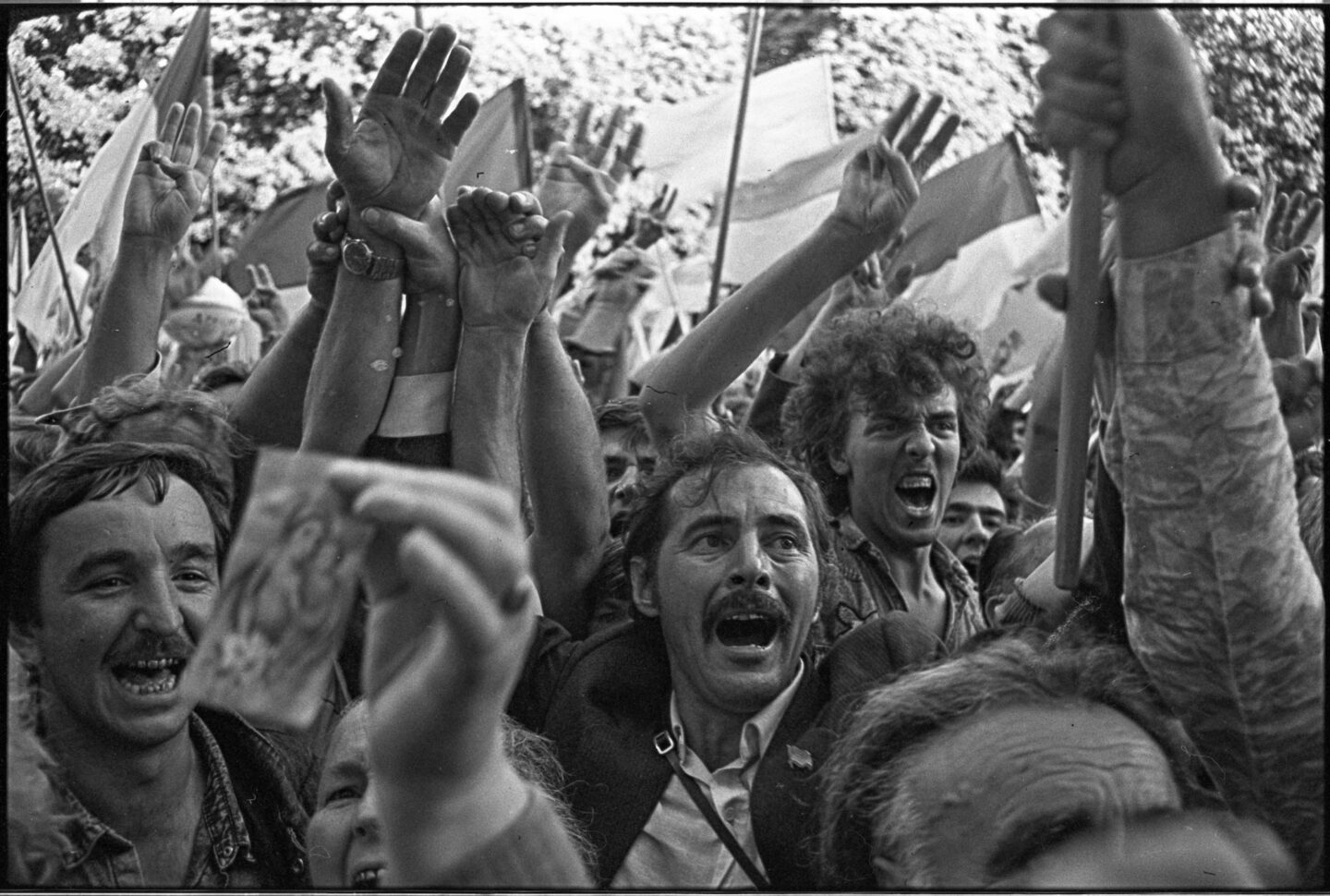
Public celebrations of Christmas began during the era of perestroika. The first sign was a vertep procession through the streets of Lviv in January 1988, organized by the informal youth organization Tovarystvo Leva [Lion’s Society in Ukrainian — Ed.]. At the end of that year, Tovarystvo Leva presented its nativity performance at the Palace of Ukraine in Kyiv, and it was broadcast on television in early January 1989. This was the first attempt to legalize Christmas.
At the end of Gorbachev’s Perestroika, just before the collapse of the USSR, Christmas was declared a public holiday, and the first public Christmas services were held in Orthodox, Greek Catholic and Roman Catholic churches.
The true revival of Christmas occurred in independent Ukraine.
But again, regional differences were apparent: Christmas was celebrated mainly in western Ukraine. A radical change occurred after the first and second Maidans. Specifically, on Christmas 2005, a few weeks after the first Maidan, the “East and West Together” campaign was held in Galicia. Galician families and entire institutions hosted thousands of Ukrainians from the east of the country to share the joy of Christmas. Following the victory of the Euromaidan, the first public Christmas celebrations were held in the large cities of eastern Ukraine.
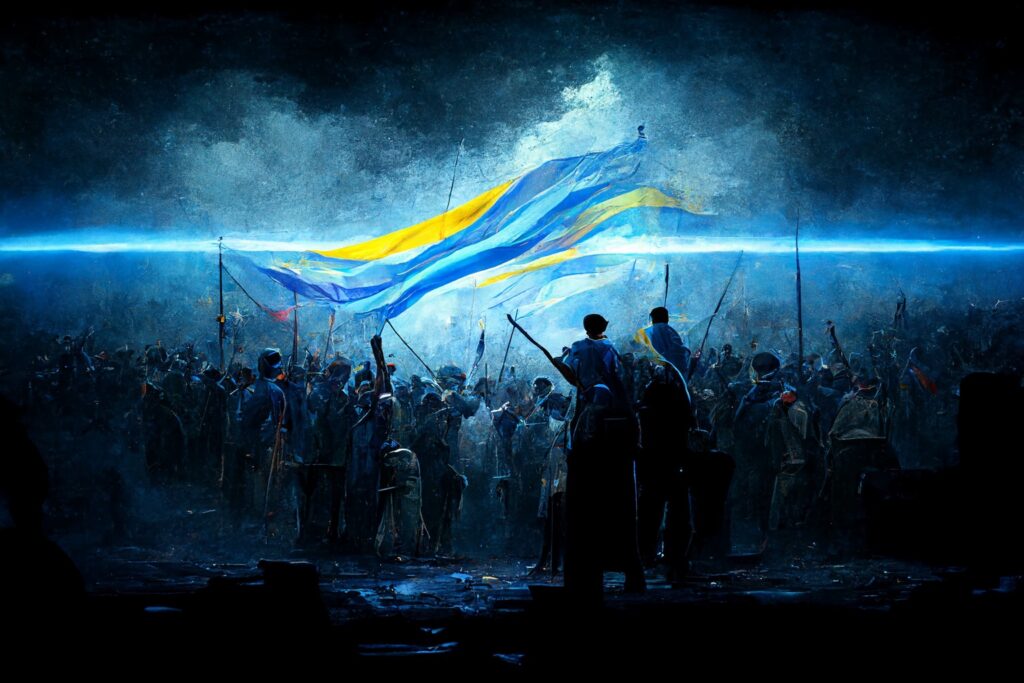
The Euromaidan and the Russo-Ukrainian War became turning points not only in Ukrainian and world history but also in the history of Christmas in Ukraine. Since then, Christmas has truly become a national holiday in both the literal sense, officially celebrated as one of the biggest holidays of the year, and in a general, symbolic sense. One could say that the war between Ukraine and Russia is a war between a country where Christmas is truly celebrated and a country where Christmas has become a hollow sound.
The fate of Christmas, both in Ukraine and around the world, depends largely on how and with what result this war ends. But the “Christmas factor” itself is also a force that strengthens the spirit of Ukrainians during the war, as the holiday convinces us that evil, no matter how powerful it may seem, is doomed, and the light of hope and victory is born in the deepest darkness.
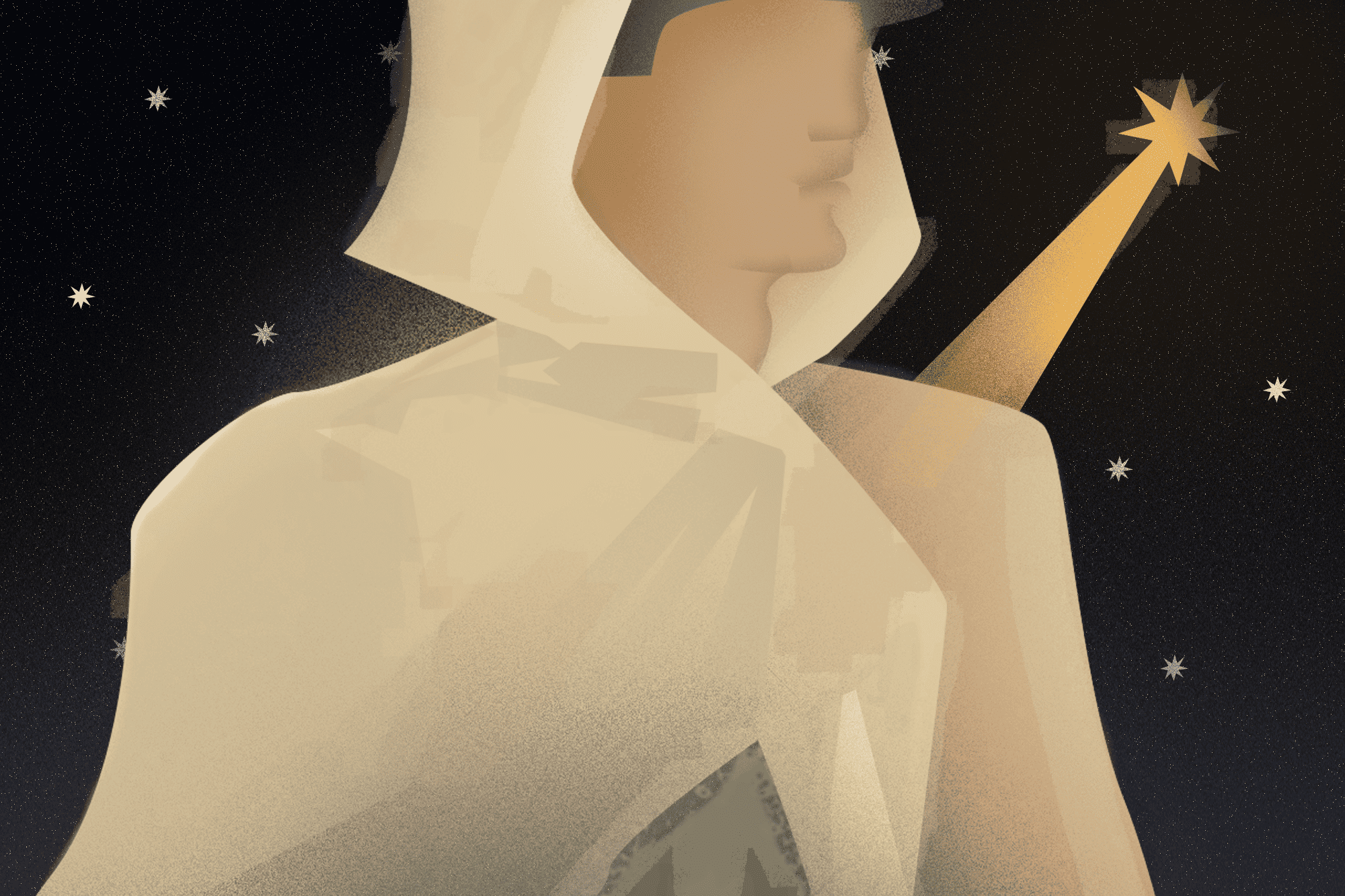
Illustration by Vadym Blonskyi
Translation from the Ukrainian by Iryna Chalapchii
If you would like to share your thoughts, ideas, or experiences by writing a column, please email us at [email protected]. The views expressed in this material may not reflect the position of The Ukrainians Media. Reprinting this text or any part of it is permitted only with the prior written consent of the editorial team.