Loading the Elevenlabs Text to Speech AudioNative Player...
This audio is created with AI assistance
This audio is created with AI assistance
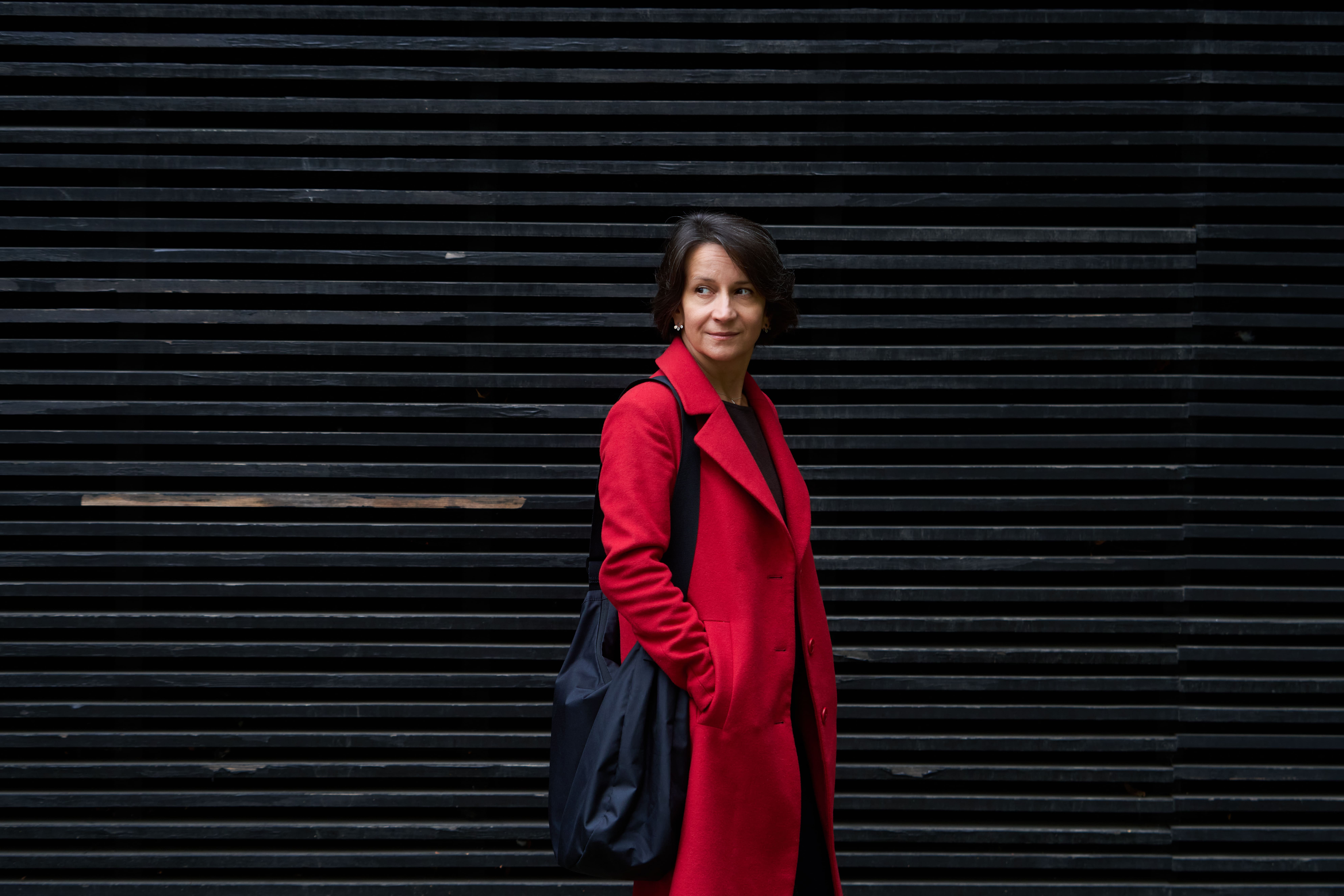
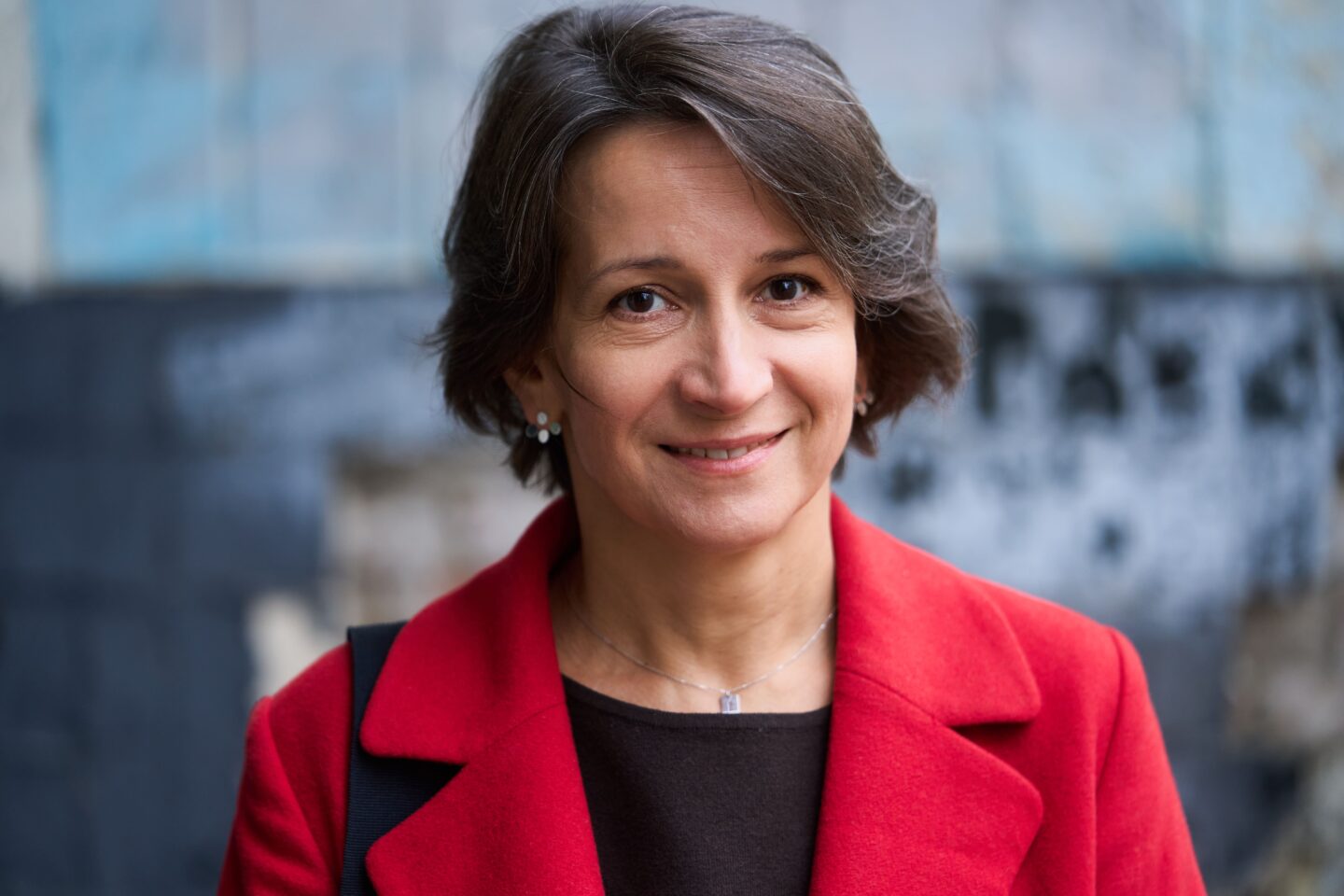
Natalka Vorozhbyt is one of the most recognizable contemporary Ukrainian directors and playwrights. The series “To Catch the Kaidash” and the film “Bad Roads” highlighted Natalka’s prowess as a showrunner. The films “Cyborgs” and “The Wild Fields” became evidence of her screenwriting talent. Vorozhbyt is one of the founders of the Topical Play Week, the Theater of Displaced People and the Theater of Playwrights. She has also written plays that have been staged in theaters in the U.K., the U.S., Germany and Sweden.
Our conversation with Natalka takes place at Propysy, a festival for young authors. She is one of the mentors at this year’s event, which aims to create a community and foster the next generation of people who will make Ukrainian culture. From time to time, future playwrights approach Vorozhbyt: they entrust her with a look at their first drafts and ask for advice during breaks between workshops. And I understand why: Natalka knows not only how to tell stories, but also how to listen.
§§§
[This interview was made possible thanks to the support of The Ukrainians Media community — hundreds of people who believe in independent, high-quality journalism. Join to help us create meaningful content.]
§§§
The beginning of a long story
“I grew up in the 1990s, a period of complete hopelessness, and in quite a marginalized environment — being educated wasn’t very fashionable,” says Natalka. The future director wasn’t lacking in artistic ambition: ever since she was quite young, she wrote poetry, songs and played guitar. In the questionnaires from schoolmates (remember those?) [In the early 2000s in Ukraine, it was extremely popular to have a special notebook with a fun questionnaire and give it to your friends to fill out — Ed.], she would note that she wanted to become an actor or a director. At that time, actors were superstars and role models to young people.
Natalka admits that she did not immediately enroll in university and spent some time “learning about life from the inside out.” Her mother’s connections helped her get into the Institute of Culture, commonly referred to as “Kuliok” [literally “plastic bag,” a colloquial nickname for the institute — Ed.]. But the girl felt that she was not getting what she wanted there: “I still had the dream of attending the Karpenko-Karyi University, but it seemed that only the elite studied there. I was convinced that they would never accept me.”
One of her instructors advised her to enroll in the School of Contemporary Dramaturgy and Directing run by the Kyiv City Administration’s Department of Culture. In charge of the school was Anatolii Diachenko, a navy officer from Sevastopol, who loved the theater and “somehow wrote about five dozen plays.” Vorozhbyt recalls that she knew almost nothing about dramaturgy at the time, and wasn’t really reading plays, because to her they looked like “oddly written literature.” Feeling no piety towards the theater, Natalka seized this creative opportunity: “They believed in me and promised to make me into a professional playwright within three years. At the time, I wondered — why does it take so long?”
Diachenko studied at the Literary Institute in Moscow, the only institution in the USSR where drama was taught as a separate discipline. It was he who suggested that Natalka enroll in this university. In Moscow, Vorozhbyt continued writing plays: “I wrote because it was part of the institute’s program. The institute, by the way, turned out to be a complete disappointment.” Later, she found herself among the playwrights who were working with new drama, and that’s where her real education began.
Cold sanatoriums and bad roads
Screenwriting and directing are two different but equally important roles in the filmmaking process. When asked which one she prefers, the introvertedness of a screenwriter or the teamwork of a director, Natalka replies that at the moment, she feels more comfortable when she’s alone. “I’m not much of a communicator, and in some ways I’m even a bit of a sociopath, although you can’t really tell. However,” she adds, “writing doesn’t always mean working in solitude.” She means documentary theater, where plays are written on the basis of interviews in collaboration with the director.
Directing and writing engage different groups of art muscles. Natalka explains that being a director means leading a team, managing the process, and most importantly, believing in yourself and never doubting your decisions. “However, I doubt all the time. It’s one thing to doubt yourself when you’re sitting alone in your office — go ahead and doubt all you like. But when you’re in front of some 50 people… They can see it instantly. So you have to always pretend that you know where you’re going.”
Directing is also physically demanding: “Everything I write takes place somewhere in the wilderness, or a village in the dead of winter, or cold sanatoriums, or bad roads, and that’s where we have to shoot. When you’re writing a play, you can say to yourself — that’s enough writing for today. But you can’t take a day off after a 14-hour shoot, as your next shoot day is tomorrow. However, exhausting work is quite an addictive drug.”
When she speaks about work, Vorozhbyt keeps coming back to the idea that universalism expands one’s consciousness — it is invaluable to have the experience of screenwriting, directing, producing and acting. All of it together provides a better understanding of the filmmaking process. It also means you’re less categorical about other people: “My only regret is that it took me so long to do it. I’ve always wanted to be a filmmaker, but didn’t actively pursue it until I got offered the job.”
Concentrated stories and drama as surgery
Every stage performance of a play is different from the last, even if the text remains the same. Film adaptation, on the other hand, gives a chance to immortalize a particular version and repeat it again and again. An eternal variance and a constant ideal. “A theater play has innumerable advantages: if one director didn’t do so well with the production, another one will improve it. I don’t direct my own plays, though. I think theater productions are more about the director’s vision rather than the playwright’s, so any version of the play could be different. Cinema is also about the director’s vision, but once it’s done, it can’t be undone — you can’t fix anything. But since I started making movies, I realized that the “cannot be undone” option is what I enjoy more. Both processes are fascinating in their own way,” says the artist. Then she adds that drama is hard in the sense that you have only an hour and a half or two hours to expand on a deep story — there is no time for the author’s introspection or the descriptions of the characters’ feelings. “A drama is a concentrated story. In three to five sentences, you have to create the magic that a piece of prose can do in several pages.”
If prose is medical treatment, and poetry is psychotherapy, then drama is surgery. Its concentration helps to weed out what’s unnecessary and keep to the point.
Aside from time, a playwright must take into account the limitations of the genre, remember that a director can’t possibly realize all their ideas, and even be mindful of certain actors’ performing styles, if the play is written specifically for them. Also, plays barely get published in Ukraine, so you have to be ready that your work will be read only in professional circles. “The director always wins over the playwright in their interpretation,” Vorozhbyt sums up.
A life on pause and a satirical play about war
Natalka was only able to write again three months after the full-scale invasion began: “At the beginning, I had a feeling, like many other authors did, that words had failed, and art had failed. But I had to get on with my life, and frankly, I don’t have many other skills.” The playwright was approached by the Munich-based Kammerspiele theater with an offer to write a play about the refugee experience and the relations between Europe and Ukraine in this new reality. Natalka agreed for several reasons: it was a chance to do something useful for Ukraine, not go insane, and, of course, make some money. “It was impossible to realistically write about everything I was feeling — my inner despair was too deep. I was seeking a new genre to write in, and that is how this satirical play about our lives came to be. Black humor helped me in talking about this serious and difficult topic,” Vorozhbyt explains. Among her key motivations was the desire to show people from other countries what is going on and who Ukrainians are. Such has been her path as a playwright since 2014.
The play “Non-existent,” commissioned by a German theater, focuses on three refugee women who lost their homes. Natalka admits that losing her home and her country turned out to be the most horrific experience for her: “When we were leaving, we had this feeling that it was all over, we would never return, and there would be nothing to return to (I do know how to be extra dramatic).” When she talks about living abroad, she adds that she didn’t feel like she had the right to write or talk about the war, “as I am not there and not living through it.” When Natalka came back to Ukraine for a few days in April 2022, she realized that, first of all, nothing had disappeared — Ukraine was still alive and kicking — and second of all, that she wouldn’t be able to live anywhere else. “It was a huge relief. I didn’t fully understand just how much I wasn’t ready to live abroad. “Non-existent” was born out of despair, the emptiness I was feeling at the time. It felt like my life was on pause. The body gets older, but you no longer exist as an individual.”
Testimony on time
In the first year of the full-scale invasion, non-fiction and reportage dominated over fiction, and many Ukrainian authors took on the task of documenting the ongoing events.
“Obviously, I feel the need to attest to what’s going on around me — ever since 2014, my sense of civic responsibility has had a huge influence on everything I do. I would gladly take a break from this responsibility, but the times demand it,” says the director. When she is approached with work offers on the topic of war, Natalka always says yes, despite “inner psychological resistance.”
However, if in 2014 she mostly worked in documentary theater and plays based on witness testimony, now Vorozhbyt wants not just to retell other people’s stories, but to reimagine them artistically — to create a certain distance, imagine the future and expand her toolbox. “Before, the most important thing for me was documenting, but now I allow myself to be a writer. The war has been going on for too long for us not to look for new ways of talking about it,” says Natalka.
“We shouldn’t wait — we have to be writing and filming”
The pivotal novel about this war has likely not been written yet — longform writing requires time and distance. With cinema, though, it’s different. When she ponders modern Ukrainian cinema, the director returns to her thoughts on how to reflect on war.
“Some people want to make movies about battles, victories and this ultra-patriotic narrative. We need these kinds of movies, too, but they have to be made tastefully, earnestly and be based on real events. Those films are mostly made for our domestic audience, to pay our respects to the heroism and memory of our defenders and give ourselves a morale and motivation boost,” says Vorozhbyt. She mentioned “Cyborgs,” a film for which she wrote the screenplay. There is another important detail: such films cost a lot to make, so in conditions of limited budget availability, there won’t be many of them. Cinema is changing, as is the point of view from which directors operate: “The reality has become much scarier, and with the tools available to us right now, we can’t quite compete with real life,” believes Natalka.
As an example of a successful portrayal of war, Vorozhbyt mentions “Honeymoon” by Zhanna Ozirna, a story about a young couple hiding from the Russians in Bucha during the occupation. Without showing the war directly, Zhanna explores this topic more deeply than a regular action movie could.
Currently, there is a demand for different kinds of films, Natalka believes, so the main thing is to continue working: “We shouldn’t wait — we need to be writing and shooting. We don’t have the right to stop, because we’re in a very precarious situation. The more artistic and testimonial artefacts we leave behind, the more of Ukraine will exist in the world.”
Pondering on the change in perspective in times of war, Vorozhbyt admits that Ukraine’s victory is more important to her than any artistic achievement: “If I achieve something, but Ukraine disappears, there would be no meaning to that achievement.
If my truth brings harm to my country, I’d rather not tell it.
Even if that means defeat for me as an artist.” The director describes her art as a careful act of walking a fine line: not telling the whole truth and hinting at things, but without being insincere, because the audience can always feel insincerity. “I truly can’t write about everything that I want because of my civic responsibility. What’s more important to me – raising a controversial topic or the victory of Ukraine? Of course, it’s the latter,” says Natalka.
Entertaining the Western audiences with war
Whether we like it or not, our war has fallen into the background for the Europeans. So, to remain in their consciousness, it’s important to seek new ways of telling our story and surprise audiences.
“When you write for a foreign audience, you have to manipulate them in some way. In “Green Corridors,” I used humor and satire. As in, we’re telling you about scary things, but we’re also entertaining you. In “Non-existent,” I didn’t mention Ukraine once, because the fear of losing your home is a universal one. This way, I’m convincing the Europeans that this story is not so much about us, but about them, and that anyone could end up in a similar situation.”
Vorozhbyt mentions themes that always work abroad, such as the topic of abducted children, which elicits empathy. Polish producers recently approached the director with an offer for her to write a movie on this topic: “Even though I don’t want to be doing this, I couldn’t say no to that.”
In our interview with Iryna Tsilyk, we spoke about filming in Avdiivka: a large part of the filming locations no longer exists, and, sadly, some of the people who starred in the film were killed. It seems that many of our cities, at least for a while, will exist only as clay impressions documented in time, which, of course, is a tragedy. When thinking about documenting reality, Vorozhbyt recalls the headmaster of a school in Popasna from her play “Bad Roads:” “That character was based on a real person, a history teacher named Viktor Shulik. He died in the war.”
Natalka talks about working in Avdiivka, Shchastia and Popasna — cities that have been either razed to the ground or occupied. “I’m especially proud of working with teenagers from those areas. At the time, they wore Russian symbols and dreamed of studying in Moscow. But after our continued contact with them, they remained loyal to Ukraine, and some of them, sadly, have already laid down their lives in defense of the Motherland,” shared the director.
Visibility
In 2020, “Bad Roads” won a prize at the Critics Week in Venice. That same year, Iryna Tsilyk’s debut feature “The Earth Is as Blue as an Orange” won the Best Director award at the Sundance festival in the U.S. In 2022, Maksym Nakonechnyy’s “Butterfly Vision” made quite a splash in Cannes — Iryna was the co-writer of the film, and Natalka played one of the parts. Ukrainian cinema is gaining agency and visibility among Western audiences. “I have a cautiously optimistic view on this matter,” says Natalka. “I think the Western audience has recognized that we’re unique and different from our neighbouring countries. That’s because our cinema is eye-catching and competitive.”
However, the process is currently stalled due to a lack of financing and a conflict between the professional community and the government. “Many films are awaiting financing, and producers look for private and foreign investments. It would be right for the state to fund projects of artistic value, not the commercial ones. This fall, we’ll have many premieres, but some of those films began production before the full-scale invasion. It’s unlikely that we’ll have as many next year.”
When thinking about the reasons for the stagnation in the film industry, Natalka talks about the lack of understanding of the strategy and the real mission of cinema, as well as a lack of communication from the government and erroneous staffing decisions.
A social drama about a pear tree
Natalka Vorozhbyt became known to a wider audience as the showrunner of the TV series “To Catch the Kaidash,” based on the Ivan Nechui-Levytskyi novel “The Kaidash Family.” The proposal of adapting this classic literary work for the screen came from the then-producer general of STB, Volodymyr Borodianskyi. The people at the network thought that it would be a comedy, pitching it as “a bit of fun for a general audience.” Natalka, on the other hand, believed that Nechui-Levytskyi created a social drama. “The offer really spoke to me on a deep level, because it was one of my favorite books as a child. I knew those people since I was little — they’re like my relatives and neighbors,” says Natalka about the project.
Vorozhbyt recalls growing up in a village, and, after moving to the city, returning there for the holidays: “The village is where I became myself.”
Later on, as she studied in Russian-language schools in the city, she turned into a Soviet child: “The village was Ukraine. I didn’t encounter Ukrainian city culture, only the Soviet one, but in Poltava Oblast, I felt the continuity and the firm connection to our roots very deeply, and I discovered my Ukrainian identity there. Every time I came back to Kyiv, it felt like going to a different country.” Later, Vorozhbyt began paying attention to the problems of the village. The crisis of the 1990s led to an economic depression, and people drank heavily. In the last 15 years, rural areas finally started to develop, but then, the war came. “My place of strength is still there, in Poltava Oblast. I go there every year to regroup,” says Natalka.
Other people’s texts and your own vision
Vorozhbyt wrote the screenplay for the film “The Wild Fields” by Yaroslav Lodyhin, which was based on the novel by Serhiy Zhadan, “Voroshilovgrad.” When she reflects on working with someone else’s text, she notes that time has worked in her favor, since the war has underscored the main points of the novel: “This story is not about fighting for one particular gas station, but for your land as a whole. The metaphor that the author had implanted has become crystal clear.”
When adapting someone else’s work, the most important thing is cutting the insignificant parts, no matter how difficult it is: “As a result, we have to cut the scenes that don’t impact the plot, but are important for worldbuilding. A lot of people read Zhadan precisely for scenes like that,” adds Natalka. Some parts of “The Wild Fields,” like the football game, were cut in the edit room — the plot took priority, although Vorozhbyt doesn’t fully accept this principle.
In 2024, Natalka worked at an art residency in Oxford. According to her, she went to the U.K. so that her daughter could go to university there, but Paraska made the decision to return home: “Despite the beauty of our surroundings and the wonderful working conditions, I found it boring and difficult there, first and foremost from a moral standpoint. In Oxford, I almost finished writing three plays and one chapter of my novel. But when I returned to Ukraine, I didn’t write a single line of prose, because life here doesn’t allow space for that.”
In Oxford, Natalka connected with other female artists and cultural figures from Ukraine.
“Right now, that whole year feels like a dream,” sums up Vorozhbyt.
A play about the Holodomor on the Shakespearean stage
In 2009, Natalka wrote a play called “The Grain Store” about a village in the midst of Holodomor. In 2010, “The Grain Store” was staged by the Royal Shakespeare Company in Stratford-upon-Avon. Later, Lviv director Andrii Prykhodko staged the play in Ukraine — according to Vorozhbyt, not very successfully. The 2022 staging by Maksym Holenko, however, has been a sell-out hit for several years now.
When talking about her work on this play and its path to the Ukrainian stage, Natalka recalls that British theater representatives traveled to Moscow in search of themes for “The Russian Seasons” at the Shakespeare Company, which had previously performed only Shakespeare plays. “I was part of the Russian theater circles at the time, so I was invited to participate in this competition. Ten playwrights and 10 plays took part in it, and two made it to the finals — my “Grain Store” and one Russian play. I then brought up the question of national identity, and the project was renamed from “The Russian Seasons” to something like “Revolution.”
Vorozhbyt speaks about the scale and ambitions of the Shakespeare Company: they wanted a big, “Shakespearean in scale” play and didn’t limit the playwrights in the number of characters or artistic devices. Natalka chose the topic of Holodomor, as it is one of our biggest tragedies. The Brits knew nothing about this genocide, but they were intrigued: “I’d read witness accounts and used my family history. At some point, the British director and costume designer came to Ukraine, traveled to the villages, and spoke with the older people. They were surprised to discover that the old folks weren’t keen on talking about those times. Our older generation is so used to being under censorship that they’ve forgotten how to speak about their trauma.”
Bringing our kids back
At the moment, Vorozhbyt is working on a screenplay about the Ukrainian children brought back from Russia. Her work started when she went to a retreat in the Carpathian mountains for the families who managed to return their children: “I interviewed them, and almost every conversation was worthy of its own screen adaptation — from the adventure of evacuating a horse from Crimea to a delicate psychological drama about a mother who got her child back, but afterwards, fell into a depression and started losing her memory, likely because of the difficult emotional burden of the last few years. Now this mother is hiding her condition and doesn’t seek medical help, afraid that her child could be taken away from her again.”
The director explains that oftentimes, the return of the kids is not a happy ending, but a new coil in the spiral of this tragedy.
Natalka recalls another story, about a 13-year-old girl who shared that, in her occupied city, everything Ukrainian disappeared almost overnight: walls were repainted, advertisements taken down, and price tags in stores replaced with rubles. “This girl went to a store and was sold Ukrainian Mriya pepper [literally “dream” in Ukrainian — Ed.]. It must have been left behind by accident. The girl said she cried at that moment, and as I listened to her, I cried too.” Natalka confesses that in calmer times she struggled with what to write about, whereas now she struggles with how to describe something indescribable: “So you sit down and learn how to write — you learn anew, every time.”
Translated from the Ukrainian by Liubov Kukharenko
Запросіть друга до Спільноти
Вкажіть, будь ласка, контактні дані людини, яку хочете запросити
Придбайте для друга подарунок від TUM
Вкажіть, будь ласка, контактні дані цієї людини, щоби ми надіслали їй посилку
Майже готово
Вкажіть ще, будь ласка, своє ім’я та емейл.
Дякуємо і до зв’язку незабаром!
Дякуємо за покупку!
Вхід в кабінет
Відновлення пароля
