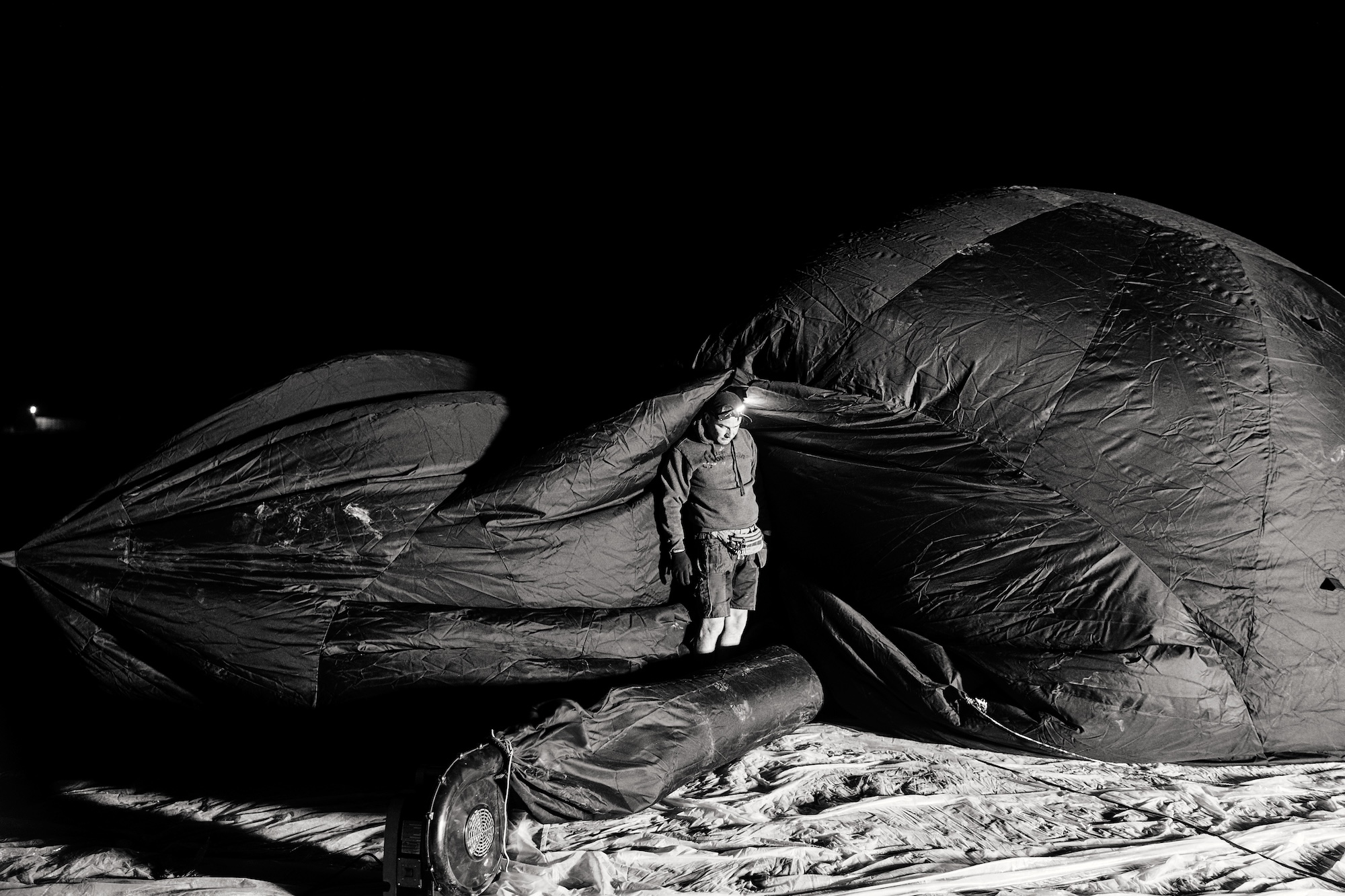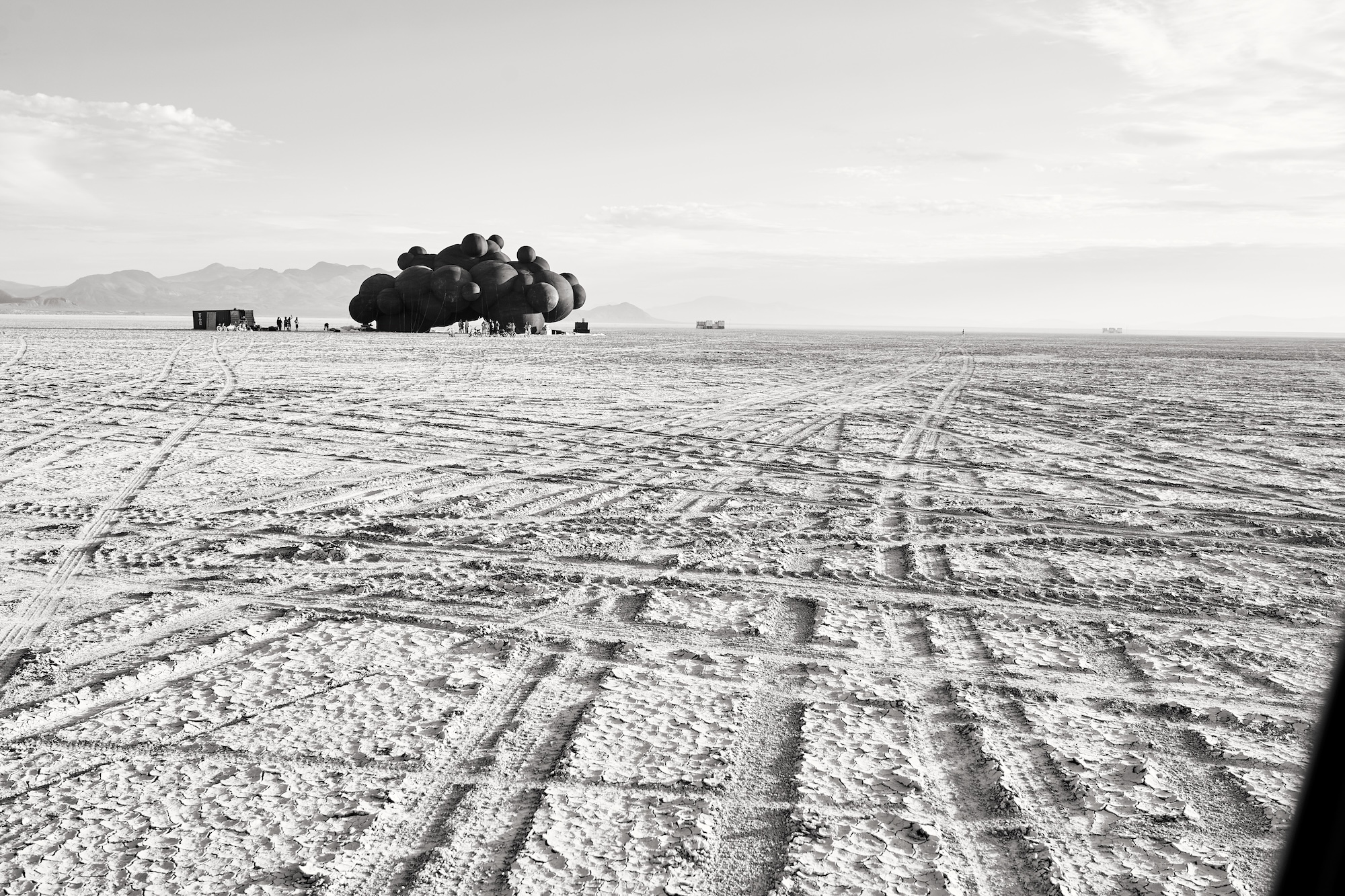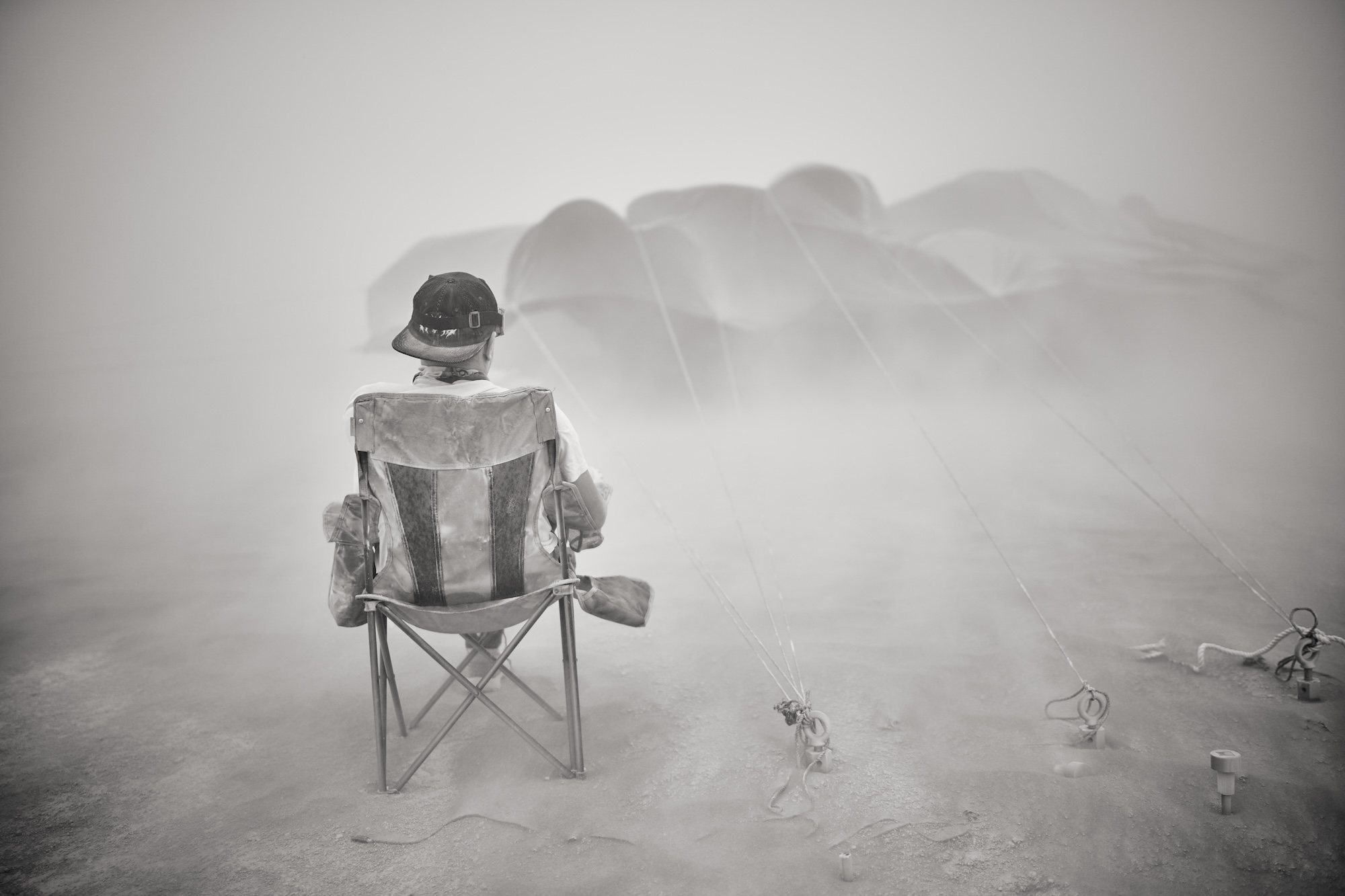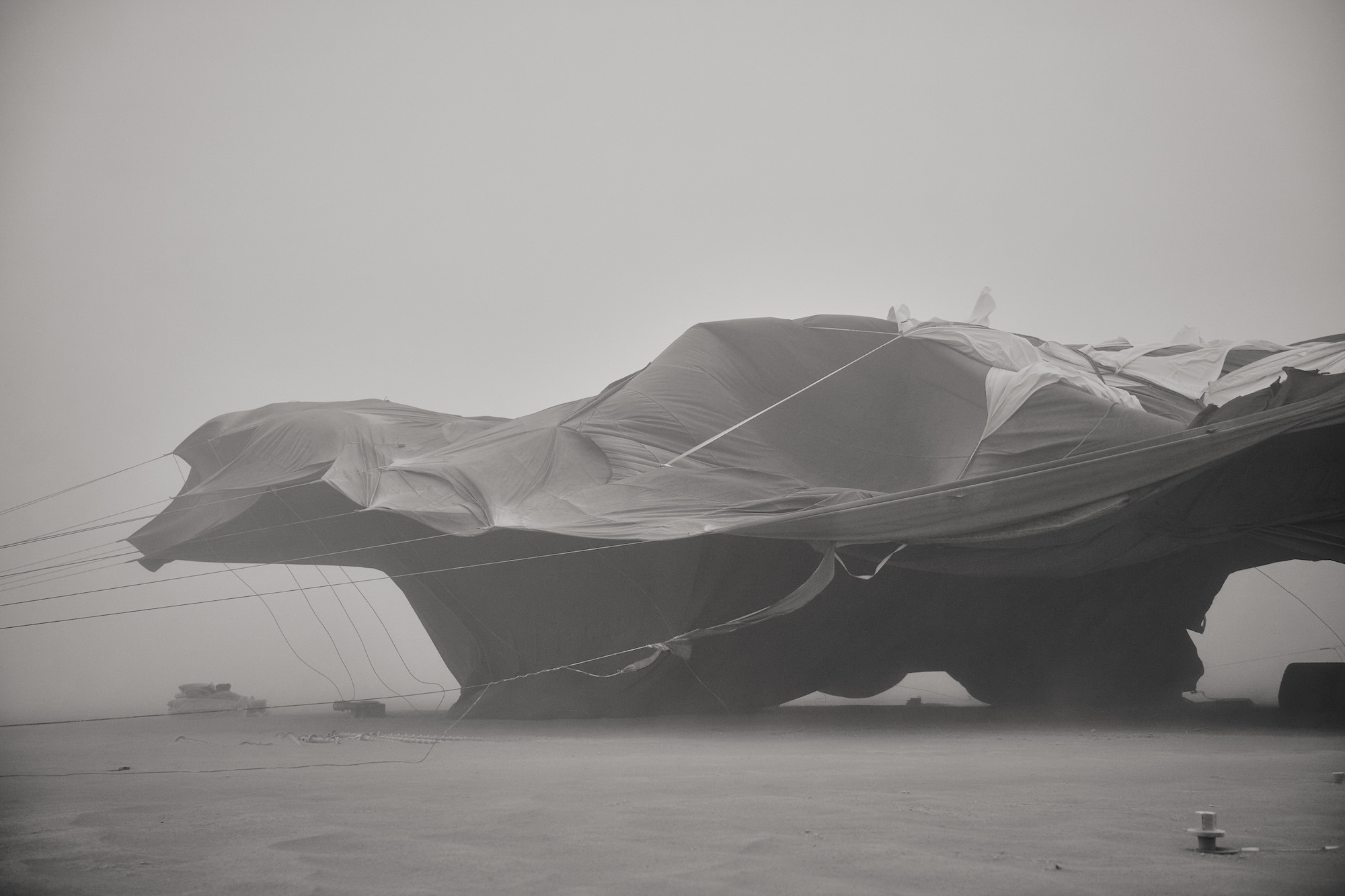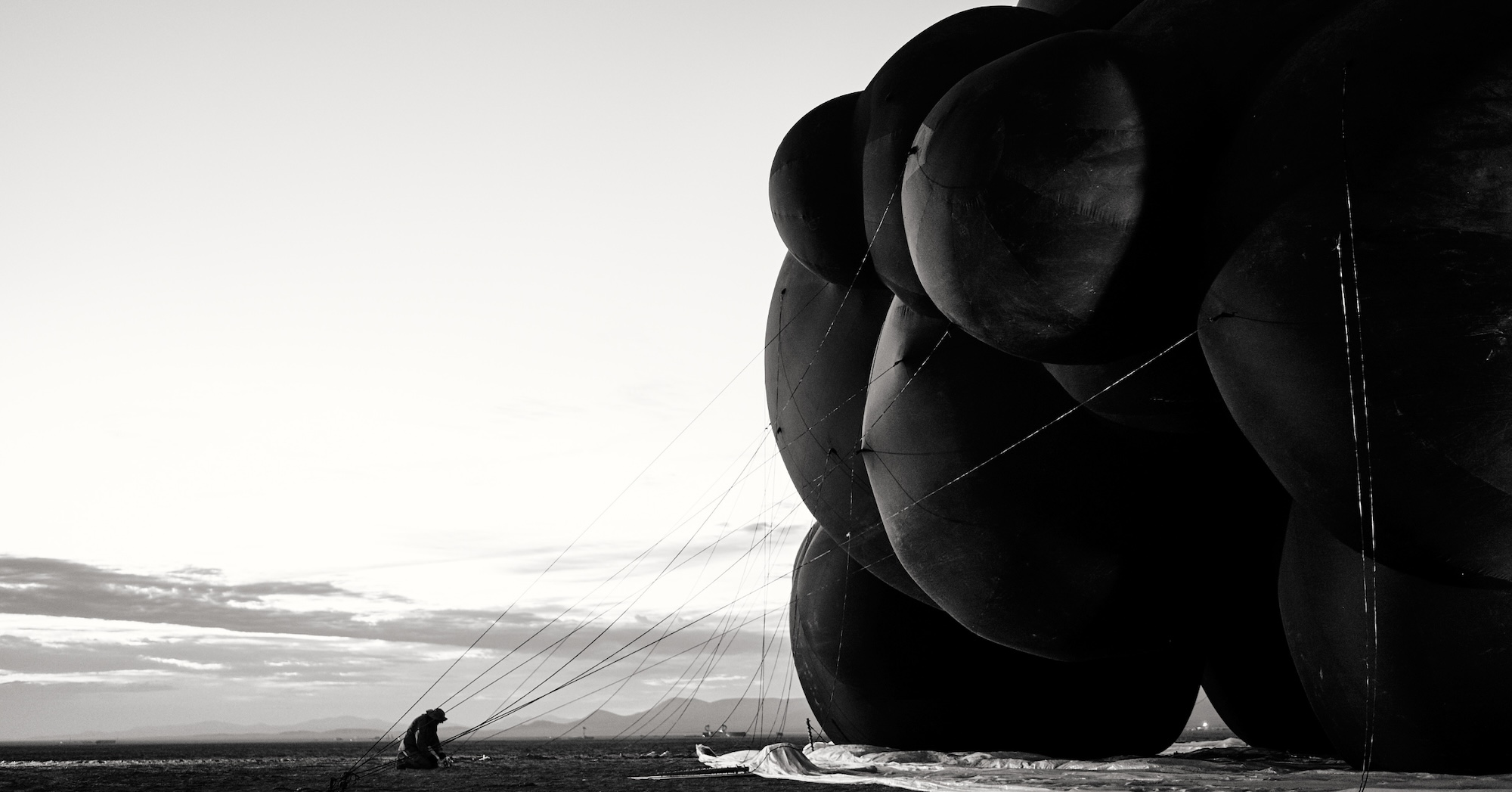
In the Black Rock Desert, amid the dry winds and endless horizons of Nevada, a Ukrainian Black Cloud took root. It knew nothing of the sky, it was born of fear and war. A shadow fallen upon the earth, it stood 50 feet tall, 100 feet long, and 55 feet wide, weighing seven tons. It resembled a haunting thought that escaped from the mind, consuming a massive stretch of space. Periodically, the cloud flashes with anxious rhythms, the sounds of thunder and lightning, but these are not the sounds of the sky. From its interior come the recordings of war: the explosions and shelling of Zaporizhzhia, pulled from the acoustic diary of musician Denys Vasyliev.
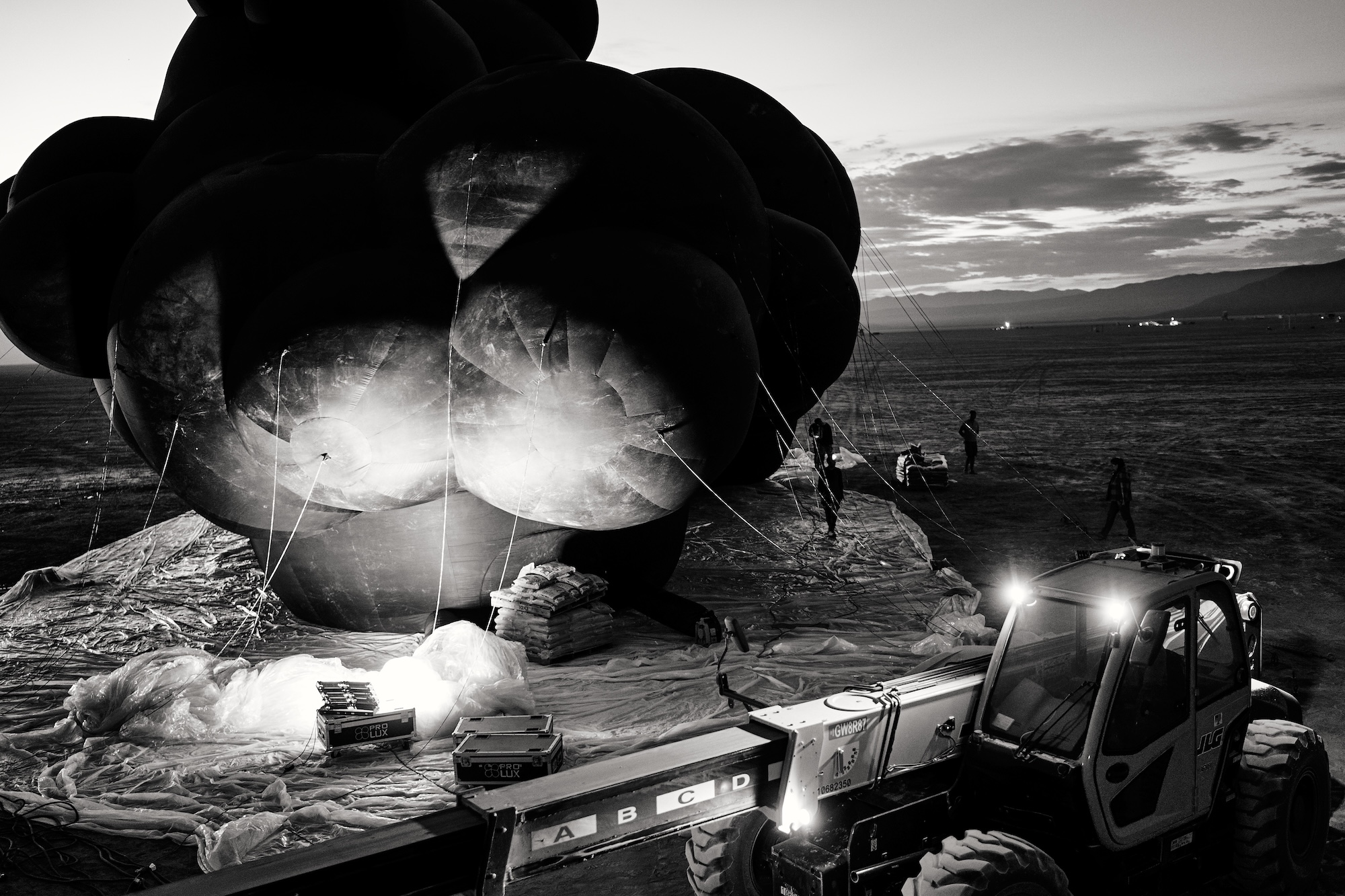
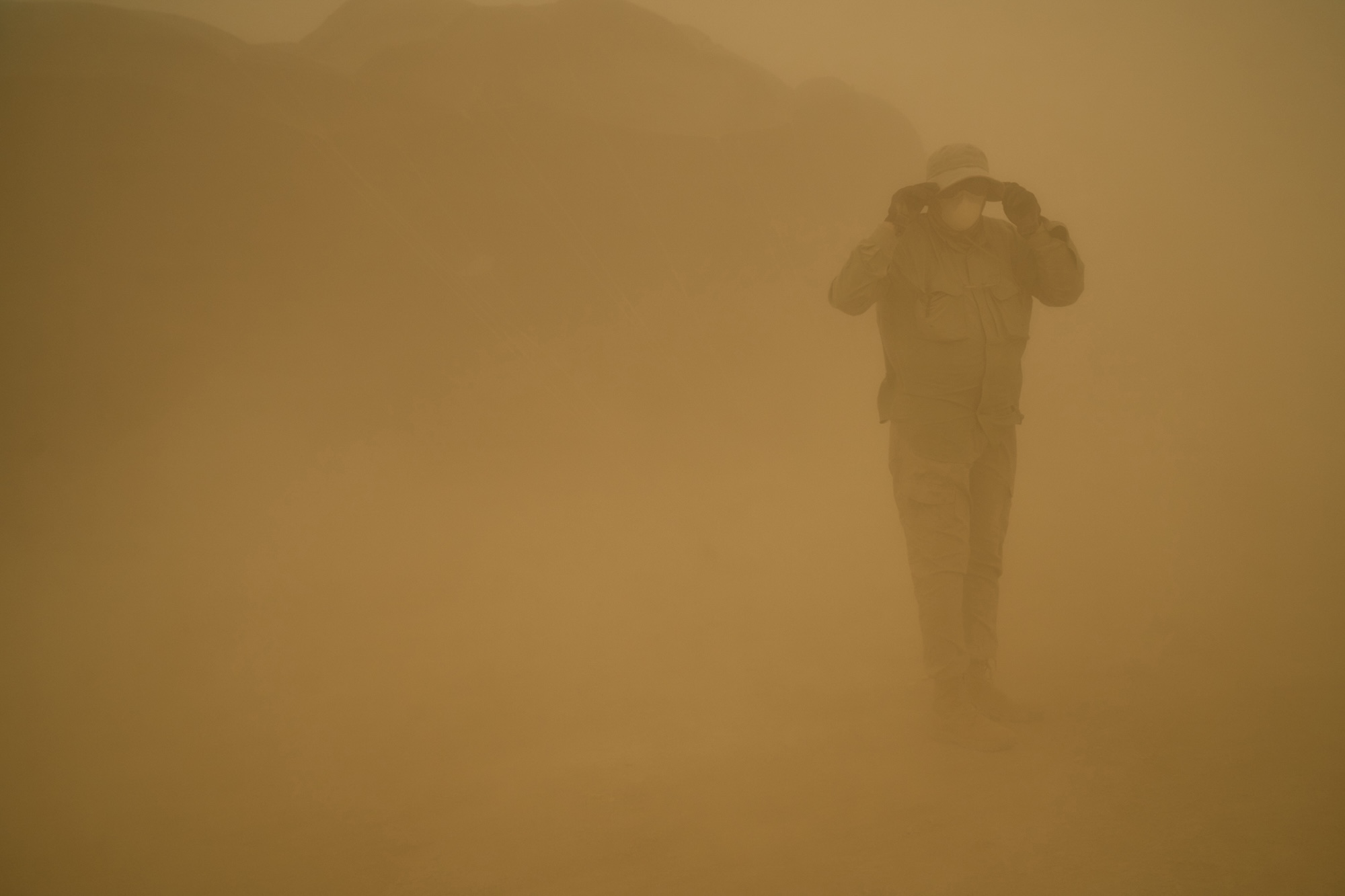
Oleksii Sai, the Ukrainian artist behind the Black Cloud installation, created a symbol of threats that seem distant until they flash before one’s eyes. This Black Cloud did not come to pass us by or to bring rain, but to warn: if the world does not stop the darkness, it will cover everyone. The global debut of Black Cloud at the Burning Man 2025 independent art festival took place on August 24. Assembling lasted through the night, and by daybreak, the installation was already inspiring awe in spectators. However, toward evening, a sudden wind swept across the desert.
The cloud was supposed to withstand a storm, but calculations proved powerless against the elements’ might. These events recalled February 24, 2022, when explosions shattered the peaceful dreams of millions of Ukrainians.
Photographer Hryhorii Vepryk immortalized Black Cloud in his images. Even during its initial presentation at Sophia Square in Kyiv, the artist felt the installation’s complex meaning: “It’s about the approach of something massive and terrifying. It symbolizes war and, more broadly, the great problems of humanity.”
The photographer recalls his anxiety during the preparation and the search for shots that would best reflect the scale of the threat looming over all of humanity. The main idea was to show Black Cloud from different angles: how it dominated the camps and other Burning Man installations, creating a stark contrast. Vepryk also sought to capture the relationship between a human being and the cloud’s gargantuan size.
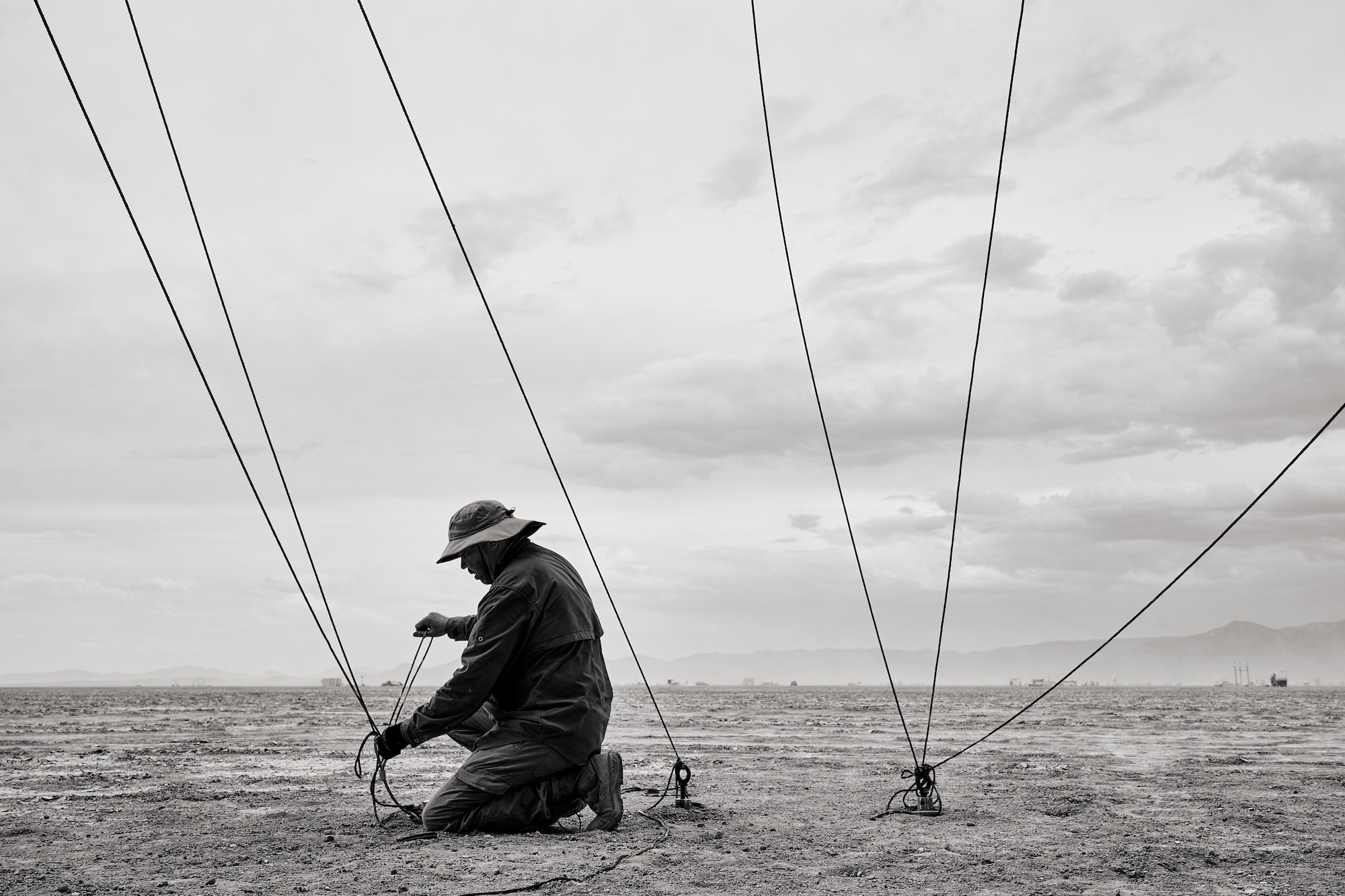
Among his favorite photos is a shot of a man kneeling while tethering the cloud, a gesture that resembles prayer or worship before its majesty. Another powerful work features a “faceless” boy in a black mask and dark glasses, who began posing against the backdrop of the massive cloud.
He caught the moments when the elements destroyed and transformed the installation: tearing it to pieces, mixing it with sand, and arranging it into unexpected configurations.
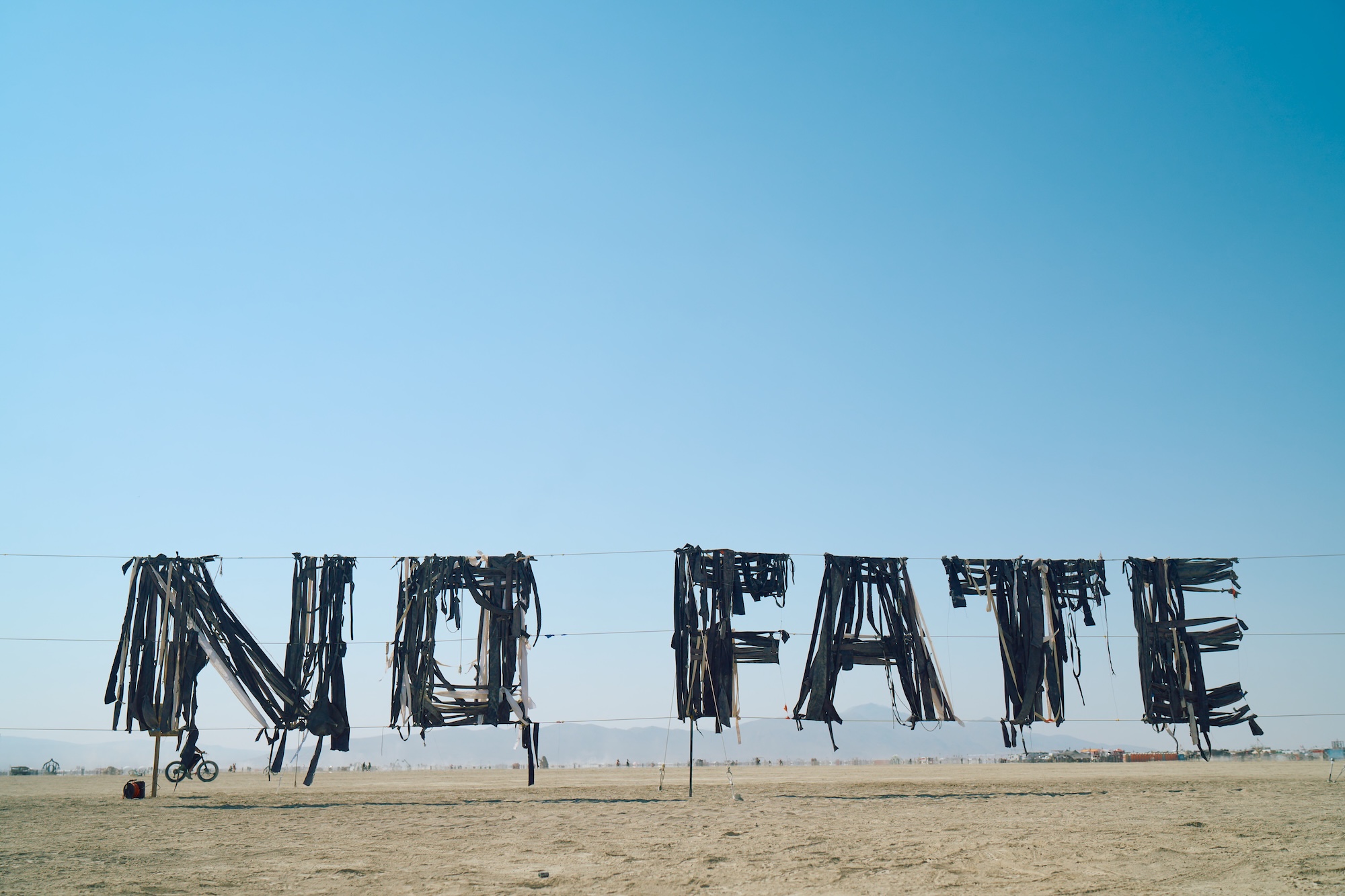
But even out of darkness, form can be created. The Ukrainian team did not give up and transformed Black Cloud into a new work. In the scorching desert, the black fragments formed the words No Fate. The name comes from the iconic phrase in The Terminator: “No fate but what we make.” In these sagging, shredded letters, a symbol of resistance emerges, one where destruction becomes a new beginning.
Although Black Cloud stayed at the festival for only a short time, it left a mark not just as an art installation, but as a wake-up call to the world. Each of us is a part of the light that can dispel the darkness. And while darkness knows no borders, we make our own fate, and therefore, we have the power to resist.
Translation from the Ukrainian by Iryna Chalapchii