The Ukrainians Media, in partnership with the United Nations Development Programme (UNDP), shares the stories of people who are rebuilding their communities. These stories show that recovery begins not with walls, but with people who take responsibility for the places where they live. This piece was produced with the support of UNDP and funding from the Government of Denmark.
Dismantling a Wall to Make Way for Construction
After eight months on the front line, a village in Mykolaiv Oblast is rebuilding its future: local young people have turned a former library into a youth center using lime, hemp and clay
24.11.2026
24.11.2026
In the fall of 2025, in Novomykolaivka in Mykolaiv Oblast, young people from nine regions tore down a wall inside a former library. Then, using the rubble, lime, hemp and clay, they built themselves a place to meet. In the spring of 2026, their story won an award in a competition organized by the UNU Resource Nexus competitiony, selected from more than 900 entries from over 100 countries.
1.
Novomykolaivka lies on the old road from Mykolaiv to Snihurivka, which the Russians occupied in the spring of 2022. From March to November, the front line ran right through here, not far from the regional capital.
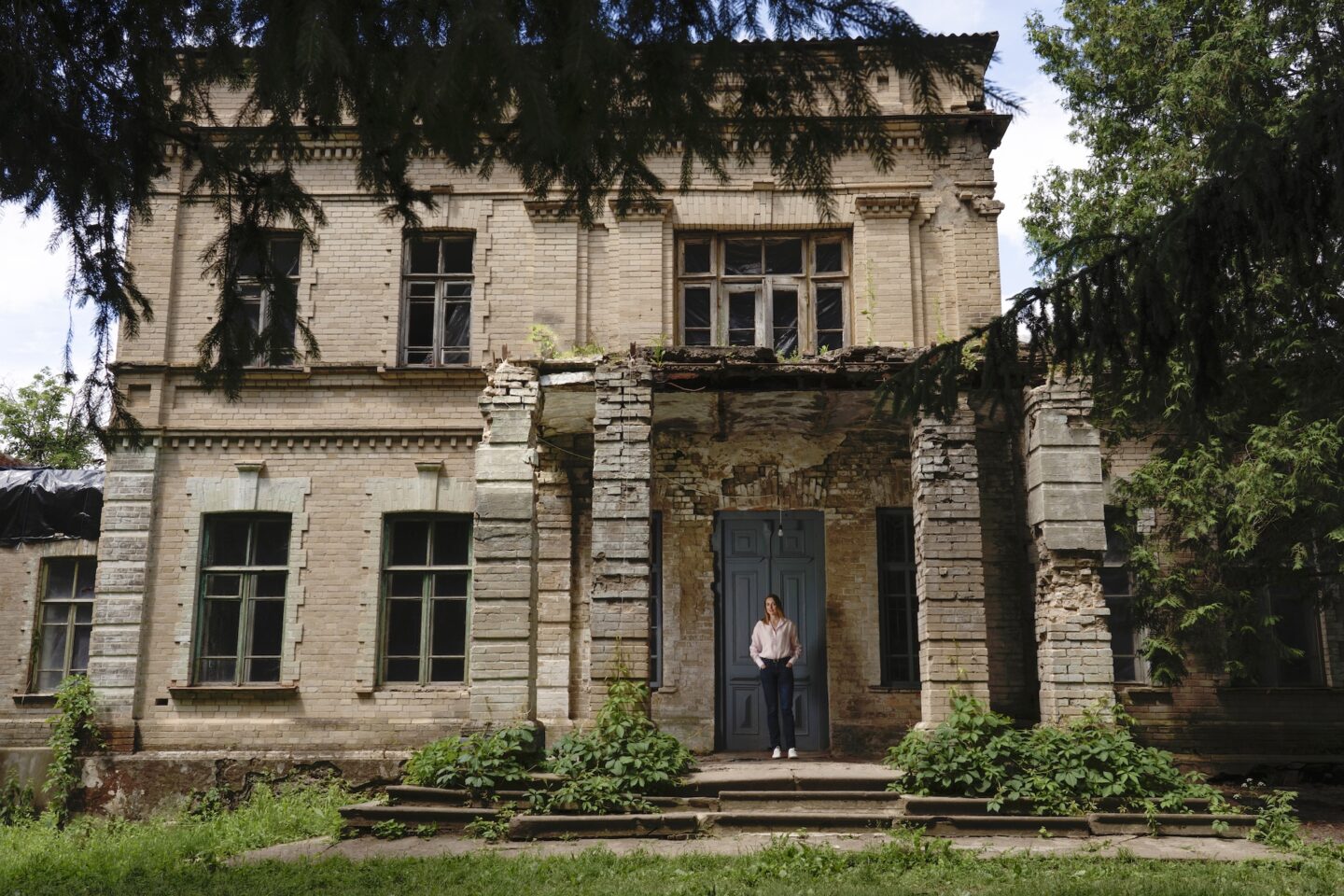
When the front shifted, people began returning to the village. Now, almost all life here revolves around a two-story administrative building right in its center. On the first floor are two small rooms that once housed the library’s bookshelves. Until the fall of 2025, they remained in disrepair and were used to store building materials.
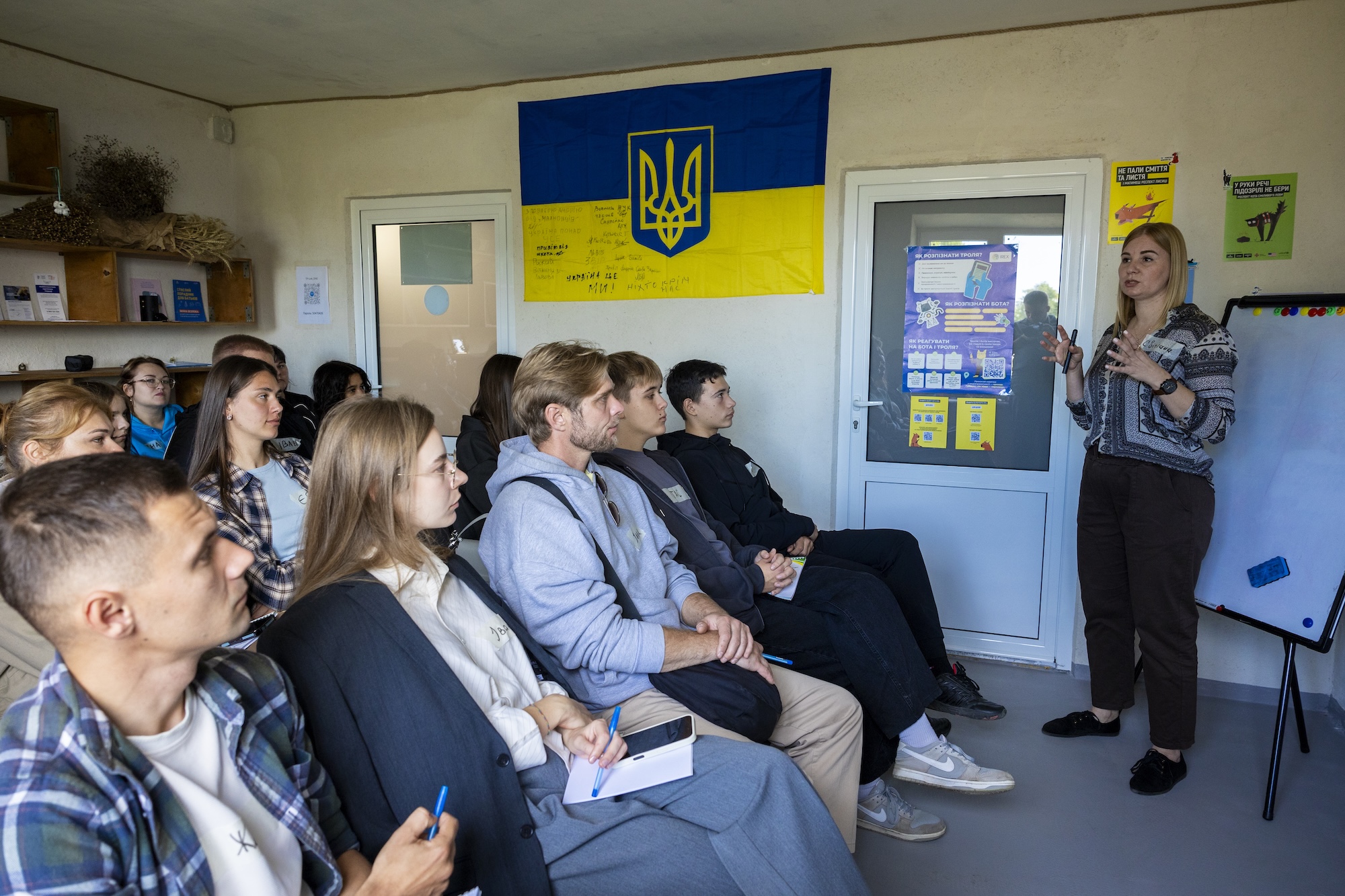
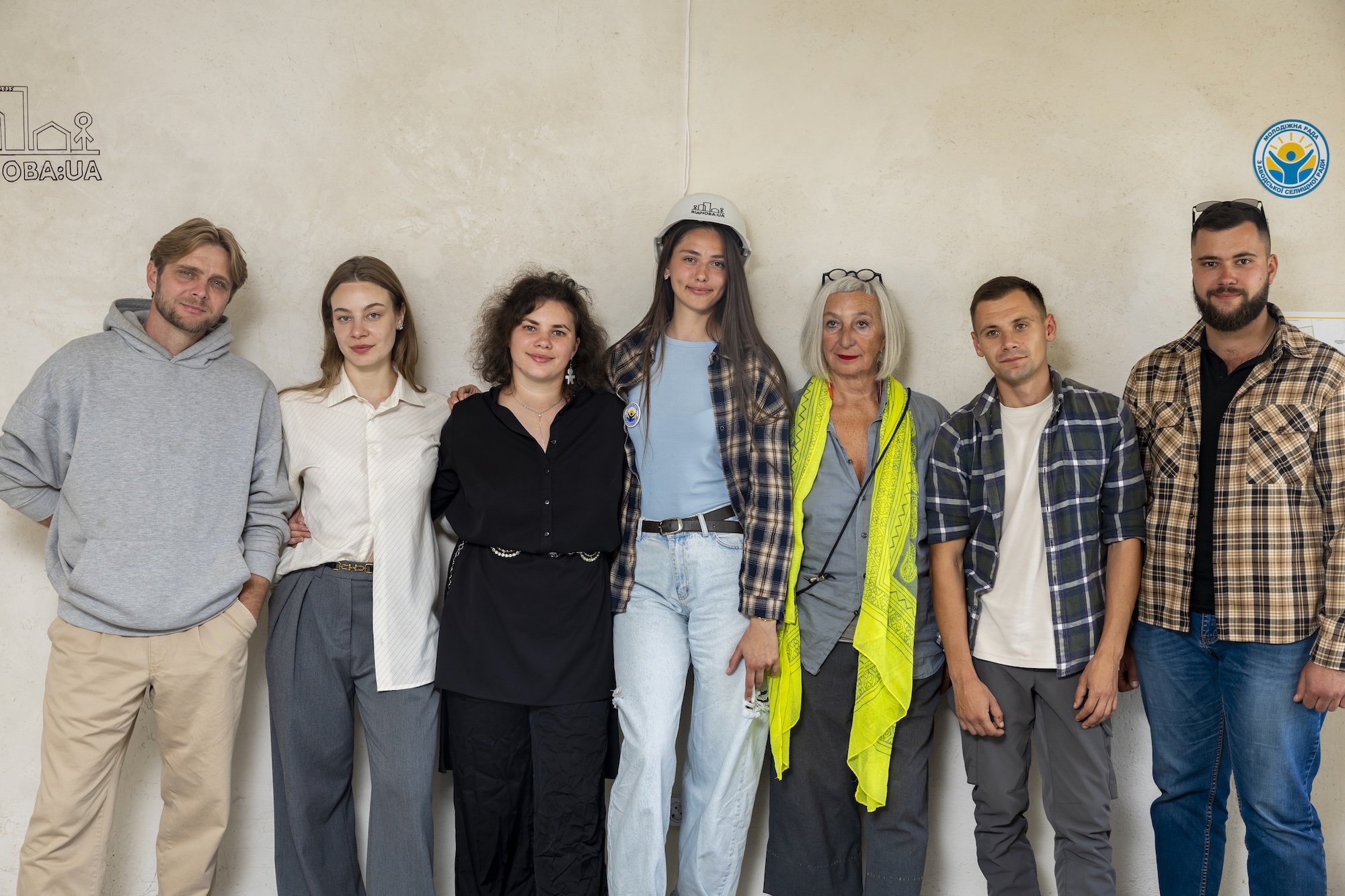
In September 2025, VidNOVA — an exchange program that brings together young people aged 18 to 35 — arrived in the village. The program aims to collectively restore a building in a village or town that’s been damaged by war. Several dozen participants from nine regions came to Novomykolaivka. Some traveled from safer regions, some had survived the occupation, and others lived near the front lines themselves. They had five days to transform the library rooms into a youth space. And they built not with concrete, but with lime, hemp and clay.
One of the first decisions was to tear down the wall between the rooms to create more space. But instead of hauling the debris to the dump, they reused it as building material. The people of this village, where shelling has destroyed many homes, know that even broken things can still be put to good use.
2.
The village remained on the contact line until November 2022, when Snihurivka and the right bank of Kherson Oblast were liberated. Before that, however, the community had been effectively surrounded by Russian troops. In reports issued by regional authorities that summer, Novomykolaivka was often mentioned alongside the word “shelling.” The Russians failed to occupy the village, but Russian shelling damaged 135 houses, 20 of which were completely destroyed. In early spring 2023, just as farmers were beginning the sowing season, two tractors were blown up in the mined fields around the village.
All in all, the Zavodske community, to which Novomykolaivka belongs, is one of the hardest-hit in Mykolaiv Oblast. Not a single school here survived.
As a result, many people left in 2022 and never returned. But young people still live in the community, and they have a youth council. Its chair, Andrii Kudin, decided not to leave: he stayed in the village and volunteered for a long time. When the council began brainstorming ways to bring life back to their community, the vacant library rooms seemed like the obvious choice. They set out to create a new space — for themselves and for others.
3.
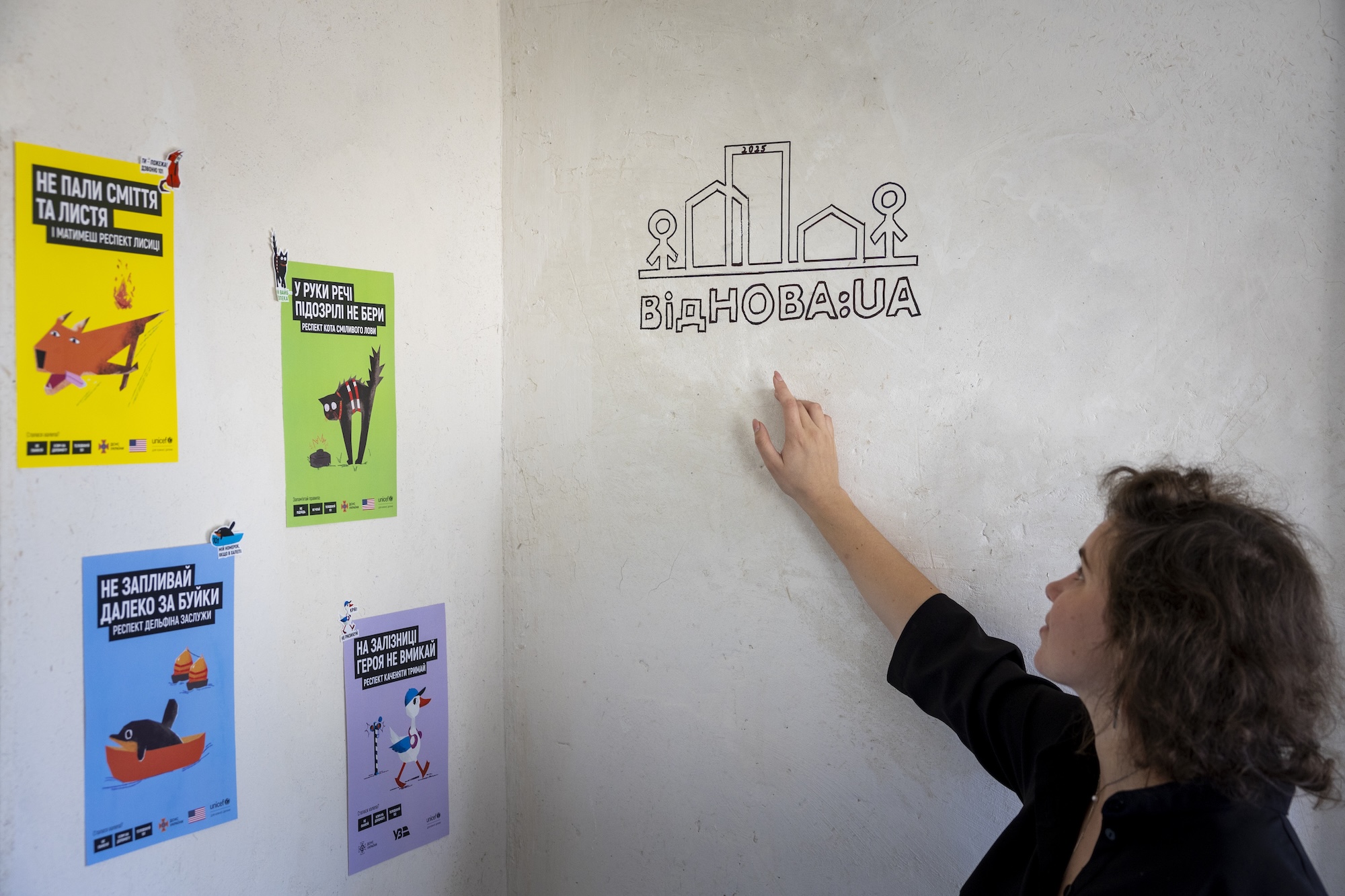
VidNOVA:UA is a national program run by the Ministry of Youth and Sports and the All-Ukrainian Youth Center since 2022, with support from the United Nations Development Programme in Ukraine and the governments of Denmark and Japan. The exchanges are structured so that anyone can participate: the work doesn’t require construction experience and only involves painting, priming and landscaping. Participants get to know each other, share stories about their regions’ traditions and work together. In total, more than 60 youth spaces and centers have been restored in Ukraine thanks to this initiative.
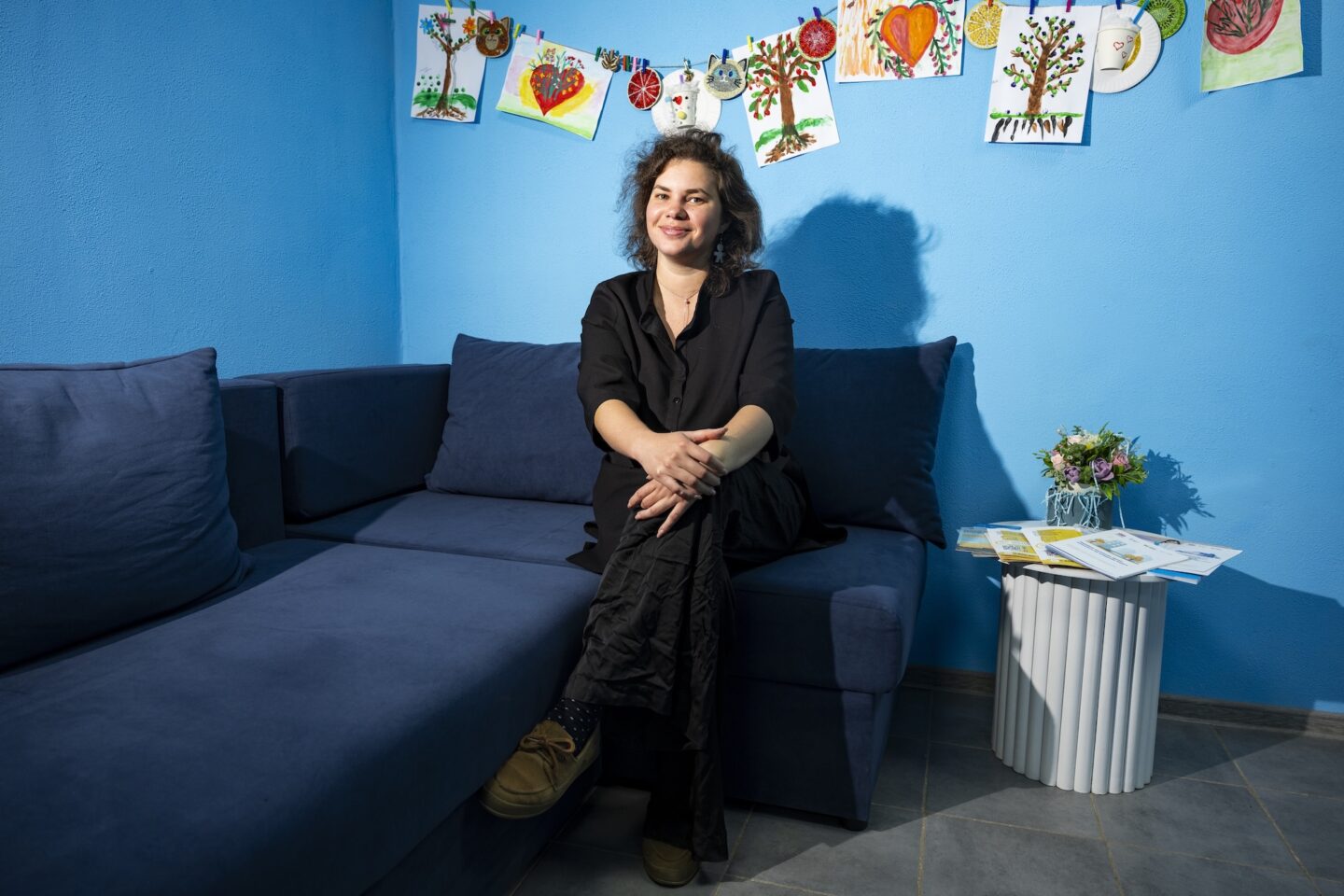
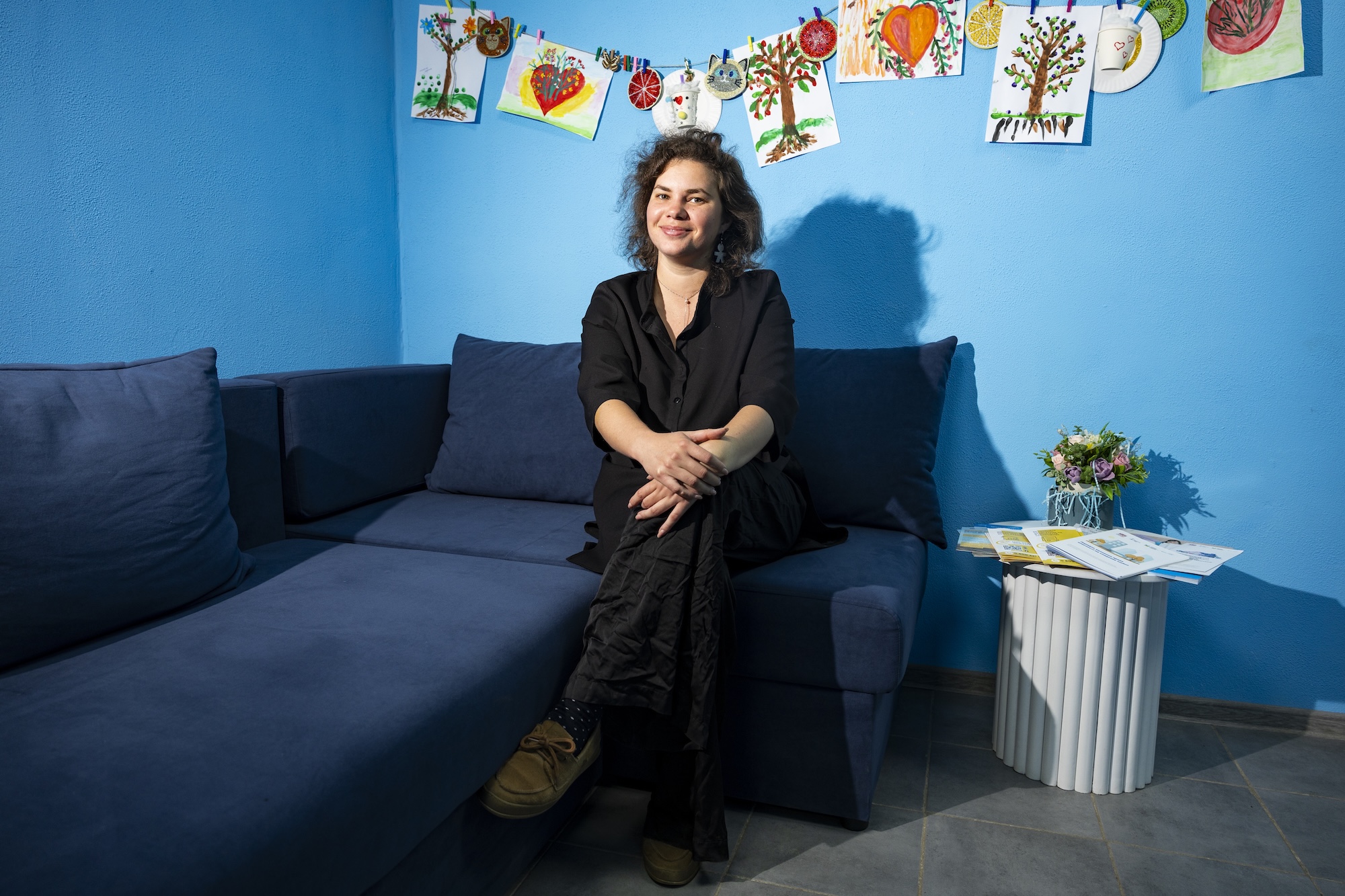
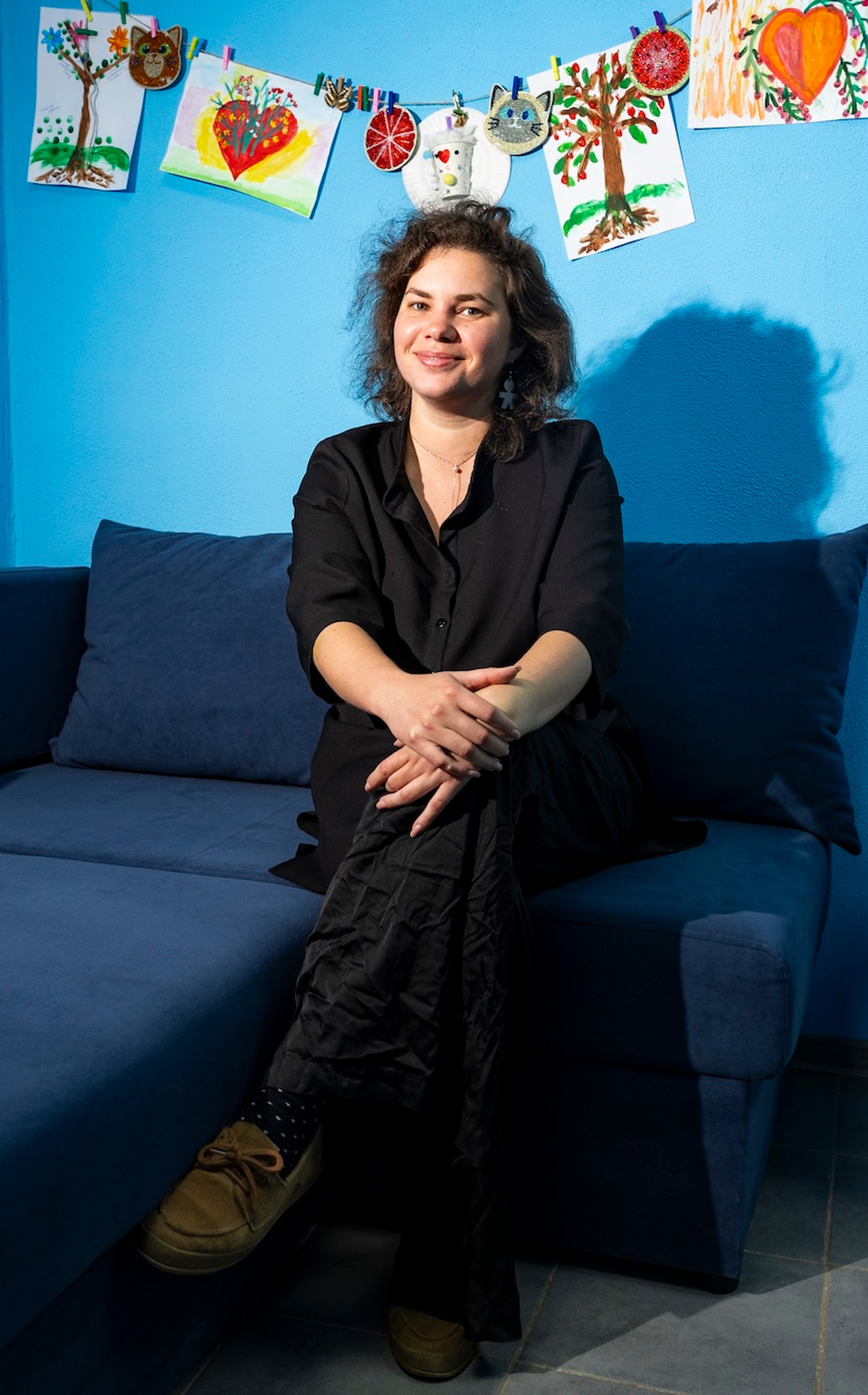
Essentially, it’s a toloka [a Ukrainian tradition of communal work — Ed.]. That’s how architect Sofiia Halat, the driving force behind this exchange, describes it. She leads the Ukrainian branch of Hope Home, a German-Ukrainian project focused on eco-friendly reconstruction. It was Hope Home that proposed holding the exchange in Novomykolaivka and building with natural materials. For Sofiia, eco-friendly construction is a return to her roots.
For centuries, people in Ukraine have built mud-brick houses using clay, straw, wood and lime. Similar techniques, Sofiia said, are used today even in skyscrapers.
Mykolaiv Oblast was not chosen by chance for this type of reconstruction. The villages in the community are surrounded by wheat fields, so the straw left over after harvest can serve as a key material for eco-friendly construction. For farmers, it’s waste; for Hope Home, it’s a raw material. There is also a living tradition of toloka here: neighbors come together to harvest crops, build houses and make repairs. Novomykolaivka itself was founded in the late 19th century by settlers from the Poltava and Kherson governorates, where both toloka and mud-brick housebuilding were commonplace.
For VidNOVA:UA, the exchange in Novomykolaivka was the third in Mykolaiv Oblast and the first in the program with an eco-friendly focus.
4.
There were almost no conventional building materials here. The participants mixed the plaster themselves, using lime, sand and hemp. They painted with clay-based paint that contained no polymers. They constructed a wooden bench with built-in greenery and a roof.
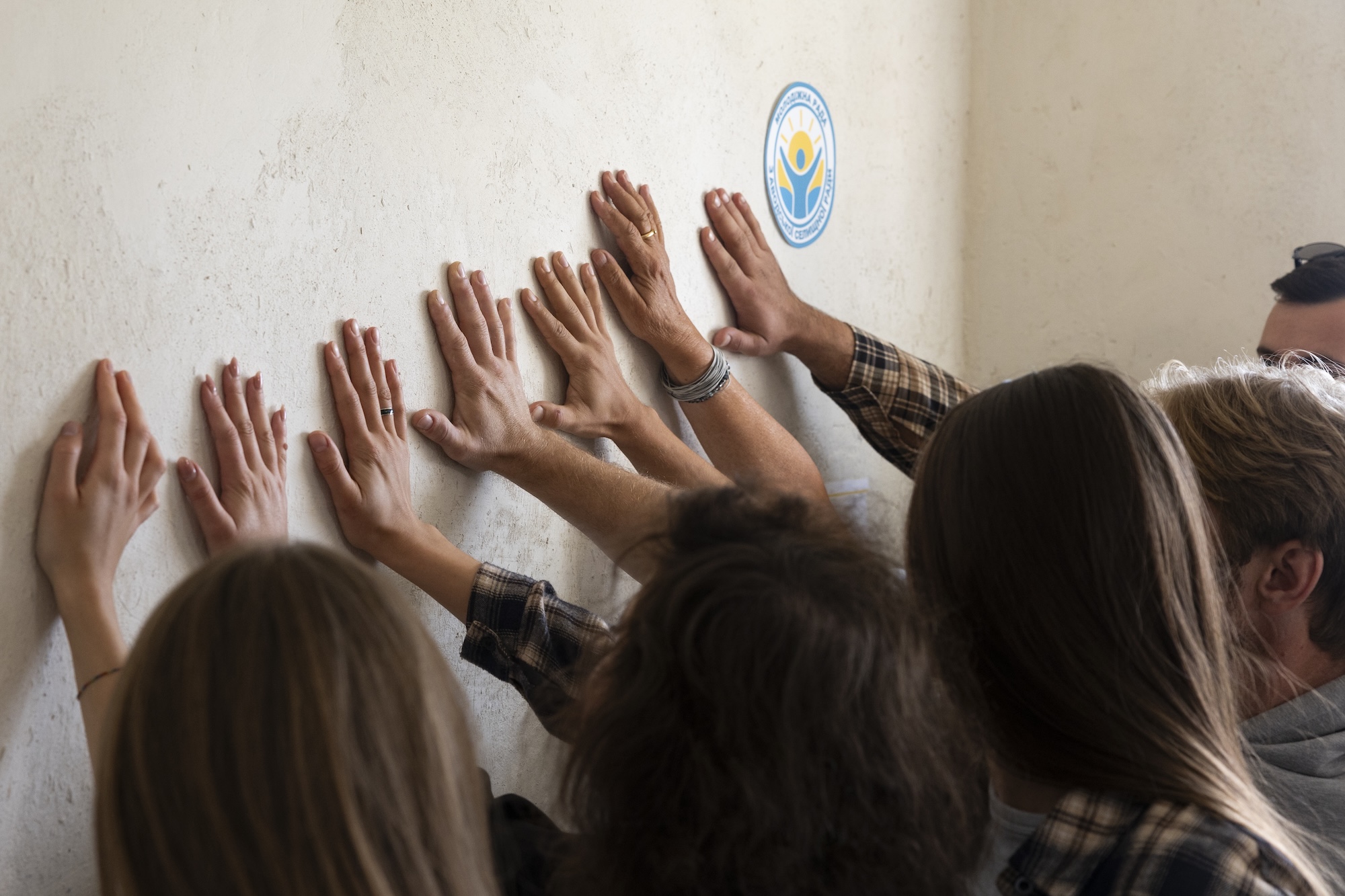
During one of the workshops, everyone searched for traditional patterns from their native region. Later, the pattern characteristic of Novomykolaivka was transferred onto plywood. The resulting panel now adorns the space and serves as a reminder of who created it.
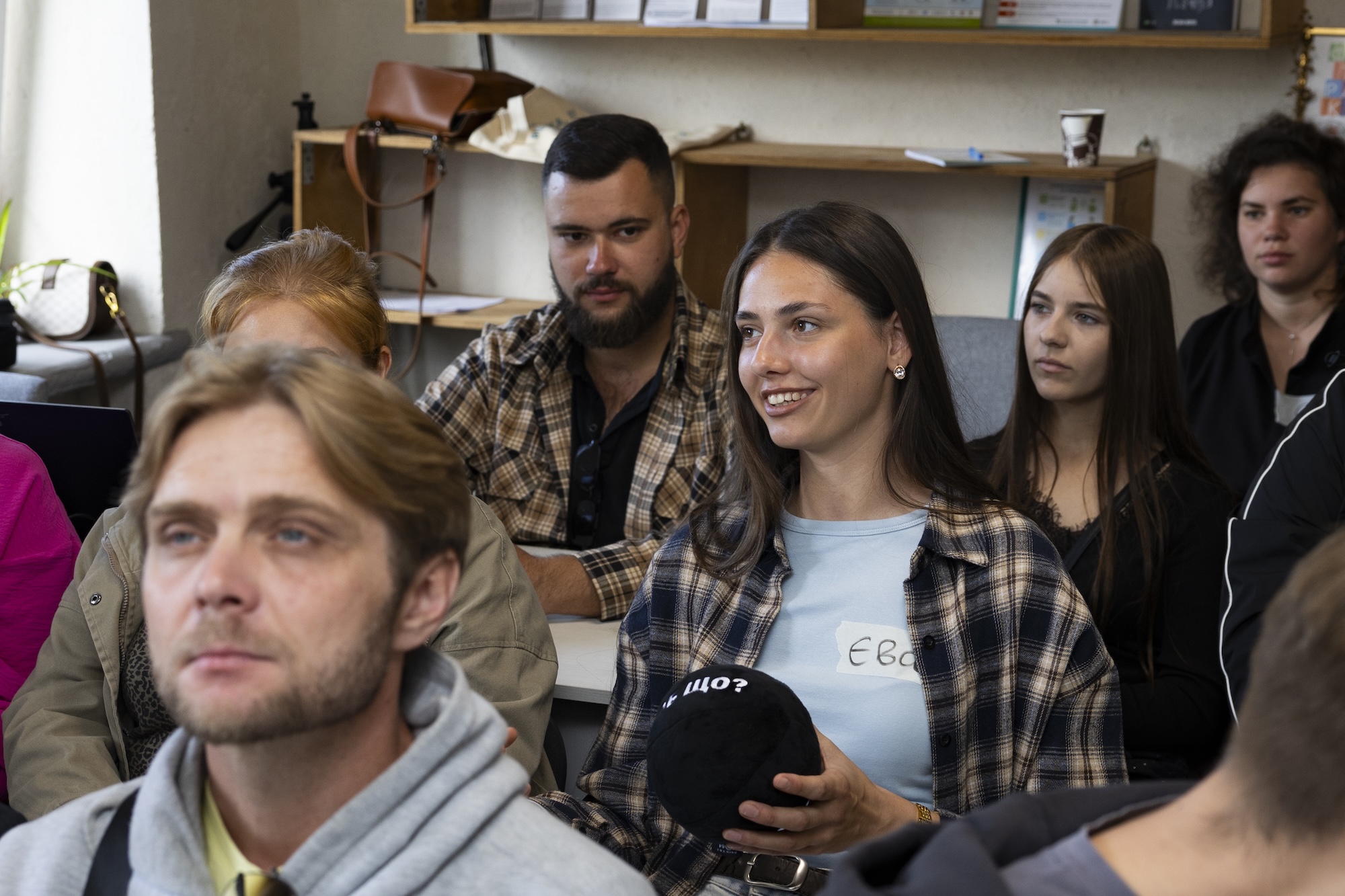
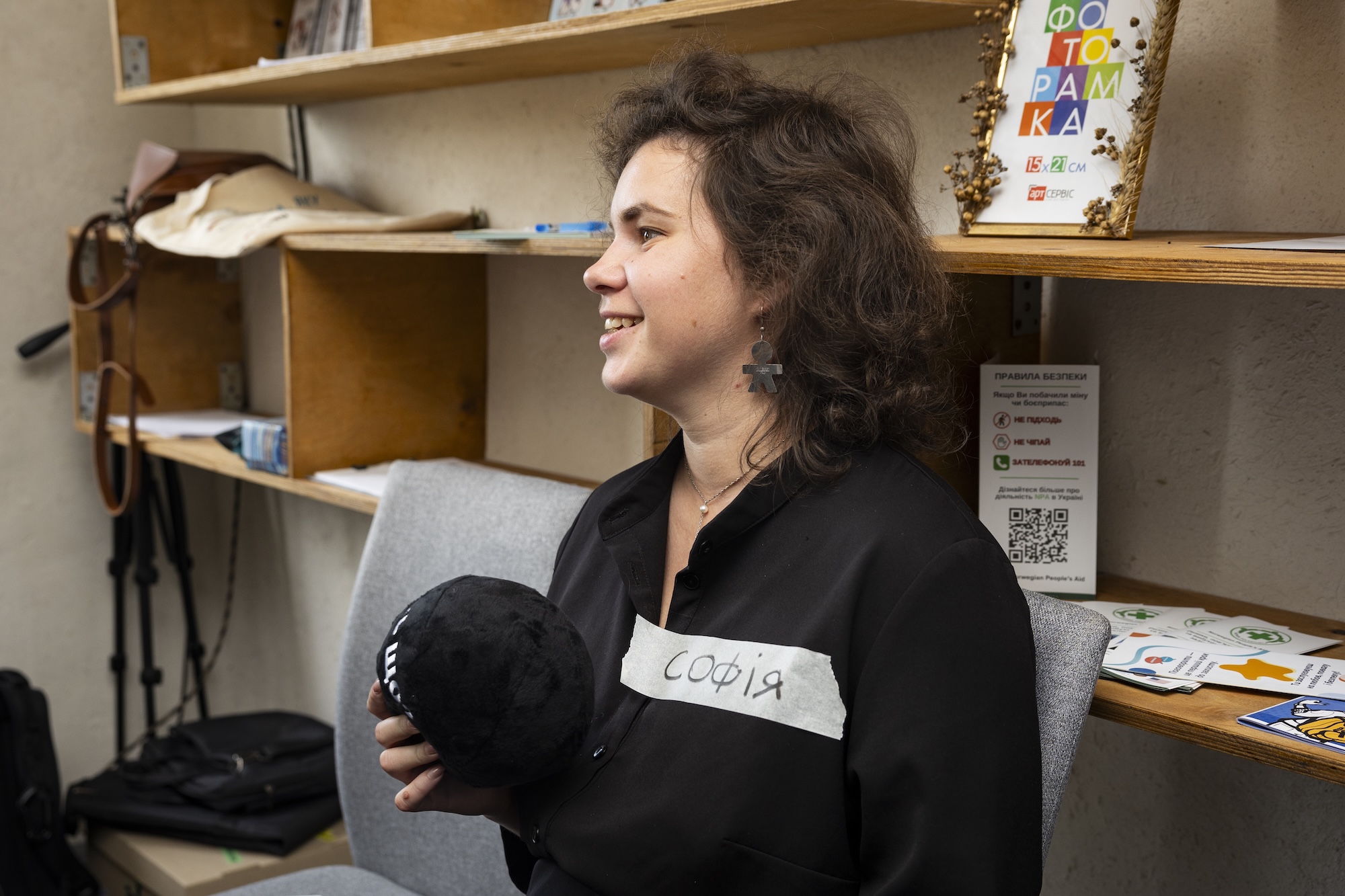
The participants’ group chat is still active, and some continue to get involved in events and projects. For Sofiia, this is perhaps the most important thing that this exchange offers: the opportunity to find people who share similar values.
5.
Sofiia Halat is originally from Mykolaiv, so this project marks a return to her southern roots. She dreamed of becoming an architect since childhood: her parents’ circle included some creative people — architects and engineers. Her love for all things natural was also instilled in her from an early age. Her father headed the environmental inspection agency for Mykolaiv Oblast, and her godfather managed a nature reserve. This family loved and cherished the environment.
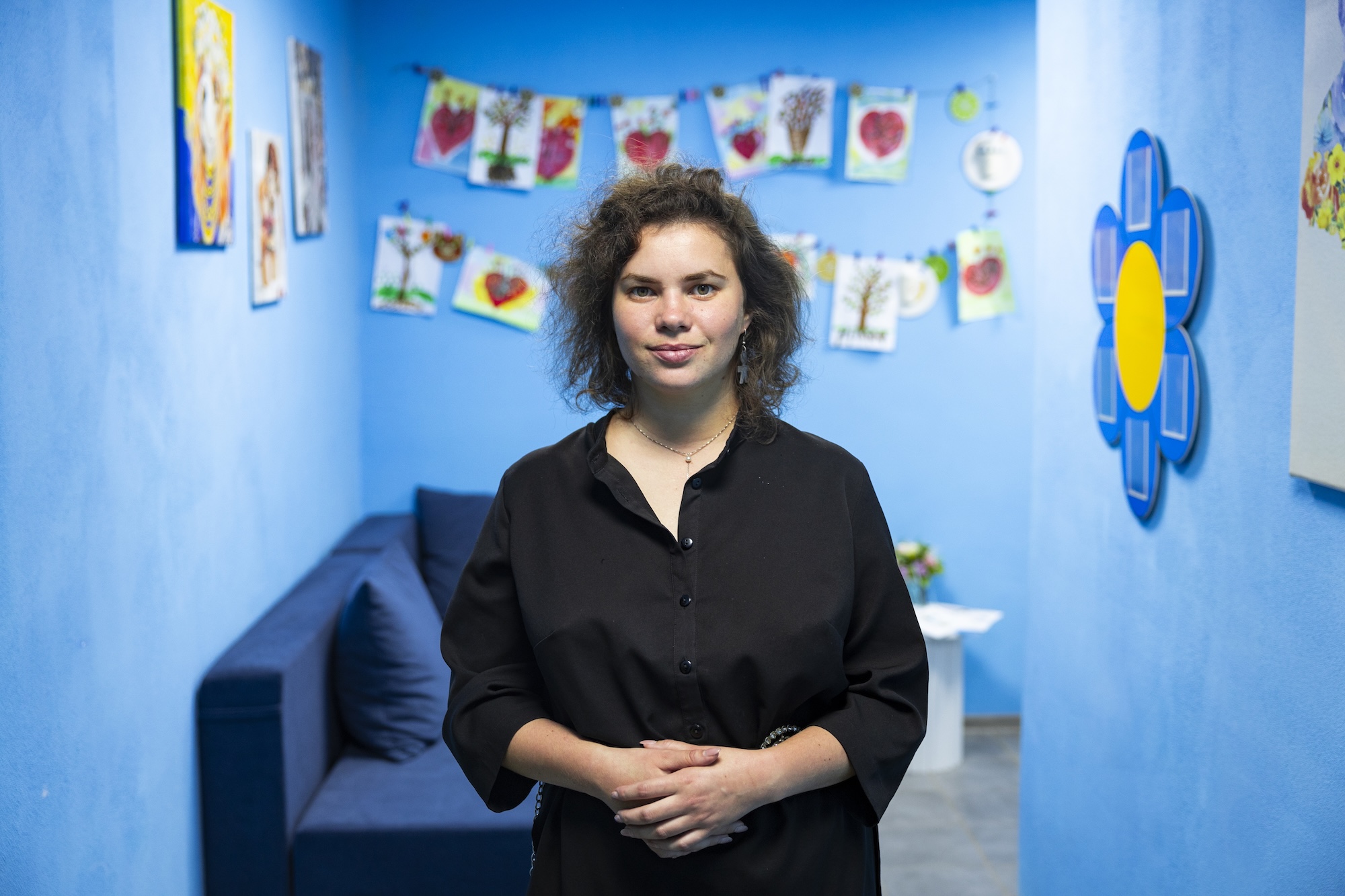
Sofiia taught materials science at the college of the Kyiv National University of Technologies and Design. She is now a PhD student at the Kyiv National University of Construction and Architecture and runs her own architectural studio in Kyiv. She is interested not so much in designing buildings as in finding eco-friendly materials and ways of restoration.
6.
The idea that started it all was conceived far from Mykolaiv Oblast. For 13 years, German curator, psychologist, and former Berlin Senator for Science and Culture Adrienne Goehler ran a traveling exhibition on art, science and natural materials.
It was decided not to let all that accumulated knowledge gather dust, but to take it where it truly mattered: to war zones or areas affected by natural disasters. That’s how Hope Home came to be, and Sofiia became a co-curator of Adrienne’s project. Since early 2024, they have been bringing together universities, artisans, scientists, farmers and local authorities around the project.
As a psychologist, Goehler sees another significance in this work. Working with your hands and seeing the results calms the nervous system and restores a sense of agency — the feeling that you can accomplish something. The project describes a home as a “third skin.” When people lose their homes, they lose not only their walls but also their sense of stability.
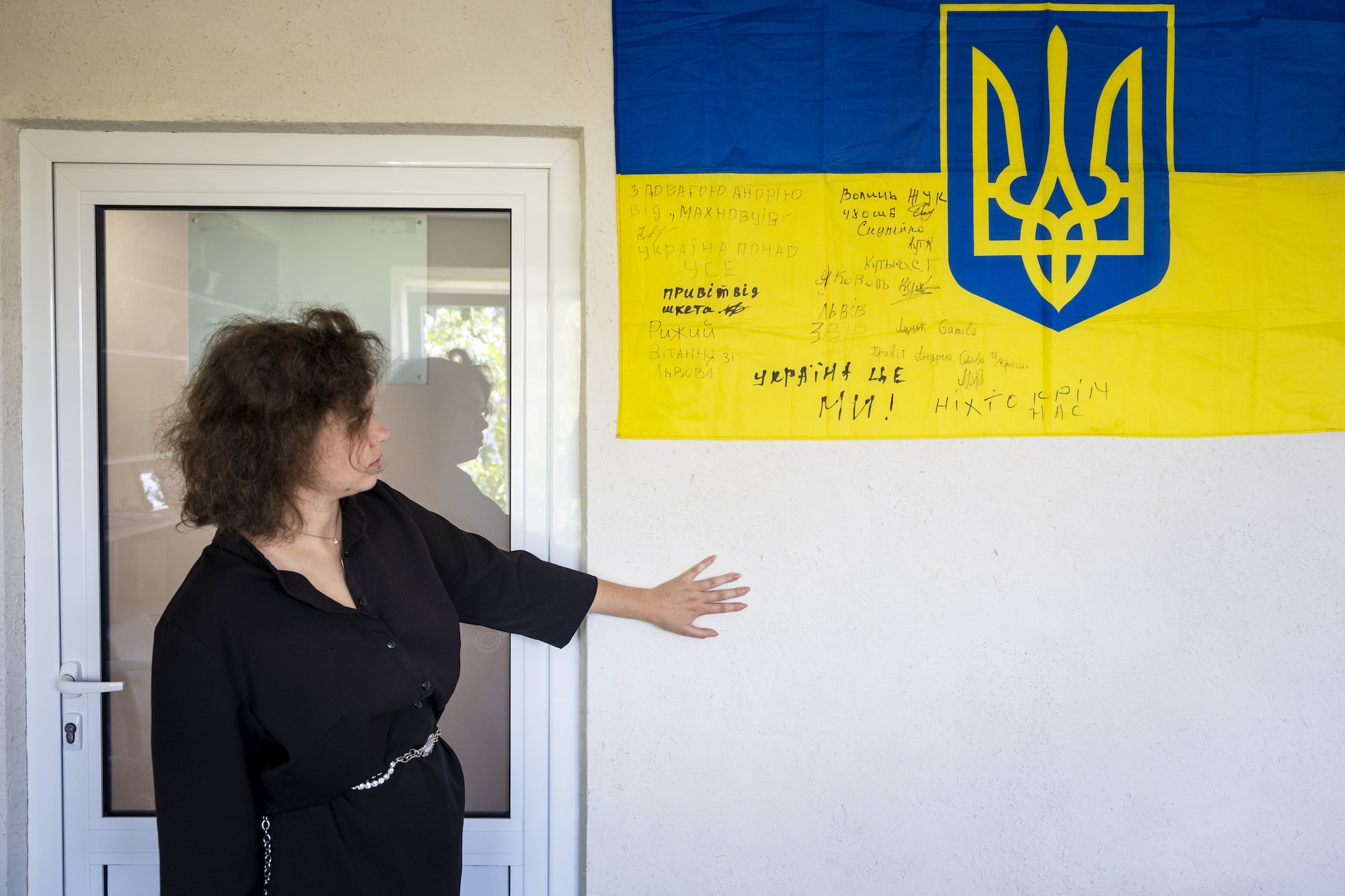
Novomykolaivka wasn’t the first stop on this map. Prior to the exchange, in early summer 2025, Hope Home held a workshop for local teenagers in the neighboring village of Pervomaiske (now Zavodske). Together, they cleared a 150-square-meter space for a youth club. Berlin-based writer Elke Schmitter wrote about the workshop for the German newspaper taz. In her report, the teens’ informal leader, Sviat, asked on the very first day: “Why not concrete?” On the fifth day, someone mentioned their grandmother’s house, made of clay and straw, which could also be repaired. By the seventh day, they were already considering whether to open a small eco-construction company in the village.
7.
In the spring of 2026, news of this project spread far beyond the village. To mark its 50th anniversary, the UNU-FLORES Institute of the United Nations University in Dresden held an international competition called “House of No Waste,” aimed at finding ideas for building without unnecessary emissions or waste.
The jury, composed of architects and engineers from six countries, awarded three grand prizes and four honorable mentions. On April 20, 2026, one of the honorable mentions went to the VidNOVA:UA youth exchange program organized by Sofiia Halat’s Hope Home. It was the only project from Ukraine to receive an award. The jury noted that this project got young people involved in restoring public spaces themselves, all the while teaching them about sustainable construction in areas that have recently emerged from occupation. The project was showcased at exhibitions in Lausanne and Dresden.
Sofiia insists that major changes in construction don’t necessarily have to come from the top. They are achieved through small steps — in a single community, with a single room. “Approaches to construction must be modernized, because the environment isn’t an abstraction — it’s what we breathe and what affects our lives,” the architect said.
8.
For VidNOVA:UA and UNDP, which supports the program, the exchange in Novomykolaivka was not only about an interesting experience and a new space, but also about the opportunity to show the world how Ukraine is tackling environmental restoration and construction.
“This helps us communicate to the world that even during the war, we are capable of implementing such projects because they are important to us,” Sofiia said.
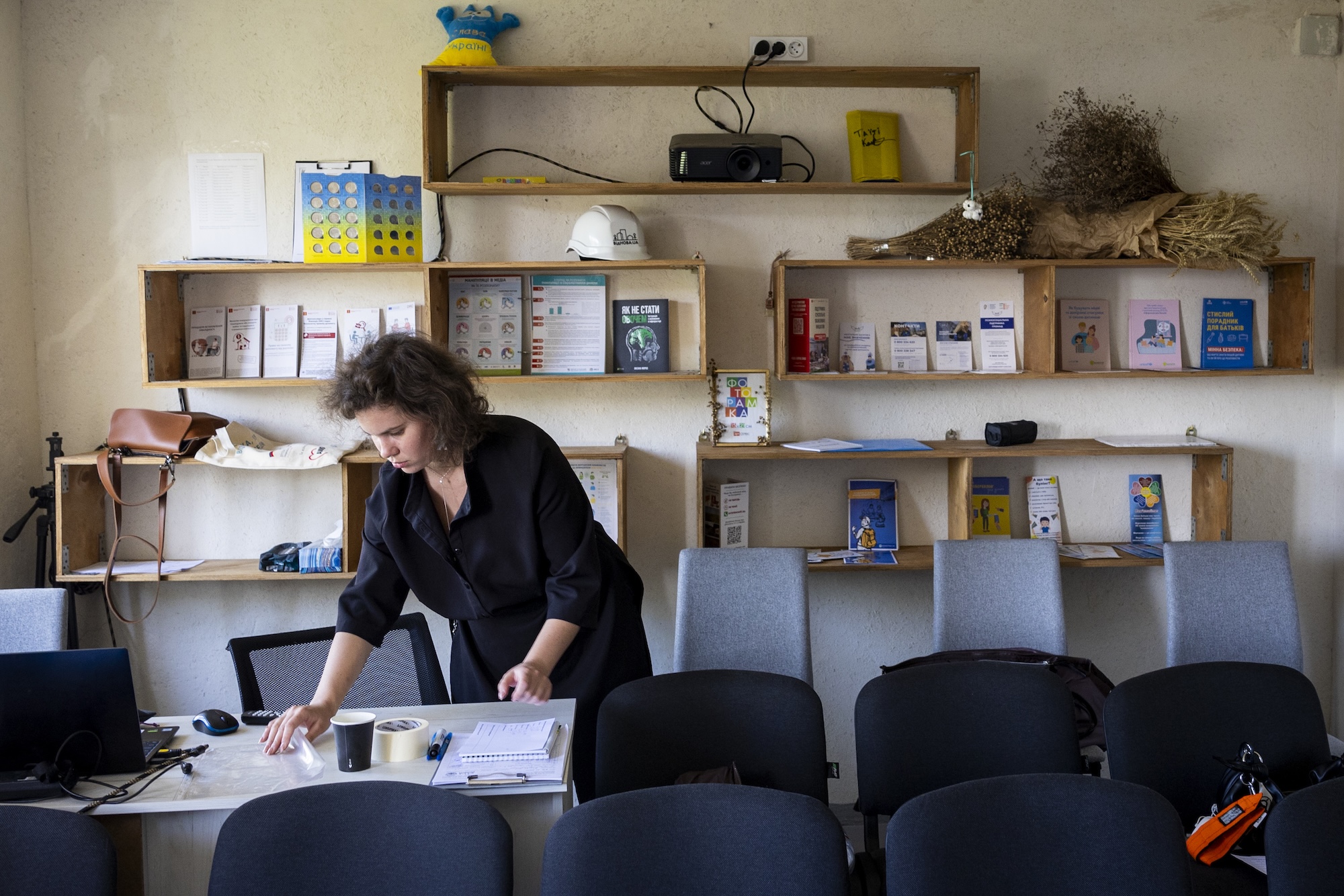
The space in Novomykolaivka now hosts events and workshops. It attracts not only locals or residents of neighboring Kostiantynivka — sometimes people from all eleven settlements in the community gather at the new center.
Meanwhile, the Youth Council, together with the Resilience Center, is setting up an outdoor area for psychological and emotional relief. Benches and tables there are made from wooden pallets. Locals already know how to do this and craft them themselves.
And Hope Home is planning their next step for the community: experimental fields of industrial hemp and its own production of building materials made from hemp, straw and clay, which will provide jobs for people.
Thanks to VidNOVA, a new space has emerged in Novomykolaivka that brings local residents together, inspires joint initiatives, and opens up new opportunities for community development. Dozens of young people have learned to build sustainably. And the world has witnessed the consequences of war and taken notice of Ukrainians who are seeking and implementing modern solutions for recovery.
In 2026, the program was active in four communities: Ivanivka in Chernihiv Oblast, Zmiiv in Kharkiv Oblast, Chernechchyna in Sumy Oblast and Shyrokiv in Zaporizhzhia Oblast.
It is being implemented by the Ministry of Youth and Sports of Ukraine in collaboration with the All-Ukrainian Youth Center, with assistance from UNDP in Ukraine and support from the governments of Switzerland and the Kingdom of the Netherlands, as well as within the framework of EU4Recovery, a flagship partnership between the European Union and UNDP in Ukraine, co-financed by the Government of Sweden.
Translated from Ukrainian by Liubov Kukharenko