Kurakhove. The Unburied City
This essay was made possible by the support of The Ukrainians Media community — hundreds of people who believe in independent, high-quality journalism. If you value our work, consider supporting us and help us tell more meaningful stories.
Writing about a city means seeking out the tangible and the concrete: streets, routes, house numbers, stretches of asphalt and the names of neighbors. Writing about a city means forgetting about pronouns, guarding yourself from generalizations and clichés. Against mediocrity.
Writing about a destroyed city means creating the illusion of presence. No matter how accurate the map turns out to be, no matter how honestly the places are described, the most I can do is bear witness to absence. Emphasize nothingness, the impossibility of getting it back.
In the end, what is the alternative? Not writing about your home means losing the last thing connecting you to it.
With every attempt to piece together the recorded conversations about Kurakhove into a coherent whole, I seem to drift further away from it. I’m scared of discovering and articulating something unflatteringly true about the town and my relationship with it. And I’m just as afraid of failing to discover or articulate anything at all.
Fear is just a thought, it can be replaced by another. So I sit down again to reread the interviews, peppered with memories. The current mayor, a history teacher, an athlete, an artist, a journalism student, an accountant and an architect each shared their version of Kurakhove with me. The latter two are my mom and my older sister. This selection is, of course, subjective and far from exhaustive.
Under favorable circumstances, about 25,000 people lived in Kurakhove; under unfavorable ones, a few thousand. They were the ones who shaped the cityscape. But in neither scenario did it ever truly belong to them.
Writing about the Kurakhove I knew means recalling the pronouns.
I keep telling myself: the only thing left for me to do is to pose the questions. Who are we? Who were we? Who weren’t we? Who didn’t we become? What did we do, and what did we turn a blind eye to? What did the city mean to us?
And since when could you make out the war among the passersby and buildings? And hear it being called exactly that?
The most problematic of all pronouns is “I.” Writing about Kurakhove also means recalling myself and those first 16 years of my life, which now also drift further and further away.
For now, all my thoughts about Kurakhove boil down to one assumption: the city could become a private catastrophe slowly engulfing everyone who once identified with it. The landscape on which an artificial regional identity was imposed is not to blame for this. The contact line that gnawed at our very side was a consequence, not a cause.
Is it appropriate to thank a catastrophe, whatever form it may take, for freeing us from illusions and removing the scales from our eyes?
The power plant. An alternative route
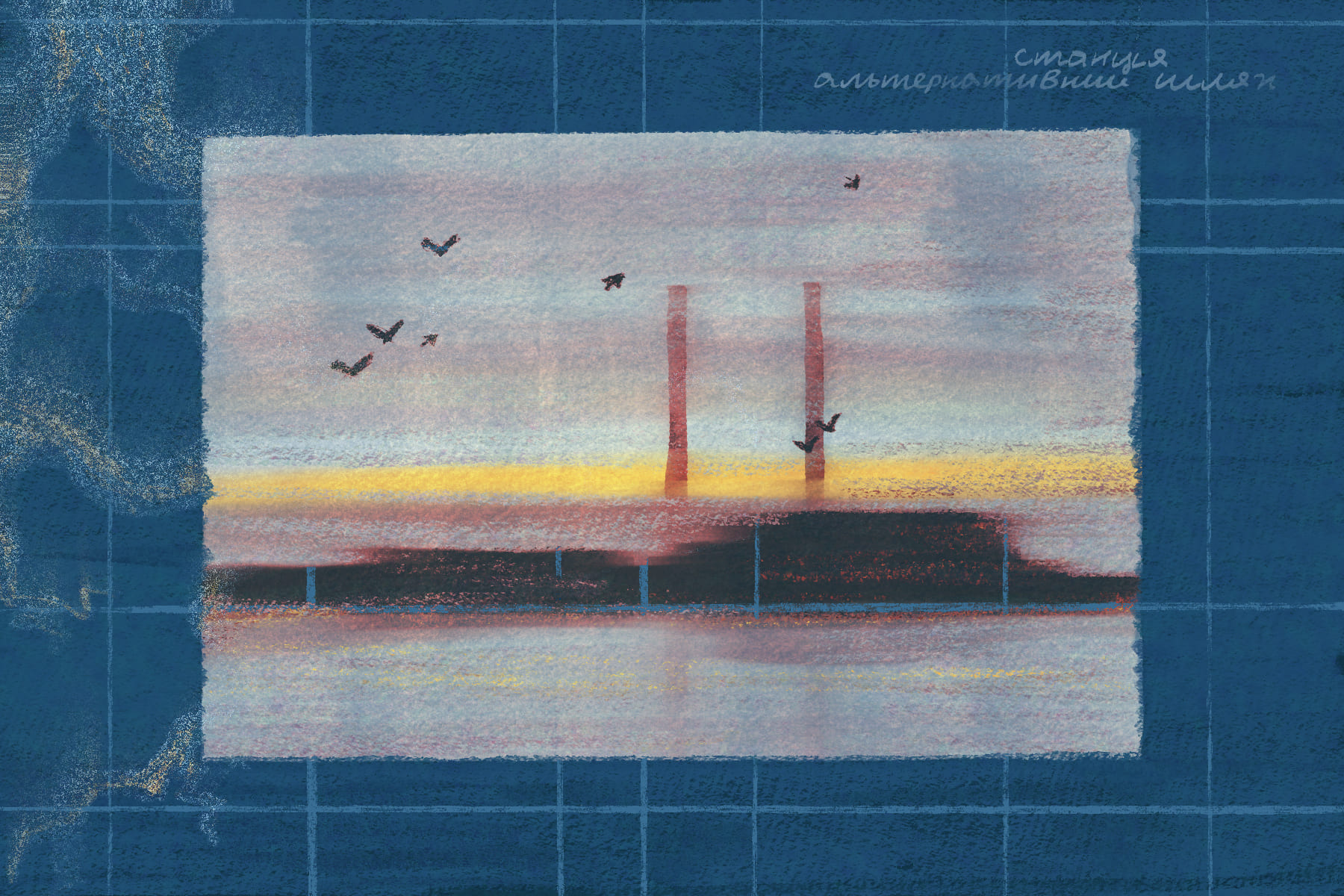
In short: “An ordinary post-Soviet town of 20,000, marred by gnarly Khrushchev-era apartment blocks. It sprang up less than a century ago beside a thermal power plant and lived in its shadow. Even from the beach on the artificial reservoir, the view was dominated by towering smokestacks.”
That’s what you remember about Kurakhove if you’re Paweł Reszka. This Polish journalist traveled to eastern Ukraine in 2014 to witness the unfolding events at the time and write a report on them. I couldn’t find a more representative description of Kurakhove in his book “A Table with a View of the Kremlin.”
Paweł, like any other journalist traveling east, couldn’t avoid Kurakhove: it was the first sizable town near the front line. Highway 15 led travelers from Zaporizhzhia to Donetsk, passing through Kurakhove and dividing it in half. The highway and its branches became a frequent route for anyone who wanted to get to the opposite side: from here — to “there,” and from there — to “here.”
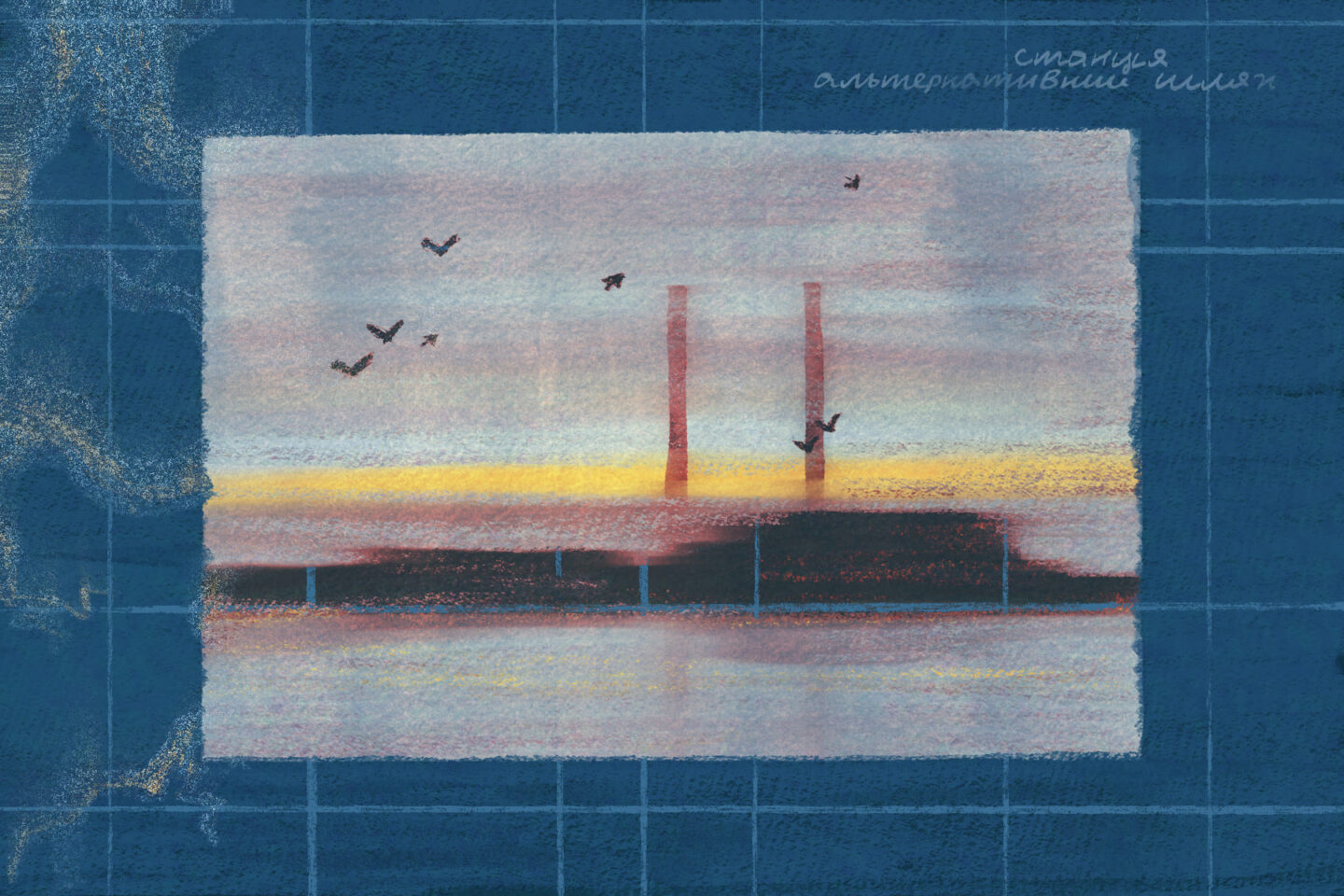
As you approach the city from any direction, you see two enormous chimneys looming closer, black, gray and white clouds of smoke billowing from them. They say the city began with these chimneys, so it’s only fitting that they be the first to welcome visitors. They say that without the power plant, there would be no city. Over 75 years, the plant has generated 317 million megawatt-hours of electricity — enough to power all of Ukraine for two and a half years.
I ask: Do those two vertical lines on the horizon, stretching toward the sky, truly define the local identity?
“The heart of the city,” replies Roman Oleksiyovych, “is the power plant.”
He worked at the power plant for 15 years and calls his family a “dynasty of power engineers.” In 2010, he was appointed deputy mayor, saying that “fate willed it.” In 2015, he ran for mayor and won, and in 2020, he won a second term. In my conversations with my parents and friends, Roman Padun rarely came up, but when he did, it was with an air of significance: the mayor, a man of influence — Roman Oleksiyovych.
“Kurakhove was founded in 1936,” he continues. “At first, it was just a settlement for the workers building the Kurakhove TPP, and only later did it become a town of power plant workers. People came from the nearest villages and mining towns, and later, after World War II, attracted specialists from various regions of Ukraine, particularly many from the west. My crew had people who came here purely for work but ended up staying. Their children are already considered locals to Kurakhove.”
This view is shared by Vladyslav Hida, a 30-year-old master of sports in kickboxing who comes across as the town’s chief ambassador. His father and grandfather worked at the power plant, and it seemed to the young man that “we owe everything to the plant. Every other relative worked there. I think people came here for stability — it was a workers’ town.”
Now meet Tetiana Filipenko, a teacher of history and law. Her mother, originally from the Kirovohrad Oblast, moved to Kurakhove when she got married. During school breaks, Tetiana would go and stay with her grandmother in Central Ukraine. She made a bunch of friends there and called it “real life compared to Donbas” — whatever that meant. Eventually, she graduated from the Oleksandriia Pedagogy College. The landscape of Donetsk Oblast came back into her life when it was time to apply to university: she chose Donetsk State. The landscape came back and hasn’t left since. Listen:
“Nobody in my family worked at the plant,” she says. “For me, this whole story about the plant being the cornerstone of the city’s existence wasn’t entirely true. Although I do have a friend whose entire family worked there — literally everyone: her grandmother, grandfather, mom and dad, aunt and uncle… But I wouldn’t say that lots of people actually worked at the plant. 25,000 people lived in the city, and about 2,000 of them worked at the power plant. But the plant generated a lot of environmental payouts. That’s why the city became so well-maintained in 2020–2021. The plant polluted the environment heavily and paid an environmental tax for it. It made up a large portion of the city council’s revenue, which couldn’t be used for anything unrelated to the environment. But you can’t spend much on planting trees, can you? So they came up with a “formula” that allowed them to use those funds to insulate buildings, replace roofs and carry out urban improvements. However, because of our industry, we were kept in the chokehold of the Party of Regions for a very long time — and what they perpetuated was a purely pro-Russian context.
In other words, the city was pro-Russian not because of its people, but because industry generated money. And where there was money, the Party of Regions and Russia followed.”
I don’t even have time to ask Tetiana any questions. Her years of teaching have taught her to stay one step ahead, anticipate arguments (excuses) and explain everything in simple terms:
“What I enjoy most is talking about the Cossack era. Our region used to be the Kalmius Palanka. There were eight palankas: the Sich existed separately, and the rest were divided into palankas, much like today’s oblasts. For example, the Buh-Hard Palanka, the Kodak Palanka and the Protovcha Palanka. Ours was called the Kalmius Palanka. Kalmius,” she repeats. “It’s important for me to explain this to the children. It wasn’t until the Russo-Turkish War ended in 1774 that Russia took the lands between the Dnipro and the Southern Buh. A little later, in 1783, they annexed Crimea. Only after that did the idea of Novorossiya start gaining traction. It’s worth remembering that this used to be Cossack territory. The Cossacks founded many settlements here: Andriivka, Staromykhailivka, Selydove, Kurakhivka and others. The Kalmius River originates on the southern slopes of the Donets Ridge and flows into the Sea of Azov near Mariupol. For a long time, the Cossacks treated the Black Sea as their own inland sea. They launched raids on Varna, Izmail, Kiliya, Akkerman, Ochakiv and Perekop, and even attacked Istanbul. And when the Turks built fortresses to block their passage, the Cossacks devised a different route. They sailed up the Dnipro to the Samara River, then proceeded to the Vovcha River; they hauled their boats overland to the Kalmius River, sailed down it into the Sea of Azov, and continued to attack the Turks with boldness. That was their alternative route, and it ran right through our lands — specifically through the area where our city stood.”
The reservoir. A side effect
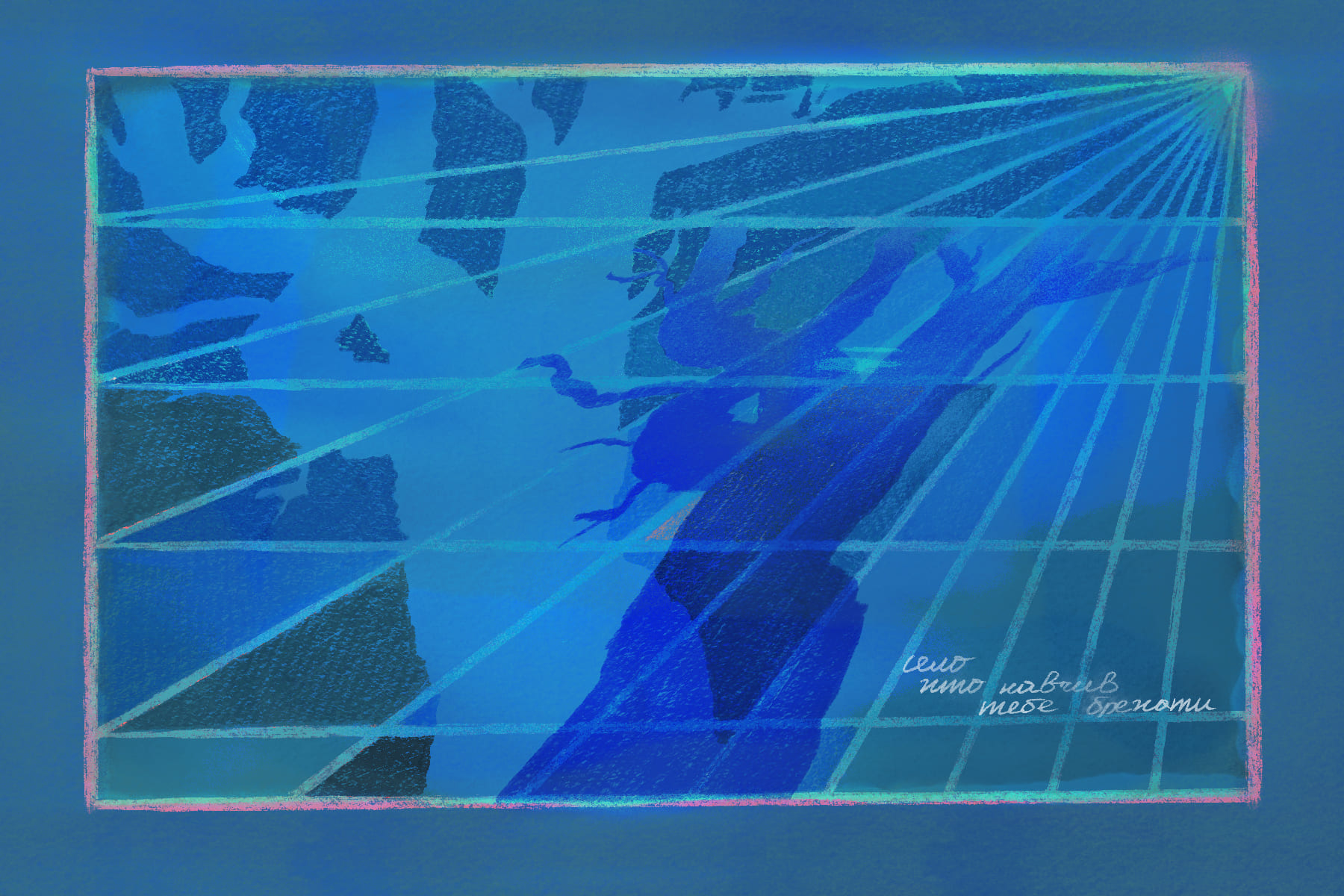
Hanging above my desk is a contour map of the city, which I’ve learned to draw with my eyes closed. I gaze at it every time I sit down to write. It consists of two parts: the north, on the water, and the south, on dry land. My hand automatically traces the outline of the reservoir, which so clearly mirrors the rest of the city.
Are there new things to be found in the curves, haphazardly scrawled across a 20×15-centimeter sheet of paper? No, let’s try it another way. Is it possible to make out at least something in the lines, deliberately placed across those larger 24 km²?
There’s another thread that stretches across the entire country: between Ivano-Frankivsk, where I’ve lived for the past four years, and Kurakhove. A thousand kilometers separate them. That very same thousand kilometers also connects them — at least when I pick up a sheet of paper once again.
There are times when I decide that homemade contour maps don’t provide any answers, no matter what questions I ask or how hard I press down on the paper as I draw a line. So my next attempt took place on a March evening at the opening of an exhibition at the Promprylad Art Center, where I met the artist Anastasiia Leliuk. The exhibition featured works by several artists, but only Nastia came to Ivano-Frankivsk to present hers. The curatorial text on the wall next to her series of paintings, “When I Look at Mountains, I See Slag Heaps,” states that she is from Luhansk.
“But my dad and his parents lived in Roiia, so I spent part of my childhood there, and then every summer I’d go visit my family there for the holidays,” says Nastia. And I feel a reporter’s stroke of luck I’d never experienced before.
Roiia is a freight railway station east of Kurakhove that connects the mines. I have to picture it based on Nastia’s description because, as ridiculous as it sounds, I’ve never seen it: “It was a brick building with a pointed roof. For some reason, I liked it: so austere, in the style of the German colonists.” And in my memory, no one ever associated the Roiia district with the railroad. After 2014, the station stopped operating, so there were no reasons to go there.
But I don’t have to imagine the reservoir: being near the water was something we all shared. Listen:
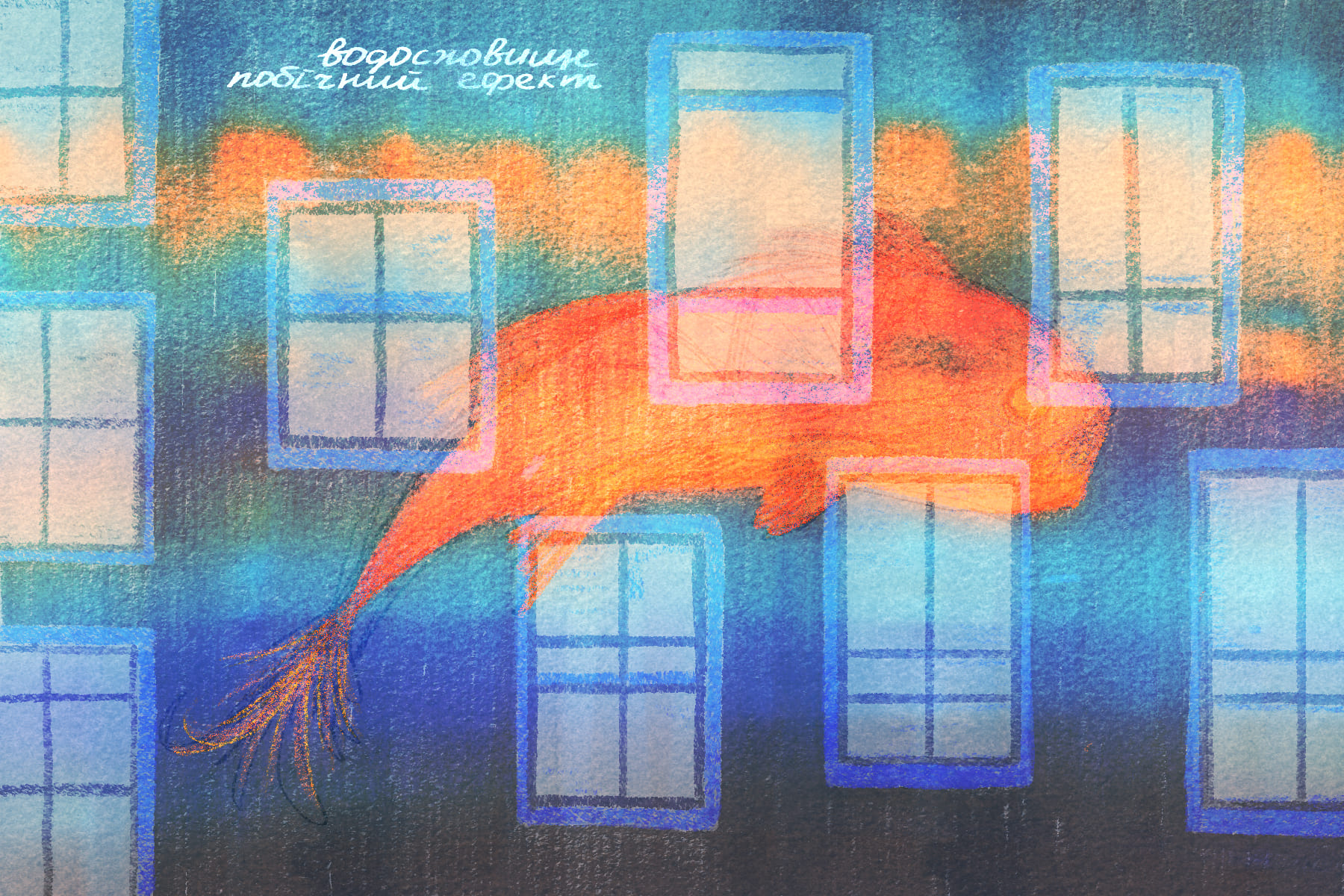
“It seemed normal to me to have a beach nearby, and I saw the reservoir as part of nature. When I was a child, I certainly didn’t think that all of this was just a side effect of industrial infrastructure. The most important thing was leisure: everyone went swimming and fishing. I would always start by describing the reservoir to others — I’ve explored it from every angle. It’s self-contained, captivating… It has all kinds of terrain variations: rocks, sandy slopes, cliffs, bends in the landscape, places where everything is covered in grass and seems to shimmer. There are reeds. And all of this means freedom. And then, of course, there are the slag heaps — a familiar part of the landscape. I had to explain them to people from other regions, but for me, they’re a source of fascination — a kind of post-apocalyptic landscape. After the full-scale war began, I started to see them differently: the landscape reveals itself in a new way when you can’t get close to it. I don’t think I took full advantage of it when I had the chance. I guess it will always feel like I didn’t do enough.”
The village. Who taught you to lie?
The mulberry tree grew right by the road. The yard next to it looked neglected. All the local children’s attention was focused on the tree. It was five meters tall; in June and July, sweet-and-sour berries rained down from it, and you could climb it all year round, as long as your winter jacket didn’t get in the way.
The road where the mulberry tree grew didn’t just seem neglected — it actually was. I can’t say exactly how many potholes and cracks there were, but my adult body still remembers the sequence of movements my dad made behind the wheel as we drove through the village. My mom’s parents’ house, number nine, with a gazebo and a vegetable garden, stood on Yunosti Street. It’s the third right turn if you’re entering the village of Dachne from the east — that is, from Kurakhove — via that same Highway 15. The house itself was on the right, and the mulberry tree, if you walked a little further, was on the left.
It was the first tree I managed to climb, earning the respect of the kids who grew up hardened by the country air. And the only one I remember, except perhaps for the identical poplars planted all over town.
When I talk about a village in the middle of the steppe, I think of the mulberry tree. Not because it seemed strange or out of place in that landscape, but because I can’t forget my berry-stained hands, lips, and T-shirts. When I talk about the village in the middle of the steppe, I think: there’s nothing more genuine than this landscape, where you can’t hide, even when climbing a tree.
Dachne, where my mom grew up, and Kurakhove, where I grew up, are made up of identical streets, parallel to one another and perpendicular to the main road. This incredibly simple layout leaves no chance of getting lost.
I think about those who grew up in such a space and yet learned to lie: how did they manage that? Or perhaps it was precisely this deceptive simplicity that taught them to seek out alternatives and uncertain paths?
Be that as it may, the village right next door both attracted and repelled me, just like the power plant. “Get out of here,” it urged, “you can only be here temporarily; otherwise, you’ll stay here forever.” And at the same time: “Come back, because even if you can’t hide in a tree, at least you’ll be able to relax.”
It would be natural to associate the village with the warmth of my grandmother’s house. But my childhood imagination first and foremost conjures up the long-stretching Yunosti Street and my older sister, who taught me how to climb the mulberry tree. Yulia lived in the village longer than I did and spent the last four years of her school life there. Her memories, like those streets, are clearly defined and run parallel to mine. Listen:
“What is hard to explain to people from other cities? If I were to tell it straight, I’d have to talk about 2014, when the war started, when tanks were rumbling down the road, and I’d go out into the yard with my grandma to watch them. I was 13 years old; I remember it all very well. When we drove to the village and back to the city, my dad would get really angry because the road was in such bad shape. And it wasn’t like that because the city was shitty, but because the tanks that were driving down that road toward Donetsk had destroyed everything.
I remember when the checkpoint appeared. And those despicable DPR goons who came to stock up at our stores because there was nothing good in theirs. Yet they claimed that Ukrainians were scum, that we’d shot at their fences and ruined their lives.
There were other ‘perks’ of life in a frontline city. And a desire for all of this to pass us by. People would leave, then come back. But at least they stopped teaching Russian in school. And I changed, too: I ran my social media pages in Ukrainian and tried to listen to Ukrainian music. That’s also when I started to hate Russia and everything associated with it with a passion. I knew we were nothing like them, even though there was still a lot of Russian content out there. Today, it’s much easier to ignore all that crap.”
Today, Yulia says she doesn’t know where her home is, even though that’s not exactly how I phrased the question. That “where” is too spatial; its dimension seems too physical. I could have asked: Where are you — between work and daily life, phone calls and intrusive thoughts? But she wouldn’t have heard me. She recalls:
“When I enrolled in the Kramatorsk Academy and moved there, every trip home was a joy. I looked forward to those trips: going to the countryside, breathing in the fresh air. Even though it was polluted as hell, it still felt fresh. This is where I went on my first dates and met my first love. The bushes where I’d sit and cry over that love. Or sometimes, we’d get together with friends and trek three kilometers on foot through the scorching heat to the locks just to swim in a tiny river that seemed barely a millimeter deep and stank horribly of leeches. You swim in that stinking water and end up stinking yourself, then come home covered in algae. And later, some guy named Dimka would show up and take you for a ride on his motorcycle. In the evening, we would go to the abandoned building they called the “house of culture,” where the whole village used to hang out. It was a blast!”
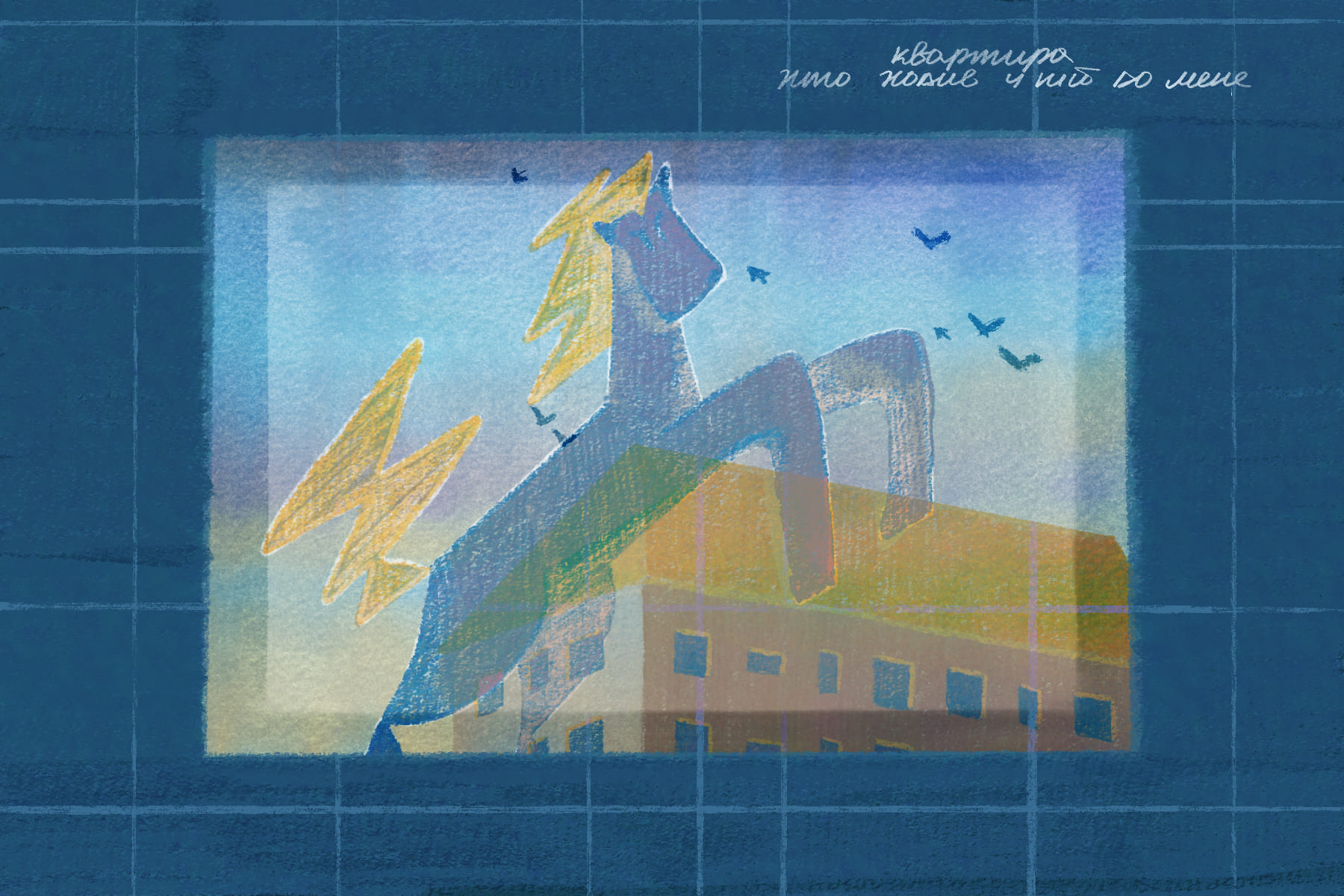
The apartment. Who walked its rooms before me?
A note, dramatically plucked from my 2025 diary: “These pauses between entries are incredibly annoying — they drag on just as long as a train traveling from west to east, a train I am not on.”
Even longer are the pauses between conversations with school friends, if we manage to reconnect at all. I haven’t seen Ania in four years, but neither distance nor time has taken away what we share. She’s also studying journalism, and also sometimes uses “incorrect” word endings at the end of verbs in the indefinite form — a regional feature — and also notices that she’s forgetting streets and buildings:
“Sometimes I look at photos from Kurakhove and think: My God, where was this?”
I, too, sometimes look at photos. But I think about something else: this city is forgetting us — those of us who grew up here and left — because we didn’t even try to change it. Ania says:
“Throughout my teenage years, I wanted to leave the town; I wanted to escape everything that was happening there. I wanted to get away from people who didn’t really understand me. I felt lonely. Isn’t it strange to want to leave, and then whine that you can’t go back?”
Ania spent her childhood split between two cities: Kurakhove and Donetsk. In general, her family moved around a lot because of her parents’ jobs: they lived in Mariupol, Zaporizhzhia, Kamianske and even Burshtyn near Ivano-Frankivsk. But Kurakhove remained the core — the place she always ended up returning to.
Ania doesn’t remember moving from Donetsk. The only thing her childhood mind has preserved for us is a school assembly where they talked about the dangers of landmines and handed out brochures with pictures that said “don’t pick this up” and “don’t go into the fields.” “But, to be honest, I didn’t understand back then why all this was necessary.” It seemed like that was just how it was everywhere. Or maybe as a child, you simply don’t ask those kinds of questions. Or there’s no adult around who would provide answers without waiting for questions.
“I can’t talk to my mom and grandma about the occupation of Kurakhove. I’ve tried, but my mom says, ‘Let’s not go there.’ And I don’t understand what that means. I hope she misses it, too. She once let slip that she doesn’t know why she’s living in a different oblast. Seriously? Do I have to explain it to you? Look: the Russians came, destroyed our city, occupied it; you left, and you don’t have a home. I’m keeping her up to date on the news, but she doesn’t have a stance; she sees herself as just a small cog in the machine. She arranged for my younger brother to go to Germany. Her parenting style is this: she doesn’t tell him anything and just takes him places. He’s constantly moving from place to place, but he doesn’t understand cause-and-effect connections. When I tell her that it’s important to explain these things, to help him understand who he is, why he’s there, and how this all happened, she doesn’t deem it necessary. I grew up and figured it all out, but it took me a lot of time and resources. And when my brother grows up, it’s not a given that he’ll be able to draw his own conclusions.”
Ania doesn’t hesitate about which language to speak. At least not now, at least not with me. But it wasn’t always that way. At the end of 8th grade, in 2019, the school began transitioning to Ukrainian-language instruction. The changes didn’t affect the parallel “A” class: the students there had been studying in Ukrainian from the start because that’s what they’d chosen.
“But I was afraid I wouldn’t understand. Today, I’m ashamed of that. I remember that during one of my Ukrainian language or literature classes, I asked the teacher to let me answer in Russian because it was hard for me to speak Ukrainian. And she let me. What else could she have done? Although I did have a few bouts of ‘patriotic fervor’: I’d come home and say, ‘That’s it, from now on I’m speaking Ukrainian.’ That lasted 40 minutes at most. It all fizzled out because there was nothing but Russian all around me.”
But where did those bouts come from? Why did you feel different, despite your surroundings?
“I don’t know. Maybe it’s because nothing was actually forced on me. It wasn’t like there was anything presented as definitely good or definitely bad. I think I was just lucky. When I tried to find out more about my family, no one would tell me anything. No one knew. Asking about it wasn’t encouraged. But I’m so curious: who walked the rooms of my apartment before me?”
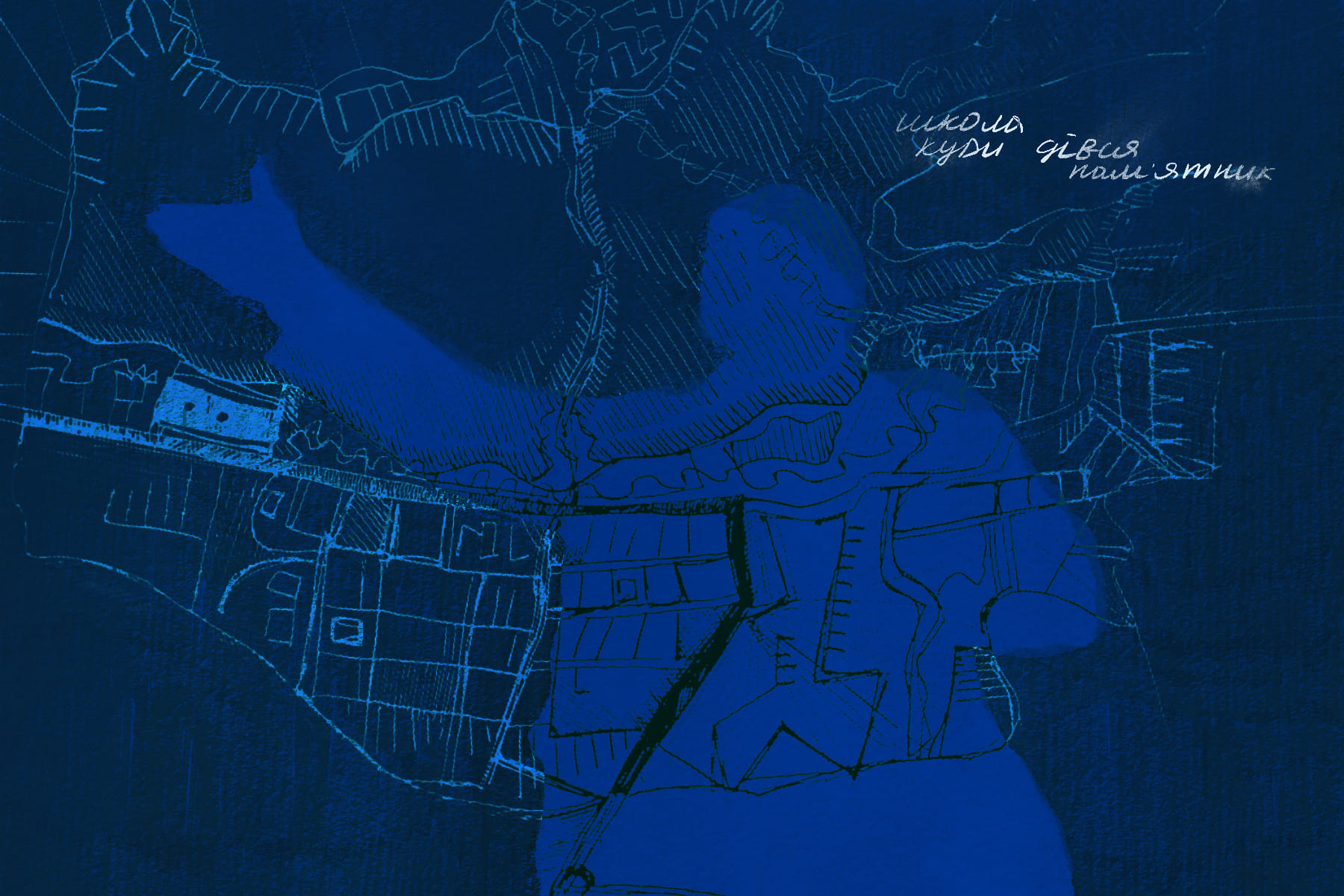
Ania’s apartment was in one of the buildings on Prokofiev Avenue. I still don’t know who that is; I still remember where it was. The building where my family’s apartment was located was nearby, a little further north, on Soborny Avenue. These streets were connected by three other, perpendicular ones: Peremohy, Lermontov and Pushkin. Our School No. 1 — the one Ania and I went to — stood on Pushkin Street.
The school. Who removed the statue?
Tetiana Filipenko wasn’t my teacher. And even if she had been, it probably wouldn’t have made any difference: Kurakhove had no shortage of good history teachers.
“Did the 2004 Orange Revolution have any impact on the city? To be honest, what a person feels and what the city feels are two different things. Perhaps that revolution did have an impact, but only very indirectly. Changes in the city’s identity began in 2014,” says Tetiana. “You see, Russia had a huge influence on our region. And even after independence was declared, not much really changed here in terms of who was in power. The city was run by what was effectively the Party of Regions (it went by different names at different times), which promoted its pro-Russian ideas. But it seems to me that educators were the driving force here, because education was changing. Since 2000, I’ve been taking the regional team to national academic competitions, and we’ve won a lot of them. Back then, people would tell me, “Donbas doesn’t haul empties” [a local idiom meaning “Donbas doesn’t mess around” — Ed.]. That phrase used to get on my nerves, and I’d sometimes feel embarrassed to represent a team from Donetsk. Although it’s important to understand that this attitude has less to do with the people who live there, and more to do specifically with Yanukovych… I’m very glad that I received the title of Honored Teacher from Yushchenko, not from Yanukovych. And now, at every turn, I make a point of emphasizing where I’m from.”
In addition to School No. 1, there is School No. 2 on Pushkin Street, and across from it stood a monument to Pushkin himself. This same street connected the schools to the central square, where the city’s second monument to a specific person — Lenin — once stood.
“I have a personal story involving the Lenin monument. In 2015, it was supposed to be torn down, and everyone, of course, opposed it — even the children. I asked my students: ‘What do you think about removing the Lenin statue?’ They said: ‘No, it’s history; it should stay.’ Fifteen minutes passed. I deliberately changed the subject, and then suddenly asked: ‘Tell me, who is Vladimir Ulyanov?’ ‘We don’t know,’ they said…
The children were clearly influenced by their parents, but I proved to them that Lenin had absolutely nothing to do with our city, except as a Soviet symbol. So when the need arose to remove this monument, I headed the group of council members tasked with the removal. I convened a committee and explained that we needed to pass a resolution to rename one of the streets and remove the Lenin statue. And everyone started grumbling! So I said, ‘If we don’t do it — listen to this!’ I read the law on decommunization aloud. ‘The regional council will come and do it, with or without us.’ Then everyone agreed. That all happened on my birthday. Afterward, I went to celebrate with my family. A few days later, my mom came to me (she used to go to a church influenced by the Moscow Patriarchate) and asked, ‘Tania, did you tear down the Lenin statue?’ I told her, ‘Mom, it happened on my birthday! Where were we?’ ‘At the vineyard, eating shashlik,’ she replied. ‘Then you know I was with you.’ And she said, ‘People say all sorts of things…’”
The bridge. Clearly, everyone will drown
My mom, Enga, an accountant with nearly 20 years of experience, moved to Kurakhove in the early 2000s. She doesn’t recall any noticeable changes in the city before 2014. And it’s no wonder: my sister was born in 2001, and I was born in 2005. Raising children is more important than fussing over the town.
Are towns ever mature enough to manage on their own without the involvement of every resident? Or, put another way: is it ever possible to stop caring about places that, for various reasons, have become important to us?
My mom talks about acquaintances who couldn’t imagine their lives without Donetsk: “They couldn’t figure out what they loved more: Ukraine or just Donetsk. They had to make a choice.”
To be sure, this choice wasn’t final for everyone: “Some people received payments in both Ukraine and Russia. Those who remained in the occupied territory most likely obtained passports there to receive their pensions, while registering here as internally displaced persons. They would enter territory controlled by Ukraine, withdraw money, and rush to the local supermarket. This only ended during the pandemic, when the border closed down. For a while, Ukrainian social workers went door-to-door to check whether these people actually lived at their registered addresses. Some were caught and denied their benefits.”
Artist Nastia believes: “Kurakhove benefited from becoming a border town. The proximity of death makes life more intense. Like now: when cities become outlying areas, and lots of military personnel arrive, money and demand follow.” Everyone gets enough time to grow weary, come to terms with it, and get used to the new reality. But as soon as they get used to it — something else begins.
My sister recalls the last day she was able to visit Kurakhove. Listen:
“Nothing had changed. Only the windows were covered with thick fabric. Other than that — my room, my pets — everything was just as it always had been. I went out with my parents to look at the Donbas department store near our house. A few months earlier, a shell had hit it, and part of the building had collapsed. That, of course, was pretty fucked up. The other part survived, and the Faina Pani store opened the very next day. It seemed like life was going on, but it was obvious that everyone was living with their eyes closed. And their ears covered.
Then we went to the village to visit Grandma, had a barbecue. Everything there seemed normal, too, but staying overnight was unnerving: there was no cell service, and the TV wasn’t working.
Plus, Grandma sawed off a piece of the plum tree because a white bag had gotten caught on a branch. Grandma was afraid that some people would think she’d hung out a white flag and target her house.
Yana, I don’t think Kurakhove could say anything. It won’t say a damn thing anymore — it was murdered. Yes, the city will live on as long as we remember it and think of it. As long as I love my room, love that godawful ATB store where Mom and I used to go, love my routine, and love visiting Grandma on the weekends. But I can’t imagine how Kurakhove will rise again. I don’t feel like we’ll reclaim our town, that I’ll rebuild it, and it’ll be just as wonderful. It’s been torn apart by war, it’s been shot to pieces, it’s empty, and it doesn’t say anything anymore. We can’t even bury it.”
At the corner of Soborny Avenue and Peremohy Street stood a two-story building, No. 33: two sections, each with four three-room apartments. On the east side, beyond the windows, were private homes and a church built in 1992. On the west side — a quiet courtyard and silent poplar trees. From the courtyard, one could see unremarkable parts of the bread factory, which had begun to fall into disrepair with the start of the war.
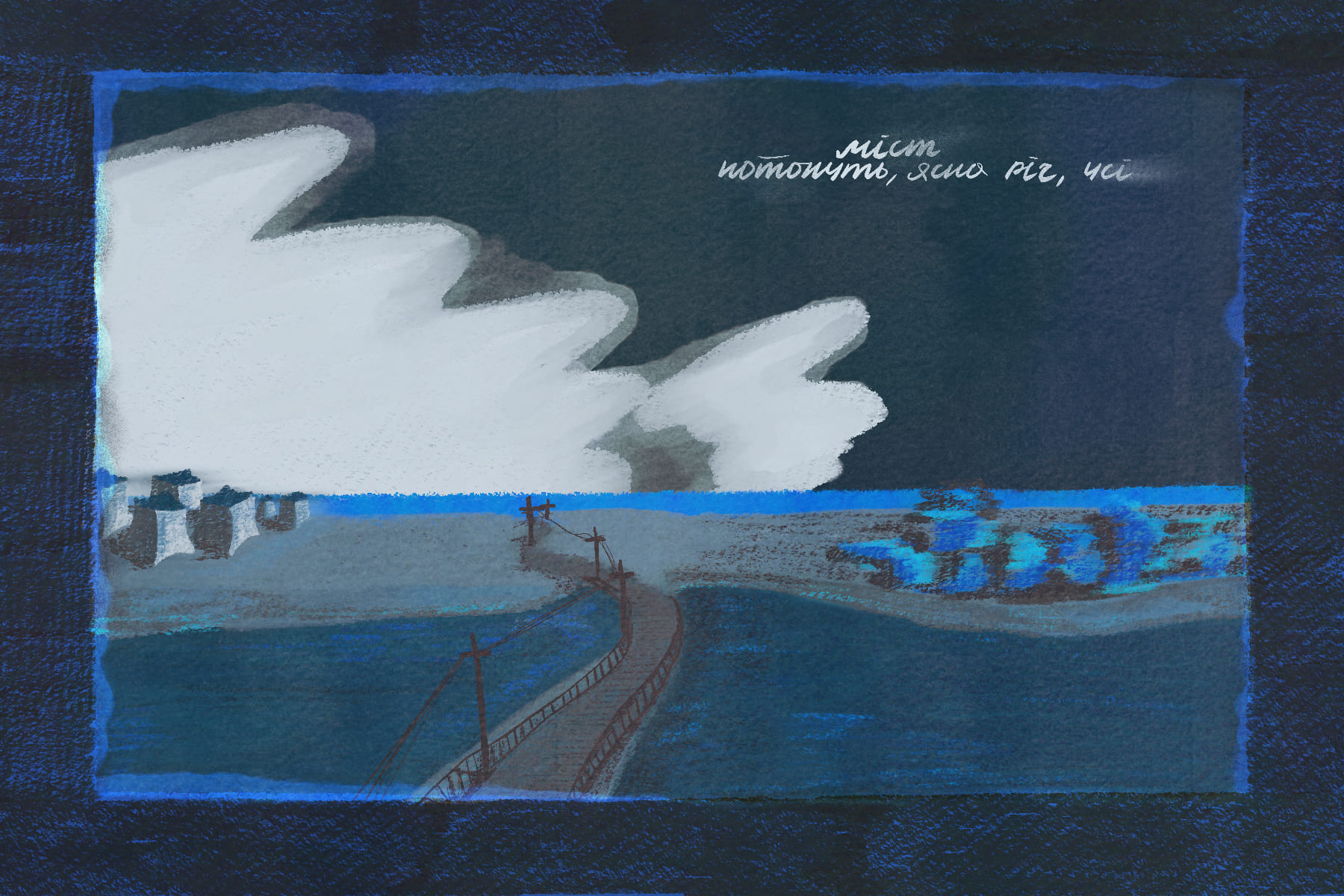
If you walk a little further up Peremohy Street — there’s a market on the left, a bus station on the right, and across from them, running horizontally, is the highway. Beyond it lies the short Hrusheva Street, which no one ever called by that name because everyone just went to the ATB. This street led to a bridge. The bridge, like Highway 15, divided the city: it crossed the reservoir, leaving equal parts on either side. Beyond the bridge, the city ended, and the road began, leading either to Pokrovsk or to Kramatorsk.
None of those who told me about their Kurakhove described this route as special or noteworthy. Perhaps because it wasn’t the only way to leave the city. Or perhaps because, like everything else in Kurakhove, it turned out to be temporary.
Translated from Ukrainian by Liubov Kukharenko
Read more
My Grandmother Built Airplanes
As a child, it surprised me that not every family had a grandmother like mine
Art Is His Tedious Routine
He’s been hanging other people’s paintings for nine years, but finds beauty in the gaps between them
Kyiv’s Protective Walls
For me, Kyiv is like a friend or a family member — when it suffers, I feel the need to be close, even if there’s nothing I can do to help