My Grandmother Built Airplanes

Українська мрія
Цей текст опублікований у друкованому журналі Reporters
As a child, it surprised me that not every family had a grandmother like mine. Mine didn’t bake pies, but she knew how to fish, drove a Jeep, oversaw all home repairs, and cracked nuts with her bare hands. She also built airplanes.
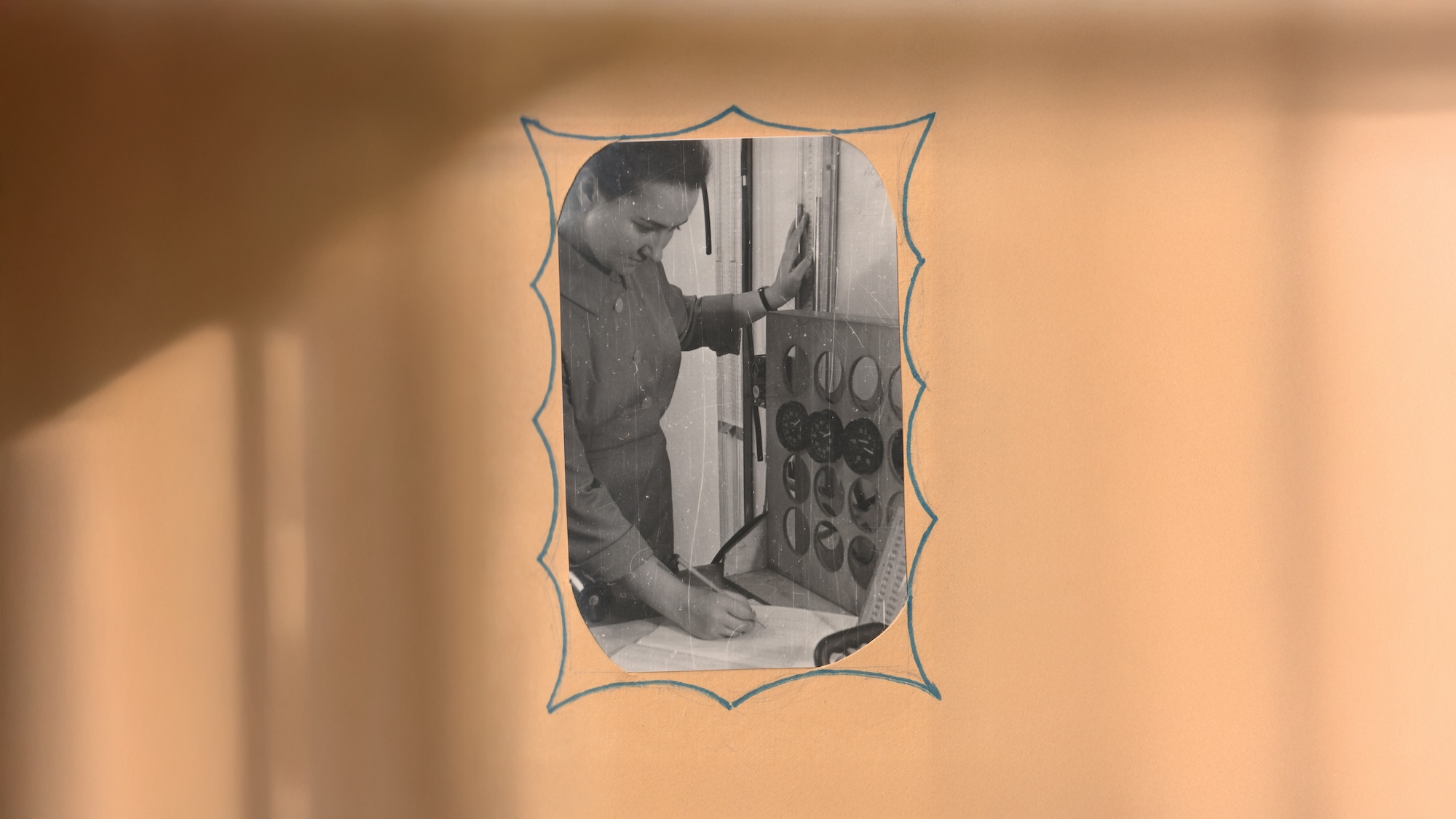
Well, that’s not quite true: my grandmother (now 86) worked on equipment that was later installed on airplanes. She was also part of the team that developed the onboard automatic control system for the Antonov An-124 Ruslan. But as a child, gazing at all the An models scattered across our bookshelves, I genuinely thought, surely there was someone in every family who worked on airplanes.
Three generations of my family worked at Antonov: my great-grandfather Mykola and his son — my grandfather — Borys; my great-grandmother’s brother Oleksandr and his son Volodymyr; my grandmother’s father Ivan; my grandmother Halyna, and both of her husbands. Even my mom spent a year there, working in the technical library.
Who made the choice? Did they decide to devote their lives to airplanes, or does aviation choose its own disciples, luring them with the promise of freedom? Where else, after all, could one find freedom in a totalitarian state, if not in the sky?
Aviators took a liking to the skies above Kyiv’s Nyvky and Sviatoshyn more than a century ago. In 1911, the Syrets Airfield was established on the site of the Syrets Shooting Range, west of today’s Nyvky Park. Shortly thereafter, Igor Sikorsky moved from Kurenivka and established the Sikorsky Aircraft Workshops. He built five new airplanes in Syrets before leaving Kyiv in 1912 and handing the workshops over to another designer.
In 1920,the workshops that had sprung up around the airfield were consolidated into State Aviation Plant No. 12. At first, they merely repaired foreign aircraft, but in time began manufacturing their own. During World War II, the Kyiv plant was relocated to Novosibirsk, where Oleg Antonov worked designing fighter jets. In hours he carved out from his military endeavors, he also developed aircraft for civil aviation.
Before the war, my great-grandmother Zhenya worked alongside her husband Ivan at the aircraft plant in Taganrog — the very same one that was attacked by Ukrainian drones in the spring of 2024. In 1941, Zhenya and Ivan evacuated to be farther from the front lines. In 1944, she arrived in Kyiv ahead of her husband, carrying her young daughter in one arm and a suitcase in the other. Within a few hours, knowing no one in the city, she found a room near Halytska Square, where she and her daughter, my grandmother, settled. Family legend has it that Zhenya firmly declared,“In this country, the only way to have a proper life is living in a capital,” and in her heart, she knew she didn’t want to move to Minsk or Moscow.
I’m endlessly grateful to her for that.
The aviation industry recovered slowly after the war. Oleg Antonov designed his famous crop duster, the Antonov An-2, and soon set out with his research and design bureau — originally formed in Novosibirsk — to build civilian aircraft in Kyiv, where the old repair plant was being revived. The mother of my grandmother’s friend was among those who came with him to Ukraine. That same friend would later, in 2022, be forced to flee under fire from the city of Irpin, then under Russian occupation.
The Antonov Design Bureau was relocated to Kyiv in 1952. My grandmother was 14 at the time. Her parents’ relationship was complicated, and by then they had already separated (my great-grandmother Zhenya would go on to marry twice more). Still, aviation was at the center of their lives and remained “in the family.” When my grandmother began working in 1957, everyone recognized her: she looked so much like her father Ivan, the aircraft designer.
My grandmother dedicated 37 years of her life to the Antonov plant. For 18 of those years, she commuted to the airbase in Hostomel. On one of those “factory bus” trips, she befriended a group of paratroopers who also commuted to the airfield. When she got engaged shortly afterward, her daily travel companions gave her a priceless gift — genuine parachute silk for her wedding dress.
All the stories about aviators I’ve read or seen in films are stories about dreamers, people who sought to conquer the elements, defy gravity, and create something not yet known — something extraordinary. There must be something special driving those willing to risk their lives (like Pyotr Nesterov, who performed the “dead loop” over Sviatoshyn in 1913).
But the people from my childhood weren’t like that. My grandmother’s friends lived very simple lives: they started families, visited one another, fixed each other’s cars, went fishing, and picked medicinal chamomile together to earn a little extra money (did you know that, back then, you could sell chamomile to pharmacies for cash?).
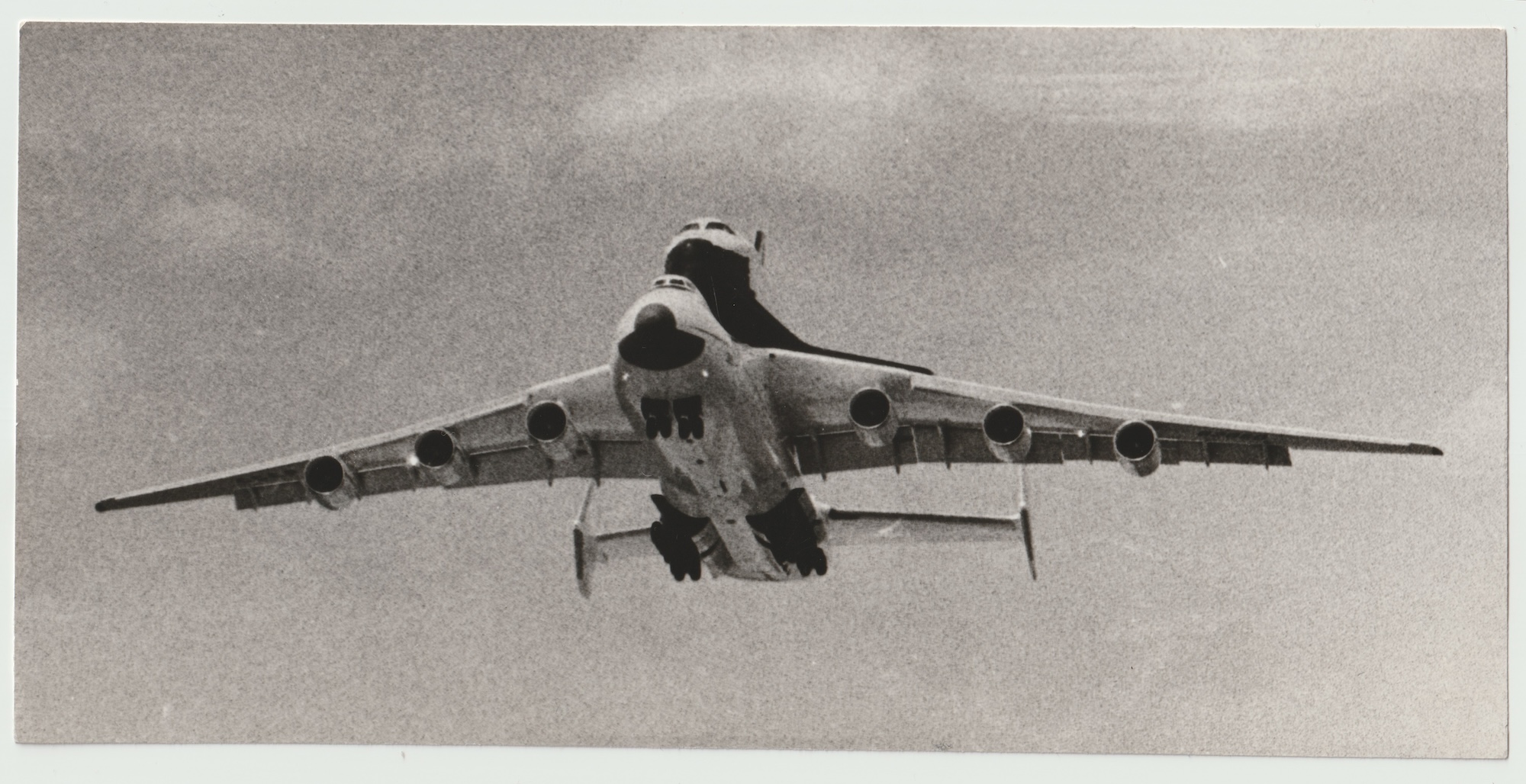
The actual creators of the Ukrainian “Antonov An-225 Mriya” and other aircraft we’re so proud of today were ordinary people who, as it turned out, were capable of doing extraordinary things.
Perhaps that was at the heart of the plant’s gravitational pull: Antonov aircraft were multifunctional and unpretentious, built to operate in harsh conditions, yet still impressive.
When I think back on my grandmother’s friends, I still sometimes find it hard to believe that the creators of the world’s largest airplanes were ordinary people living in small, albeit very comfortable, apartments. Most of them lived near the plant — in Sviatoshyn and Nyvky, in what’s known as Aviatown. The neighborhood owes its modern appearance to the inescapable presence of the plant, which constantly needed new housing for its workers, gradually replacing the old Sviatoshyn dachas and tall pine trees. My grandmother’s plant was always nearby, just out of sight, for as long as I can remember. It seemed there simply couldn’t be another plant in Kyiv, because everything revolved around that one. In a world where airplanes were built across the street from my home by people I had known since before I could even speak, there was nothing closer or more familiar than aviation.
When I was born, I was brought to an apartment on a street that is now called Mriya Street. It used to be Tupolev Street, named after the Soviet aircraft designer Andrei Tupolev, whose creations now take off from airfields in Russia almost every night to launch missiles at Ukraine.
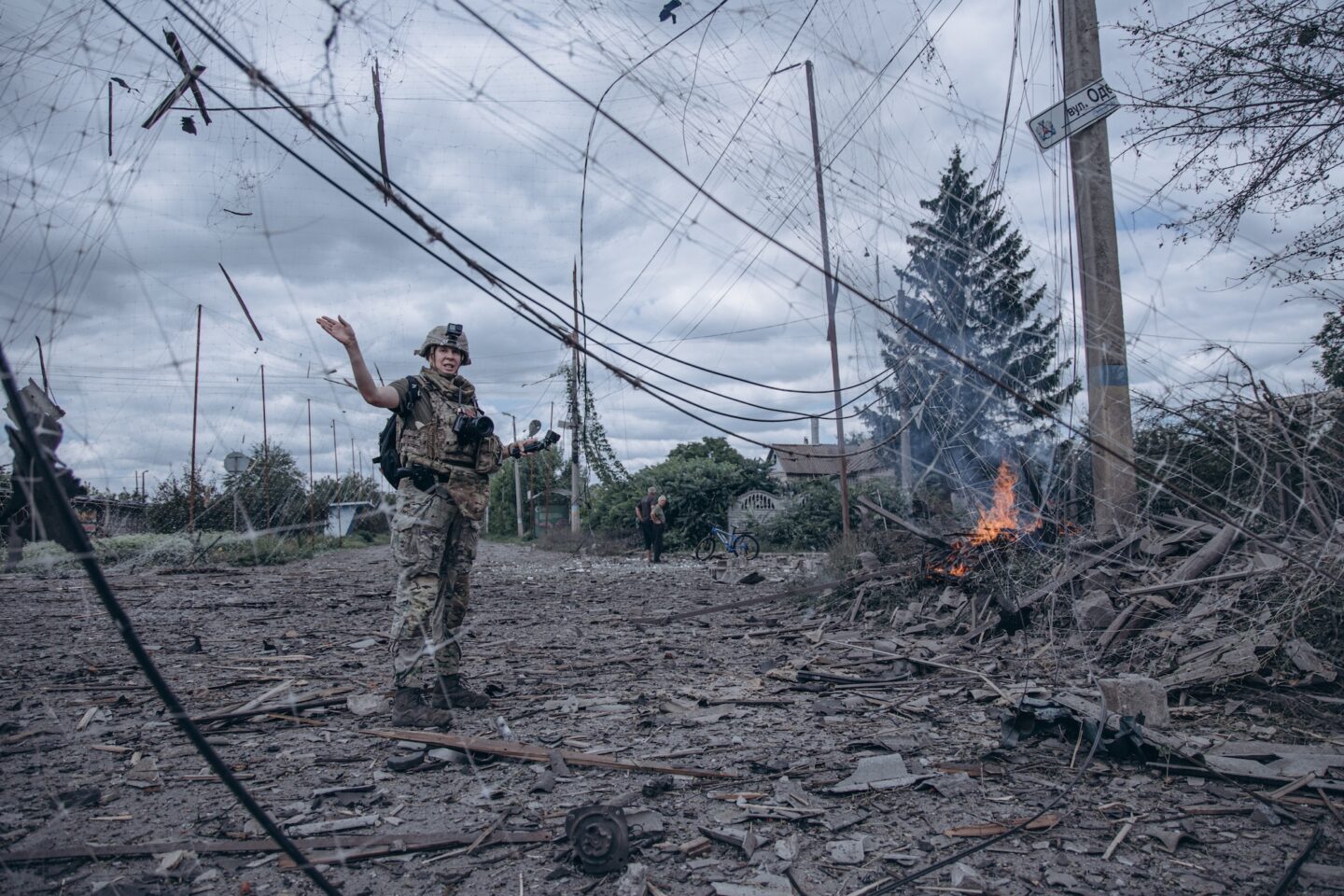
On April 24 of this year, during yet another missile strike, a North Korean ballistic missile destroyed a residential building in Aviatown on Kremenetsky Lane and damaged others nearby. One of the leading designers of “Antonov An-225 Mriya” still lives in one of these buildings
Most of my grandmother’s friends did not live to see that day. F-16s fly over our summer cottage during the day, and Shahed drones fly over it at night. And I’ve finally written a piece about the person who taught me to believe in the power of my hands and to rely on the people around me. Sometimes that’s almost as important as dreaming.
Translated from the Ukrainian by Liubov Kukharenko
Ознайомитись з виданням