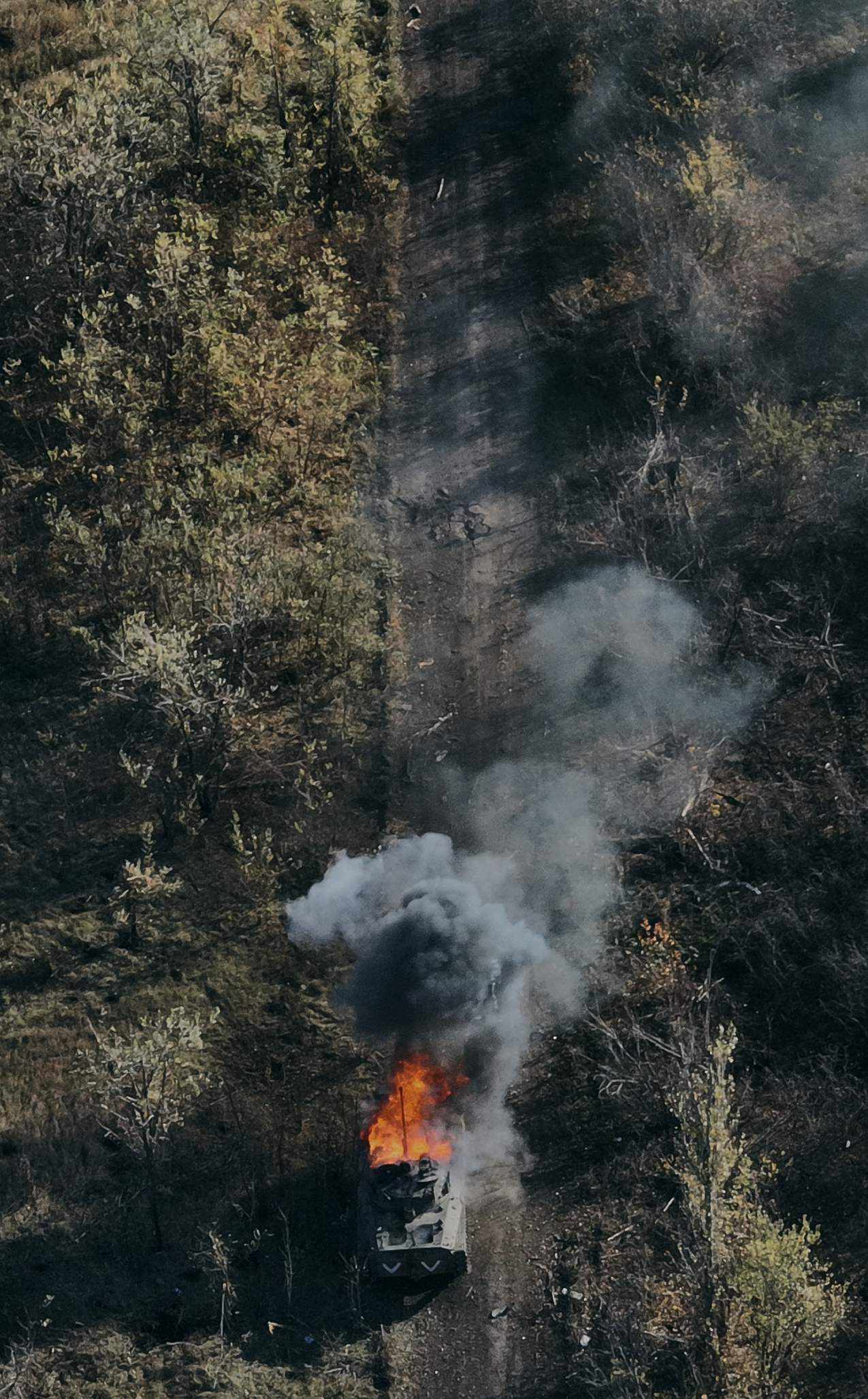
The Men Who Turned FPV Drones into Weapons
The camera follows a soldier as he makes his way through tall grass, yellowed by the scorching sun. The man carefully places a small device with an antenna on the ground and puts on his goggles. Yellow-green fields and destroyed houses appear on the monitor. Among them, a house with a blue door stands out; someone is walking near it.
“Should I aim for the blue door?” the pilot asks.
“Do it!”
“The fourth house, blue door.”
“Yeeeeeeaaaaah!” all the soldiers cheer as one.
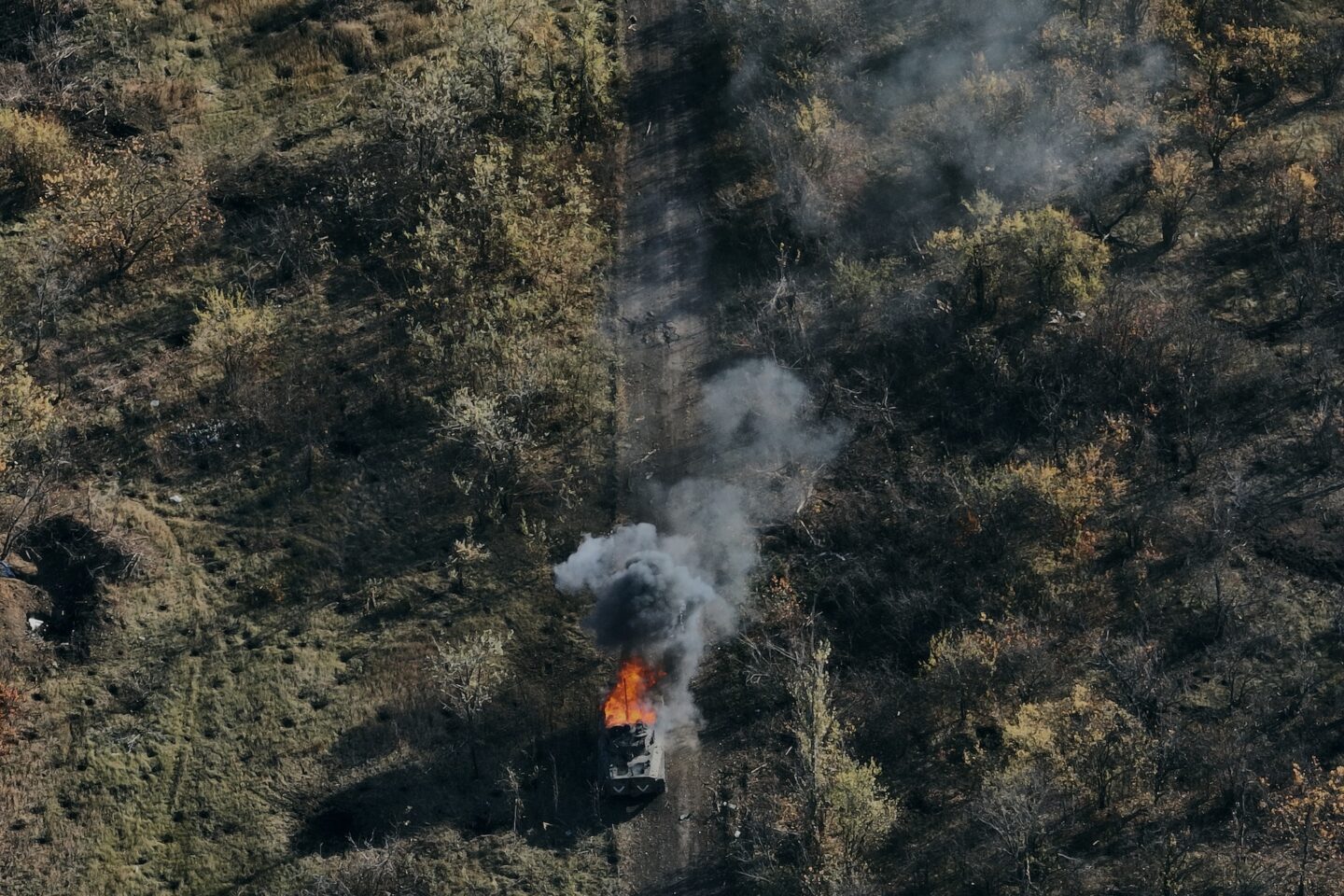
We can no longer see the blue door — it’s obscured by a thick plume of smoke.
“Did it not explode?” the pilot asks sheepishly.
“It fucking did! You’re welcome, assholes! You’re fucking welcome!” The drone navigator, who had been helping the FPV pilot aim from his Mavic, sputters with joy. Two soldiers stand on either side of him, but the trio is barely visible: their fatigues blend in with the rust-colored clay of the trench.
“I hit ‘em,” the pilot’s voice cracks, turning squeaky from excitement. “Did you see? I straight up hit ‘em! Into the door, right in there, guys!”
The guys watch the Mavic’s live feed from the site of the explosion, located about three kilometers away from them.
“The blue door is no more…”
“There, there he runs. Scared shitless,” the Mavic pilot describes the Russian soldier. “Welcome to Ukraine, fuckers!”
At that moment, they don’t yet know that this move of theirs — this very strike against the blue door — will change the history of warfare.
In June 2022, the men of the SIGNUM unit, who had been civilians just the day before, were searching for strategies to help them and their country survive amid an enormous disparity in weaponry and overwhelming uncertainty about the size of Russian forces.
This was the first documented use of an FPV drone as a kamikaze weapon in Ukraine. The mission’s pilot, Serhii Zhukovin, likes to say that the idea was right there, in plain sight.
However, from his team’s experience, we understand what was happening along the front line at the time: existential fear was transforming into a desperate, inventive fervor that drove people to make decisions that had previously seemed insane.
This coincided with the first attempts to turn FPVs into combat weapons.
The guys had no idea that just a few years later, such strikes would number in the hundreds of thousands per month, and the scale of FPV drone production would reach millions in both Ukraine and Russia.
FPV drones became widespread primarily due to a shortage of artillery shells. Ultimately, this makeshift “band-aid” solution, which the military and volunteers used to patch holes in Ukraine’s defense capability, forced the world’s leading armies to rethink their own approaches.
But that came later. On that day in June 2022, Serhii felt an almost childlike joy that their desperate gamble had succeeded.
1.
It all started on a fishing trip in 2020. Serhii Zhukovin, call sign “Schweiger,” went fishing with his close friend Bohdan, who brought along an FPV drone to film the landscapes of Cherkasy Oblast.
Bohdan Mynko isn’t your typical custom drone enthusiast. Such drones gained popularity among a small circle of engineers and model aircraft enthusiasts due to their ability to accelerate quickly and their surprisingly responsive manual controls, meaning that the pirouettes they perform in the air are possible only thanks to the pilot’s skill. That was Bohdan’s uncle’s hobby; as for Bohdan, he enjoyed spending time with his uncle more than tinkering with the inner workings of drones.
The only part of the whole process he actually liked was flying.
It was his uncle who gave Bohdan the parts for the drone and taught him how to fly it. Mynko brought that drone with him on his trip with Zhukovyn. The friends hadn’t seen each other in quite a while, even though they lived almost next door to each other in a town in Cherkasy Oblast. Serhii was just recovering from COVID-19.
As Bohdan began flying the FPV drone around the field, Serhii was the first to come up with the idea of using the inexpensive quadcopter as a weapon.
“I reckon, if we were at the front right now, we could strap explosives to this thing and fly it directly into some kind of a battlement.”
At that time, Serhii, a volunteer from the first wave of the ATO, found himself thinking about the front lines more and more often and was seriously considering taking up arms again. He and Bohdan had barely turned 18 when they first went to serve. Although they both returned to civilian life shortly after, that early experience proved to be a defining moment for them.
The idea of attaching explosives to an FPV drone was already in the air: recreational drones had been tested on the front lines long before the full-scale invasion, although, at first, they were used only for reconnaissance.
The front line looked different back then — it was a stable, positional war. After the intense fighting of 2014–2015, the sides had firmly entrenched themselves along the contact line and spent years studying each other’s positions down to the smallest detail.
A slow-moving Mavic, despite its higher-quality video, is much easier for the enemy to target than a super-fast FPV drone. However, the latter remained a rarity, since piloting them required pinpoint precision and, consequently, more extensive training.
Yet on the kind of front Serhii knew, a small drone carrying a grenade that could fly straight into a bunker opening and reach an enemy rifleman seemed like a highly effective solution. That way, you could destroy a position or an enemy combatant with precision and within a single sortie.
Back then, by the river, Bohdan hesitated: what technical solution would they use to make the munition explode on impact?
“Serhii was always quite handy, ever since childhood,” says Bohdan. “He was always able to put stuff together. So, he immediately said that it wouldn’t be a problem and that he’d figure it out.”
But that wouldn’t happen for another two years — the daily grind of civilian life had magnetically drawn Serhii into its web, pushing his decision to go to the front into the future. He sold souvenirs, and sometimes honey. Bohdan sold beanbag chairs and was considering a career in IT.
2.
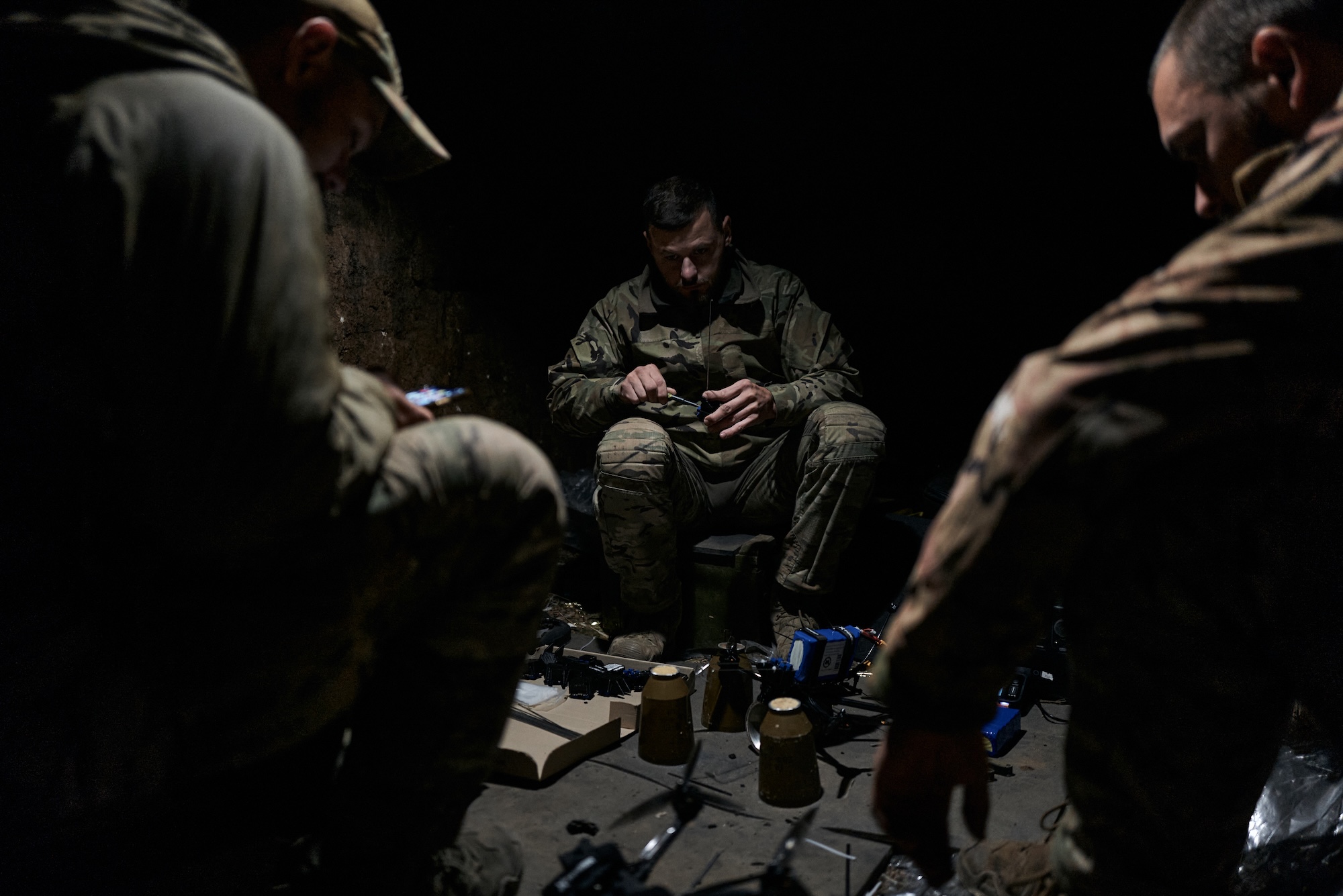
After the full-scale invasion, Serhii, Bohdan and Vladyslav Ovcharenko (call sign “Tourist”) — someone they’d crossed paths with in the past — found themselves in the same unit in the Territorial Defense Forces. It was Vladyslav who would later serve as the Mavic navigator on their first combat mission.
Before the full-scale war, Vladyslav lived in Estonia, where he was building a business. He founded his company just hours before the first Russian strikes; he set off for Ukraine immediately. He took only a few belongings with him, but among them was a Mavic drone. In Estonia, he enjoyed filming everything around him, especially the northern outskirts of Tallinn, where a tall cliff plunged into the sea, with nothing beyond it but the horizon. There, he felt as if he were at the very edge of the world. Vladyslav knew the Mavic drone would definitely come in handy during the war.
A few weeks later, when the young men realized that their hometown in Cherkasy Oblast was not under threat of occupation and had found a way to officially enlist, Serhii and Vladyslav joined a unit that would later become the SIGNUM Unmanned Systems Battalion.
Bohdan, a programmer by then, did not join the military. His employer relocated him to Lviv. Although he wanted to be with his friends, he felt he had to work at least for the next little while, since he owed it to the company that had paid for his relocation.
To this day, Serhii remains convinced that without those two guys, he wouldn’t have succeeded.
3.
The beginning of the full-scale war was completely different from what it looks like today — war will never look like that again. The guys made active use of drones, including that Mavic from Estonia, but they used them solely for reconnaissance, to track down the Russians or adjust their aim. In those days, they still scouted targets on foot, and the unit’s main weapon was the mounted grenade launcher, which they now hardly need at all — largely because of the FPV drones.
A fierce drive for efficiency and effectiveness in the spring of 2022 became the driving force behind their boldest ideas. The unit’s supplies at that time were little different from those of the rest of the Ukrainian army, whose resources were rapidly dwindling under constant Russian pressure. But in addition to their will to resist, SIGNUM — at the time, a tiny unit of just a few dozen people — had a huge advantage: its commander embraced any viable ideas, encouraged experimentation, and gave the green light to all field innovations without invoking unnecessary bureaucracy.
Vladyslav recalls one April day in Barvinkove, Kharkiv Oblast. He had just brewed some coffee. Serhii was sitting across from him. Suddenly, a fiery tornado burst through the window and knocked Serhii off his feet. The young man barely had time to glance at his cup — the coffee was hopelessly ruined by chunks of plaster and dust. A few dozen meters away from them, a missile struck — most likely an S-300.
“If we’d been taken out then…” Serhii says suddenly during lunch four years later.
“So much wouldn’t have been done,” agrees Vladyslav.
“It’s hard even to comprehend this.”
“There would be no blue door…”
“It would have been such a pity to croak without having accomplished anything.”
A few weeks after the S-300 missile missed its target and the guys once again managed to cheat death, they took their first FPV flights.
The memory of a fishing trip from two years ago popped into Serhii’s mind at just the right moment. They continued to make good use of the Mavic and the mounted grenade launcher, but when it came to FPV drones — which only Bohdan knew how to fly — their speed and the ability to see the target with their own eyes before striking it captured the soldiers’ imaginations.
“Bodya, do you remember what we talked about on our fishing trip? Get over here!” [Bodia is short and informal for Bohdan — Ed.]
Bohdan took time off work and traveled to join the guys in Kharkiv Oblast. He brought with him the very same drone and a full set of piloting equipment.
4.
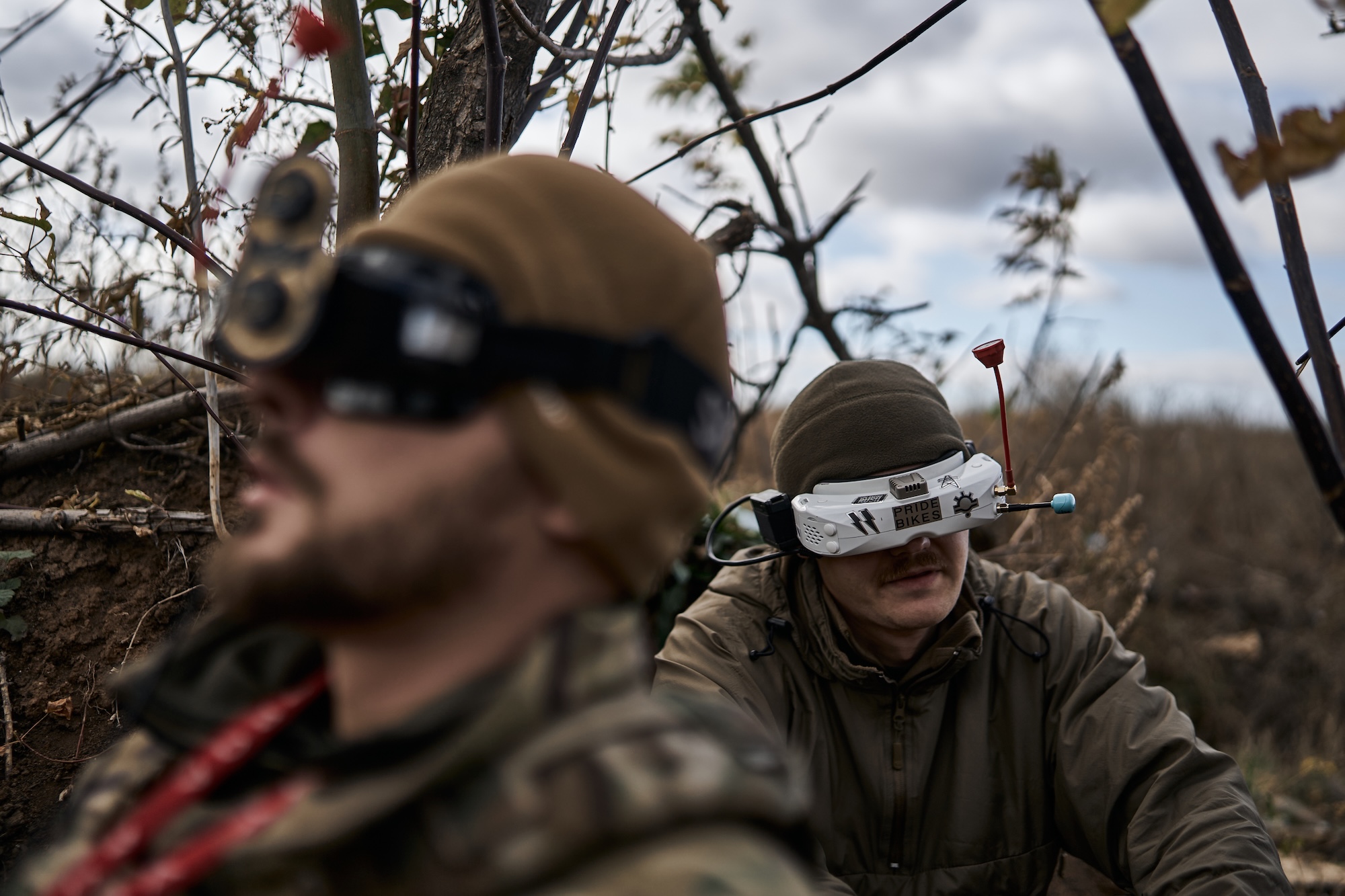
Bohdan installed a simulator on their laptops — the same one he had once used to train — and told them to practice flying for at least 20–30 hours. What had taken Bohdan a month of after-work training, Serhii and Vladyslav mastered in two days. By the third day, Serhii Zhukovin was confidently flying a drone over the garden near the house where they were based.
But how could they make sure the detonator went off exactly when they needed it to? For their historic first strike, they used explosives from a dismantled VOG. Serhii jokes that there was certainly no shortage of explosives around them.
“Of course, we could have easily blown ourselves up before takeoff,” Serhii admits.
Typically, military munitions, such as VOGs, explode on direct impact with their front end. A contact fuse is triggered there, setting off the explosion. But a drone could crash sideways into an enemy position, catch on something with its rotor or land on the wrong side.
So Serhii devised a circuit with an open electrical path. He extended two metal prongs in front of the camera, spaced just a few millimeters apart. The idea was that the prongs would bend as the drone fell, closing the circuit and sending the current from the battery directly to the detonator.
Simple and deadly. This design had no safety precautions, since the battery was connected directly. This meant that during takeoff, when the pilot picked up the drone and carried it to the position, any sudden movement that caused the pins to touch each other could be his last.
Did they realize the risk to their lives? Yes, but that’s just how it was in the beginning.
There were very few attempts. The guys simply couldn’t afford to waste $300 drones, which at the time were provided to them by the Glory UA Foundation, an organization that continues to support the battalion to this day. Everything had to work on the first try.
Another challenge was adapting the drone’s civilian electronics to the realities of the battlefield, so Bohdan made a post in one of the private chat groups for FPV enthusiasts, which had barely a few hundred members across Ukraine.
“We need your advice. We have this idea of using an FPV as a kamikaze drone — is it realistic?”
In response, he received a slew of explanations as to why this idea was technically impossible. The main concern was the radio horizon. And that made sense: on the home stretch, when the drone would be descending towards its target far from the pilot, the radio wave simply wouldn’t be able to bend around the terrain and would hit any obstacle in its path — a hill, a forest strip or a building. In that case, the drone would disappear “off the radar” of the goggles’ antennas, the signal would cut out, and at the most critical moment before impact, the pilot would see nothing but a black screen. There were also fears that the drone could easily be jammed by electronic warfare.
“Serhii and I sat there, looking at each other, reading those comments aloud,” Bohdan recalls. “I said, ‘There you have it — we can’t take off because of the radio horizon.’”
“So what? Our position is in Komyshuvakha. I will personally get up the hill and under some bushes, cover myself with a camouflage net and fly out. What’s the problem?”
Bohdan’s uncle wasn’t quite so categorical, though he did warn that there would be plenty of challenges. He said the idea was great, but they would need a powerful video transmitter and good antennas. It was his uncle who guided Bohdan, telling him which wires to solder together, how to replace parts and how to “bind” the receiver — that is, connect it to the remote control.
Serhii did find a launch site near Komyshuvakha and also determined where to fly to and from. Before their first attempt, they conducted tests near the house where they lived, since the terrain there was similar.
After preparing the first drone for takeoff, Bohdan, a civilian, returned to Lviv.
The guys succeeded on their third try. They started in May, and in June, it worked out. Bohdan Mynko assembled the last two drones — including the one that flew into the blue door — in Lviv and shipped them via Nova Poshta.
“Bodia, it works. I hit the target. I’ll send the video later,” Serhii texted Bohdan. The latter, overjoyed, immediately told his uncle.
“Everything worked out because we were ignorant,” Bohdan says. “The people who knew more about this saw certain problems and obstacles. But we were less knowledgeable, so we just went ahead and gave it a try.”
But even then, spending $300 on a single FPV drone seemed too high a price for the guys to pay to hit just one target. Because of this, the unit assumed that the whole endeavor would most likely remain a one-time operation.
5.
But a video of their “antics” had already begun circulating secretly among their comrades. A month after the first successful flight, on the eve of another mission to positions near the zero line — this time, as infantrymen — Vladyslav decided to post a blurry video of that first winning sortie online.
Vladyslav spent the next five days without internet access. When he finally got a signal and looked at his phone, his heart dropped, and a panicked thought flashed through his mind: “What have I done?”
His Instagram was flooded with hundreds of messages — he had never seen so many likes on his page before. The video itself, as it turned out, had already been picked up by national TV stations and Telegram channels.
And although, technically speaking, almost nothing changed for them after this media explosion, their video set a precedent. Most likely, it inspired and reassured many other soldiers and civilians who had already been considering — or even attempting — a similar course of action, convincing them that it was worth it.
6.
After their moment of glory, the guys returned to their routine combat duties: reconnaissance, fire support, operating mounted grenade launchers and providing cover for the infantry. They simply had neither the time nor the resources to experiment with FPV.
However, history could not be stopped.
Why didn’t the Russians think of it first? They had no need to, as they were drowning in resources, both human and material. The Ukrainians, on the other hand, to avoid being overwhelmed by the relentless pressure of the enemy, had to figure out how to remain effective amid shortages of weapons, money, ammunition and manpower.
At the end of the summer, SIGNUM, which at that time was part of the 93rd Separate Mechanized Brigade “Kholodnyi Yar,” was redeployed to the Donetsk axis. The fighting for Soledar was ongoing, while the major battle for Bakhmut was slowly taking shape.
The guys were sent to Soledar to carry out missions that had absolutely nothing to do with drone innovations. Their job was to hold the line and stop the Russian infantry assaults that were pushing toward Ukrainian positions around the clock.
Serhii wasn’t surprised at all when, a few months later, things came full circle: volunteers’ deliveries would include ready-made FPV drones, as pioneering makeshift workshops began popping up in the rear. They assembled FPV drones by hand and could provide the unit with barely 5–7 drones for testing. In addition to SIGNUM, the volunteer workshop they worked with supplied a maximum of five crews across all of Ukraine, Serhii recalls.
The guys guarded the FPVs they’d received like hawks.
Serhii would load the Mavics he used for reconnaissance, targeting and dropping VOGs onto the bed of the pickup truck. Their routine went like this: detect Russian movements and, using whatever they had on hand — including an automatic mounted grenade launcher — control key intersections and prevent the Russians from getting close to the infantry. The infantry remained the main line of defense, and its presence determined who actually controlled a given patch of land.
But despite their artillery and grenade launcher capabilities, Serhii always carried those few FPVs with him, hoping to spot a target juicy enough to be worth the price of the detonator.
“I had three measly drones, so I waited for the perfect moment, because there was a chance they wouldn’t reach their target.”
He actually managed to hit some targets. Serhii scrolls through his phone’s photo gallery and remarks in a matter-of-fact tone:
“Here are some torn-off fingers… A lot of us lost our legs back then because the Russians mined everything very densely.”
Eventually, he stops on a particular video. At the time, he spent a long time calculating the ideal takeoff point: he wanted as many Russians as possible gathered in one place, but at the same time he factored in the radio horizon so that communication with the drone wouldn’t be lost at the most critical moment.
“I found my moment,” says Serhii. “I had three Russians in my sights.”
7.
For that mission, Serhii had only two drones. The first one crashed and exploded almost immediately. The second, however, flew right past the face of a Russian soldier who had just poked his head out of a foxhole. The enemies, like ants, rushed out of their burrows, their helmets glinting brightly in the August sun. Eventually, the FPV drone exploded right at the feet of one of them.
“I rushed it a bit there. But I didn’t have enough drones to fully decimate those burrows,” says Serhii with regret, as if even now, years later, he’s still angry at himself for not having done it “perfectly.”
Meanwhile, more and more videos of precision strikes against enemy equipment started appearing online. Most of them were clips from special forces units, which had significantly more time, resources and room to experiment.
For the guys from SIGNUM, reality looked completely different. Serhii scrolls through his video library again: the screen displays a jumble of drones, remote controls, external antennas and grenade rounds. Sometimes he lacks the words to describe the frenzied intensity of those events, and that’s when he silently reaches for the phone that holds his memories.
“All of our innovations, especially in the beginning, were just a matter of picking something up and giving it a try,” says Vladyslav. Back then, that meant walking across the battlefield with antennas on their backpacks and drones in their hands.
“And honestly, this was when Soledar and Bakhmut were happening, intense combat operations. If we’d been taken out — no joke, there wouldn’t have been enough observation posts for our troops to be able to hold the defensive line.”
However, their commander saw enormous potential in these wild experiments.
Meanwhile, Bohdan was living in Lviv, and his phone was ringing non-stop: “Bodia, where should I solder this wire? Why aren’t the propellers spinning? Why isn’t it binding?” Bohdan laughs, saying he was basically working as a 24/7 tech support person back then, even though he didn’t know the answers to most of the questions and was constantly bugging his uncle.
In 2022, there weren’t as many public tutorials and videos online as there are now. Eventually, these daily consultations turned into a running joke. Every time Bohdan picked up the phone, the usual greeting would come from the other end: “Hello, Bodya, hi! So, when are you coming to join us?”
They didn’t pressure him, but Bohdan knew what he needed to do. At first, he’d take time off work, pack his things and rush to join the guys on the front lines, where he even filled in for Serhii once when Serhii had the flu.
During one of those regular trips, he realized he wouldn’t be going back. “I won’t be coming back,” he wrote to his boss and stayed with the guys for good.
“I definitely wouldn’t have dared to do all that by myself. Back then, it was something new. If you’re not a mechanic, don’t mess with the car. Likewise, I wasn’t an experienced enough FPV pilot at the time to get into it properly. And I had other things to do besides FPV,” Serhii admits.
Of course, Serhii had never used mounted grenade launchers before the full-scale war either. But, according to him, they’re much easier to master than finicky digital equipment.
8.
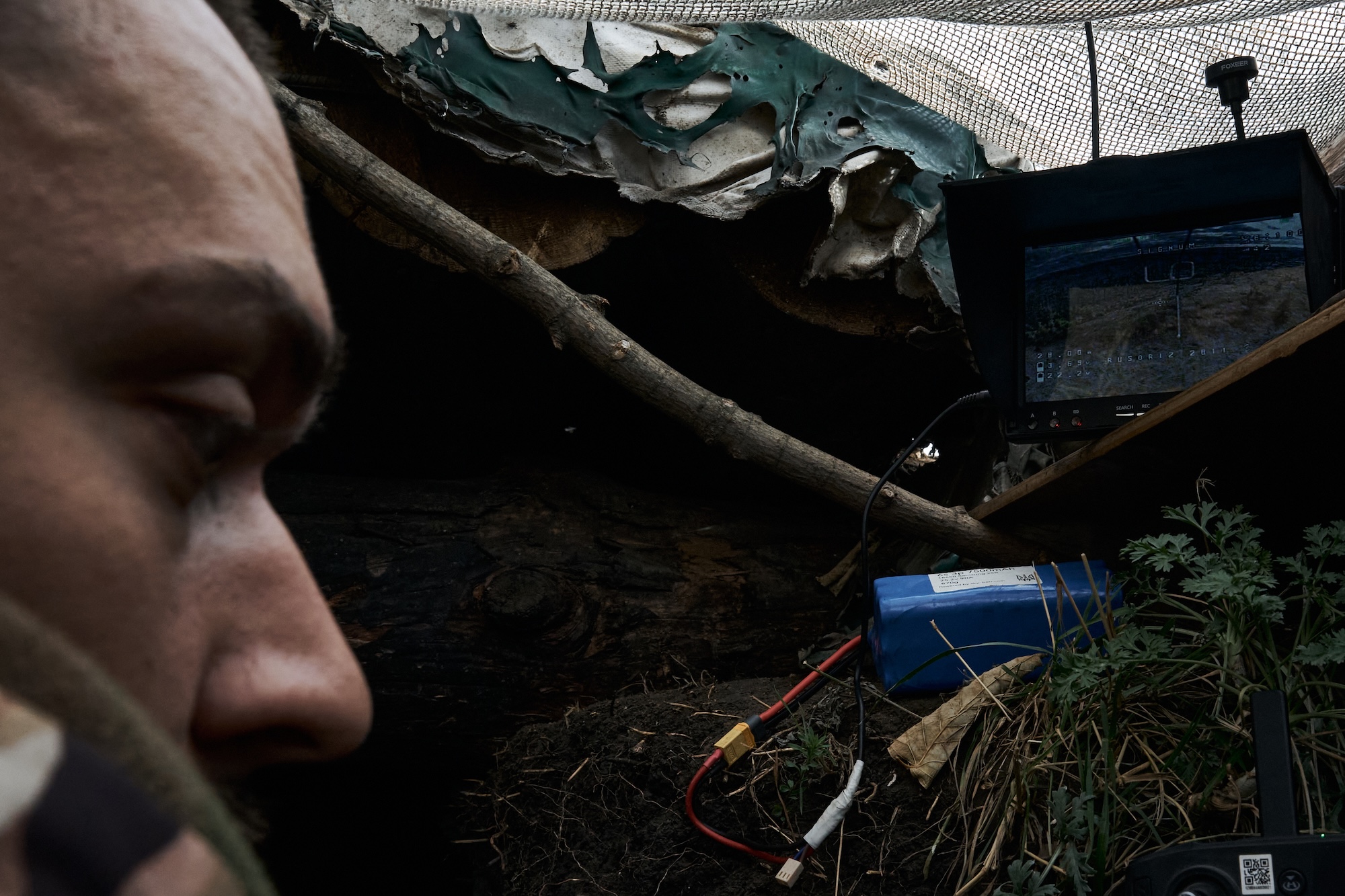
Serhii and Vladyslav entered Bakhmut in late January-early February 2023. At that time, the scale of their FPV operations was measured in single units: from their first flight in June all the way to Bakhmut, barely 15 drones had passed through their hands.
Some commanders from neighboring units, within whose area of operations SIGNUM was deployed, heard about the new “toy” capable of taking out even armored vehicles. In the heat of battle, they would often demand over the radio: “Take out that tank!”
However, haste almost never led to success. Serhii was motivated by the fact that other units had also taken up the initiative, and videos of successful hits were spreading across the Internet. Serhii understood that he was at the very beginning of this journey, but the thought that they still hadn’t developed the technology to its full potential hung over him like the Sword of Damocles.
“I think it would have happened anyway, even without our videos,” he says thoughtfully now. “Someone would have come up with it, for sure.”
But as history would have it, they were the ones who took the first step.
Serhii regrets that the Ukrainian army did not scale up the use of FPVs for the defense of Bakhmut. He is convinced that if the fighters had had kamikaze drones at their disposal back then, the course of that battle would have unfolded quite differently.
Serhii and SIGNUM’s combat operations shifted from isolated attempts to inflict massive damage on the enemy after Serhii Sternenko’s foundation began supplying them with drones. The old grenade launcher was gradually becoming less and less effective on the battlefield.
When Sternenko began delivering the first drones, they realized they needed to set up at least some kind of a workshop. To do this, they decided to set aside a tiny storage room in the house where the soldiers were staying. Since it was being used to store volunteer-provided supplies and cookies, the room was swarming with mice. Bohdan and Serhii had to throw everything out of there and cover the floor with sticky traps to catch all the rodents. Then they set up a workspace there, and Bohdan got to work on mass-configuring the drones for the guys on the front lines. A little while later, he even got an assistant.
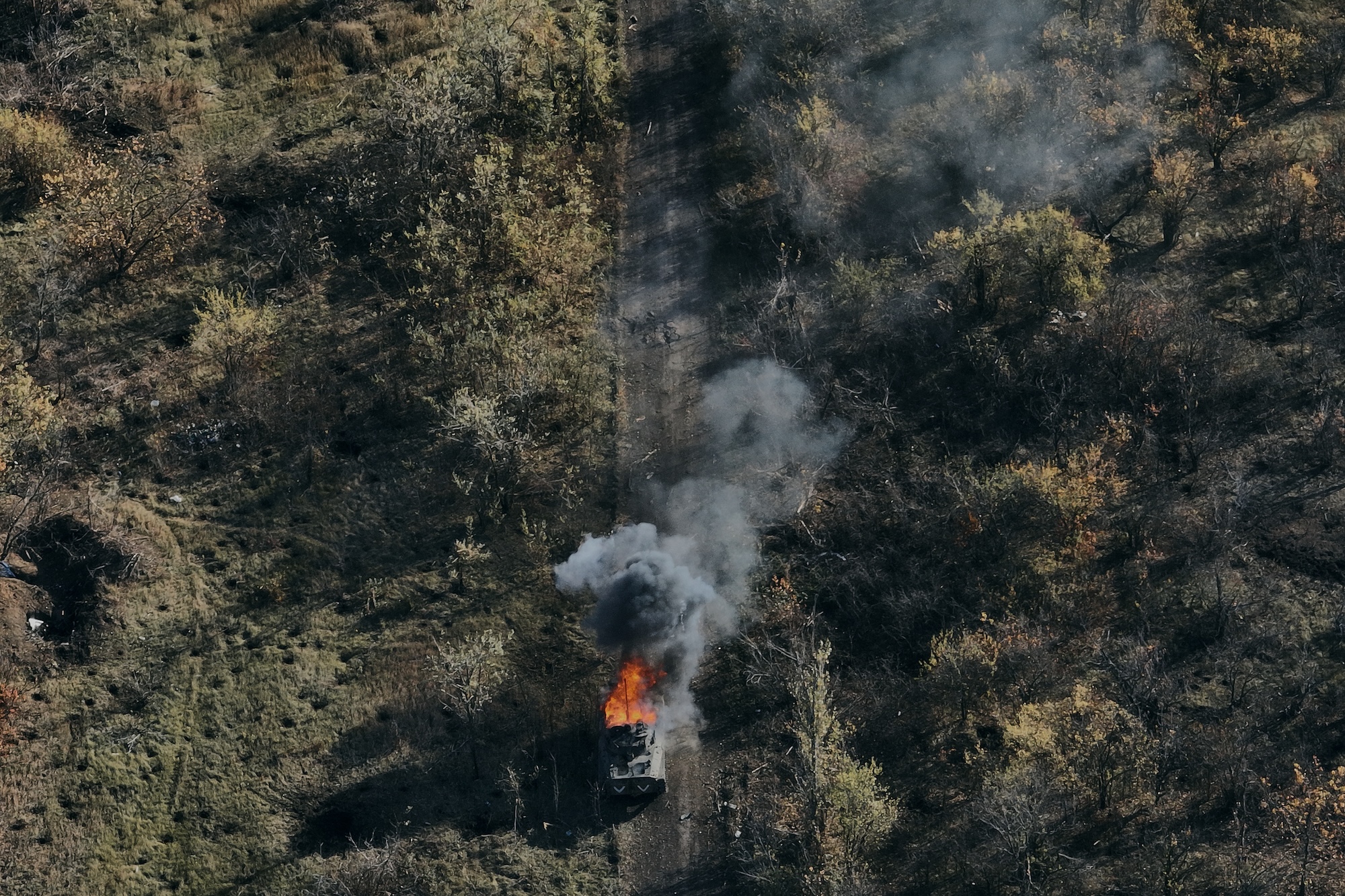
The realization that the rules of the game had changed irrevocably came when they learned to repel enemy assaults with ease using nothing but drones.
Their work turned into an assembly line: they would get a call in the morning from the command post saying, “Vehicles are advancing on us, this many units.” The guys calmly replied, “Okay, we’re taking off.”
The boom in FPV use coincided with a catastrophic shortage of artillery ammunition. The defense of Avdiivka became perhaps the hardest challenge: amid a total shortage of shells, under a relentless barrage of Russian guided bombs and endless assaults, the drones partially took over the role of artillery and held back the Russian mechanized columns.
The loss of Avdiivka opened the way for the enemy to Pokrovsk. No ammunition from allies had been seen on the front lines for over two months due to pre-election political disputes in Washington. And it was precisely the massive use of FPV drones that became one of the factors preventing a deep Russian breakthrough, during which they could have captured hundreds of kilometers in a matter of days.
In the summer of 2024, Serhii etched into his memory what was likely his last participation in classic, purely infantry-led assault operations. The era of complete dominance by unmanned systems was dawning.
9.
Today, SIGNUM is a battalion that specializes in FPV drones and interceptor drones. Other units call them for advice, asking how they fly and what specific equipment they use.
In 2023–2024, there was a relative parity in drone capabilities on the front lines. By then, the Ukrainians had already created a “no-fly zone” for the Russians — something like a giant gray zone stretching over 20 kilometers. Subsequently, the no-fly zone emerged on both sides of the zero line. On the one hand, this prevented the Ukrainians from recapturing lost territory; on the other hand, presently, it means that any significant concentration of infantry or armored vehicles can be instantly detected and destroyed. This makes large-scale Russian mechanized offensives, such as those seen at the start of the invasion, impossible.
But on July 17, 2024, Serhii saw and felt the fruits of their own ingenuity finally turn against them.
That day, his comrades set out on an assault-and-recon mission. It was a forest landing zone from the movie “2,000 Meters to Andriivka”; among themselves, the soldiers called it “The Eighth Mile.” They moved into position at night. Serhii wasn’t physically with them, but he watched via live stream feeds at the command post, as he often does when his comrades are moving out to their positions.
That night, Russian FPV drones targeted the group.
“You’re watching a feed of your men getting pummeled,” Serhii says mutedly. “It was really tough.”
All the guys were wounded; they weren’t evacuated until the next morning. The injuries were moderate, but, as Serhii says, “unpleasant.” This was the first time in the entire war that his close comrades had been injured by FPV drones.
But Serhii actually began to fear drones much earlier.
“We would drive through the fields, imagining ourselves in their place,” he recalls. “We were driving across the field, and the Russians were driving across the field at the same distance from the contact line. Only at first, we were firing at them, but they weren’t firing at us yet. But I already knew for sure — sooner or later, the fire would come my way. We sped past the sections of the road we’d identified as dangerous, took certain precautions and kept a close watch on our surroundings. FPV pilots already understood what was to come.”
10.
At first, the brigade provided only limited batches of 20 drones, and those were often of poor quality. Of all the available variety, Serhii recalls, the first volunteer-provided Rusoriz drones were the best. The guys learned to conserve supplies and gradually built up their own untouchable stockpile.
By the time SIGNUM was transferred to the 53rd Brigade, this stockpile was already quite substantial.
Later, the government introduced the e-Points system [єБали in Ukrainian — Ed.]. It’s often criticized on the front lines, but Serhii likes the principle behind it: a transparent system where you can exchange verified combat results for new batches of drones.
Today, Serhii can’t name an exact number of drones at his disposal, because the count runs into the thousands. If someone had told him all this back in 2022, he wouldn’t have believed it. Now, he sometimes has up to a hundred ready-to-fly drones at his position, and his unit is capable of halting and repelling assaults at any time.
Bohdan runs a large, spacious and modern workshop where 12 people now work under his leadership. Instead of soldering individual components by hand, the team tackles complex scaling challenges every day: ensuring that hundreds of drones can take off without hindrance and that their crews do not interfere with one another in the sky.
Vladyslav has shifted his focus to interceptor drones — yet another field innovation by Ukrainians that has become known far beyond the country’s borders and has even increased the “number of cards” in geopolitical games.
“We will never see warfare as it was a decade ago — that is now ancient history,” says Serhii.
Sometimes he thinks about the war’s end. He’s certain that day will come, but for now he isn’t completely sure who he’ll become in that new, peaceful life. These days, he compares his service to fishing: you head out to a new, unfamiliar spot and try to fly there — it’s like finding a new pond to fish in. New targets — different fish.
Translated from Ukrainian by Liubov Kukharenko