Felicity Spector: ‘Food Is a Wonderful Window into Understanding Culture’
The British journalist and author of “Bread and War” on cultural bridges, dispelling illusions and her favorite Ukrainian food.
Daryna Tymkiv, Danylo Pavlov
02.11.2026
Daryna Tymkiv, Danylo Pavlov
02.11.2026
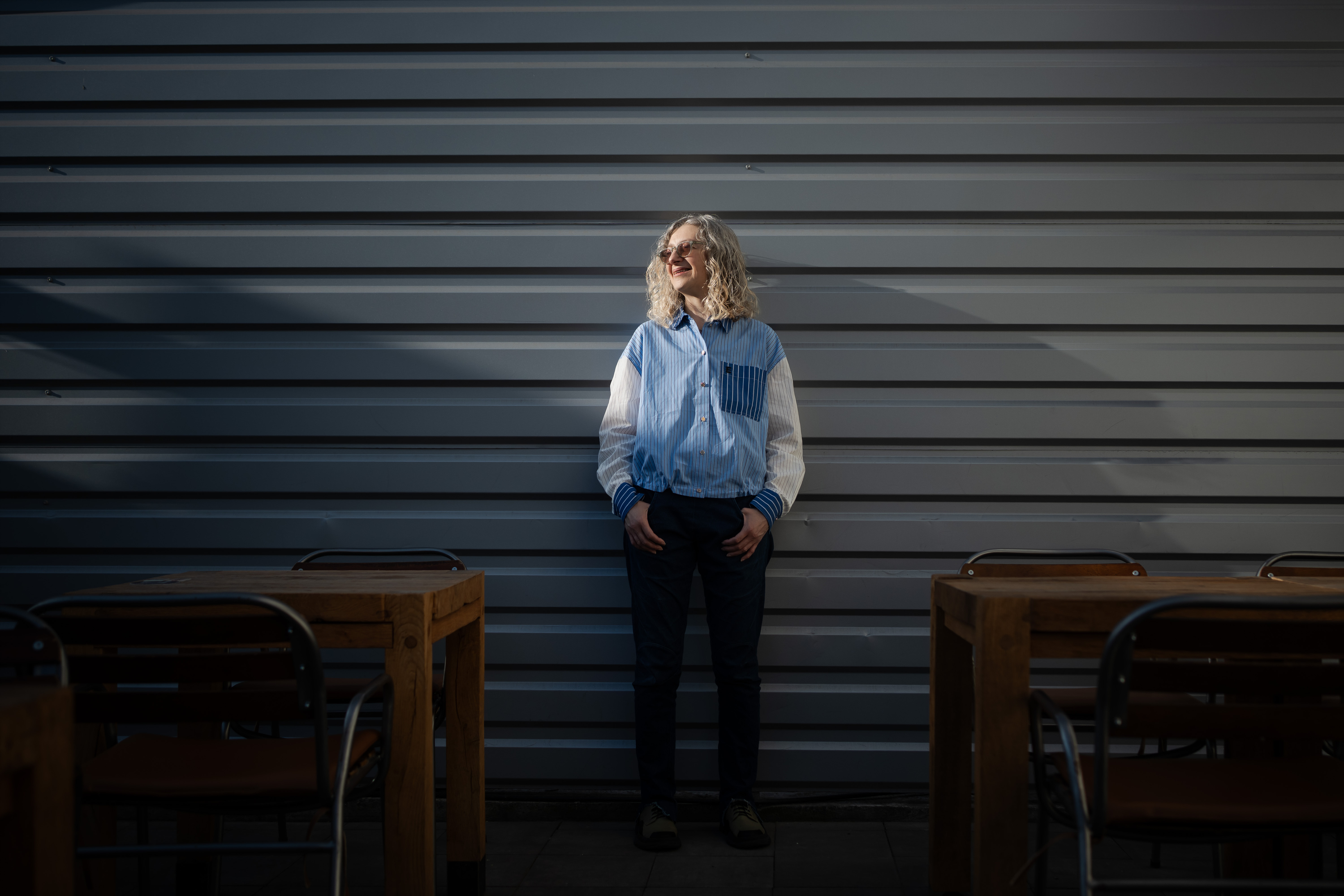
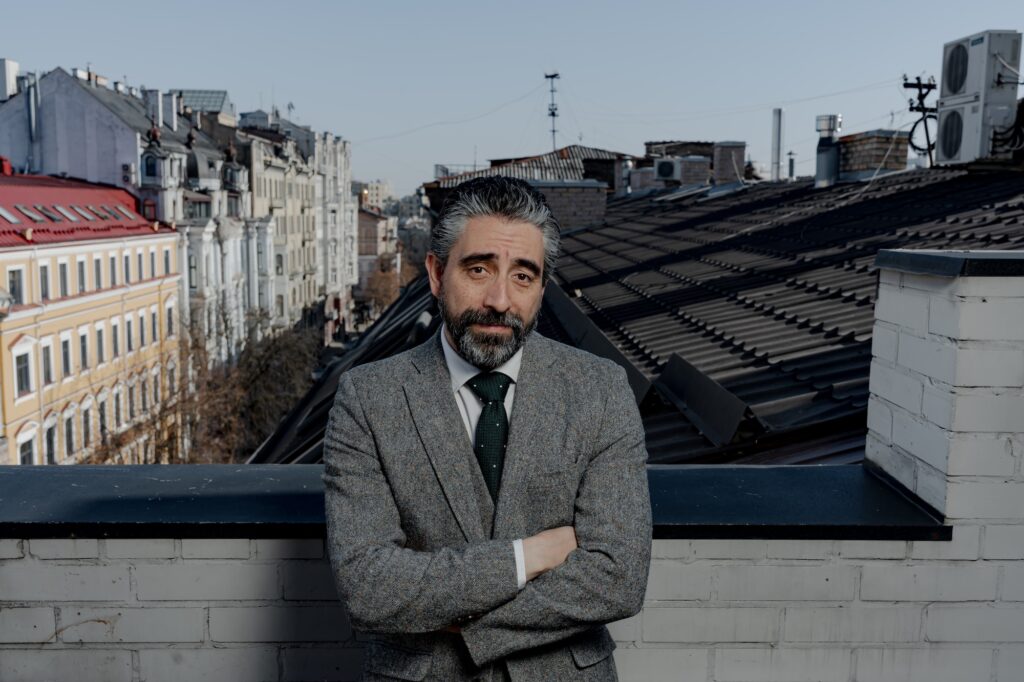
Felicity Spector is a British television journalist with 35 years of experience. She began her career as communism was coming to an end and the Soviet Union was dissolving. A food blogger and author of “Bread and War,” published in 2025, Felicity has been volunteering in Ukraine since the first year of the full-scale war, helping to raise funds for Bake for Ukraine, an initiative that supports bakeries in communities affected by the war.
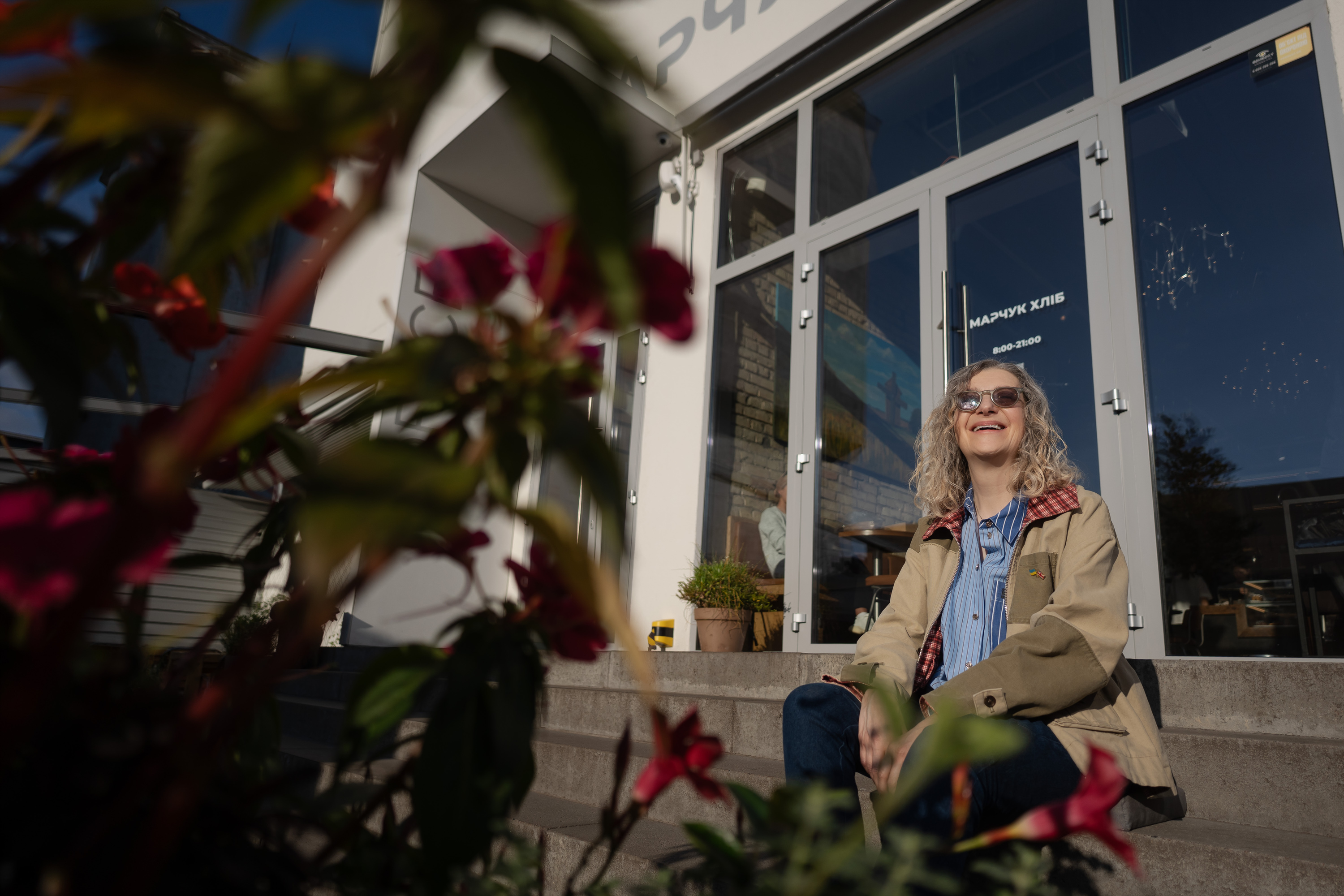
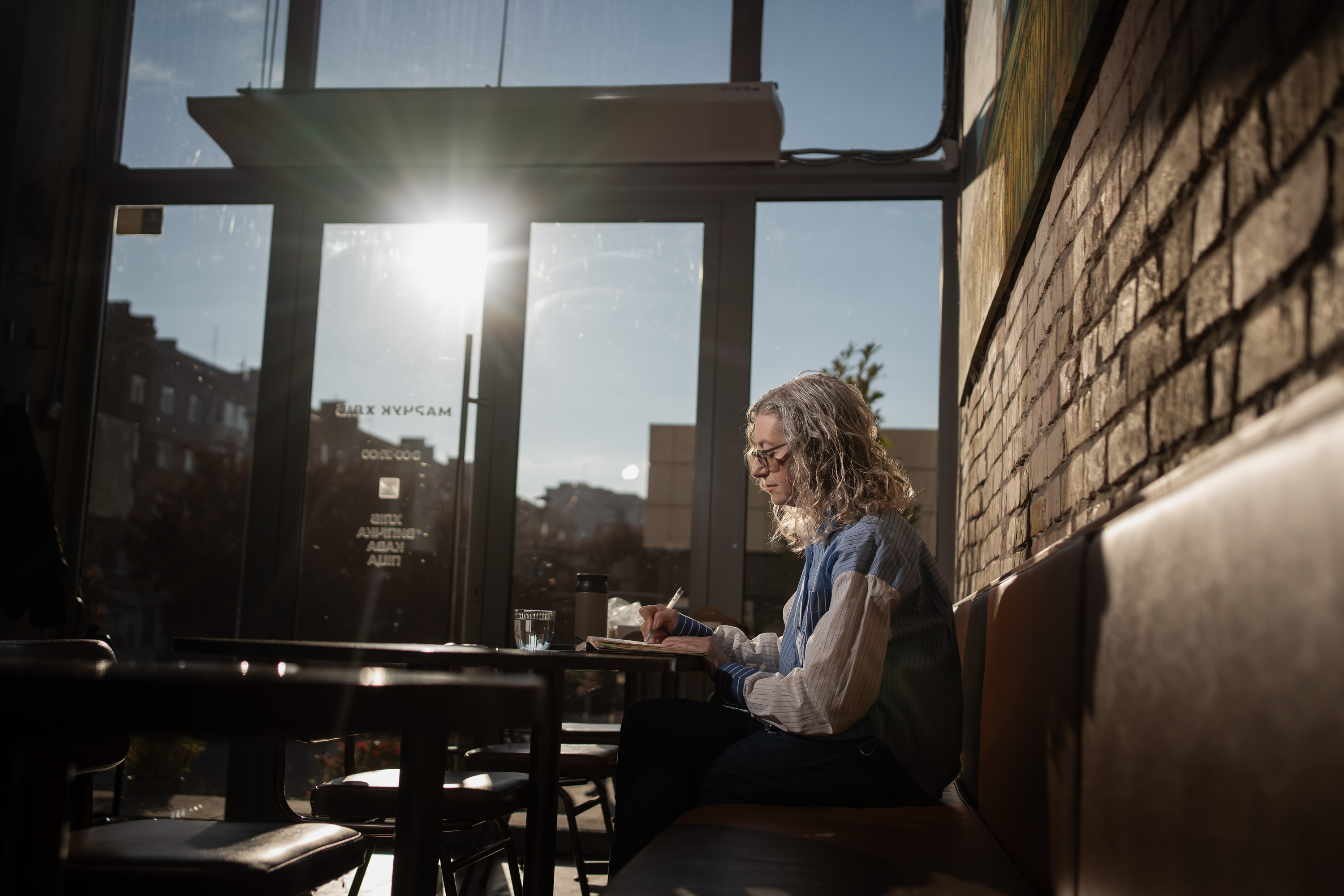
Her Instagram is dotted with colorful desserts, favorite London spots and photos from her trips to Ukraine. We meet on a sunny October morning in Kyiv. At 9 a.m., we pause for the moment of silence alongside the rest of the street. Later, two explosions interrupt our conversation. We briefly check whether drones are heading our way, then carry on talking. One of the blasts makes it into my transcript automatically, in square brackets: [explosion].
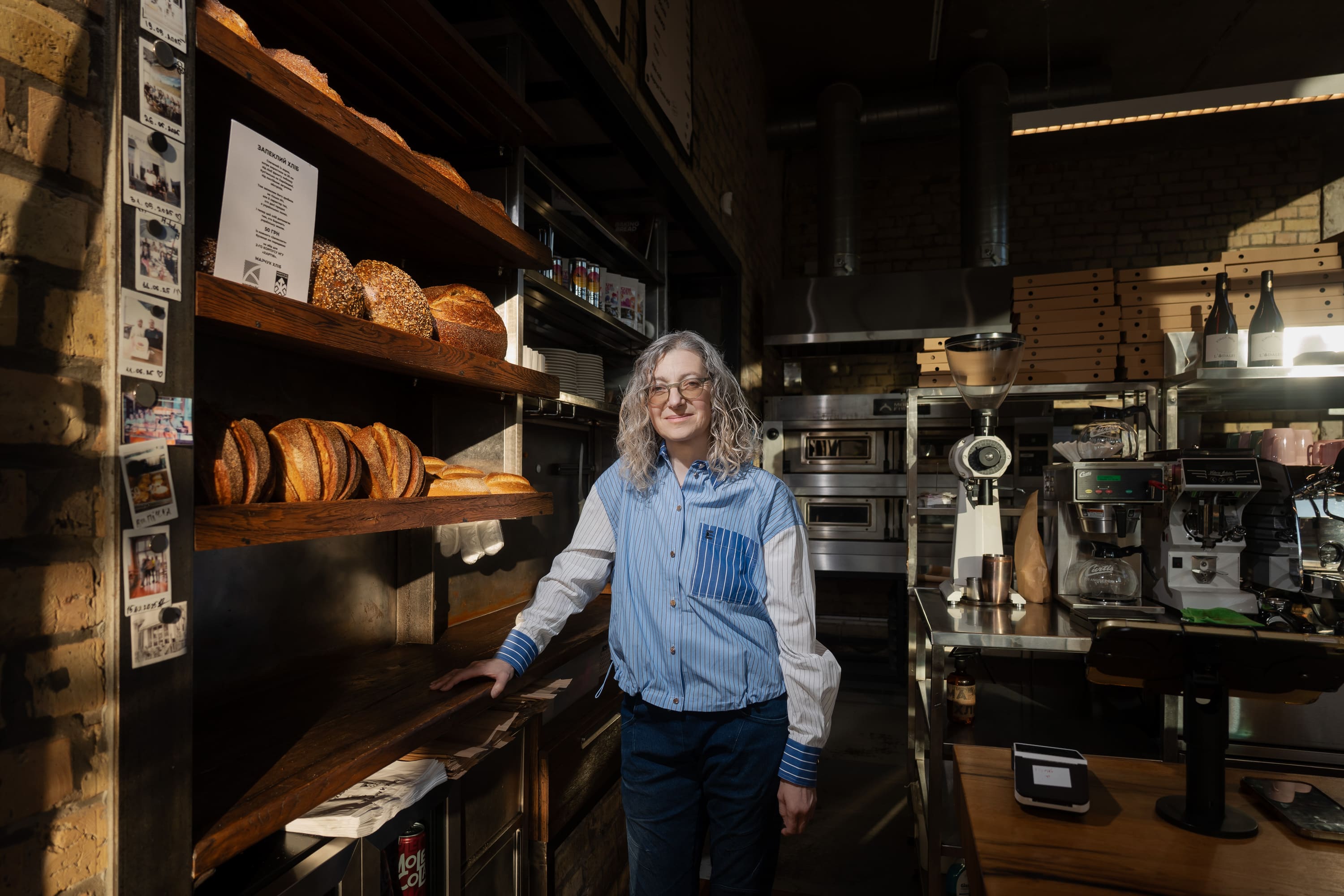
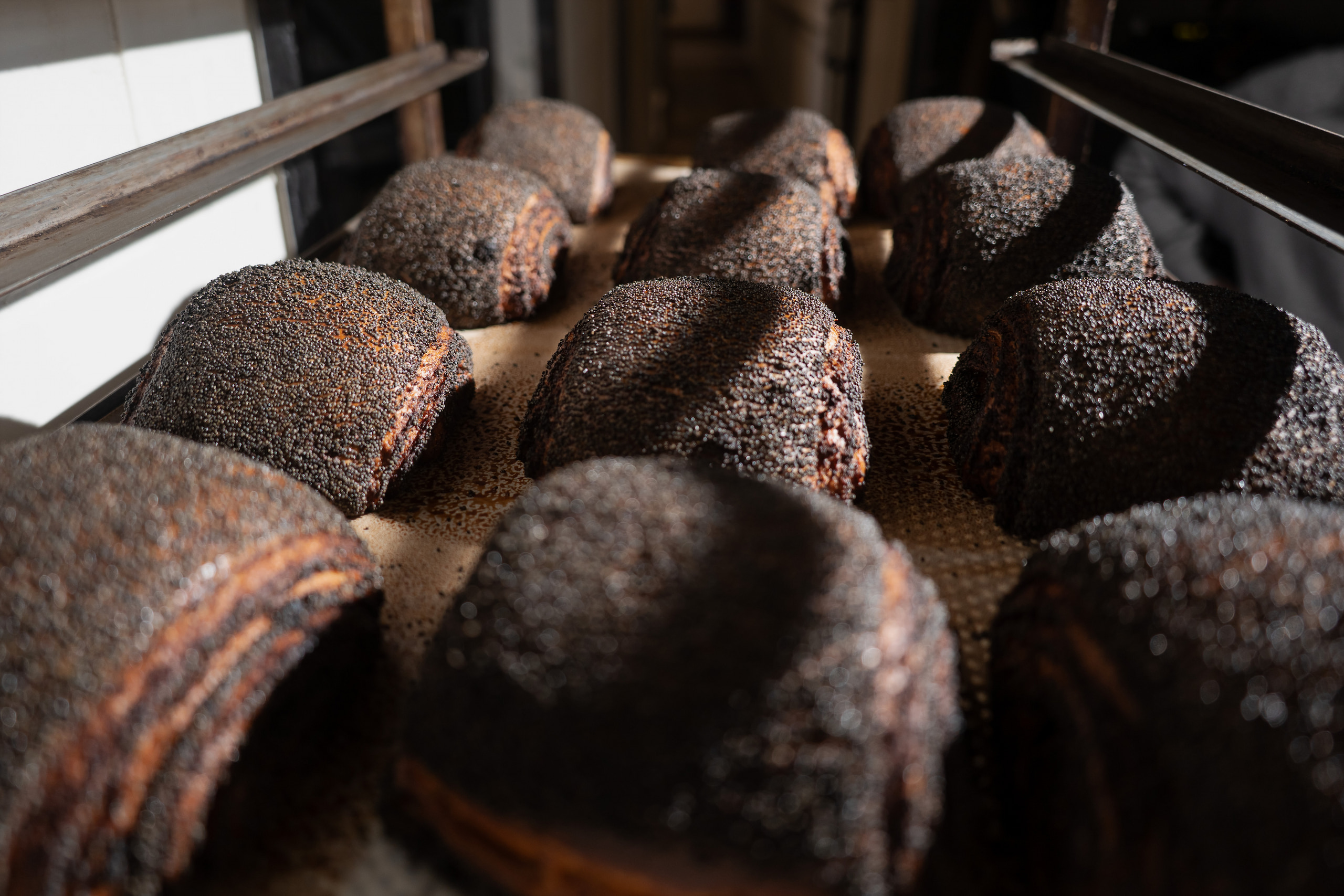
Over breakfast, Felicity urges me to try the curd cheese with raisins and a cherry-and-poppy-seed bun. She says cheese and coffee go perfectly together, and I take her word for it. After all, food is what her blog is known for. We talk about her years in journalism, the difficulty of telling the truth, and the way food brings people together.
“Being Banned from Arguing on Social Media Is a Blessing”
Felicity, you have Ukrainian roots. Your grandparents left Dnipro (then Katerynoslav) over a century ago. Was your family’s Ukrainian heritage ever talked about at home?
I never met my grandparents; they died a long time before I was born. My dad had me later in life, just as his parents had him, so I don’t know much about them at all. He didn’t know very much either; he only kept a few photographs of them. My grandparents anglicized their names when they arrived. My grandfather was called Morris, though I assume it was originally Moshe. My grandmother was called Annie, which I guess was Anna, and her maiden name was Kannanovych. When they moved to London, my grandfather started working in a furniture factory making cabinets. Many Jewish men worked in furniture making in that part of East London back then. There used to be big factories there; now it’s all fancy restaurants and boutiques. Women generally stayed at home. I remember my dad saying that my grandmother Annie didn’t speak any English at all; they spoke Yiddish at home. My grandfather read a Yiddish newspaper and was a member of a trade union that communicated in the same language. He used to read bits out of the newspaper to everybody at home.
One day, I would really like to explore this topic further. I know there’s a Jewish archive in Dnipro. It would be amazing to find out exactly what they did before they left and where they lived. Spector is a Jewish name from that area. My dad wrote a small book about his childhood as part of a Jewish writers’ project in East London, and that is really the only source I have for all of this. My dad didn’t talk about their past much at all.
Your mother was a local politician, and you chose journalism, specifically political journalism. What influenced your career choice?
In England, being a local councilor isn’t a salaried job. When you chair a major committee like education, planning or transport — as my mother did in Birmingham, the million-strong city where I grew up — it becomes a full-time job, and you receive a salary and have a secretary. But before that, during her many years as a regular councilor, she worked probably 60 hours a week, pretty much unpaid and without any secretarial help. She had to write all the letters herself and make hundreds of phone calls. But she valued the opportunity to be part of the community and help people; in a way, you could call it volunteering in those days.
Every Saturday, my dad and I would walk around delivering leaflets door-to-door. During elections, we put up campaign posters on lampposts. My dad would assemble these large pieces of hardboard, gluing the posters down with an adhesive that smelled terrible, and threading string through the boards to tie them up. The day after the election, we’d drive around with a ladder in the back of the car to take everything down. It was a real family production.
There were always meetings at our house and fundraising buffets. It was a very politically active environment. I helped out too, even though I was tiny at the time, probably about five. I would offer people crackers, which I had carefully arranged on a tray beforehand, or take everyone’s coats and stack them on the bed because there wasn’t enough room in the wardrobe. At the end of the evening, we’d have to dig through the pile, trying to match the coats to their owners. I remember it with a smile.
My mother was constantly talking politics. Since everyone in the house agreed with her, she never had anyone to debate. As I got older and hit my teenage years (when you feel the natural urge to disagree with your parents). I would deliberately adopt positions to the left of my mother just to spark an argument. I didn’t even know where my logic was going half the time, but I did it anyway.
Eventually, I got involved in student politics. I thought about a serious political career, about becoming an MP. I was involved with the Young Socialists while at school. My friend and I used to organize protests against nuclear weapons. We would travel to Greenham Common, the U.S. air base where cruise missiles were stationed in the early eighties, to protest alongside the anti-nuclear movement. It was perhaps very naive, but at 14, it felt significant. I gave a speech at a demonstration attended by hundreds of thousands of people — I still can’t believe it was me who did it.
At university, I chaired the Labor Club and later became president of the student union. It was a full-time, paid position for a year. To be honest, that experience completely cured me of any desire to work in politics. I realized I didn’t have the temperament for it. I had no interest in plotting my next move according to some Machiavellian script, nor do I enjoy direct confrontation — I just want everyone to be nice.
I thought, “No, I’m not spending my life doing this.”
And I realized that journalism offered a way to engage with the exact same subject matter — explaining political events to the public rather than arguing with people for the sake of it.
But political journalism isn’t always about being nice, either…
What matters here is that I work in British television.
Originally, I thought I needed more qualifications, so I planned to pursue a PhD at St Antony’s or Harvard. But then I was offered a job in broadcasting, so I put my postgraduate studies on hold. In retrospect, I’m glad I did, because at that point I was intending to focus on Russian studies. Thank God I didn’t waste four years of my life immersing myself in Russian history.
Television appealed to me because of the teamwork. Newspaper journalism sounded quite lonely, and I didn’t want to be on my own all the time. Television offered a great team: a cameraman, a correspondent, a producer. You travel everywhere together. The standards of television journalism in the U.K. are strict. Television news must be impartial; we are prohibited from expressing personal political views. For example, I can’t post my own opinion on social media about the conflict in Gaza, Brexit or controversial issues in domestic politics. Expressing support for Ukraine is permissible because it isn’t a subject of political debate in the same way, but otherwise we have to avoid expressing our own views.
Print journalists work under different rules. They can write about politics online, provided their employer doesn’t object. Of course, a journalist working in news rather than as a columnist understands that they shouldn’t openly take sides. Their role isn’t to tell people what to think, but to present the facts in a way that allows readers to draw their own conclusions. We want our reporting to be trusted. We have dedicated fact-checking teams that carefully verify every report and every photograph before publication. We don’t simply repost things we happen to come across online. An enormous amount of work goes into making sure we don’t broadcast disinformation.
In fact, being banned from arguing on social media is a blessing for our mental health. It would be easy to waste an entire day arguing with people in the comments, but it’s not worth jeopardizing your career over it.
Gorbachev and Yeltsin Standing Together in a Bakery Queue
You were a young Oxford graduate when you set off to cover the collapse of the Eastern Bloc. What did it feel like at the time? Did you realize at the time the historical weight of that moment?
I’d been to Berlin when the Wall was still standing — on a summer job in 1987, working on a building site and painting walls with other students (who knows why I did that?). I’d also been to Prague in 1988, before the end of communism, and to Moscow in the early 1980s, so I’d seen how difficult life was under those regimes. There was poverty everywhere, and ordinary people stood in queues for bread in bitterly cold weather. Through Jewish students who faced political persecution simply for wanting to practice their religion or emigrate to Israel, I became acutely aware of the complete absence of freedom. We met people whose relatives had disappeared as a result of political repression, and this was happening in the 80s, not just during Stalin’s time.
A lot of people on the political left, both then and now, harbor these romantic illusions about communism because they have never lived under it. They view it as a utopian system with full employment and no poverty or exploitation. But as soon as you visit those places, you realize what an absolute nightmare it was for ordinary citizens, and all those romantic illusions disappear. I was always fascinated by East European and Soviet history. I took several modules on the subject at university, read Václav Havel, and was deeply inspired by his writing, particularly his account of the nonviolent uprising of 1968. So when the Velvet Revolution broke out in Prague in 1989, it was an extraordinary thing to witness firsthand.
I was a very inexperienced trainee, so I asked my colleagues, “Can I come along with you?” And I went.
I slept in a hotel room where the cameramen stored their broadcasting equipment, and followed everyone around like a little sponge, soaking everything up.
I remember one pivotal moment when Havel’s party held a meeting in a basement in central Prague, immediately after the Communist Party leadership had officially resigned. I remember the correspondent I was working with jumping onto a chair to do a piece to camera, announcing, “We’ve just heard that the Communist Party leadership has resigned.” The camera panned around, and the Czechs were waving and celebrating. I felt that this moment meant something profound to the people around me — an experience I’ve never quite matched since. Afterward, we drove through the streets at 2 a.m. in the morning to interview Václav Havel, following his car down narrow alleyways. The cameraman, the correspondent, another producer and I were all crammed into a tiny Škoda. When we arrived at his apartment, his wife tried to turn us away, saying he was far too exhausted to talk. But Havel was gracious; he came out of the apartment and gave us a brief interview right there, in the corner of his house, in the middle of the night. It was a genuine world exclusive.
What took you to Russia after the previous assignment?
I wanted to work in the Moscow bureau. God. (Sighs.) That ambition didn’t last long. One of my first assignments there was in 1990, right at the end of the Soviet era. Massive historical changes were taking place, and every news journalist wanted to cover them. So we established a full-time bureau in Moscow, shared by ITN News and Channel 4. We were all crammed into a tiny apartment that doubled as an office. We sat around one small table, with not enough chairs to go around. Calling England was a real challenge, although ITN had installed a landline that allowed us to avoid the astronomical rates charged by satellite phones — around $25/minute. Naturally, everyone wanted to use that single landline at the same time rather than sit waiting on an expensive satellite line.
Things were gradually opening up, and foreign journalists were being given more freedom, but we still had to obtain permission to travel anywhere outside Moscow. For example, we wanted to visit a city that manufactured missiles and report on a factory that was converting its facilities to produce bicycles following an arms reduction treaty. The authorities initially granted permission, but late one evening (we often worked until midnight because of the time difference) the phone rang in the office. A KGB officer from that city told us we couldn’t come. I rarely lose my temper, but I was deeply frustrated. I remember shouting at him, “This is ridiculous. It shows your industry in a positive light — why on earth are you doing this? We’ve arranged everything for tomorrow’s trip!” But we had to change our plans and find another story.
What was it about Russia in the early 1990s that made it such a compelling assignment for British journalists?
The British public knew very little about Russia, so it was relatively easy to report stories that felt fresh and original. There were vast areas where no foreign journalist had ever set foot, so we had the opportunity to be first. There was no shortage of dramatic events: the barricades in Moscow, the attempted coup, the fall and return of Boris Yeltsin. During the Cold War, the country had been completely closed off. Then came a brief window of a few months, when you could gain access to almost anything.
I remember a colleague who was obsessed with filming inside the KGB headquarters at the Lubyanka. He asked me to call their press office. At the time, MI6 in Britain still officially claimed it didn’t exist, so the idea of the KGB having a press office seemed quite amusing to us. I called and asked whether we could film a report. To my surprise, they asked, “Where exactly do you want to go?” My colleague was thrilled at the prospect of filming inside a KGB training facility. They probably staged a demonstration for us, but he was delighted.
I spent three months calling Gorbachev’s team every morning to request an interview. They turned me down time and again until one day they suddenly said “yes.”
Editors back in London would suggest interviews with Gorbachev and Yeltsin standing together in a bakery queue, and we had to manage their expectations and scale the request down to something realistic.
Russia wasn’t a comfortable place to live. My colleagues hired local women as housekeepers to do the grocery shopping because our working hours were so demanding. Later, when I briefly left Channel 4 News to join ITV’s “News at Ten,” the schedule became even more exhausting. We would finish the live broadcast, return to the office at one in the morning, and get home by two, yet still have to be at work by 9:30 a.m. There simply wasn’t time to buy food or clean the apartment.
I was homesick. I was only 21 — very young — and it was tough. In those days, before the internet, staying in touch with your family was a genuine challenge. You could only make international calls from your home phone between midnight and 2 a.m. At other times, you had to book a call in advance through an operator. I would stay up late trying to get through, but the lines were perpetually engaged because everyone was attempting to make international calls at exactly the same time.
I tried again and again just to hear my parents’ or friends’ voices.
British airlines brought in newspapers every day, with the previous day’s papers delivered to our office by courier. If we had a news package that needed to air that evening, we had to book a satellite feed through one of the two major agencies, Reuters or AP. A driver would take the tape to their studio while I arranged the satellite uplink and downlink, reserving a 15-minute window immediately before the broadcast. If another network took our slot, we had to negotiate with them or settle for an earlier transmission time.
It was a mad dash: if you missed your window, the story didn’t go on air, and the team’s work that day went to waste.
For live broadcasts, we had to go to the studio and remember to request “reverse sound” so we could hear the presenter in London. I’m not a particularly organized person, so I often forgot and panicked, pleading with my colleagues, “Please, can someone sort this out quickly?” Perhaps I shouldn’t have been a producer (laughs). If we were working on a longer feature scheduled to air later in the week, we simply sent the tape by courier on a British Airways flight.
In those days — the early 90s— there was practically nothing available in Russia. Western-style establishments were only just beginning to open. The first Pizza Huts and McDonald’s restaurants drew enormous queues. Moscow in winter was perpetually dark: daylight barely appeared around 11 a.m., and by 3 p.m. it was dark again. Everything was covered in mud. Political tensions were rising. The far-right nationalist Vladimir Zhirinovsky and the communists were staging aggressive demonstrations. When we went to film them, protesters would hurl insults at us, shouting about “Zionist Americans” and telling us to get out. I found it infuriating and insulting. We were there to document their rally; we were doing our job, yet they treated us with such hostility.
People walked the streets with heavy steps, their eyes fixed on the ground. No one looked up, smiled or made eye contact.
We had local staff who stood out from the general atmosphere: they were intellectuals, spoke English and had experience working with Western organizations. But outside work, it was difficult to get to know people.
I had a few local friends, including a young couple, Oleg and Tania, who had a little boy. For his birthday, I bought a fresh pineapple at a hard-currency store, thinking it would be a special treat. The boy had never tasted pineapple, but he once told me he had seen one in books. He was thrilled, and Tanya was genuinely grateful. “Oh, that’s so kind of you. You really shouldn’t have…” Oleg looked at the pineapple and sighed. “Ah, but it’s a tragedy, because he’ll never taste this again in his life.” I thought, “That’s so Russian — taking all the joy out of such a genuinely happy moment.”
“I Was Shocked by American TV News, Where Hosts Spoke Loudly and Expressed Biased Opinions”
After 10 years in the media, you went to Harvard Kennedy School to study the American political system. Why did you feel the need to go to the U.S. to study in the early 2000s?
I had originally planned to go straight from university, but then I was offered a job at ITN. Still, I thought it would be amazing to go. Many of my friends had spent a year at Harvard on a Kennedy Scholarship, so I knew what a great place it was, and I held on to that ambition. Also, after my last assignment in Russia, I never wanted to return. I refocused on American politics, thinking, “This looks much more optimistic.”
You arrived at a turning point, but many journalists describe that period as the “old” or perhaps “older” world. America still felt like the winner of the Cold War, the 9/11 attacks had yet to happen, the economy was growing, and the internet seemed to offer a new horizon. What was that time like for you?
The Kennedy School turned out to be a liberal, invigorating environment. Many faculty members had served in government — in the Clinton administration, or previously under Bush or Nixon — bringing practical experience into the classroom. I took a course taught by Clinton’s former director of speechwriting. He shared incredible behind-the-scenes stories from the White House, such as the time someone forgot to hit “save” on a disk before a State of the Union address, losing the entire text and frantically trying to recover it just minutes before the president was due to speak.
World leaders regularly came to give talks, and students could ask them questions directly. It was a striking contrast to British universities. Oxford was also a privileged environment, with extraordinary professors, but teaching centered on tutorials. Every week, you would meet in a room with one or two other students and a professor, read your essay aloud and defend your argument. It was intimidating to realize that I had just written a paper based on five books by the very person sitting across from me. But it forced you to make sure you could back up your claims with facts. Harvard had a different dynamic: we were learning from people who were making those decisions in real life.
Having worked as a journalist in both Britain and the U.S., you’ve seen two media cultures from the inside. What differences stood out to you most?
I was shocked by American TV news, where hosts spoke loudly and expressed biased opinions. It doesn’t seem right that they can air their personal views while also reporting the news. On the other hand, I have enormous respect for major print publications such as The New York Times or The Washington Post. They check their facts rigorously. Having written for American publications, I know how much effort goes into fact-checking. You can trust what they publish because of that work.
I was also surprised by American journalists’ attitudes toward politicians. British journalists are naturally critical of politicians; their job is to challenge authority, not to be polite. If a politician evades a question, a British interviewer will keep pressing them, asking the same question again and again. It can sometimes feel staged for the camera, but it serves a purpose: it stops public figures from evading accountability and forces them to explain their actions. In America, if an interviewee gives an answer, reporters tend to accept it and move on without pressing further. It is a fundamentally different approach to interviewing.
How would you describe the current media landscape in Britain?
If I were to give a brief overview of British politics for a Ukrainian audience, I would start by saying that the biggest shift in recent history was our exit from the European Union. That radically changed the country’s political landscape. It is now being reshaped by populist movements, online disinformation and far-right parties such as Reform UK, which rely heavily on anti-immigrant rhetoric. Broad sections of the white British working class feel forgotten by modern society and neglected by political institutions. The established parties are desperately trying to work out how to reconnect with a wider range of voters.
That challenge explains why Andy Burnham is now prime minister. Keir Starmer won a huge parliamentary majority, but despite being exceptionally intelligent and principled, and having a legal background that gave him a deep respect for justice, he struggled to connect with voters emotionally. In modern politics, expertise alone is not enough; leaders need the charisma to project authenticity. Andy Burnham has that quality. He is natural and relaxed, and knows how to communicate on social media without seeming staged.
Under the previous Conservative government, you could easily see politicians desperately trying to win over young voters on social media, yet struggling to look natural even when walking down a corridor on camera.
What deeply worries me about this shift is how fragmented news consumption has become.
My own social media feeds are full of pro-Ukrainian, constructive, balanced content, which means I rarely see the flood of manufactured nonsense circulating elsewhere. Huge numbers of fake videos generated by AI — often originating in Russia or China — are also amplified by figures such as Elon Musk. People watch this content without checking whether it is authentic and take it for the truth.
When I began my career in broadcasting, we used typewriters. It was a decade before we had a single computer connected to the internet. When I tell younger producers that we worked without the internet, they look at me as if I had arrived from the 19th century and ask, “How did you find anything out?” We picked up the phone. We went to the library. It was harder and required much more preparation, but at least we could be confident that the facts we uncovered were real.
“Human Stories Help Audiences Empathize Far More Than Raw Combat Footage or Political Rhetoric”
At a panel discussion in London, you spoke about the gap in the average Briton’s knowledge of what is happening in Ukraine. We see a similar trend in many countries. People are less interested in politics, let alone geopolitics; social media and the internet polarize societies and encourage people to see things in increasingly simplistic terms. What happens next?
At times, I genuinely believe people will eventually hunger for a return to something grounded and reliable. Living without a baseline of truth is ultimately disorienting. Traditional media organizations are trying to survive by proving their authenticity — showing the painstaking work that goes into fact-checking and ensuring that what you see isn’t AI-generated fabrication or an old video recirculated to mislead you. I hope that, just as people eventually rebelled against ultra-processed food and fast food, audiences will grow tired of digital junk and seek out reliable, verified information.
At worst, we risk reaching a point where society no longer shares a common understanding of reality. Ordinary people don’t have the time or tools to fact-check everything themselves; it’s simply too exhausting. I hope schools begin teaching media literacy as a core skill, so the next generation learns to spot manipulation and evaluate different perspectives.
In affluent parts of London, people tend to share more or less the same worldview. But step outside those neighborhoods, and you realize how fragmented public discourse has become. The Guardian published a piece investigating violent protests outside a hotel housing asylum seekers. The reporters wanted to understand why people felt threatened by a small group of quiet residents in a town who had previously gone entirely unnoticed. The reasons went beyond xenophobia: there was a deep-seated sense of marginalization and hopelessness, a lack of economic opportunity and a desperate desire to find someone to blame. Immigrants become an easy target.
How do you reach people in that situation?
You have to show that you are listening, that you care — that the media exist not merely to represent the views of people who already agree with them. Naturally, we all prefer to live in a world where our values are shared, where basic principles such as human equality seem beyond question. So encountering fundamentally different, entrenched views can be a shock.
I find it particularly difficult to encounter anti-Ukrainian sentiment among people who have never set foot in Ukraine, don’t know a single Ukrainian and have never read anything beyond fringe posts online.
When I tell them, “I’ve been there, I’ve seen it with my own eyes, and this is what’s happening,” and they reply, “Well, I disagree with you,” it’s baffling.
This isn’t a matter of agreement or disagreement; it’s a matter of fact. You can’t argue with someone who insists the sky is red when it’s blue.
How can you convince Western audiences that the war is still going on? How do you pitch stories from Ukraine that have a chance of breaking through the wall of indifference?
It’s genuinely difficult. Sometimes I pitch stories about Ukraine and meet a deafening silence. For traditional television networks, covering Ukraine is extraordinarily expensive. Frontline insurance alone costs thousands of pounds per person every week, not to mention the cost of security teams and armored vehicles. Networks can rarely justify sending crews continuously; instead, they plan one intensive two-week trip every few months. Institutions such as the BBC and newspapers such as The Telegraph, with its excellent daily podcast about Ukraine, have the resources to do this.
To counter audience fatigue, I try to focus on ordinary people and their everyday lives: someone running a café in the middle of a war, people commuting to work in the frontline city of Kherson, or children attending school in underground shelters. These human stories help audiences empathize far more than raw combat footage or political rhetoric. The way we cover the war today often reduces human suffering to numbers: six people injured in an attack. When people read that, they become detached; they compare the figures with those from other global conflicts and treat human tragedy like a competition.
But compassion is by no means a finite resource. Caring about one crisis doesn’t mean you can’t care about another.
When I give talks about my book at literary festivals, I’m struck by the diversity of the people who attend and the questions they ask. At my last event, a man at the back raised his hand and demanded, “What about corruption in Ukraine?” I replied, “If you want to see systemic corruption, look at Russia.” Corruption exists in Ukraine, just as it does in Britain and every other country. But in Ukraine, people recognize it as a problem, expose it and fight to eradicate it. In Russia, corruption isn’t a flaw in the system; it is the system.
“Unfortunately, as a Teenager, I Was Obsessed with Russia”
I like how you weave current news into the background against which events unfold, because Ukrainians don’t exist in a vacuum and readers need to see the bigger picture.
That’s the essence of good storytelling, isn’t it? You anchor the narrative in an individual’s lived experience and then build the context around it. Television scripts are short — you’re writing texts of perhaps 50 to 100 words — so you have to tell a story succinctly, get to the heart of it, and still make it feel fresh and engaging. When I set out to write a book, I worried that I might have lost the ability to write at greater length and in more detail. Fortunately, I managed to develop the narrative.
You gently encourage readers to delve into Ukraine’s past, providing historical context for many aspects of the country today. When you were studying, there were few resources about Ukraine’s history, let alone accurate accounts of it. Where did you turn for information?
I’m conscious that I approach this history as an outsider: I haven’t lived through this experience, and I don’t claim to be the ultimate authority on Ukrainian history or politics. My main goal was to give Ukrainians a voice rather than put myself at the center. To understand the history, I drew on a range of sources. I read historical works by Timothy Snyder and Ukrainian nonfiction, including books by Oleksandr Mykhed, as well as fiction and poetry by Serhiy Zhadan, Andrii Kurkov and other writers. I also read as many translated articles as I could and learned a great deal from conversations with friends who knew the Ukrainian context well.
Conversations with friends from Odesa and Kyiv were particularly valuable in helping me understand local nuances. They explained popular memes and jokes, as well as why certain words or expressions resonated with people in a particular way and the cultural and historical contexts behind them.
What would you recommend to British friends who want to understand Ukraine beyond the news headlines?
I often recommend Serhiy Zhadan and Andrii Kurkov. Even in its darkest moments, Ukrainian literature is underpinned by wonderful black humor, which makes it a little easier to read. I also recommend Victoria Amelina’s books and Sasha Dovzhyk’s “Apocalypse Baroque.” It offers a fascinating, almost fable-like perspective through which British readers can better understand Ukrainian cultural sensibilities. Olesya Khromeychuk’s “The Death of a Soldier Told by His Sister” is another important read, particularly because it reminds people that this war began long before 2022. Books such as Kurkov’s “Grey Bees” also trace the deeper roots of the conflict. More recently, I read Artem Chapeye’s memoir “Ordinary People Don’t Carry Machine Guns.” He is a journalist now serving in the military, and his keen eye for everyday details — the small, routine things, like stopping for coffee or tea in the middle of a war — is extraordinary. These books aren’t too long or dense, but they build a vital human bridge.
That human connection is so often missing. Just yesterday at work, a colleague asked me, “Can you put me in touch with an organization that evacuates people from Kyiv?” I replied, “I don’t think there is one — they evacuate people from occupied territories, not from Kyiv.” Then I shared a joke a friend from Kyiv had told me: “There are two types of people who run to the metro station when the air-raid siren goes off: those looking for shelter, and those taking advantage of free entry so they don’t have to pay 30 hryvnias.” Once I explained the context, she laughed. It’s these small, human moments that allow people to truly understand one another.
What did you love to read as a child or teenager? What was your comfort reading?
Oh, comfort reading! Unfortunately, as a teenager, I was obsessed with Russia and devoured the works of Trotsky and Lenin’s pamphlets. Can you imagine? I was in a Young Socialists group, and all my friends belonged to a Trotskyist faction. They saw themselves as young revolutionaries, constantly arguing over the tiniest details of foreign policy toward Cuba or Nicaragua as they tried to build solidarity with “comrades” abroad. Thankfully, I’d grown out of it by the time I went to university.
At university, I became fascinated by Czech literature. I read a lot of Václav Havel’s poetry and novels by Josef Škvorecký, who wrote about anti-communist resistance and the Second World War. I loved the irreverence of Czech writers: “Yes, life is tragic, but let’s go play some jazz and sod it.” Their writing was countercultural and full of life. It lacked the dark, unrelenting gloom found so often in Russian classics, which insist that life is nothing but tragedy and there’s nothing anyone can do about it.
That fatalism seems to be the essence of the mystery of the “Russian soul”…
That relentless fatalism of a tortured soul, insisting on finding darkness in everything… Life is simply too short for that. I always recommend Czech literature to anyone looking for rich European writing. Škvorecký wrote a wonderful book called “The Bass Saxophone.” Then, of course, there’s Milan Kundera’s “The Unbearable Lightness of Being” and the work of Bohumil Hrabal. Alongside Havel, they helped shape a brilliant literary movement after the events of 1968. I also read a great deal by American war correspondents, such as Tim O’Brien, who wrote about the Vietnam War in an unvarnished way, and political writers like Joe Klein. In his novel “Primary Colors,” Klein offers a thinly veiled account of the Clinton presidential campaign from the inside, portraying political journalism as a remarkably glamorous world.
On a Mission to Make Syrnyky a British Staple
I wanted to talk to you about cultural bridges, particularly culinary ones, because I feel that a nation’s spirit is reflected directly in its cuisine.
Both British and Ukrainian cuisines have evolved significantly over the past few decades. There has been a movement towards reimagining traditional dishes for modern tastes, much like The New York Times article “Everything Old Is New Again,” but taking them to a better, more refined level. British food has historically had a terrible reputation. People tend to think of it as bland and lacking in imagination. Growing up in the 1970s, British food was certainly nothing to be proud of. My mother did the cooking at home before she was elected to the local council. She was a good cook, but her style was deliberately simple. Fresh herbs and vibrant spices were the stuff of fantasy; at best, there might be a jar of dried herbs in the cupboard. Our traditional dishes are wonderfully comforting. A proper Sunday lunch consisted of roast meat with potatoes and vegetables, neatly arranged on a single plate, followed by a warm dessert such as apple pie or fruit crumble with custard. For the rest of the week, we would eat the leftover meat with boiled potatoes, generously covered in gravy. Gravy is a stroke of genius; I have no idea why it hasn’t caught on more widely around the world. Britain’s two greatest contributions to global food culture are gravy and custard. Both make almost everything better.
Against the backdrop of relatively simple traditional British food, immigration from the Indian subcontinent opened a new chapter in the country’s culinary history. Immigrants adapted classic curries to British tastes, making them less spicy. Dishes such as chicken tikka masala consequently became some of the most popular in the country. This influence brought greater sophistication and excitement to British food culture, opening up new horizons of taste.
Food is a wonderful window into understanding a culture; sharing a meal offers direct insight into how people live. In Britain, the Ukrainian food writer Olia Hercules has spent the past decade introducing people to Ukrainian cuisine. Before her debut cookbook, “Mamushka,” most Britons knew very little about Ukraine, let alone its food. The prevailing assumption was that Eastern Europeans lived on cabbage, potatoes and dense, dark bread. Olia showed just how vibrant, diverse and sophisticated Ukrainian food is, drawing attention to traditions such as pickling, preserving and fermentation. Today, fermentation is fashionable in the West — restaurants charge three times as much for a jar of fermented tomatoes! In Ukraine, though, preserving food was never a culinary trend; it was a practical necessity for surviving harsh winters. Every grandmother has a cellar or pantry stocked with homemade preserves. This tradition has proved invaluable during crises and when food shortages threaten. Knowing you have a supply of nutritious, wholesome food at home gives you peace of mind.
I’ve been lucky enough to know people who write cookbooks and to be invited into their creative process. My friend Maria Kalenska recently published a wonderful cookbook in Odesa. It’s full of fascinating stories! Maria knows the local producers well, and the culinary diversity of the Odesa region is remarkable. I’ve stayed with families there and watched them prepare these intricate dishes entirely by hand. It’s second nature to them: they don’t measure anything. They’ll chat away quite casually as they debone a chicken, blend the meat into a mousse, pipe it back into the skin and sew it up. I’d still be struggling to get the chicken out of its packaging! Their skill is extraordinary, and every dish is connected to the land, whether through the local dairy culture or the particular grains grown in different regions.
Culinary traditions build bridges faster than almost anything else. The food writer Nigel Slater once hosted a BBC series exploring how immigrant communities had brought their culinary traditions to Britain. Each episode focused on a shared concept, such as dumplings. Nigel visited Polish, Chinese and Italian families before bringing them all together to share their own versions. It showed that although dishes have distinct names and flavors, our basic culinary instincts are remarkably similar.
There are more and more Ukrainian cafés and restaurants in Britain, opened by people who moved there and missed home or wanted to build a business. They introduce local communities to Ukrainian culture. Personally, I’m on a mission to make syrnyky a mainstream staple in the UK. I absolutely adore them.
I heard that you specifically asked for syrnyky to be served at your book launch. Your Instagram features a hundred different desserts. What is it about this dish, found in practically every Ukrainian home, that speaks to you so strongly?
I had a special syrnyky bar at my launch in London because I desperately wanted people to try them! For Ukrainians, they’re an everyday food, but for Britons, they’re a revelation. They’re simple, unpretentious and delicious. What’s not to love about a warm pancake made with fresh cheese? They’re versatile — you can eat them sweet or savory — and they’re healthier than many standard breakfast options, as long as you don’t drown them in syrup, of course. Why shouldn’t syrnyky be just as ubiquitous on British menus as avocado toast?
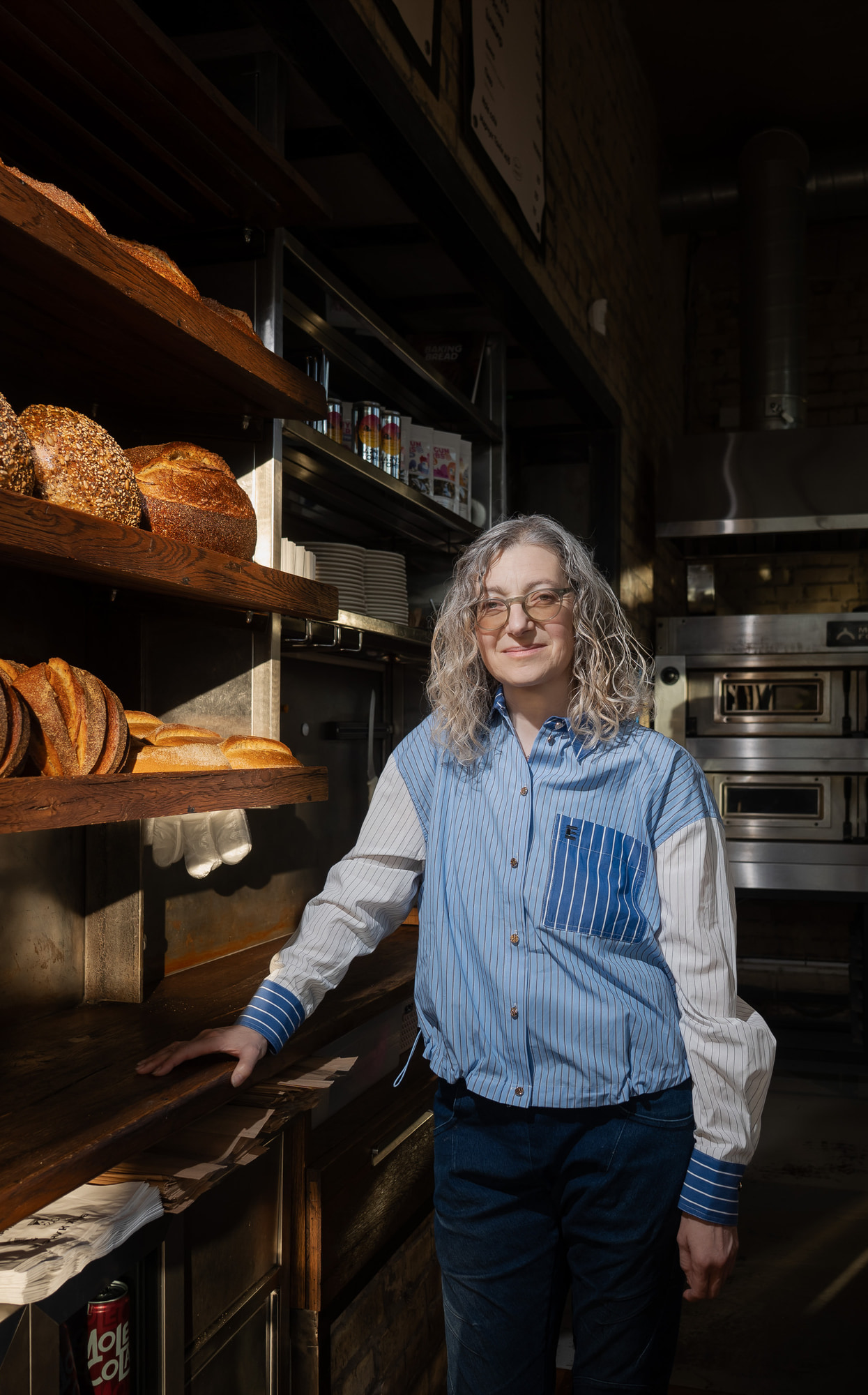
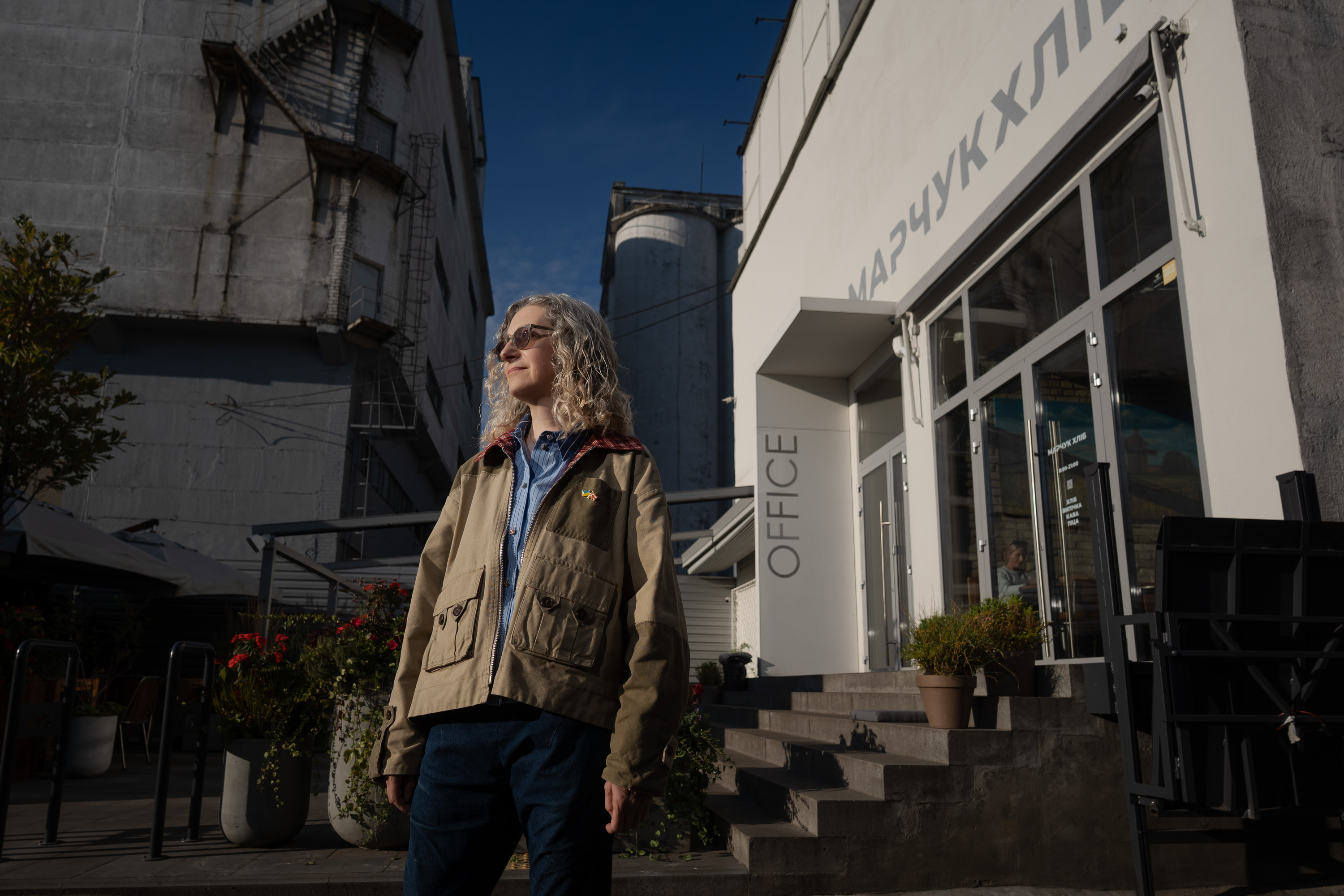
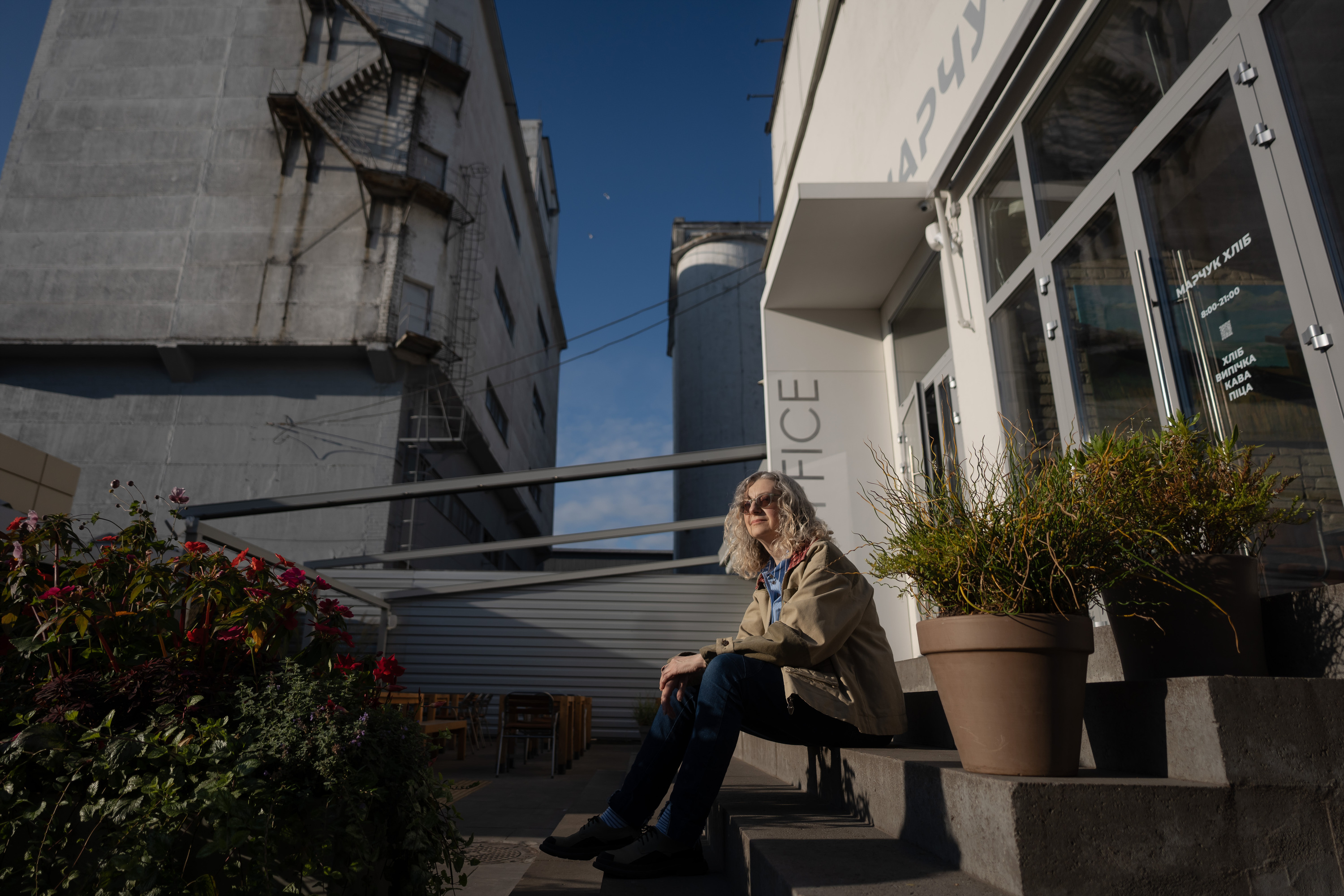
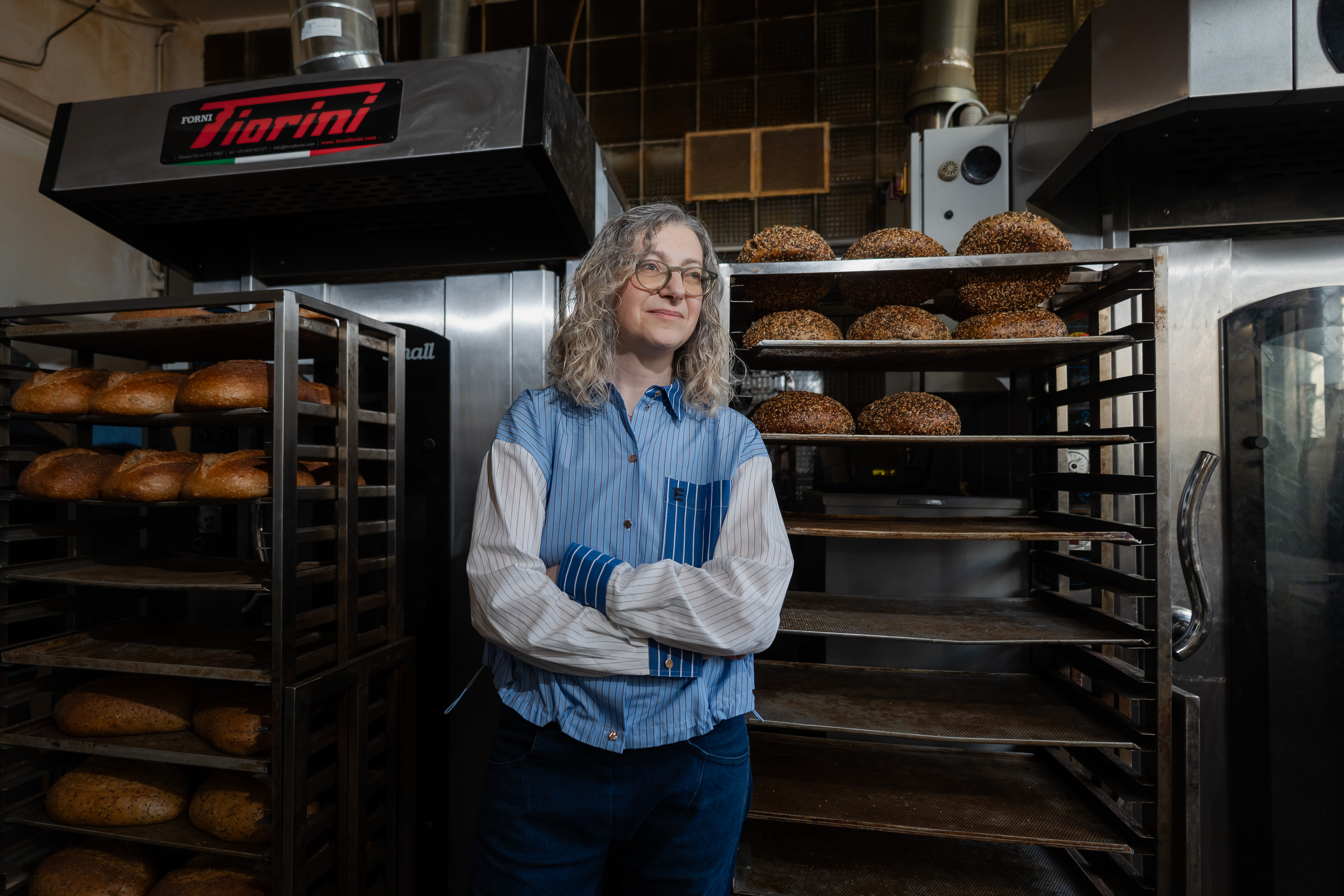
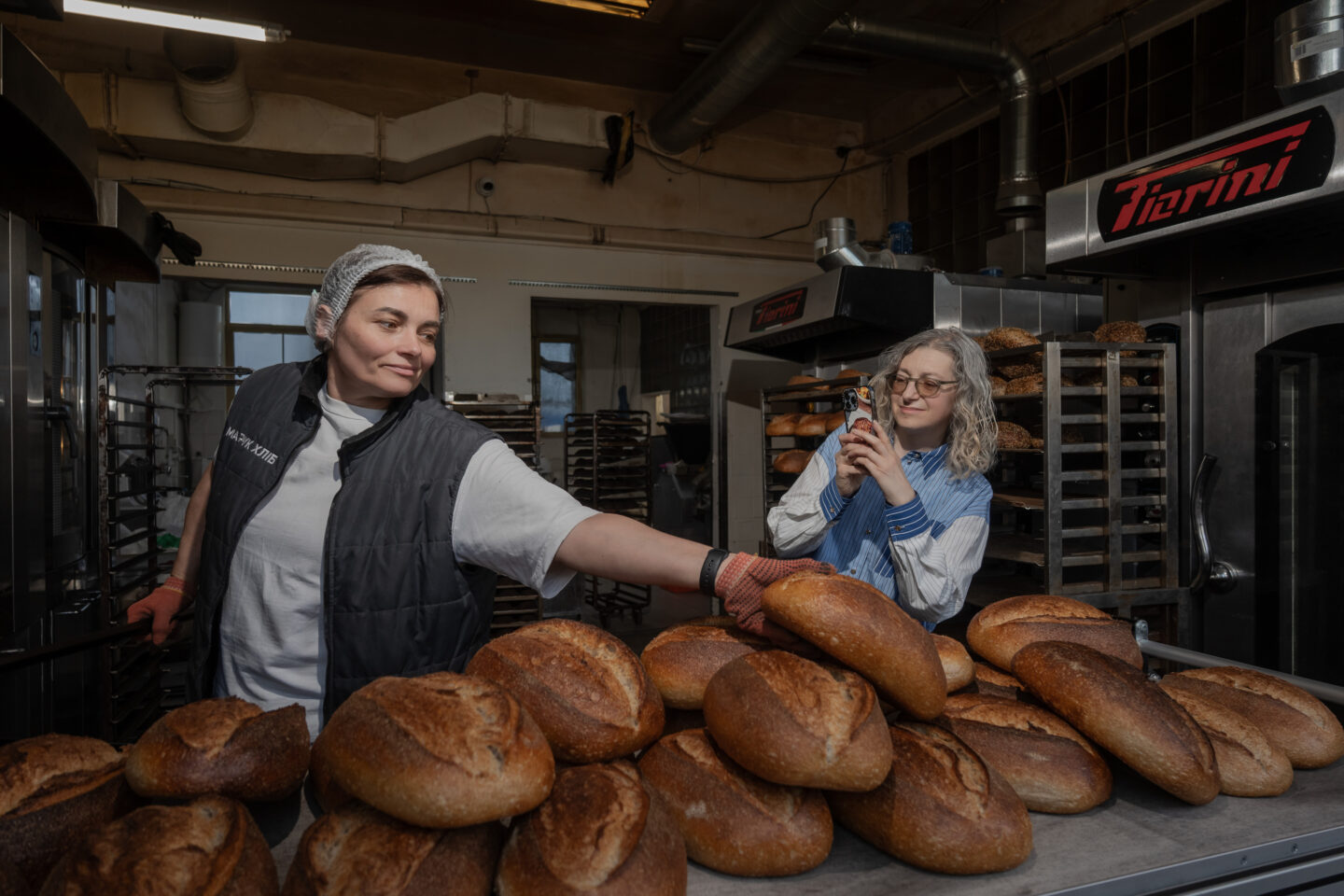
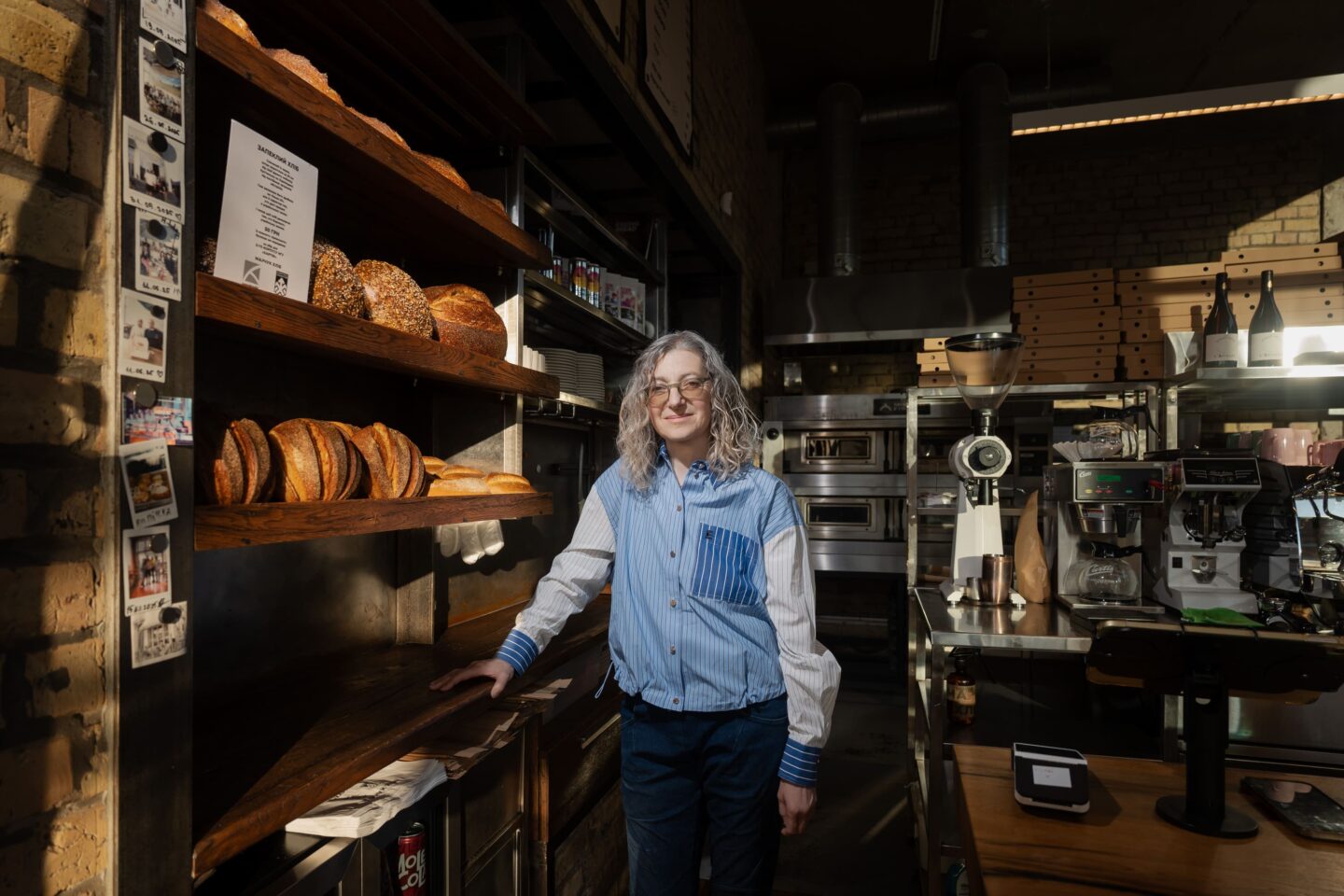
The editorial team would like to thank the team at Marchuk Khlib for their help with the photo shoot for this piece.
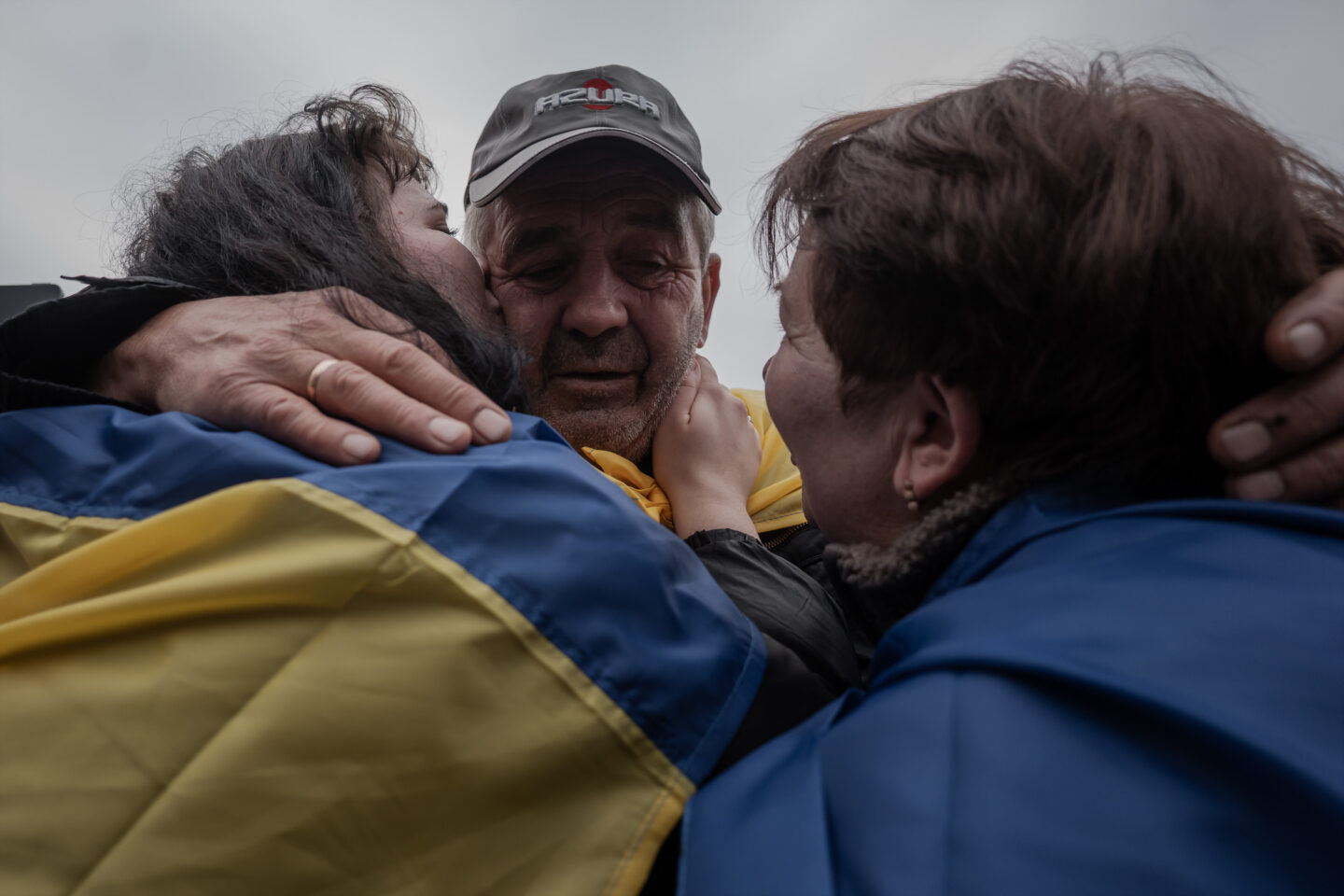
Hundreds flee Oleshky, where electricity, water and food are scarce. This is their first reunion with loved ones in free Ukraine
Yaroslava Tymoshchuk, Danylo Pavlov
Inheriting a Legacy Without Blood Ties
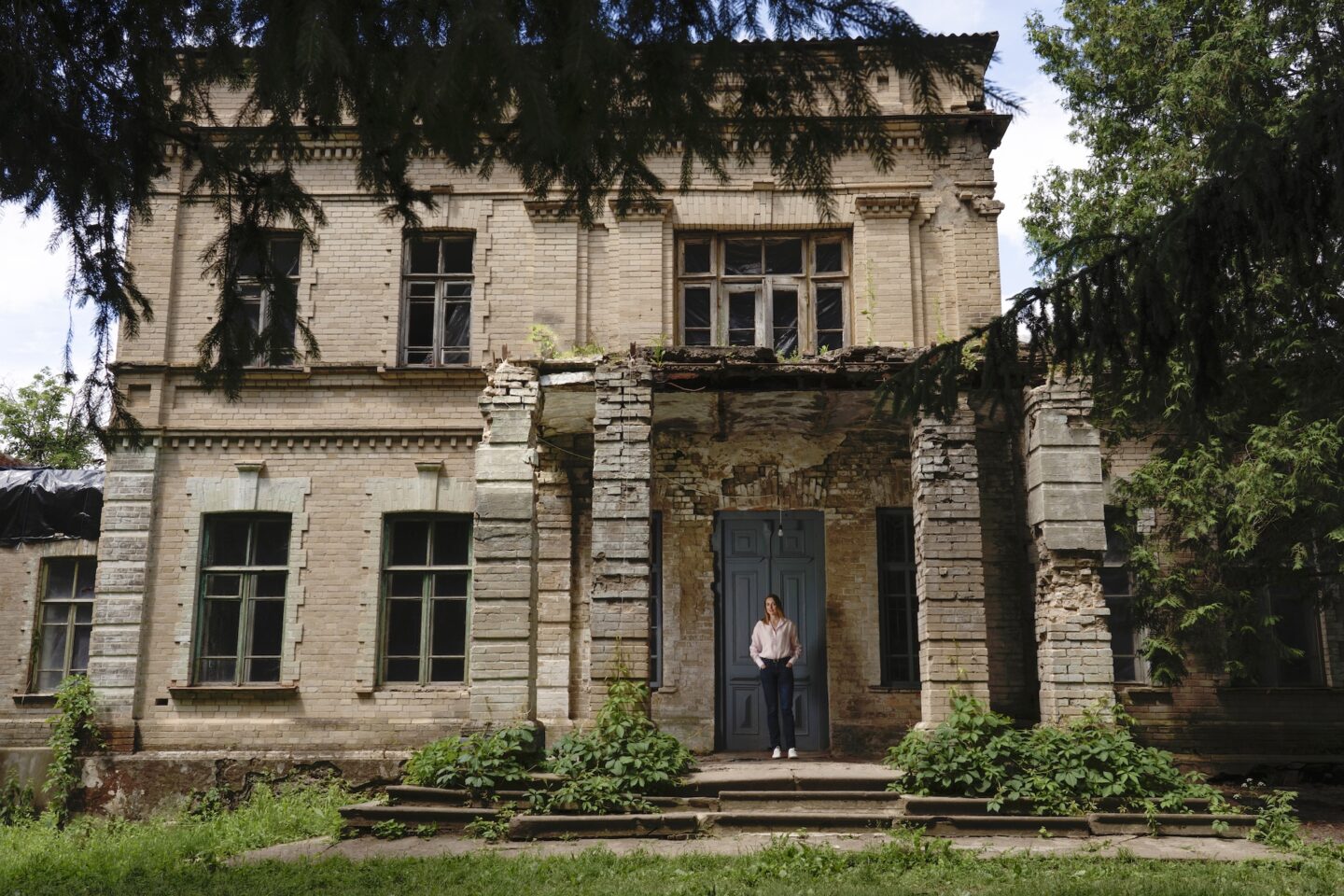
Breathing new life into a neglected estate means recovering forgotten fragments of history
Olga Myrovych, Polina Polikarpova
The Men Who Turned FPV Drones into Weapons
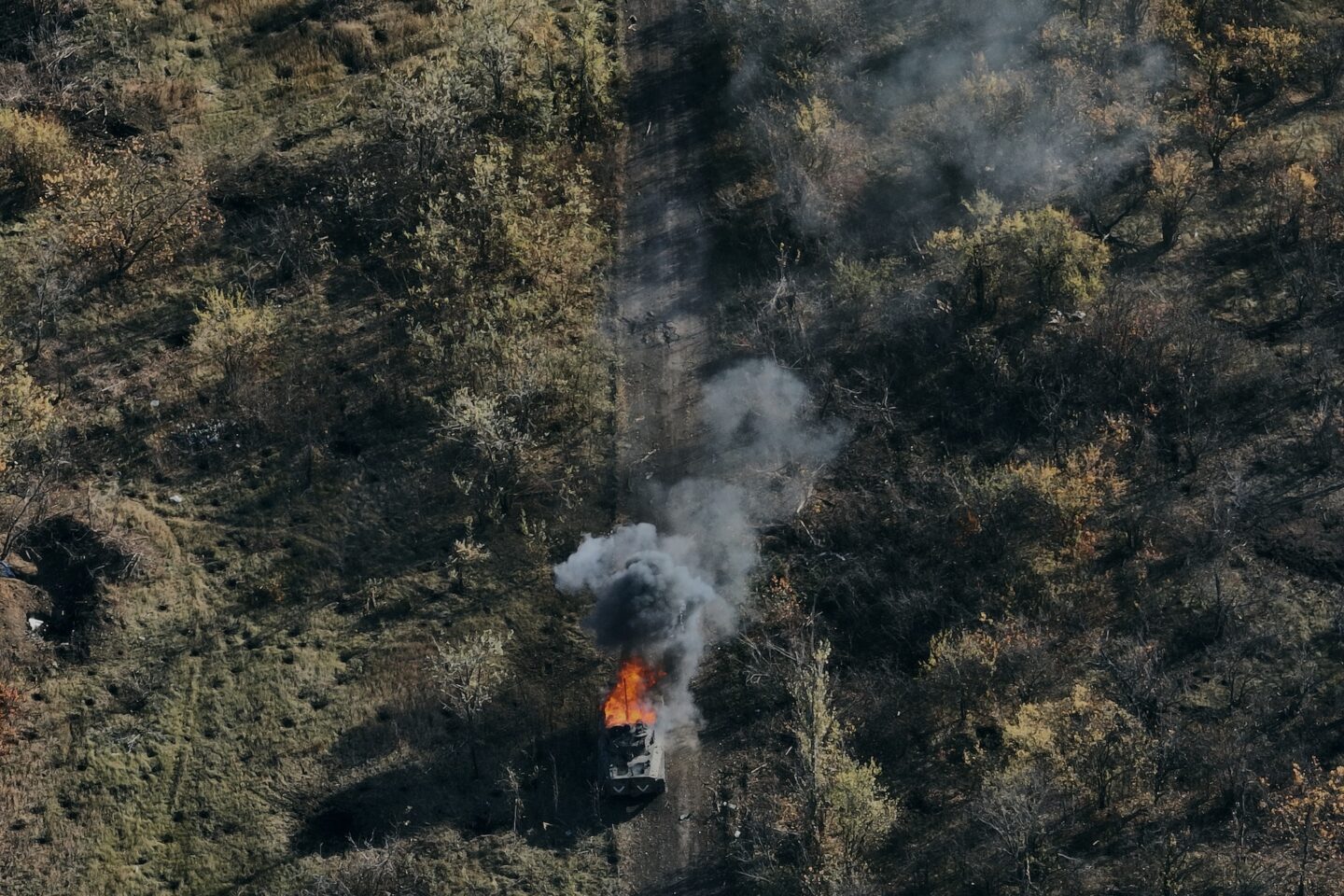
Driven by a shortage of artillery shells the new generation of Ukrainian soldiers sought ways to defend themselves against the Russians — and rewrote the rules of modern warfare
Kostiantyn and Vlada Liberov, Sofiya Varzar
Думки
What I Dream Of
Thinking about the future, hoping for the future, fearing the future — these are uniquely human traits
Volodymyr Yermolenko, Vadym Blonsky
Calling Things by Their True Names
Hope is not assuming that everything will be all right. Hope is a deeply held belief that all our efforts have meaning
Oleksandra Matviichuk, Vadym Blonsky
Remain Partially Soft
On Ukrainian women who grew armor over their skin
Alina Sarnatska, Vadym Blonsky
Інтерв’ю
Felicity Spector: ‘Food Is a Wonderful Window into Understanding Culture’
The British journalist and author of “Bread and War” on cultural bridges, dispelling illusions and her favorite Ukrainian food.
Daryna Tymkiv, Danylo Pavlov
‘What If the Roof of Westminster Abbey Were Burning?’
Charlotte Higgins, Chief Culture Writer for The Guardian and author of “Ukrainian Lessons,” on translating experience and the art that will shape the memory of war
Olesya Yaremchuk, Julia Kochetova
Nataliia Kryvda: On the Art of Responsibility
A cultural studies scholar and Doctor of Philosophy discusses women’s leadership in times of war, Russia’s attempts to appropriate Ukrainian culture and “Sophianity” as the defining trait of Ukrainian resilience
Tetiana Katrychenko, Valentyna Polishchuk
Спадкоємці
Шістнадцятий номер журналу літературного репортажу та документальної фотографії Reporters — про тяглість поколінь, яку в нас відібрали, і спадок, який ми знову набуваємо і прагнемо передати нащадкам.
Меншовартість, яка доймає багатьох українців, тягнеться звідти — від пограбованих і вбитих людей, наших предків, які в кожному поколінні мусили вибудовувати все з нічого, а не множити традицію.
Сьогодні ми — чи не перше за довгий час покоління, яке знову має що передати, ба більше, навіть зачерпнути трохи спадку з минулого. Покоління, якому дістанеться цей спадок, частково вже тут — і от-от прийме на себе країну. Ми ще не знаємо, якою вона стане для них: країною війни чи країною після війни. Що опиниться в руках і на плечах цих людей — матеріально й морально, — значною мірою залежить від нас.