A cultural studies scholar and Doctor of Philosophy discusses women’s leadership in times of war, Russia’s attempts to appropriate Ukrainian culture and “Sophianity” as the defining trait of Ukrainian resilience
Tetiana Katrychenko, Valentyna Polishchuk
11.07.2026
Tetiana Katrychenko, Valentyna Polishchuk
11.07.2026
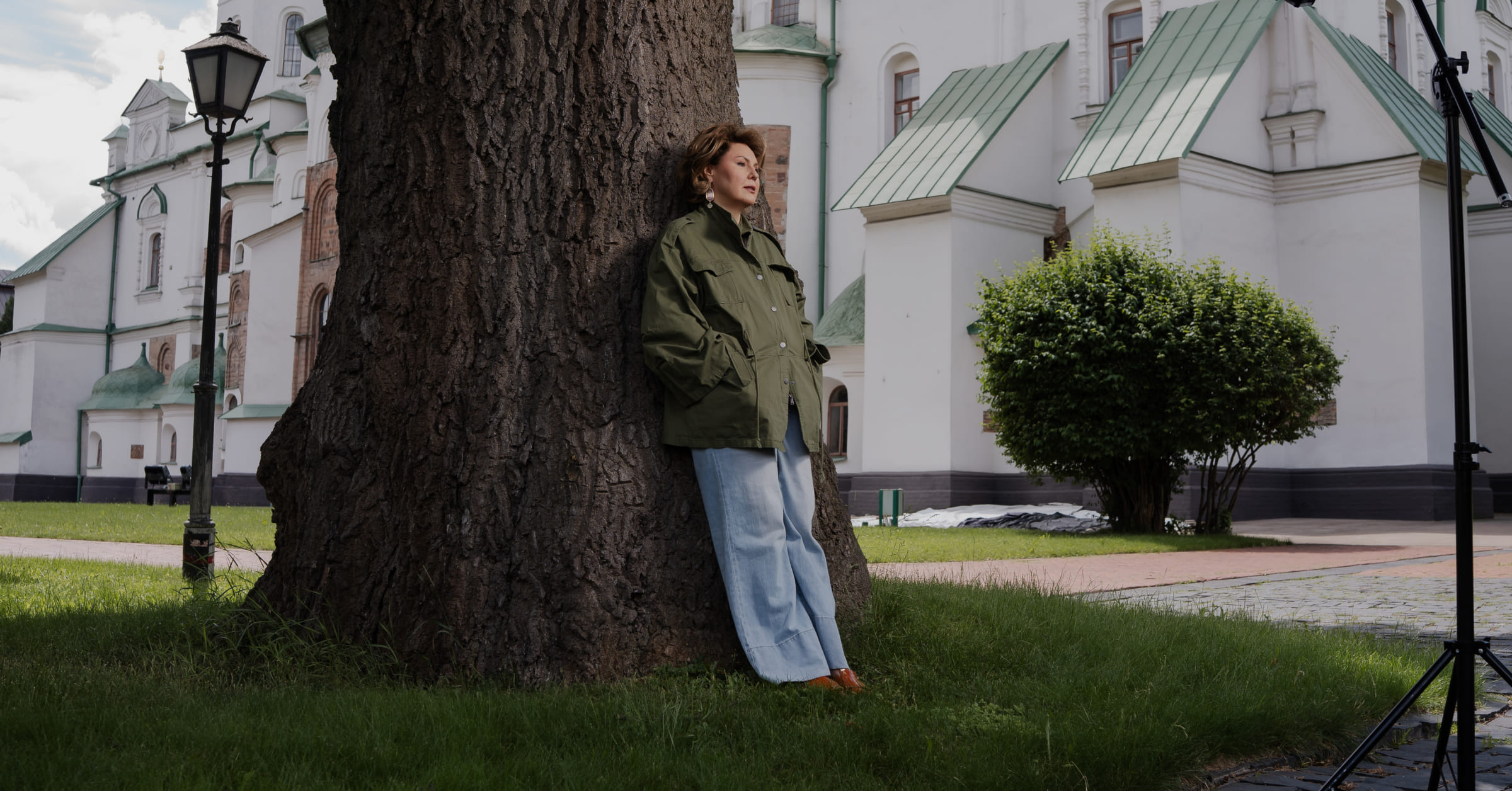
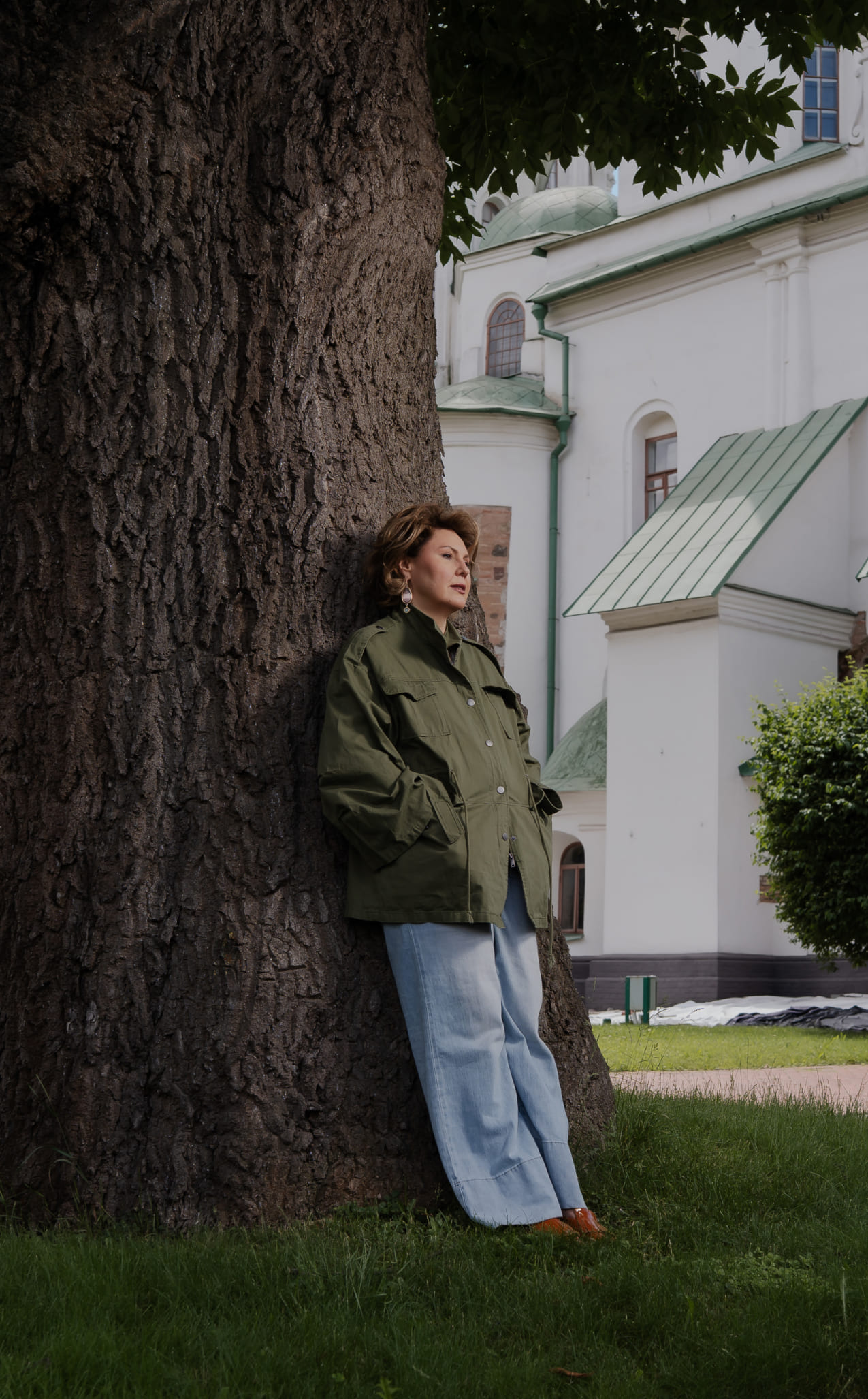
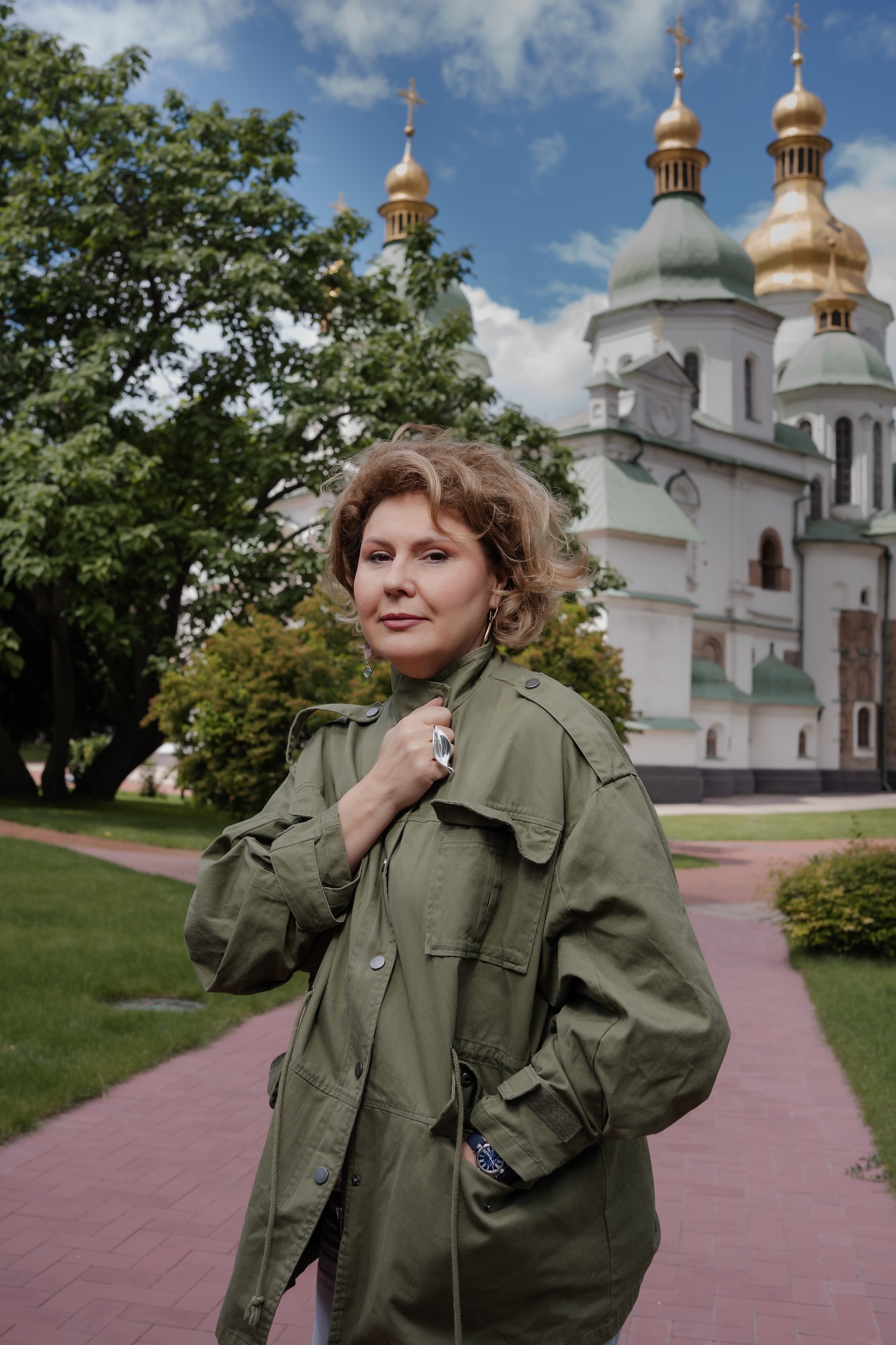
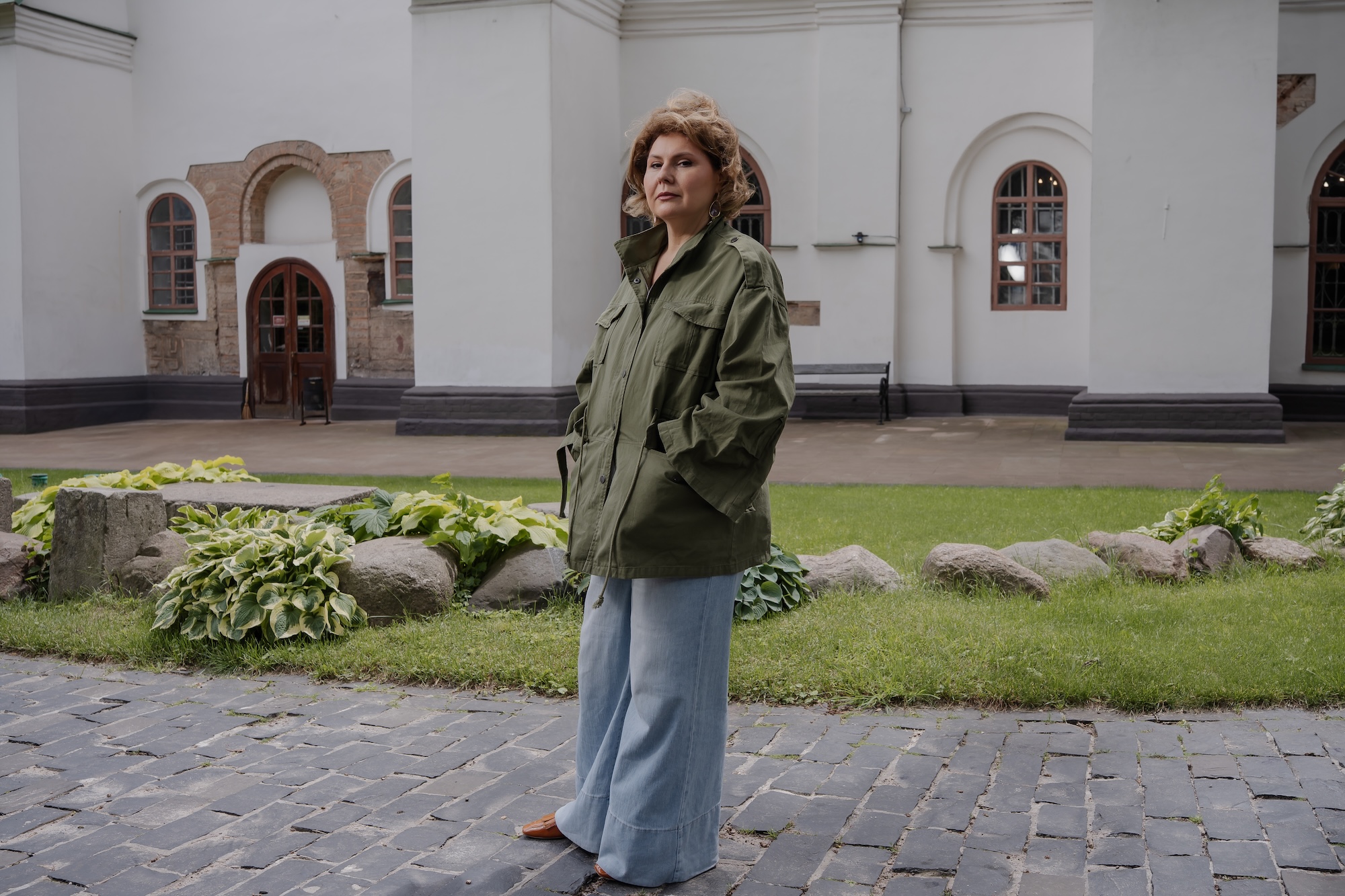
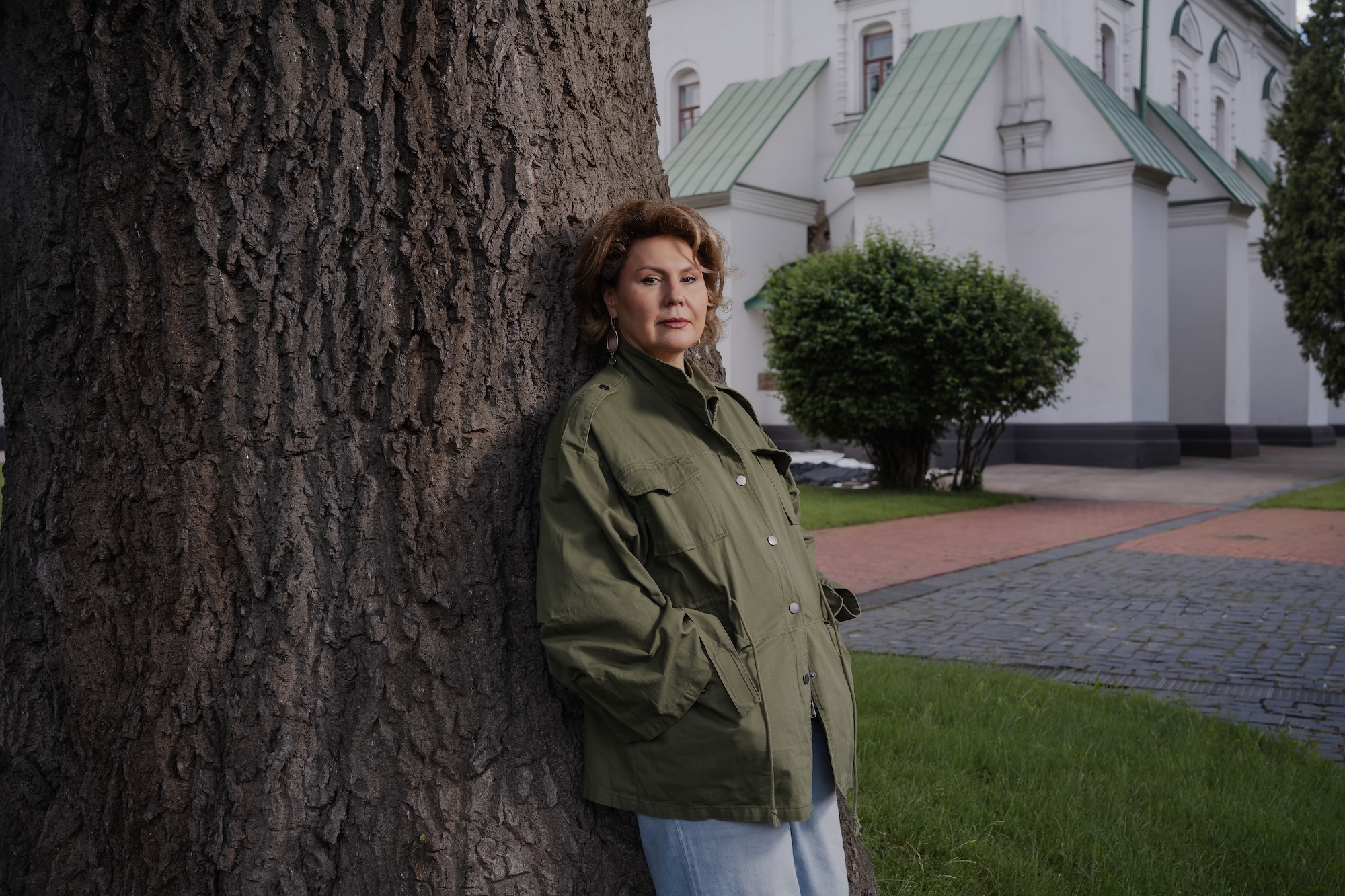
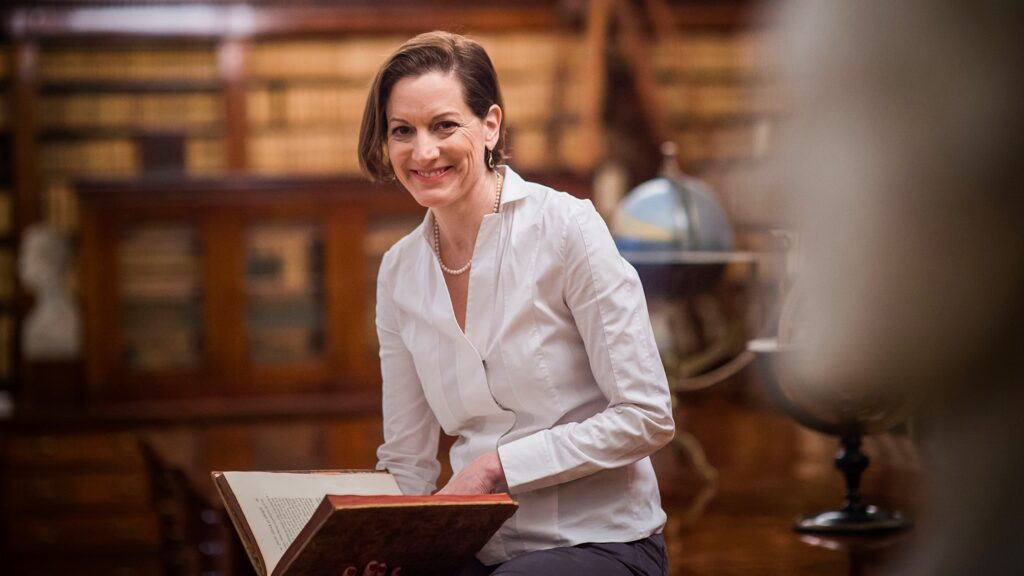
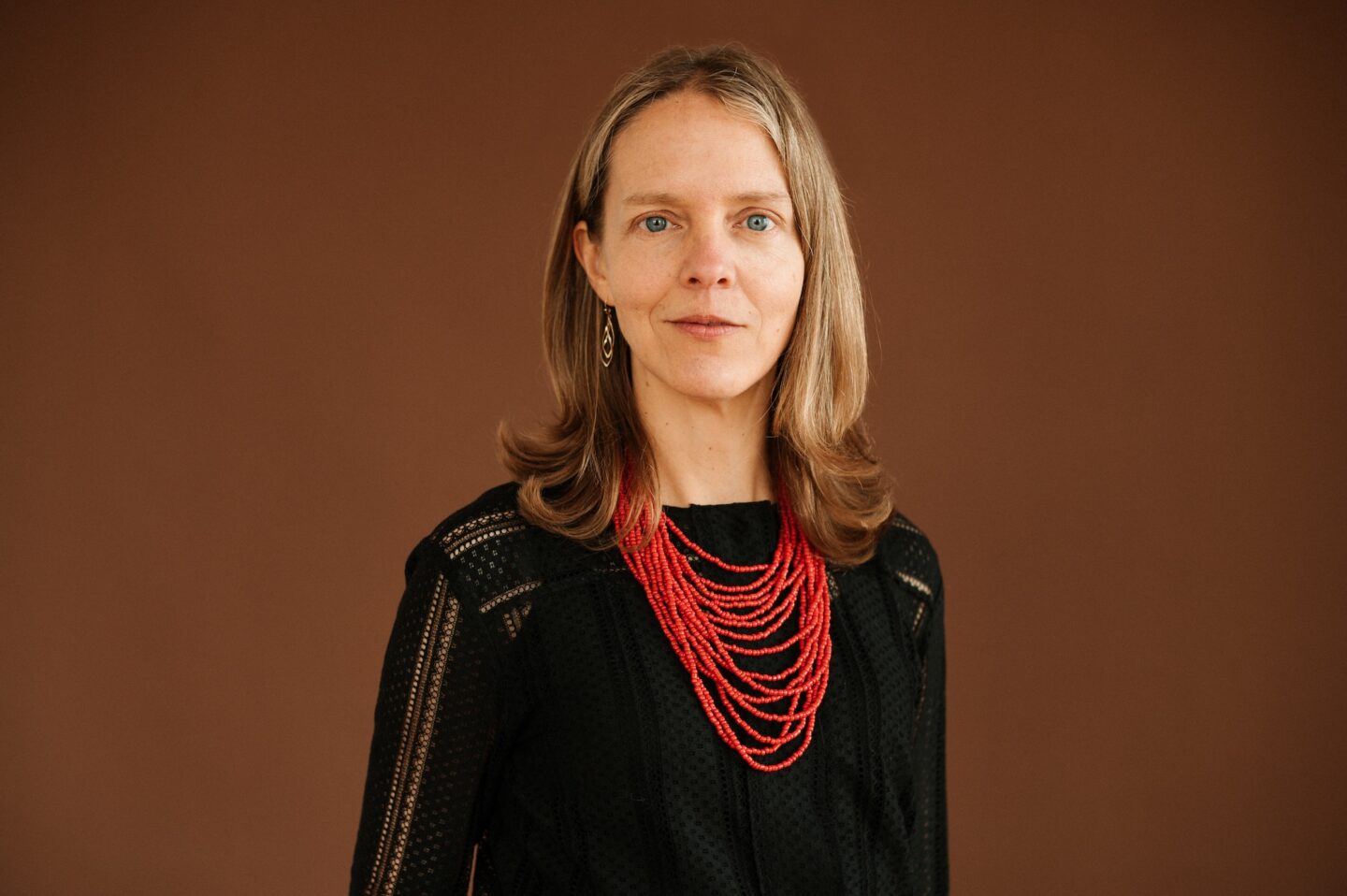
Nataliia Kryvda is the chair of the supervisory board of the Ukrainian Cultural Foundation, a professor at the Department of Ukrainian Philosophy and Culture at Taras Shevchenko Kyiv National University, and the academic director of the MBA programs at the Edinburgh Business School. She researches the philosophy of culture, cultural identity and contemporary transformations in Ukrainian society — in her official capacity. In everyday life, she is a Kyiv native who feels the pulse of her hometown, with a deep knowledge of its history over the past millennium. In her view, being Ukrainian is a conscious daily choice, regardless of one’s origins or place of birth.
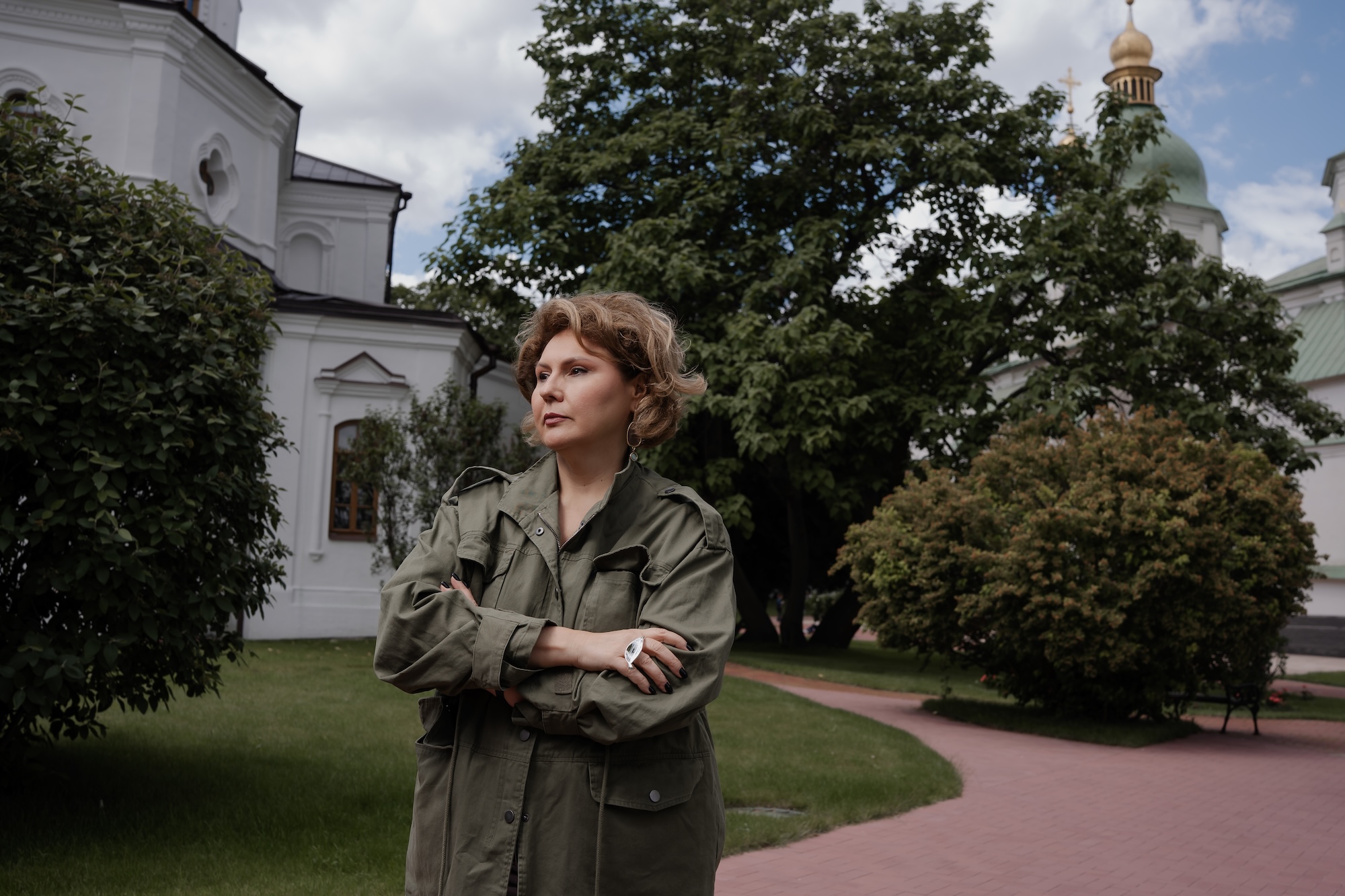
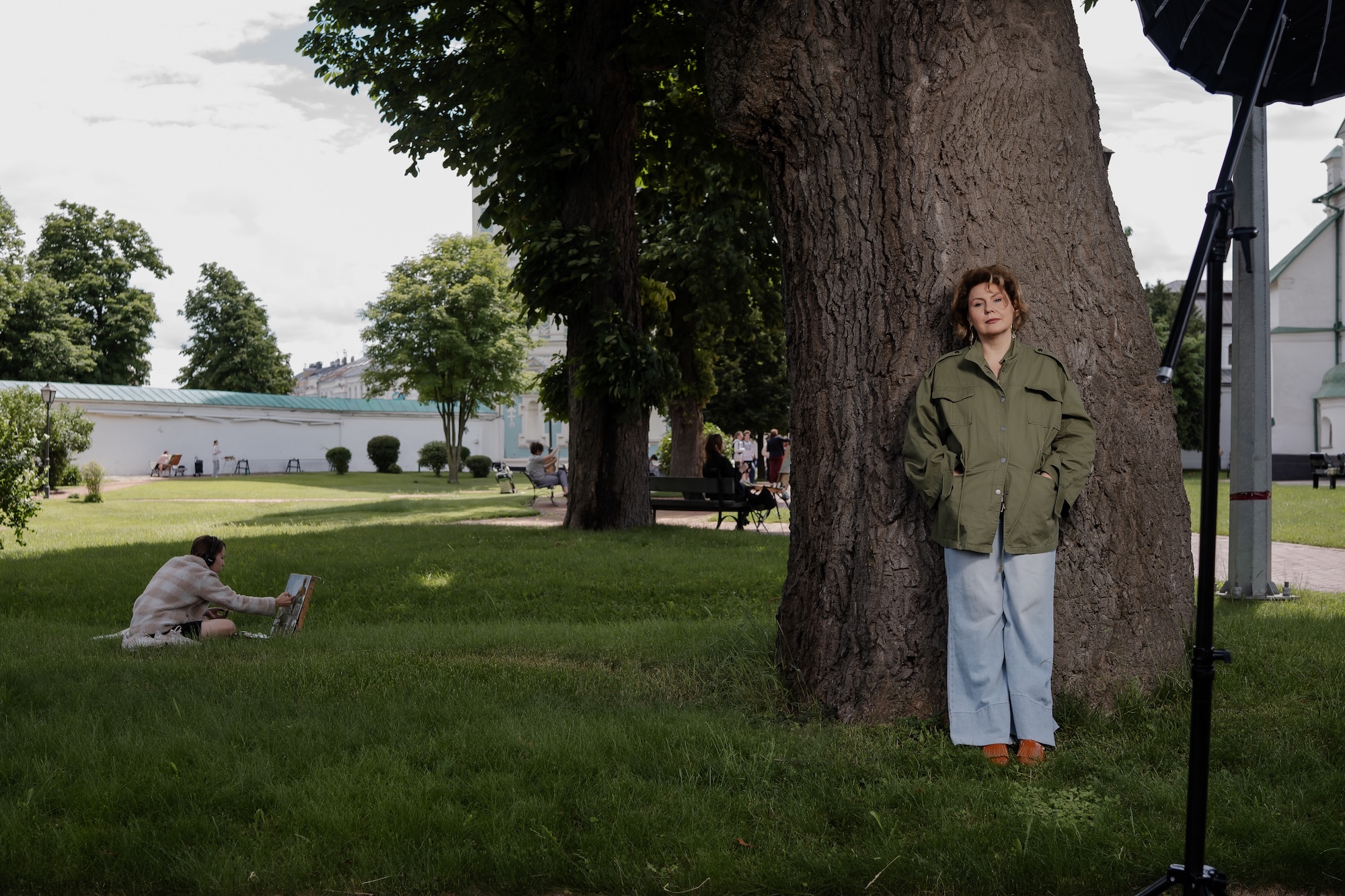
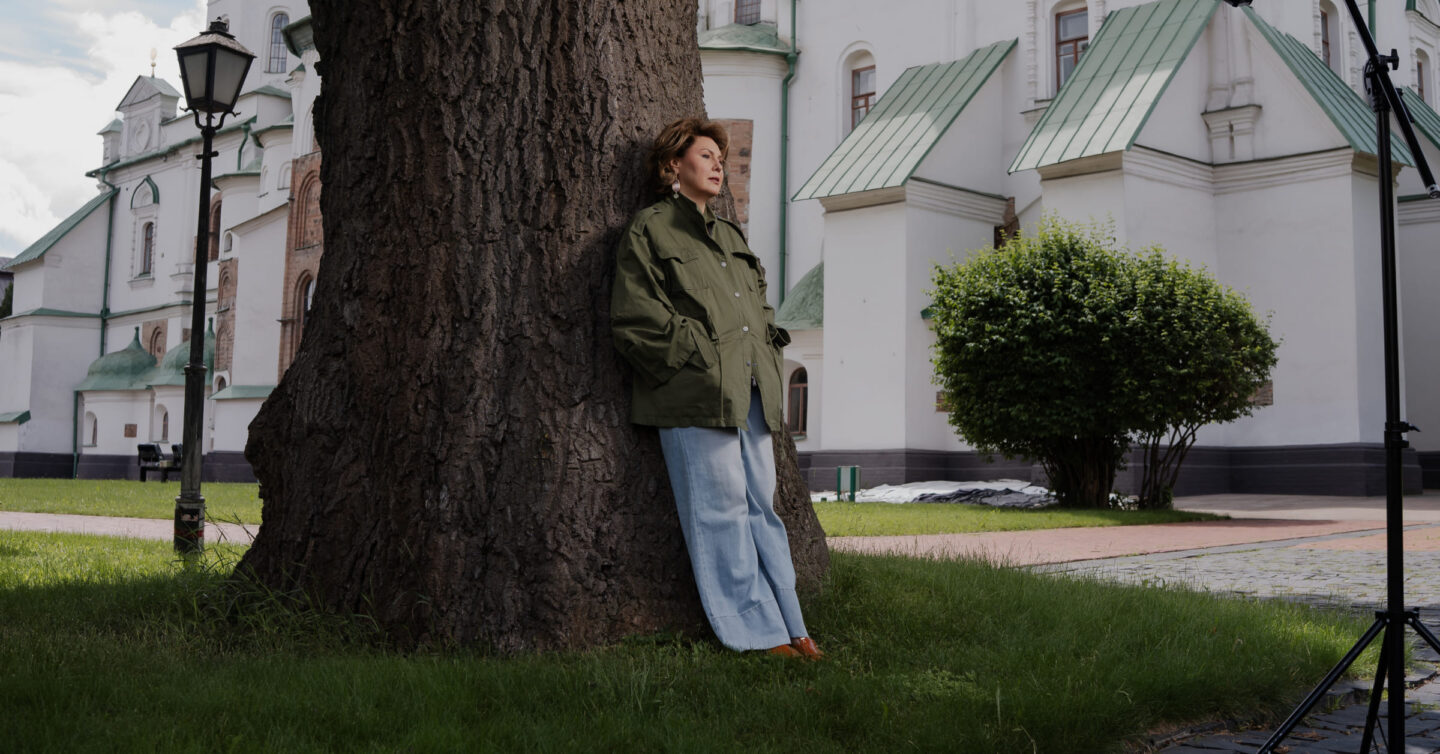
In her interviews and lectures, Nataliia talks about Ukrainian culture as a way to understand oneself, the collective memory that shapes society and identity. In this story, we’ve tried to blend the professional with the personal. We wanted to talk not only about her academic work but also about her experiences as a teacher and a student, her transition to using Ukrainian in everyday life and her worries for her daughter, a tactical medicine instructor. We also took a stroll through Kyiv, savoring the scent of lilacs as we walked around the Botanical Gardens and St. Sophia Cathedral.
This interview was made possible thanks to the support of The Ukrainians Media community — hundreds of people who believe in independent, high-quality journalism. If you value our work, consider supporting us and help us tell more meaningful stories.
“No one has thought to ask me about my personal life before,” says Nataliia as she invites us into a small house with a tall attic. It’s tucked away in a courtyard on Volodymyrska Street, across from the National Opera. The professor’s office is on the first floor.
The walls are made of wood, with built-in cabinets and shelves; the interior features a leather sofa and armchairs, as well as an antique desk. It’s a space that looks frozen in time. “These are all my books,” says Kryvda, as if anticipating the first question. “Books about the Armed Forces of Ukraine, about Ivan Pinzel [a sculptor known as the genius of Ukrainian Baroque — Ed.], about art, 1980s architecture and Timothy Snyder’s ‘On Freedom.’” After a pause, she adds: “And calendars from Come Back Alive and Azov. I work with them.”
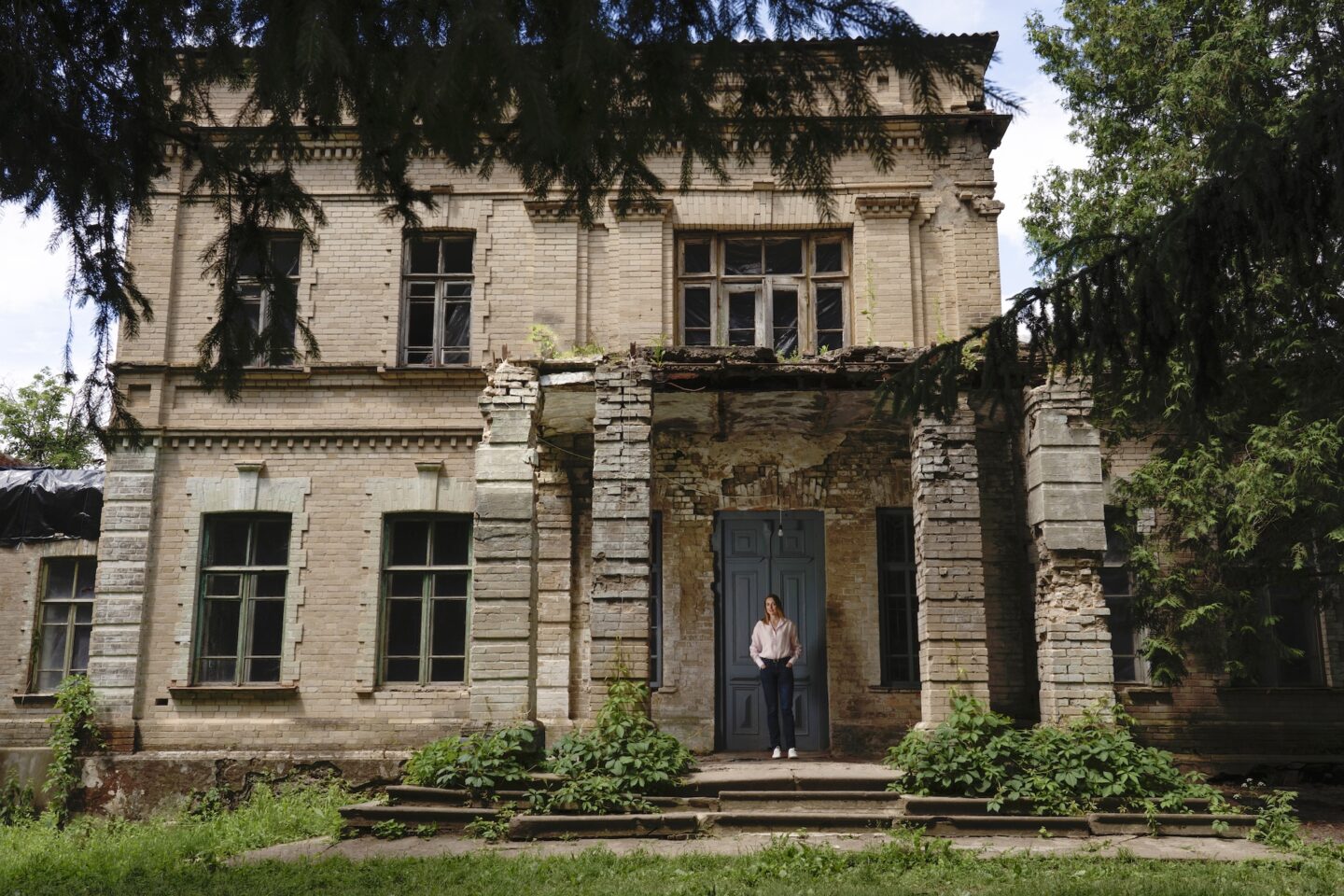
The estate, built in the early 20th century in the late Art Nouveau style with neoclassical elements, belonged to Volodymyr Illiashenko, a financier at the Kyiv Land Bank. In the 1920s and 1930s, Nataliia explains, the building was divided into rooms. Writers, poets and artists lived in each one. One of them was Valerian Pidmohylnyi. He wrote part of his novel “The City” here and not in Kharkiv. This thought, says Kryvda, warms her heart.
“Given its ornate decor, this building isn’t an integral part of my identity. If we’d met at Shevchenko University, that would be a different story. Or at St. Sophia Cathedral. Here, I’m more of a guest. But I enjoy working within these walls,” she explains.
She takes her coffee black, without sugar.
The Illiashenko Estate is now home to the Institute for National Resilience and Security. The institute conducts research on how to make Ukraine more resilient to war, crises and security threats. Nataliia Kryvda is a research consultant there.
Kyiv in May
***
When Nataliia was born, her parents lived in a communal apartment on Prorizna Street, which runs uphill from Khreshchatyk toward the Golden Gate. Later, her father was assigned an apartment on Vynohradnyi Lane in the Lypky neighborhood. The lane appeared on the city’s map in the mid-19th century; its name comes from a vineyard that once grew there. The apartment buildings, however, were built there in the 1960s.
***
Kyiv in May is her favorite — the air is filled with the scent of lilacs and the Hryshko Botanical Garden blooms above the Dnipro. Since childhood, she has known every gap in its fence. This knowledge came in handy in the spring of 2020, when the botanical garden was closed due to COVID-19. Even then, she and her daughter still found their own pathways to the birch grove, the rose garden and the greenhouse.
The Kyiv of her childhood is a city of fountains — in Mariinsky Park, near the Golden Gate and at the Philharmonic. In the heat, they serve not just as decorative elements, but also as places where you can cool off.
***
After school, she and her classmates would sometimes go to the Kyiv-Pechersk Lavra. They’d climb up to the bell tower even before the restoration, when the spiral staircase was still there, but the inner landings were already gone. It was dangerous, scary and exciting. At the Lavra, they absolutely had to climb over the fence into the apple orchard, wait until the guard looked away and pick an apple. Not because they didn’t have enough food at home — this was just what childhood tasted like.
Another quintessential taste of Kyiv for Nataliia Kryvda is the Kyiv cake. Even though almost no one in her family likes it, she still buys a small one for herself on special occasions, while choosing a different dessert for the rest of the family. At one time, a special Prague cake was on this list. There’s a legend that its recipe was borrowed from the Austrian Sacher cake. “I was in Austria, and I tried Sacher — it tastes nothing like it,” she adds with a laugh.
For Kryvda, Kyiv isn’t just the city where she lives. It represents the importance of the moment and the continuity of history. She calls it fantastically historic, its thousand-year history seeped into its everyday existence. She speaks, as if voicing Kyiv’s thoughts: “Yes, I’m a thousand years old, and I know that for sure. St. Sophia stands within me, older than Notre-Dame de Paris. Are you going to lecture me about eternity?”
Also, says Nataliia, Kyiv is warm and intimate. It loves its leisurely pace, its gardens and long walks. But when necessary, it knows how to defend itself. That was true in the days of Kyivan Rus’, and it remains true today.
The path towards a choice
The realization that history is more than just what’s written in a textbook came to Nataliia Kryvda while she was still in school. Her history teacher, Svitlana Petrovska, organized a school theater group with the older students. At first, the students worked with archives, searched for documents, and met with eyewitnesses; only then did they put on their plays. For one of the plays, they tracked down the class of 1941, who fought in World War II. Some of them hadn’t seen each other in decades; they reunited in the school auditorium. Nataliia felt it: she was part of history and felt responsible for it.
It seemed as though Nataliia Kryvda’s path had been predetermined. She wanted to study in the Red Building of Kyiv University. But at the same time, she dreamed of studying art history, and to do that, she needed to enroll in an art institute. The creative entrance exam required drawing skills. “I draw about as well as I dance. And just as well as I sing. That is, not well at all,” Nataliia explains. Her mother suggested a solution: the Chair of Ethics and Aesthetics at the Philosophy Department.
Since then, the Red Building has become her place of strength. Here, she not only studied but also presented her dissertation, witnessed the founding of the Department of Ukrainian Philosophy and Culture and stayed on to teach.
Kryvda speaks about the Soviet past without trying to embellish or dismiss it: “I was a happy Pioneer and Komsomol member.
There were two moments in her life when it became clear that the time for change had come. The first was in the early 1990s, when she discovered Ukrainian philosophy and culture for herself. She read works by historians Mykhailo Hrushevsky, Volodymyr Antonovych, and Ivan Krypiakevych that had been republished at the university’s initiative. A view of Ukrainian culture as a distinct intellectual tradition, rather than an appendage to Russian culture, began to take shape. She then spoke enthusiastically about it to her students. “With the enthusiasm of a neophyte,” the professor notes.
In the late 1980s, the Ukrainian language was rarely spoken at the university, recalls Nataliia Kryvda. In the philosophy department, only Professor Danylo Ostrianyn gave lectures in Ukrainian. To many, this seemed strange and edgy: just one step further, and he wouldn’t be considered “normal”; just one step further, and he’d simply be a laughingstock, she says — even though he was an outstanding scholar.
Nataliia says she grew up in a Russian-speaking family and graduated from a regular school in Kyiv. Her parents were part of the Soviet intelligentsia and read books in Russian.
They had no family legends about the UPA or embroidered shirts that were passed down from generation to generation.
So, for Kryvda, the Ukrainian language has long been the language of her profession. She says that ever since she began teaching at the university, she has given lectures exclusively in Ukrainian. She admits that at first it sounded a bit awkward — she wasn’t a native speaker and had to learn it. In her daily life, she spoke Russian because it was more convenient. “My Russian is quite good and proper — not a Kyiv dialect,” she adds.
The second turning point came in the winter of 2013. One morning, Kryvda woke up and found a note in the kitchen: “Mom, don’t worry. I’m on the Maidan. I’m with my friends. Everything’s fine.” On a cold December night, after the Berkut special police unit had beaten up student protesters, Nataliia’s seventeen-year-old daughter, Mariia, left home.
Nataliia Kryvda’s students also went to Maidan, even though the university administration had been instructed not to let them go.
“It was then that I realized that the people I teach sometimes turn out to be wiser than I am. They were quicker to see where the light side was and took it. And I asked myself: where am I right now? Who am I? My daughter and her classmates, my students, became my teachers,” Nataliia reflects. She also went to Maidan, where the Revolution of Dignity was unfolding.
A daily referendum
“Identity is not a state, but a process.” “Being Ukrainian is a choice.” Nataliia Kryvda repeats these two statements in her lectures, interviews, and public speeches. She speaks of identity not as an inheritance that a person receives at birth, but as a daily practice — through language, culture, responsibility and solidarity.
Personal identity is the answer to the question “Who am I?”; collective identity is the answer to “Who are we?” Nataliia cites the British sociologist Anthony Smith, who discusses two ways national identity is formed. The first is through the blood. The second is through values. The first is based on shared ancestry, language, traditions and rituals. “It’s like a sense of an extended family,” she comments. The second is based on a conscious choice. “You want to be part of this community not because you were born here,” she continues, “but because you share its values, accept its rules and see your future alongside it.”
That is precisely why, during her lectures, Kryvda asks students how Ukrainian national identity is formed. The answers vary each time, but they always lie at the intersection of the ethnic, the inherited and the chosen. “Ukrainians, Crimean Tatars, Jews, Gagauz, Poles — they’ve all chosen to be part of a single political nation,” says Nataliia.
To explain this idea, she unexpectedly turns to “Harry Potter.” One of the main characters, Hermione Granger, is asked, “Are you a pureblood?” She is a “mudblood,” or of Muggle (non-magical) descent. It’s generally believed that the children of wizards are the true wizards, while others aren’t quite the same. But Hermione is, in fact, a highly skilled witch. J.K. Rowling’s story shows just how absurd the very idea of judging a person by their background really is.
Nataliia smiles: “Are you really ‘pure-blooded’? I’m not. And neither are you. But we’re all citizens of Ukraine. And that’s our choice.” And then she puts her thought into words: “Identity is a daily choice, a daily referendum. Through my life, my decisions and my work, I vote every day to affirm that I want to be a citizen of Ukraine, a Ukrainian — not just because of my heritage, but because of my values.”
Concepts such as dignity, freedom, democracy, equality, the rule of law and respect for human rights are not abstract.
“It is these values that make us a political nation. These are the values of the European Union, as set forth in the Treaty of Lisbon. These values are shared by EU member states in a society characterized by pluralism, non-discrimination, tolerance, justice, solidarity and equality between women and men. Right now, experts, government officials and civil society are working on amendments to the law on identity, discussing the list of socio-political values of Ukrainian society,” the researcher adds.
She recalls Nadiia Svitlychna, a journalist from the 1960s. In 1972, the Soviet authorities convicted her of “anti-Soviet activities.” She served her sentence in a strict-regime Mordovian women’s camp in the village of Barashevo. While in the camp, Svitlychna did embroidery. In the spring of 2024, we saw one of the bookmarks she had embroidered at an exhibition dedicated to the artist Alla Horska, who was murdered by the Soviets.
“And only a Ukrainian eye will see the trident on that bookmark,” says Kryvda. “But I wanted to talk about something else: even in a Soviet camp, a woman convicted on political charges was given a needle and thread, whereas during this war, Russia refused to give Ukrainian female prisoners at the Olenivka colony a needle so they could sew a button onto their prison uniforms. And when we make this comparison, we’re not talking about sewing, but about dignity, about the right to be oneself. That’s when this folkloric, ethnic culture ceases to be merely a folk tradition, becoming a right to freedom and dignity.”
Throughout history, there have been many prohibitions imposed on those who lived within the borders of modern-day Ukraine: on language — the Ems Decree, the Valuev Circular; on the right to live on one’s own land — the deportation of the Crimean Tatars; and on religion — people were not allowed to celebrate Hanukkah or Sukkot. And these prohibitions are an affront to human dignity.
“It’s important to cherish our language,” says Nataliia. “But not just because it’s our native language, or because it’s beautiful, or because it’s the right thing to do. But because people paid for the right to speak it with their freedom and their lives. Because Stus was killed. Because in 1987, my classmate was expelled from the philosophy department not just for bringing flowers to the Shevchenko monument, but for reading his poems. Those poems were part of a school curriculum, but she was punished for performing a ritual of remembrance, for making a statement.” And after a pause, she adds: “That’s why, for me, language, like culture, symbolizes dignity, freedom and the right to be oneself.”
After 2022, culture finally ceased to be a realm of the “intelligentsia” or a pretext for pleasant small talk.
Russia uses art as a psychological lubricant, Kryvda adds — and not just in Ukraine, but everywhere in the world. In essence, Russia is raping the European way of thinking. And to make it feel less like rape and more like a “personal choice,” a passion, a “union born of love” — it turns to art. “Russian propaganda creeps into the consciousness of the average European on soft paws. They think that slipping a mention of Dostoevsky or Rachmaninoff into a conversation is cool; that it shows how intellectually advanced you are,” she explains.
In June 2024, the Parliamentary Assembly of the Council of Europe identified the erasure of Ukrainian cultural identity as one of the key causes of Russian aggression. At that time, the Assembly recognized that Russia is not only conducting military operations but is also implementing a systematic policy of destroying Ukrainian cultural and national identity through the destruction of cultural heritage, the banning of the Ukrainian language and education in the occupied territories, the looting of cultural artifacts and the imposition of a Russian identity. And this is a widespread practice, not isolated incidents.
“When I read that, I thought it was good that the members of the Ukrainian delegation to PACE, particularly Yevheniia Kravchuk, were able to convey this idea and make their voices heard, ensuring that this term was used: ‘Erasure of Ukrainian cultural identity.’ Erasure is erosion, the obliteration of identity. Not territories, not mineral resources, not Russian-speaking people, but the desire to erase our identity is the reason for this war,” adds Kryvda. “Later, PACE emphasized that Russia uses disinformation, historical falsifications and revisionism to justify its aggression. And this is not a new trend, but a continuation of its imperialist policy.”
Russia is appropriating Ukrainian history, engaging in assimilation, reframing and taking things out of context, the professor believes. Virtual and spiritual concepts are being used to justify an attack on a sovereign state.
For Nataliia Kryvda, knowledge is also a form of resistance. Either you know your history and culture, or you don’t know enough — and then you allow others to appropriate it.
“A person can be taken captive. They can be killed, like the children’s author Volodymyr Vakulenko. But if you know your history, love and practice your culture, and leave a legacy for your children — texts, cathedrals or synagogues, songs or icons, traditions and language — you cannot be completely erased,” she says.
She speaks of 1991 as a restoration of independence, not its birth. “Behind every Ukrainian soldier stand all the previous generations: Rus’ warriors, Cossacks, Sich Riflemen, fighters of the Ukrainian Insurgent Army and dissidents. This is not a grandiose image, but a historical continuity,” concludes Nataliia Kryvda.
In Sophia’s light
Nataliia first visited St. Sophia Cathedral — the oldest surviving Christian church in Kyiv — in ninth grade. Her history teacher took the class on a field trip — the very same teacher who had founded the school theater and taught them to see history beyond the pages of textbooks.
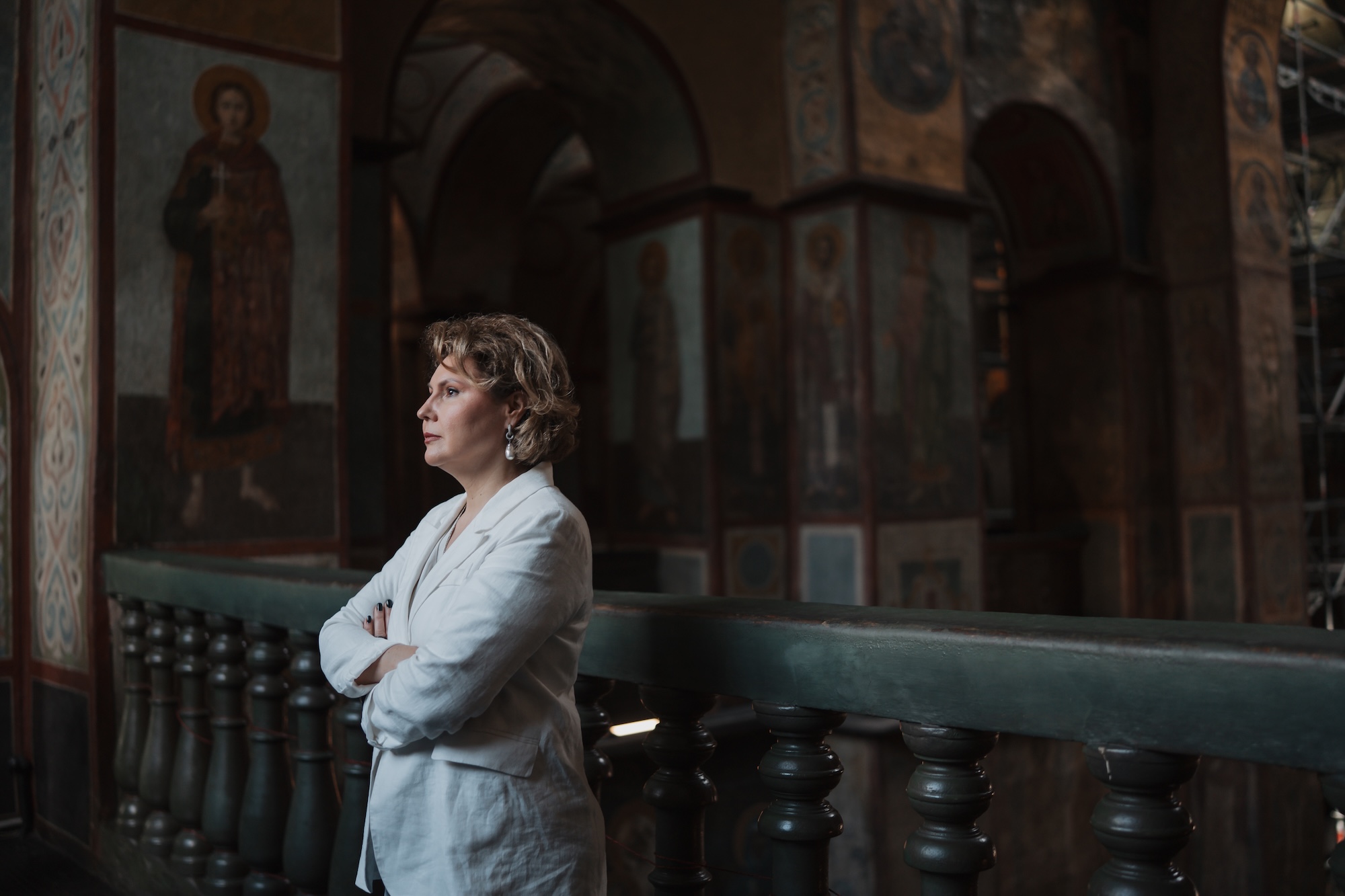
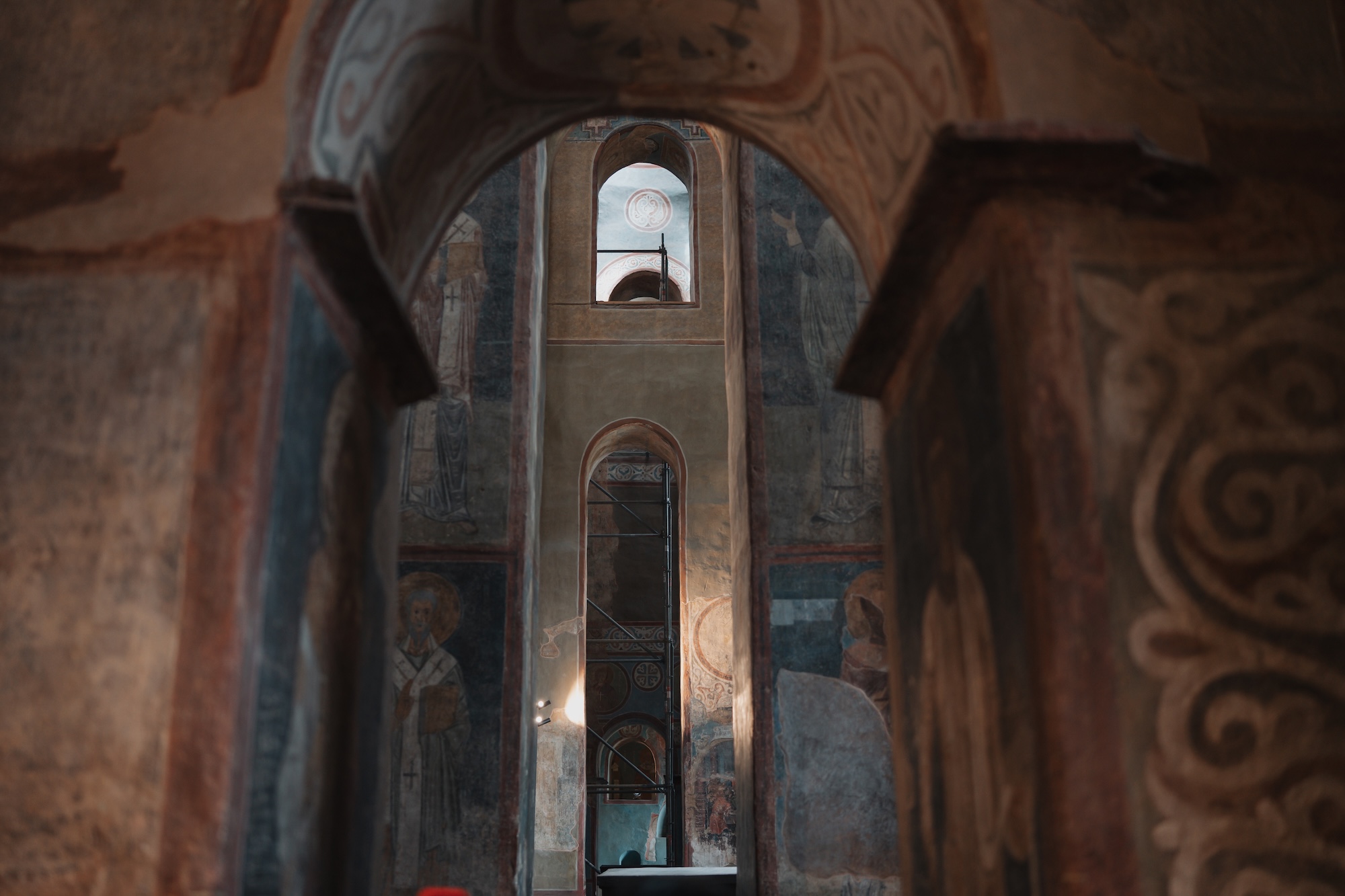
The cathedral left her speechless. “I remember how dim it was, the rays of light streaming through the windows and the Oranta. It was one of the most powerful experiences of my teenage years,” says Nataliia.
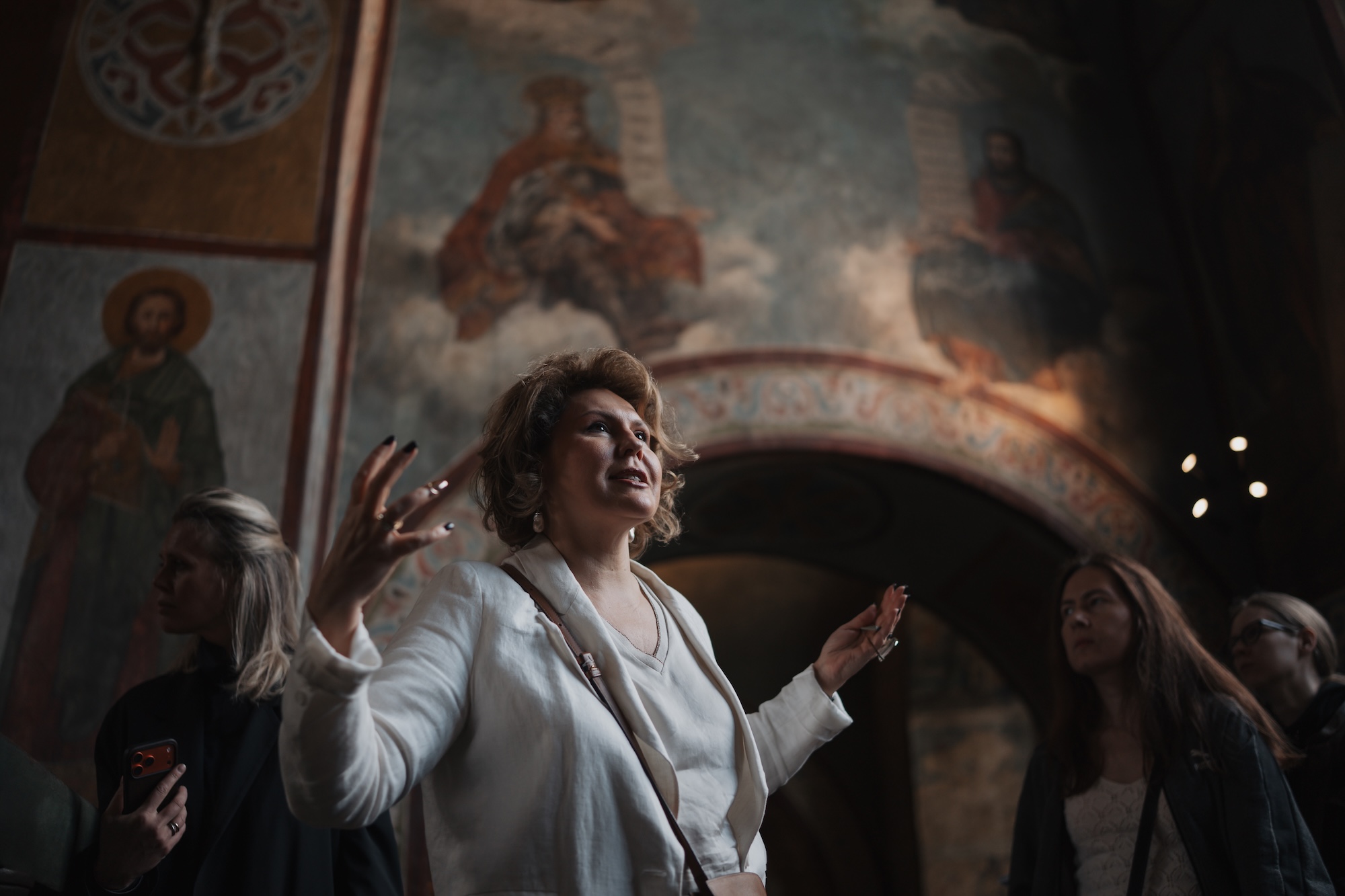
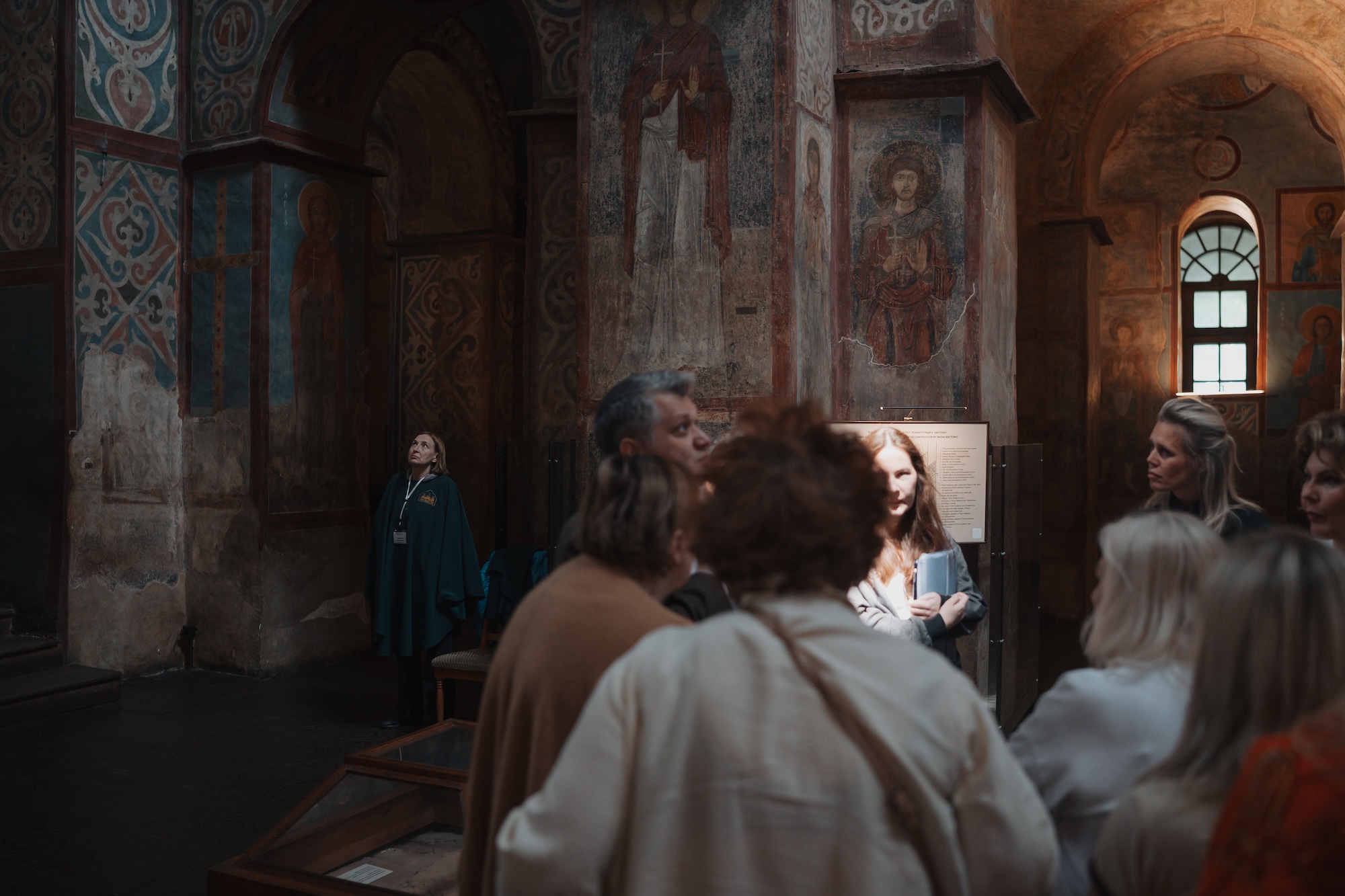
Decades have passed since then. Now she brings her own students to the cathedral — philosophers, lawyers and philologists. She says that one day she realized: lectures in a classroom just don’t work anymore. It’s not enough for young people to simply hear about history; “they need to experience being present in history, to experience culture as their own existence.”
Long before Ukrainian museums began talking about museum-based learning, Kryvda saw it at the Louvre. In the middle of the museum hall were six-year-old children — some were sitting, some lying on the floorб and all of them were coloring reproductions of famous paintings. “I thought then about how easy it is to introduce a child to art,” says Kryvda. And she invited her own students — though not schoolchildren — to St. Sophia’s. “I heard St. Sophia calling to me,” she’s convinced.
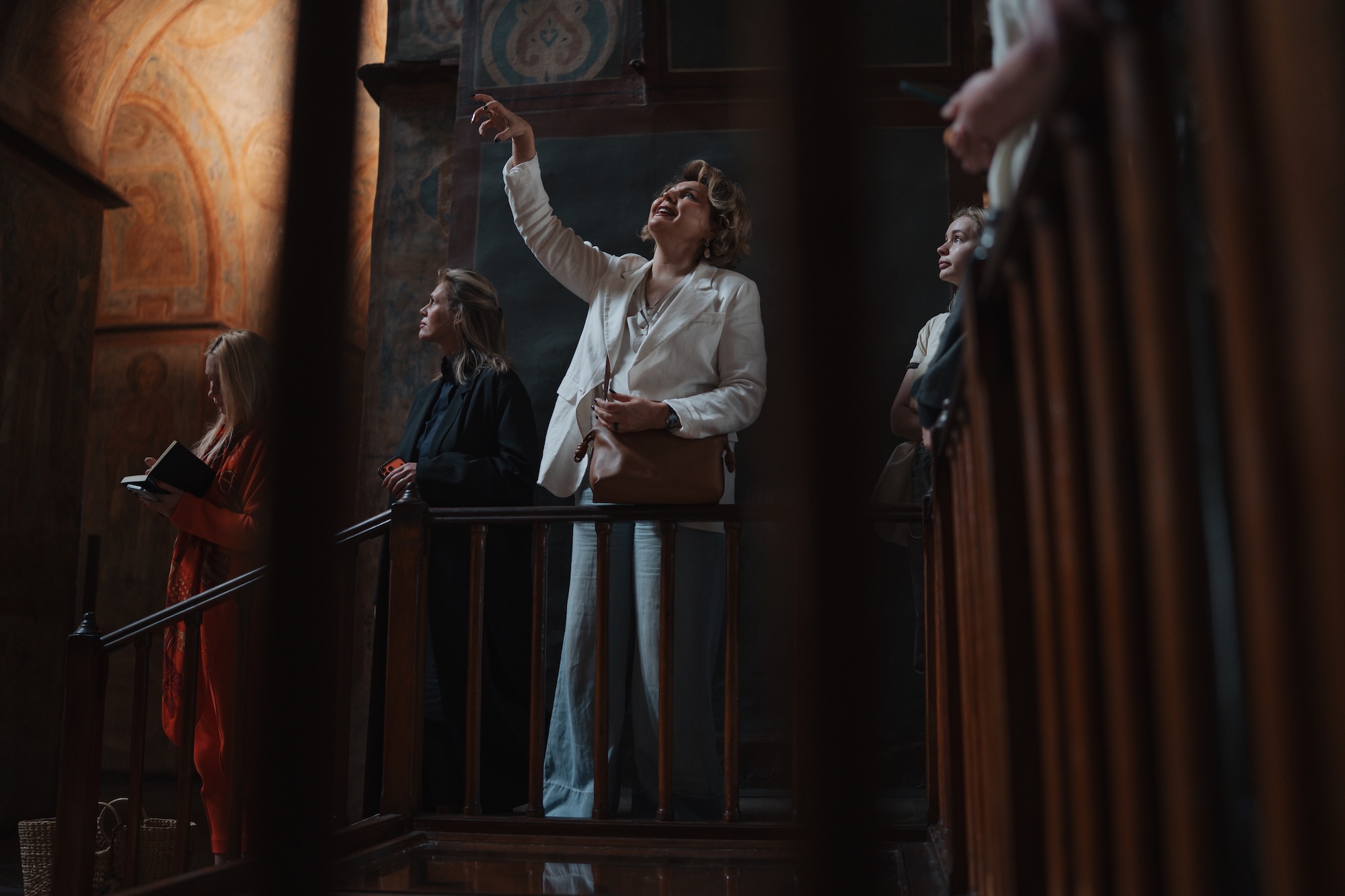
Listening to Nataliia Kryvda inside the cathedral, you quickly realize: she’s a mediator. She has a gift for conveying important ideas and, as she puts it, “knocking at people’s hearts.” She translates complex concepts into everyday language. She talks about architecture while actually describing a model of the world; about frescoes, but in reality, about responsibility; about the 11th century, but always bringing the conversation back to the present day.
“I’ve been here, I suppose, about 300 times, and I fall in love with it every time. Every time I see something new. For me, Sophia has become a channel, a platform, a space where new meanings unfold,” says Nataliia.
She calls “Sophianity” one of the foundations of Ukrainian resilience. For her, Sophia represents the worldview that Rus’ adopted after its baptism. “Christianity didn’t just bring about a new faith; it offered a new way of seeing the world,” explains the scholar. “It provided answers to simple yet profound questions: what is good and evil, justice, truth and falsehood, love and responsibility. It also addressed how to live going forward, who is in charge, and whether there is life after death. Whereas people once lived in the world of Perun, Veles or Yarylo, they were now offered a different system of values — a system of love. And Sophia became its embodiment in stone.”
Over the years of working at the cathedral, Nataliia has found dozens of favorite spots. Lately, she has been stopping more and more at the mosaic of the Virgin Mary with a red thread (in Christianity, it symbolizes Christ’s flesh). The mosaic is located on the triumphal arch, to the right of the altar, and is part of the Annunciation composition, in which the Archangel Gabriel announces to Mary the imminent Immaculate Conception and the birth of Christ.
Kryvda asks us to set aside the religious aspect for a moment and just look at the girl. “The archangel is happy. He flies without his feet touching the ground, his white robes fluttering. He has been entrusted with delivering the news to this earthly girl, Mary. She is 15 years old — still basically a child. She comes from the line of King David, and she knows that. She has just left the temple, knowing nothing yet about her future. She was betrothed to Joseph, who was much older than she was. The marriage has already been arranged, but their married life has not yet begun. And now an angel appears to her. He announces that she will give birth to a son of God, not of man. The responsibility for the fate of the world now rests upon her shoulders,” she says. She pauses and continues: “Mary didn’t say, ‘No, I’m not ready; I wasn’t born to do this.’ She accepted her responsibility. And that’s what sustains me, and I think it should serve as a source of inspiration for everyone.”
Nataliia adds that Mary lived with the knowledge that her son was destined to die for the salvation of humanity. Throughout the 33 years of his earthly life — more than 12,000 days and nights — she woke up every morning wondering if her child was still alive. “Ukrainian mothers wake up the same way today. Even if your child isn’t serving in the military, you don’t know what the next night will bring. But that’s precisely what matters most. You don’t know the future, yet you have the dignity to accept it — to fight, to move forward, to shoulder your responsibility. And today, there are so many young women among us wearing those blue dresses with a red thread,” she adds.
Today, Nataliia Kryvda gives lectures to students not only in St. Sophia but also at the Kyiv-Pechersk Lavra.
The Lavra is not just the largest monastery in Ukraine or one of the most important Christian temples. It is a place where the Ukrainian intellectual tradition took shape over the centuries. It was here, in the 11th century, that Metropolitan Hilarion wrote “Sermon on Law and Grace” — one of the first philosophical texts written in Rus’. Scribes worked here, a printing press operated here, and ideas that changed the country were born here. It was here, says Kryvda, that a new vision for Ukraine took shape in the 17th century.
“Hetman Ivan Mazepa listened to the people here. When we remember him, we often think of the Battle of Poltava, which he lost. But we forget that this was not merely a military defeat, but an attempt to defend the right to our own state,” says the scholar. “We are not a victim nation. We are a nation that hasn’t stopped seeking statehood for centuries: we made mistakes, we lost, we started over. And in the end, we regained our independence. That is why the current war is not an exception to history, but a continuation of our struggle for the right to be ourselves.”
Two days before our conversation, a Russian missile damaged the Dormition Cathedral at the Lavra. Kryvda is convinced it was no accident. “Russia is not only at war with people; it is at war with memory. An empire cannot exist without a grand history, so it tries to appropriate someone else’s. That is precisely why St. Sophia, the Lavra, museums and archives are being targeted. This is a war for the right of a people to remember who they are,” she says.
The mother of a servicewoman
“Mariia went to Maidan and never really came back. That’s what my mom said, and she was right. She never came back mentally,” says Nataliia Kryvda.
Mariia became an active participant in Euromaidan, worked with the Maidan medical service, then joined the Kyiv protests against illegal construction and co-organized the March for Kyiv in 2021.
“She said, ‘You’re always talking about culture. Why aren’t you at the March for Kyiv?’ I honestly didn’t understand how my presence could change anything. She laughed: ‘You’ll be filmed, photographed by journalists — millions will see you. Others will follow in your footsteps.” Even back then, she was thinking differently. Mariia is my biggest critic, my friend and my motivator,” says Kryvda.
Mariia Nazarova is a tactical medicine instructor and volunteer known by the call sign Zhaba Poliova (Field Frog). After completing her training, she worked at the Ministry of Defense’s Office of Reforms. She later went to the front lines, where she trained military personnel in tactical medicine. After the full-scale invasion began, she continued to assist the Defense Forces. Together with like-minded individuals, she pushed for changes in the system for supplying the front lines with donated blood. This made it possible to administer blood transfusions to the wounded even before they were transported to a hospital.
Eventually, Mariia found love, got married and gave birth to her son, Yurii. But she remained active in civic life. She currently works with one of the military units, helping to develop their support services.
Nataliia Kryvda didn’t believe a full-scale invasion was coming until almost the last moment. And this was despite her daughter repeatedly asking, “Have you learned how to apply a tourniquet yet?” Eventually, Nataliia did go to a training session — on February 16, 2022.
The day before, they had agreed: if a major war broke out, it would be Mariia’s mom who would take the Come Back Alive Foundation’s documents out of the capital.
On February 25, Nataliia set off for Ivano-Frankivsk with boxes of archival documents.
She planned to take the documents out of the city and return to Kyiv. “It never even crossed my mind that it could go any other way,” she says. Especially since she knew her daughter was near Kyiv — perhaps on the Zhytomyr highway, which the Russians were trying to cut off.
Nataliia arrived in Ivano-Frankivsk, handed off the documents, and was about to leave when Anna, the foundation’s administrator, approached her. “Excuse me,” she said, “you’re a well-mannered woman — could you please man the hotline for a few hours? We’re short-staffed.” Nataliia thought to herself: “I’m tired from the trip; I’ll rest a bit and then head back.” Those few hours stretched into three months. For 15 hours a day, Kryvda and her colleagues at the foundation answered calls. She listened to despair, rage and death in real time.
Nataliia lived in an apartment whose keys had been given to her by her students. Every morning, she would head to Promprylad, a renovated former factory in Ivano-Frankivsk that, after the start of the full-scale invasion, became one of the city’s main volunteer hubs, wearing heels and red lipstick.
“The boys and girls admitted: at first, they thought I was completely out of touch with reality. But later they said that it was my heels and red lipstick that reminded them of a normal life. I was this smart lady, a professor from a life that existed before and definitely still existed somewhere,” says Nataliia Kryvda.
She also attended performances by director Rostyslav Derzhypilskyi with her colleagues from the foundation. He had previously staged “Sweet Darusya,” based on the novel by Maria Matios. The Ivano-Frankivsk Drama Theater resumed operations shortly after the start of the full-scale invasion. The first production the audience saw was “Hamlet.” Later came “Hutsul Wedding.” “The performances became a way for me to keep my balance,” says Kryvda.
Now, at the first opportunity, she travels to Ivano-Frankivsk for performances, gives lectures and participates in conferences organized by the theater. She says this is her way of expressing gratitude and repaying her debt.
On April 1, 2022, Shevchenko University resumed classes. At the foundation, Kryvda announced that she would be teaching remotely but didn’t want to give up her volunteer work. She’d only need an hour and a half a day. Over time, she noticed that not only were her students listening to her lectures, but also the Come Back Alive staff members.
Meanwhile, Mariia was actually near Kyiv. Nataliia found out about this from the news. “Imagine: you’re a mother, and suddenly you see your child on TV. She’s wearing a military helmet and medical gloves. The wind is blowing her hair around, she’s wiping her forehead, and there’s blood on her face,” Kryvda pauses for a moment. “What was I supposed to think?”
Today, they sometimes look back on that moment: “Mariia laughs. She says I always exaggerate, that I’m a drama queen. But now she is also a mom. Since Yurii was born, I think she understands better how I felt back then.”
Leadership during wartime
When Nataliia Kryvda is asked about women’s leadership, she almost immediately takes issue with the very term — as in, there shouldn’t be a distinction between women’s or men’s leadership. “There is leadership by women and leadership by men — leadership by people. Period,” she says. Leadership begins not with gender but with responsibility: the ability to listen, take responsibility and nurture humanity in others.
However, war changes our perspective. “Once again, the red cloak rests upon our shoulders,” says Kryvda, referring to religious symbolism. The Virgin Mary in icons, including those in St. Sophia Cathedral in Kyiv, is depicted in dark blue or dark green robes, with her shoulders covered by a red cloak — a symbol of the divine presence. Christ, on the other hand, is dressed in red — a sign of his divine origin — and wears a blue or green cloak as a symbol of his human nature. “You don’t know which cloak rests on your shoulders. But you must fulfill your mission with dignity,” she says.
Kryvda is convinced that Ukraine has a distinct matriarchal tradition, and the influence of women here has always been profound.
She recalls a common saying: “Whatever Dad says, we will do it Mom’s way.” Throughout the duration of the war, women have shouldered an enormous physical, moral and emotional burden. They predominate in education and healthcare, and their numbers are growing in the security sector. Eventually, Kryvda suggests, there will be more women in public administration, big business and politics.
The researcher cites a study that struck her. After 2014, the largest number of female entrepreneurs emerged in smaller towns and communities. As the number of men dwindled, women began starting businesses and taking responsibility for their families, communities, and the local economy. “Luhansk Oblast had the highest numbers. I thought for a long time about what this says about our society,” notes Nataliia.
At the same time, she believes that the world is moving toward a greater presence of women in leadership. Not because it’s trendy or the “right” thing to do: this is simply how life is changing. Women will increasingly hold leadership positions, and the world may not be ready for it.
If you listen closely to the interview with demographer Ella Libanova, you’ll hear that Ukraine faces difficult times ahead. And even after victory, its challenges will be no less complex: rebuilding the country amid a demographic crisis and a shortage of people, heavy human losses and profound social changes. Does this mean that after the war, women will retain the positions they hold today? Kryvda is reluctant to answer. Instead, she mentions the concept of the “glass ceiling” — an invisible barrier that often prevents women from rising to the highest leadership positions. And then there’s the lesser-known concept of the “glass cliff.” “Very often, a woman is offered the chance to lead an organization precisely when that organization is in crisis. If everything works out — great. If not, the woman will be held responsible,” says Nataliia.
Why is this happening? “Perhaps society feels that she’s ‘disposable.’ If she can’t handle it, she will be replaced. A man, on the other hand, is precious. We can’t sacrifice him so easily,” the researcher says calmly. At the same time, she suggests that after the war, men might say, “Thank you — but now we are back.” However, in her opinion, Ukrainian women have changed a great deal over the years. They’ve “built up muscles” — both professionally and in terms of socialization and have grown stronger emotionally. And they’re unlikely to voluntarily give up the responsibility they’ve taken on.
For Nataliia Kryvda, leadership isn’t about job titles or power. It’s a daily choice, just like choosing your identity — every day, you take responsibility for yourself, for the people around you and for the country. And every time, despite fear, you choose not to back down.
Breathing new life into a neglected estate means recovering forgotten fragments of history
Olga Myrovych, Polina Polikarpova
The Men Who Turned FPV Drones into Weapons
Driven by a shortage of artillery shells the new generation of Ukrainian soldiers sought ways to defend themselves against the Russians — and rewrote the rules of modern warfare
Kostiantyn and Vlada Liberov, Sofiya Varzar
The Pinned Hawk Moths in the Kotsiubynskyi House
They are all descendants of Ukrainian classic Mykhailo Kotsiubynskyi. A family with a legacy that none of them could lay claim to, and a burden that none of them was obliged to bear
Andre Luis Alves, Vira Kuryko
Думки
What I Dream Of
Thinking about the future, hoping for the future, fearing the future — these are uniquely human traits
Volodymyr Yermolenko, Vadym Blonsky
Calling Things by Their True Names
Hope is not assuming that everything will be all right. Hope is a deeply held belief that all our efforts have meaning
Oleksandra Matviichuk, Vadym Blonsky
Remain Partially Soft
On Ukrainian women who grew armor over their skin
Alina Sarnatska, Vadym Blonsky
Інтерв’ю
‘What If the Roof of Westminster Abbey Were Burning?’
Charlotte Higgins, Chief Culture Writer for The Guardian and author of “Ukrainian Lessons,” on translating experience and the art that will shape the memory of war
Olesya Yaremchuk, Julia Kochetova
Nataliia Kryvda: On the Art of Responsibility
A cultural studies scholar and Doctor of Philosophy discusses women’s leadership in times of war, Russia’s attempts to appropriate Ukrainian culture and “Sophianity” as the defining trait of Ukrainian resilience
Tetiana Katrychenko, Valentyna Polishchuk
Fiona Greenland: ‘Documentation serves to affirm that these works and people existed’
A researcher of cultural heritage on culture as a target and literature as a weapon
Ivan Haivanovych, Iryna Dzvonkovska
Спадкоємці
Шістнадцятий номер журналу літературного репортажу та документальної фотографії Reporters — про тяглість поколінь, яку в нас відібрали, і спадок, який ми знову набуваємо і прагнемо передати нащадкам.
Меншовартість, яка доймає багатьох українців, тягнеться звідти — від пограбованих і вбитих людей, наших предків, які в кожному поколінні мусили вибудовувати все з нічого, а не множити традицію.
Сьогодні ми — чи не перше за довгий час покоління, яке знову має що передати, ба більше, навіть зачерпнути трохи спадку з минулого. Покоління, якому дістанеться цей спадок, частково вже тут — і от-от прийме на себе країну. Ми ще не знаємо, якою вона стане для них: країною війни чи країною після війни. Що опиниться в руках і на плечах цих людей — матеріально й морально, — значною мірою залежить від нас.