American archaeologist and sociologist Fiona Rose Greenland visited Ukraine for the first time after the full-scale invasion began, leading a team investigating Russia’s crimes against Ukrainian cultural heritage as part of the Conflict Observatory Ukraine project. Since then, she has visited the country 15 times. Although the project concluded in 2025, the researcher continues to study the loss and restoration of cultural heritage in Ukraine and has written a book on this very topic. The Ukrainians spoke with Fiona Greenland on the eve of the Lviv Media Forum, where she participated in the discussion, “Culture as a Target and Instrument of Genocide.”
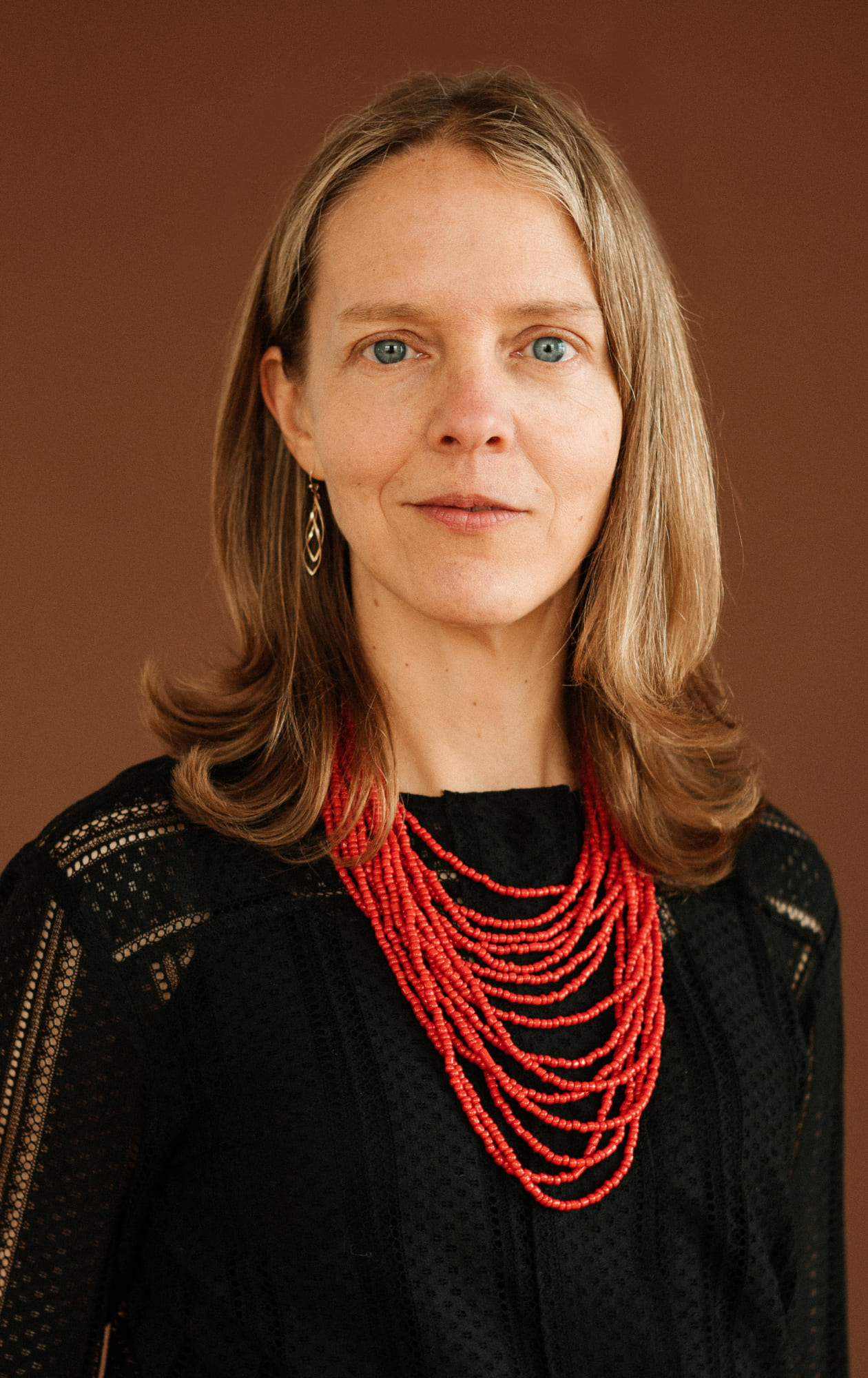
Fiona Greenland: ‘Documentation serves to affirm that these works and people existed’
A researcher of cultural heritage on culture as a target and literature as a weapon
11.06.2026
11.06.2026
This interview was made possible thanks to the support of The Ukrainians Media community — hundreds of people who believe in independent, high-quality journalism.
Your new book, “To Kill a Nation,” is set to be released this year. What is it about?
The book examines Ukraine’s resistance to Russia’s continuous attempts to destroy the Ukrainian nation. I use the term “nationcide,” coined by Ukrainian legal scholar Volodymyr Pylypenko. He identified in Raphael Lemkin’s works the criteria by which Lemkin defined the process of a national community being destroyed by an aggressive state. This refers to institutions that support social life: schools and hospitals, cultural institutions, workplaces, as well as informal practices that give people a sense of unity.
Pylypenko is a lawyer, and I am a sociologist, so my approach is different: instead of law, I think about social cohesion and culture. My expertise in the field of culture spans 30 years — I started out as an archaeologist, then became a cultural sociologist. That is why I focus on language, religion, symbolic traditions and aesthetic practices — on everything through which a community perceives itself as such.
The book starts by documenting Russia’s assault on Ukraine’s national identity, and then explores how Ukrainians have resisted it and how they envision their country’s future. I focus primarily on language and literature: following the full-scale invasion of Ukraine, a network of authors, translators, publishers and editors has mobilized to defend and strengthen Ukrainian literary output. Along with this, a new readership is emerging, along with tangible investments in promoting Ukrainian books.
By the way, while looking for information about your upcoming book, I saw at least two versions of the title: “To Kill a Nation: Literature and Resistance in Wartime Ukraine” and “To Kill a Nation: Russia’s War and Ukraine’s Cultural Survival.” So, which will be the final title?
True, it has changed a bit as the project has progressed. In the subtitle, I’d like to highlight Ukrainian creativity and defiance, without placing undue emphasis on Russia. This book should be about Ukrainians — Ukrainian ideas, Ukrainian creativity and Ukrainian decisions regarding their democratic and sovereign future.
I like the first part of the title — “To Kill a Nation” — because it captures the essence of the Russian project. And this, of course, isn’t just about 2022. The Russian Empire has sought to subjugate Ukraine, dominate it and keep it within its borders for many reasons, be it its symbolic and strategic importance, wealth or resources. So, I assume that readers of this book will have varying degrees of familiarity with Ukrainian history. For those just starting out, it’s important to see Ukrainian resistance in the context of a longer history. That’s why I tried to do this through the lens of language and literature and to explain just how important it is that the Ukrainian language survived despite repeated attempts to destroy it.
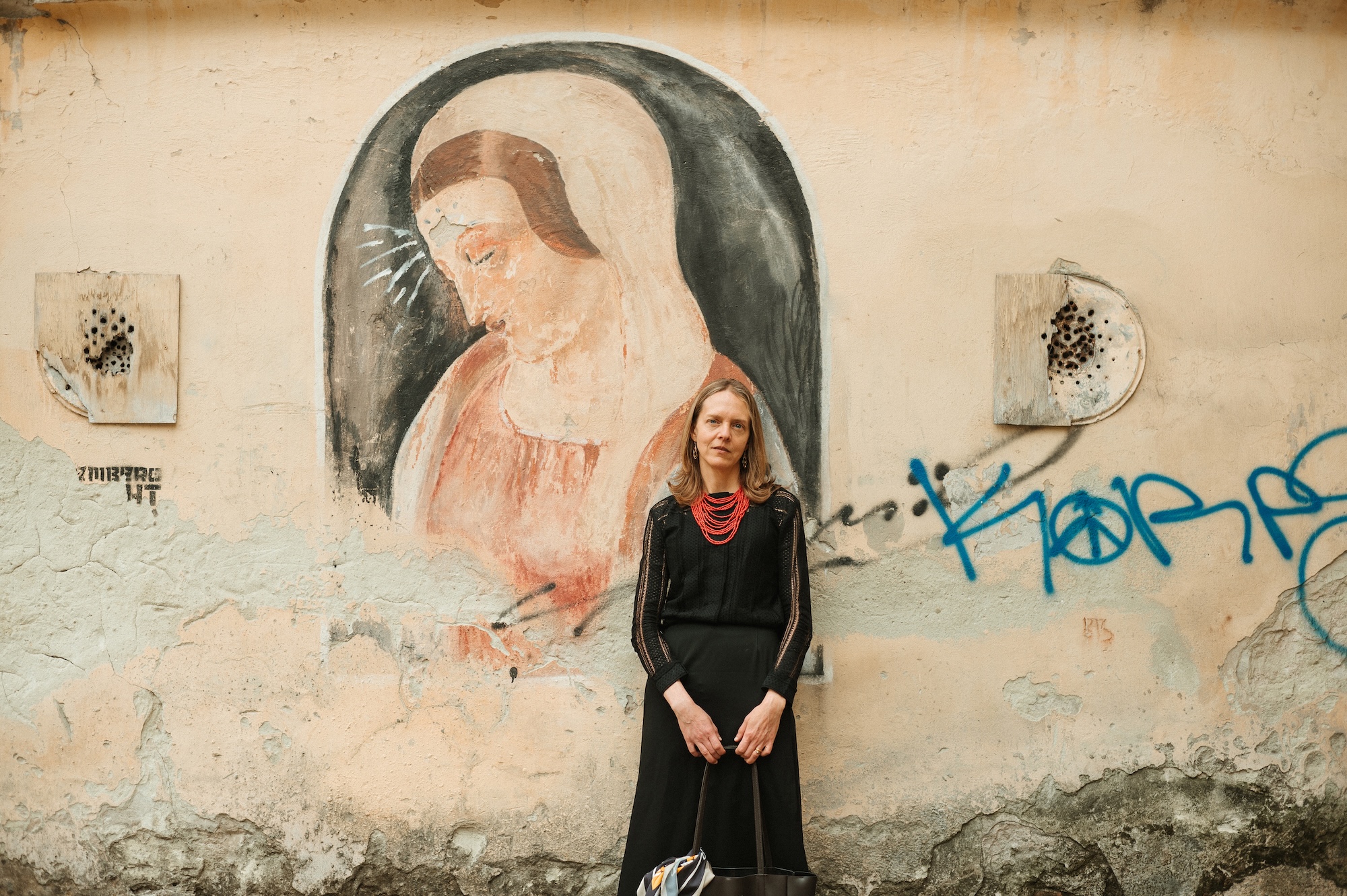
As an American, how did you become interested in Ukraine, its history and its culture?
I first became interested in Ukraine while working as an archaeologist. I was a classical archaeologist, specializing in the Mediterranean region — I studied the Roman Empire and Ancient Greece. Many of my colleagues worked in the Black Sea region, and that part of the world captivated me. I knew about the rich cultural exchanges between different peoples in antiquity, but as an archaeologist, I never had the opportunity to visit Ukraine.
Then, in 2023, the U.S. State Department invited me to join a project documenting war crimes — Conflict Observatory Ukraine. I was selected because of my experience documenting the destruction of cultural heritage in Syria, as well as my research on crimes against art and the global trade in looted artifacts. I worked together with Ukrainian experts, and finally got the chance to visit.
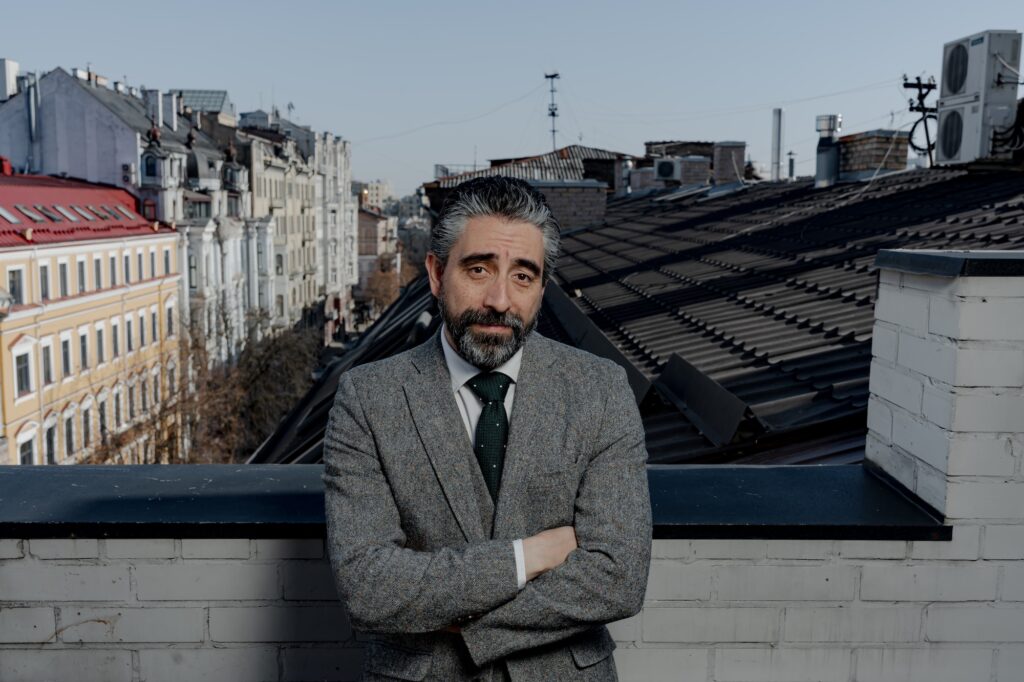
My first visit was in early 2024, and since then, I’ve been here 15 times. I come both for work and to see friends. Kharkiv, Mykolaiv, Odesa, Kyiv — getting to know Ukraine and Ukrainians has given me a different perspective not only on this region, but also on world history and our possible shared future.
This project — Conflict Observatory Ukraine — ran for two years, in 2023 and 2024. What were its main findings?
Our consortium used satellite imagery and open-source intelligence (OSINT) to document alleged war crimes committed by the Armed Forces of the Russian Federation. My team focused on cultural heritage, but we were part of a larger research consortium. The work resulted in a series of reports and investigations into allegations of war crimes, as well as a shared database that was later used by Ukrainian law enforcement agencies, particularly the Office of the Prosecutor General.
Among the Conflict Observatory Ukraine reports, I saw some dedicated not only to cultural heritage but also to the environment, which surprised me.
I think you’re referring to the report on the destruction of the Oskil Reservoir Dam in September 2022. I worked on that, too. We consider cultural heritage a broad category — since culture exists in landscapes meaningful to people, the natural environment — forests, rivers, wetlands — is also part of a community’s culture. That is why we wanted to highlight the close connection between the environment and national identity.
Ukrainian law recognizes ecocide as a crime — Ukraine was one of the first countries in Europe to enact such a law as a legal tool for environmental protection.
The Kakhovka Dam, which was destroyed later, received much more attention, but the destruction of the Oskil Dam affected certain protected natural areas downstream — forests and wetlands — and we wanted to document this.
Environmental issues often take a back seat during investigations of war crimes compared to civilian deaths or the destruction of settlements. Our report was meant to serve as a reminder: environmental damage is also a consequence of the Russian war, and there must be accountability for it.
You mentioned that Conflict Observatory Ukraine relied on open-source data. Which specific OSINT tools helped in documenting the damage?
OSINT is often understood to mean social media posts and photographs. But environmental data and satellite imagery can also be used. We managed to find smartphone photos documenting water damage, obtain scientific reports with analyses conducted directly on-site, as well as satellite images with pixels indicating moisture levels that can be identified, and thus gather data on the condition of the soil and vegetation. This demonstrates how OSINT methodologies can be applied to assess environmental impact.
By the way, my team included an ecologist with a PhD in this field and the necessary methodological training. So we had specific expertise for the study.
The Conflict Observatory, in particular, documented the alleged theft of artworks from the Kherson Regional Art Museum in November 2022. If you know more about this case, please tell us how the theft took place and how it was investigated.
The report indicates that the occupying authorities appointed their own people to leadership positions at the museum, removed the previous director and established full control over the institution. In November 2022, as Ukrainian troops advanced, occupation forces removed approximately 11,000 works of art, as far as we know, to Crimea. Despite this, some museum staff resisted occupation authorities: employees hid valuable items and concealed documents regarding the works’ provenance, putting themselves at risk.
How useful are satellite images and observations in this and similar cases?
Satellites are ideal for geolocation — that is, pinpointing the exact location of an event or object. Depending on the sequence of images, they also help document movement and the dynamics of events. But they don’t really allow us to look inside an institution: you can’t see how internal rules have changed, how this affects the staff, or what’s actually happening behind the walls. For that, other sources are needed.
We had satellite images that helped identify vehicles near the Kherson museum, which we believe were used to transport the stolen works of art. But the images do not answer the main questions: what was being discussed, who these people were, who selected the items, and who moved them.
Your question highlights an important limitation of OSINT in cases involving cultural heritage: to understand why it was protected or destroyed, one must understand the conditions of people’s decisions, relationships and social dynamics. And for that, other tools are needed.
It is not easy to assess the damage to cultural, artistic, religious, and historical heritage sites, as their value cannot be measured solely in monetary terms. But many might ask: what is the point of documenting all these losses if there is no hope of ever receiving compensation? What’s your response to that?
First, we shouldn’t rule out compensation and other forms of accountability. Second, documentation serves to affirm that these works and people existed. One of the tragedies of Ukrainian history is Russian and Soviet officials’ periodic “erasure” of Ukrainian thinkers, writers and artists, as well as the appropriation of their cultural contributions without acknowledging authorship. Therefore, documentation allows us to create an archive that testifies to the richness, diversity and complexity of Ukrainian creativity and Ukrainian thought.
I recall my visit to the Literary Museum in Kharkiv: the director told me that despite studying literature at university, she learned about Slovo House and about the writers repressed by the Soviet secret police very late; not only did she not know their names, but she also had no access to their texts. While working on the book, I heard similar things time and again from young Ukrainian writers: “We didn’t know about these works; we were taught that the Ukrainian language is limited in its expressiveness — then suddenly it turned out that Ukrainian poets were doing these incredible things.”
This is no historical coincidence — it was a deliberate policy of the Soviet Union. So my answer is this: even if documentation does not guarantee compensation, we must do it.
We must do it to create a historical record, contribute to a living archive of national memory, and, hopefully, influence how Ukraine’s contribution to world culture is understood.
Who did you collaborate with on documenting the destruction and expropriation of Ukrainian cultural heritage sites by Russia? Were people from the occupied territories among those who helped you?
The first organization is HeMo (Heritage Monitoring for Recovery), which documents damage to cultural heritage sites. We relied on their work in documentation, mapping and analysis, and I’m glad to have been in touch with their staff for many years.
We also collaborated — and continue to do so — with the Ministry of Culture, specifically its museum agency: we discussed issues related to museum documentation and provenance records, which were particularly important for the occupied territories. The Regional Center for Human Rights shared its expertise on documenting archaeological thefts in Crimea and their legal classification. The EU Advisory Mission provided legal recommendations regarding violations of Ukrainian law in the field of cultural heritage. We also cooperated with Ukrainian archaeologists.

I would like to give a special mention to Alina Dotsenko, director of the Kherson Museum. We met at a conference in Kyiv in 2024, and since then, we’ve had many conversations, including an in-depth interview about the occupation of Kherson, the violence at the museum, her forced departure from the city and the search for the museum’s collection. These are just some of the people and organizations we’ve worked with. I want to emphasize that the work of Ukrainians themselves — in documentation, advocacy and data collection — is incredibly important.
Were the Office of the Prosecutor General of Ukraine or the Ministry of Internal Affairs among the agencies you collaborated with?
Through Conflict Observatory, we collaborated with the Office of the Prosecutor General — I explained our findings to various partners, including the Prosecutor’s Office.
To be honest, given the number of war crimes involving the killing of people, I doubt that crimes against cultural heritage are a priority.
I am not an employee of the Office of the Prosecutor General, so I cannot speak to their priorities. But in every conversation, whether private or public, they made it clear that they take issues of cultural heritage seriously. During public discussions, OPG staff consistently demonstrate a genuine interest in understanding the broader picture of the aggression against Ukraine, and that picture necessarily includes the cultural dimension.
Do you believe that material culture plays an equally significant role in shaping a nation?
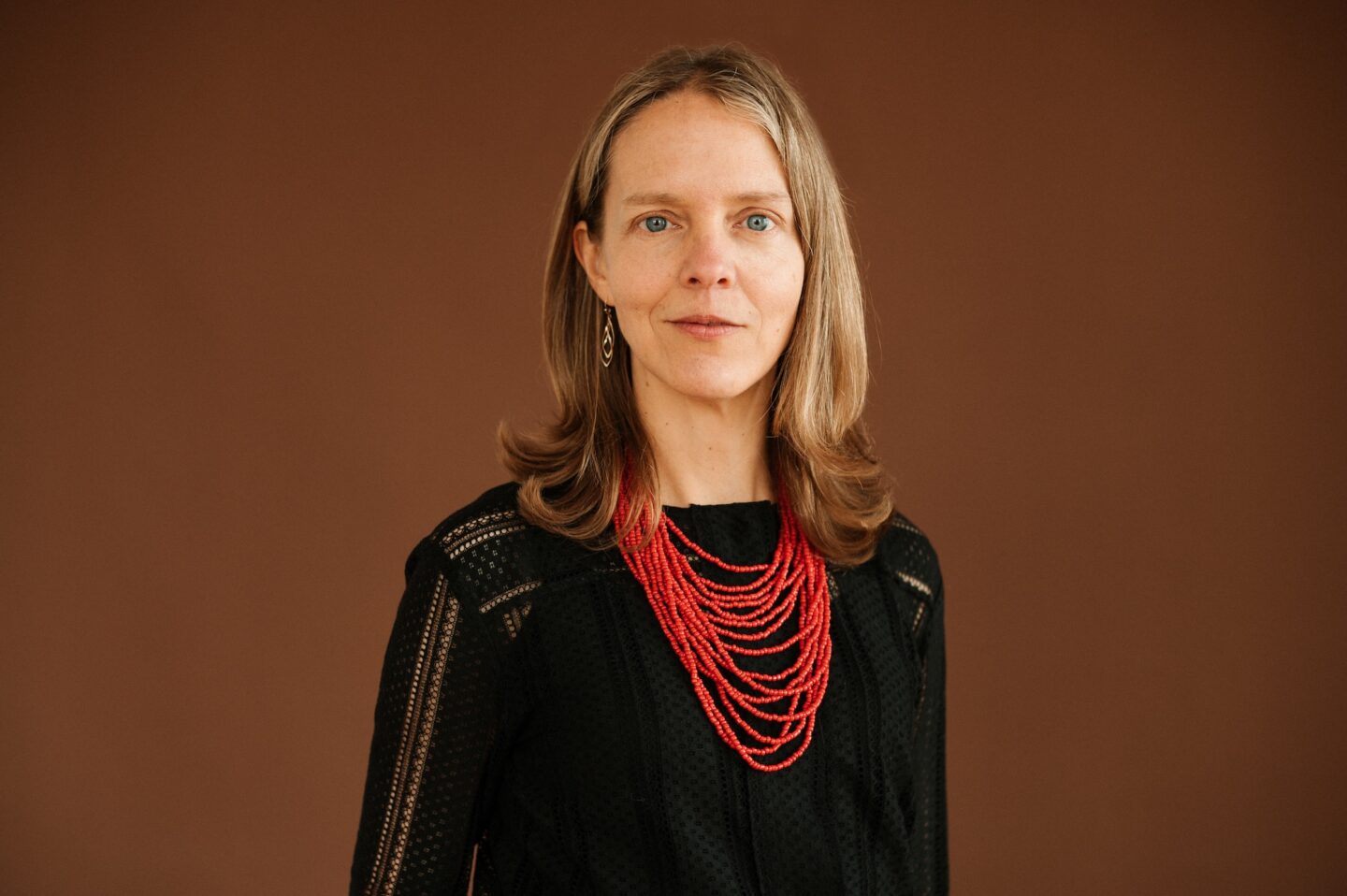
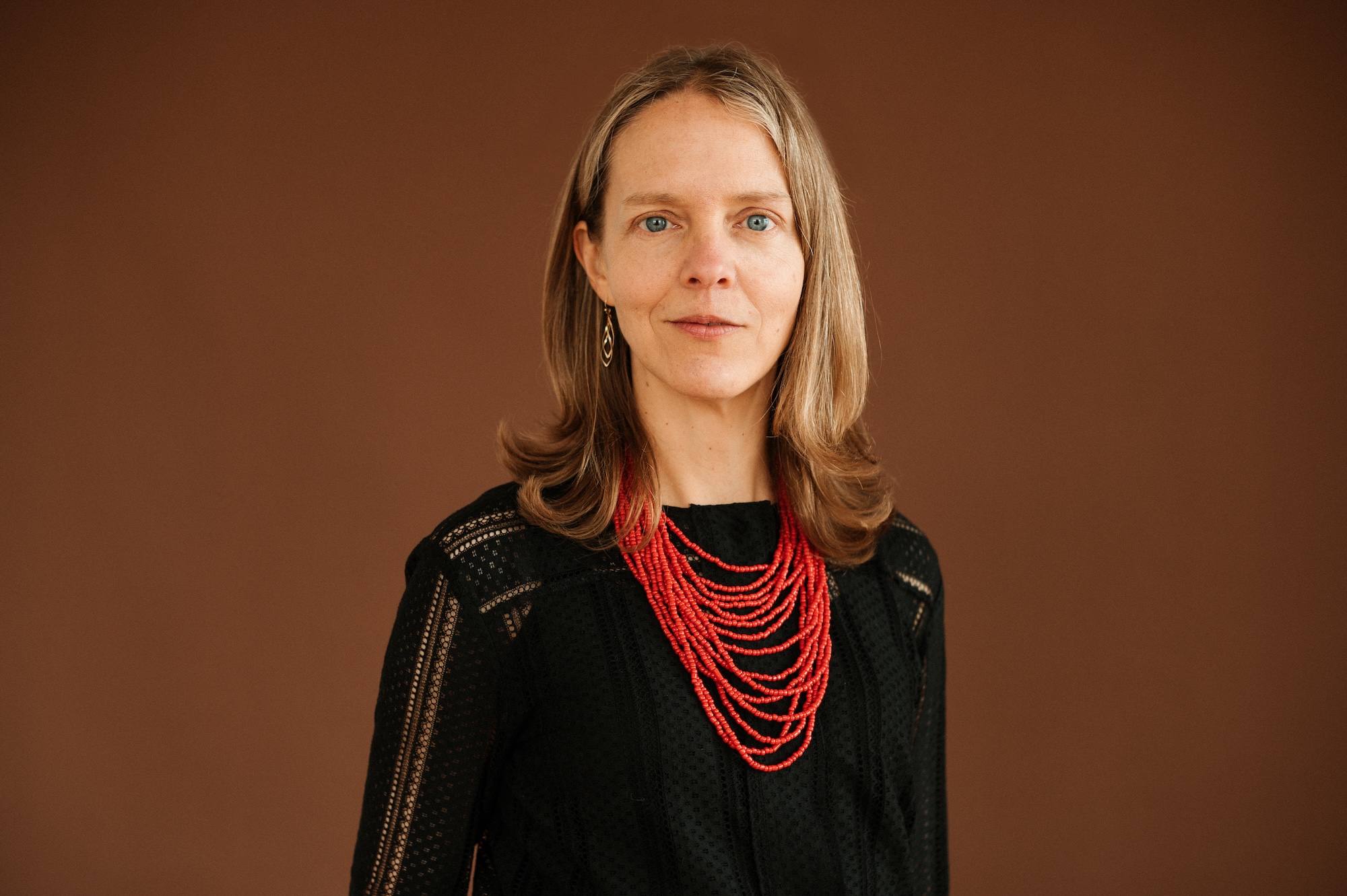
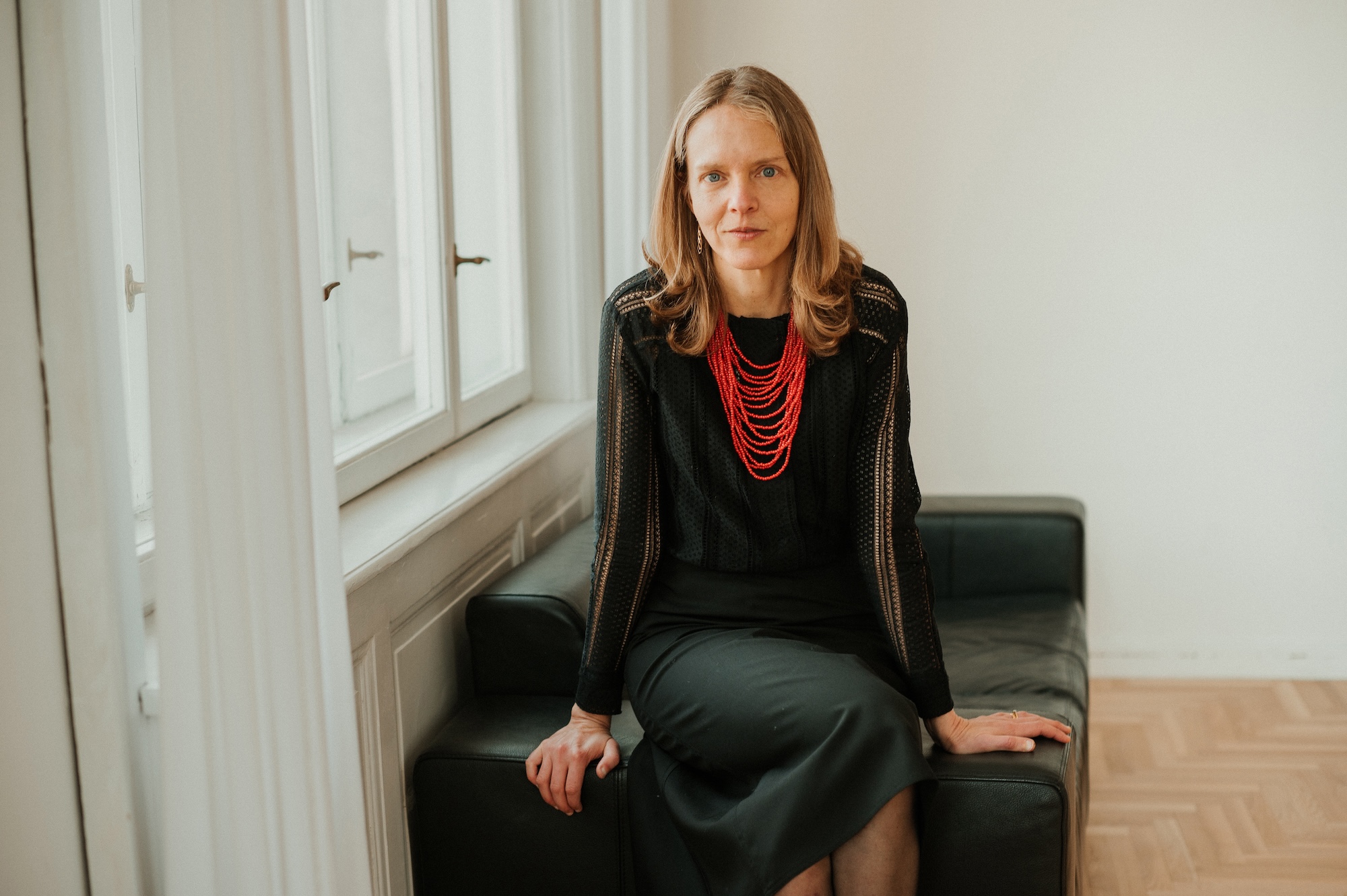
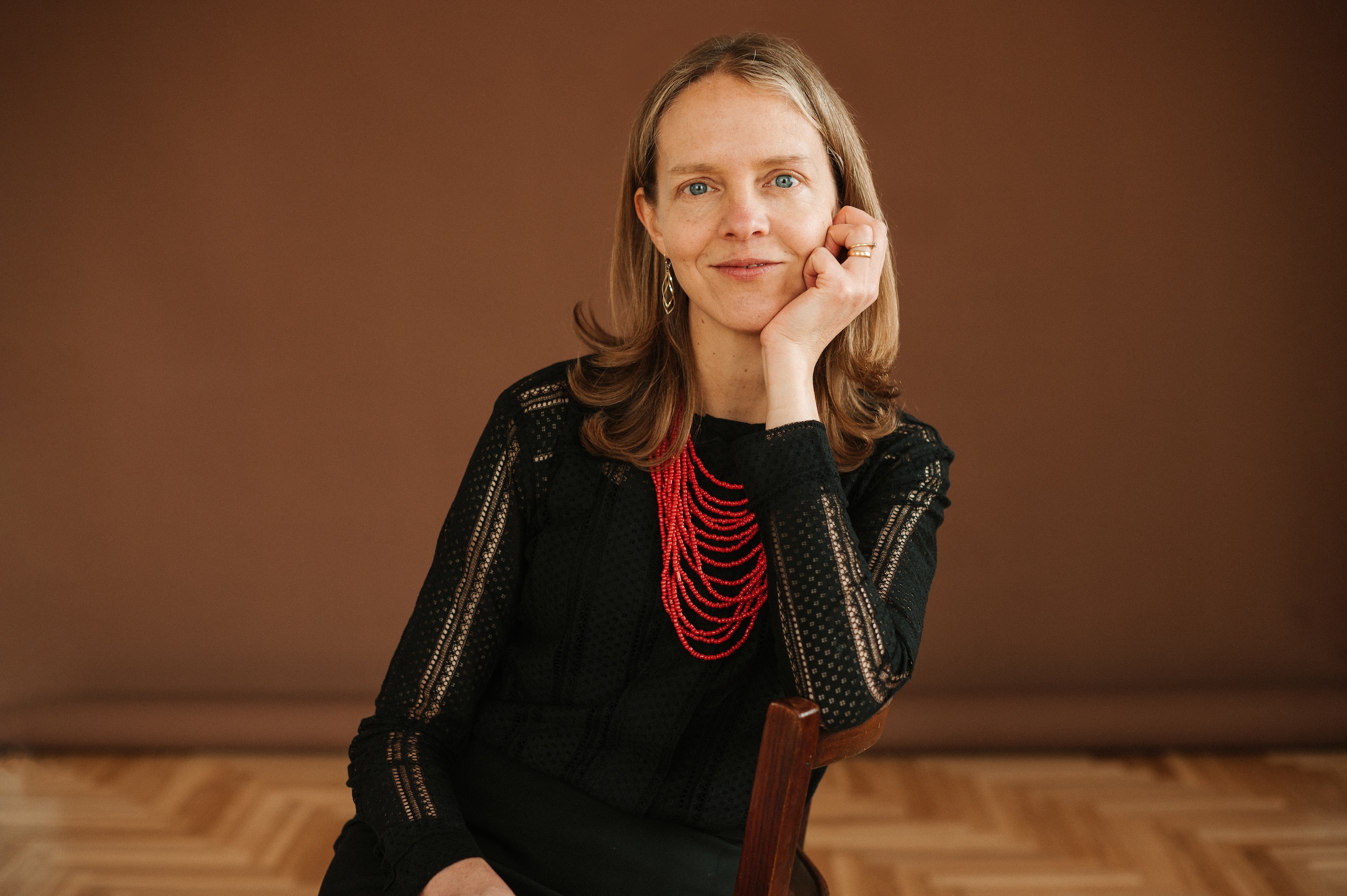
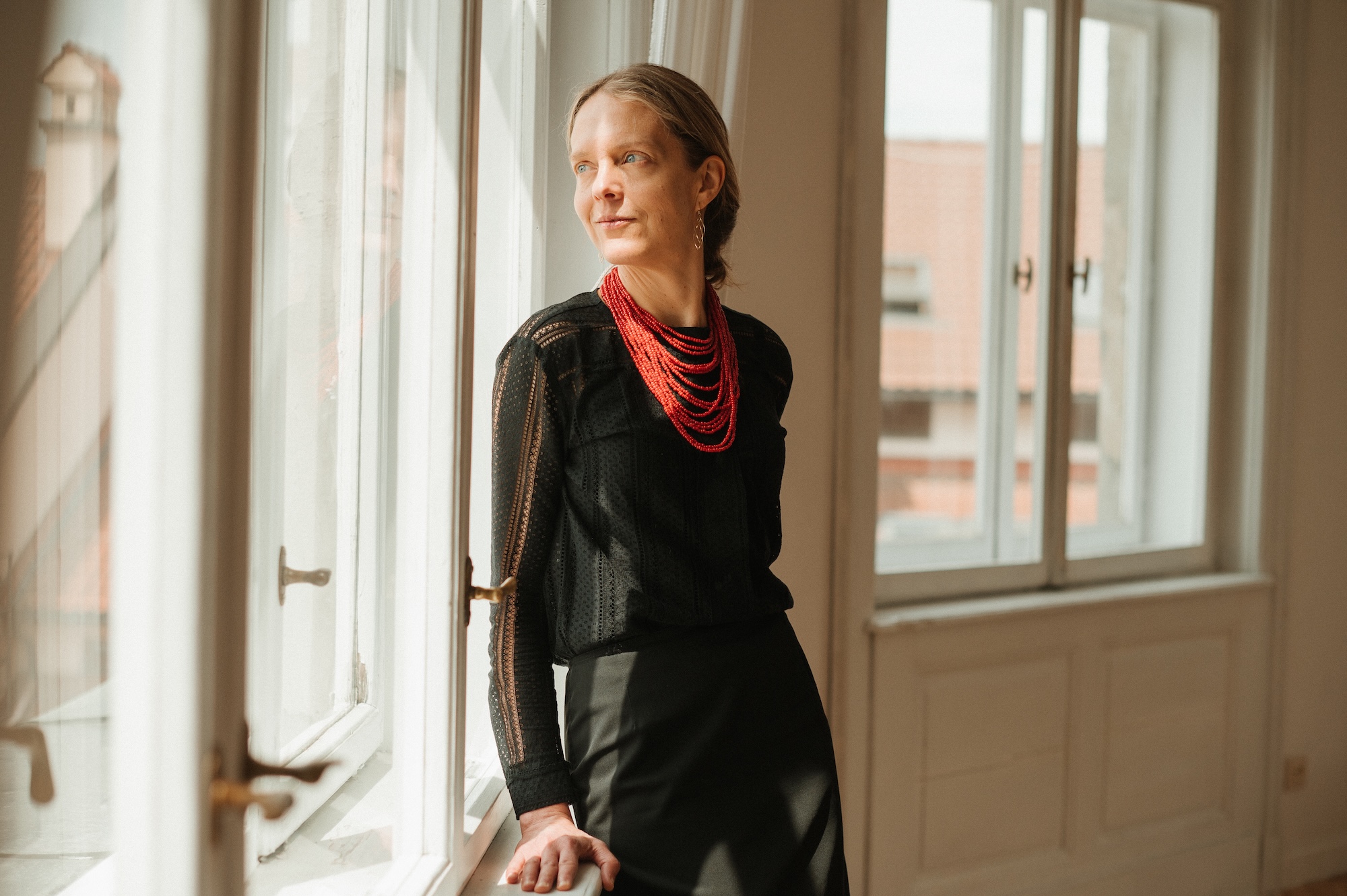
Yes, I do. Material culture takes many forms — works of art, clothing, spaces, landscapes and even small objects. The necklace I’m wearing right now is a good example: a traditional multi-strand necklace made of red beads, worn by Ukrainian women.
As an archaeologist, I often reflect on the durability of material evidence, and on what artifacts can tell us about the people who lived before us. Sometimes this is interpreted as the continuity of tradition, but often it speaks to significant changes over time. What’s important is this: we are part of a long line of people with different worldviews and customs, yet we share a tradition.
Ukraine has an extraordinarily rich array of archaeological sites, and there’s a reason for that: historically, it has been a crossroads thanks to its long coastline along the Black Sea and its land borders with various European countries. A true intersection of languages, cultures and traditions. I am particularly fascinated by archaeological work tracing the origins of ancient languages: models suggest that some of the earliest versions of modern language groups originated precisely in Ukraine. When reflecting on responsibility for wartime atrocities, I think about this material evidence and about how Russian troops are deliberately destroying Ukrainian books, religious buildings, works of art and Ukrainians themselves, whom they view as a threat to their worldview.
In my book, I want to explore in greater depth the material culture of a modern, cosmopolitan and extraordinarily diverse country. Ukraine is not a monolithic community with a single language, a single religion or uniform clothing. It is a country of immense diversity, and that is precisely why it serves as a valuable example for understanding contemporary national models, what might threaten them and how they can become a source of future development.
When, just recently, on March 24, a Russian missile struck the center of Lviv, UNESCO didn’t even manage to name the perpetrators. I imagine you’ve read their statement expressing “deep concern over the strikes” and calling on “all parties” to refrain from any actions that harm cultural heritage. What does such a statement indicate?
I remember that statement. I believe UNESCO removed it from its website after it sparked a storm of protest. UNESCO spokespeople can explain for themselves what they meant. But I was surprised by the call for all parties to respect cultural heritage, because I consider this a one-sided issue. Russia does not respect cultural heritage; Russia deliberately targets sites, spaces and people. Recall the hit lists for Ukrainian intellectuals and activists — this is their deliberate strategy.
I’d like to clarify a few things regarding intent. There are academic fields that study this issue; lawyers have their own approach, and weapons experts have theirs. Russia possesses highly accurate weaponry and could have avoided targeting cultural heritage sites if it had wanted to. But I am a sociologist, and for me, intent is a set of indicators that together reveal a pattern: the rhetoric of Russian leaders claiming that Ukraine is not a legitimate state, the forced imposition of the Russian language in the occupied territories, the mass deportation of children to Russia — the list goes on. It is precisely in this context that the strike in the center of Lviv must be viewed. If we analyze it in isolation, a multitude of technical questions arise, and that is not my area of expertise. My area of expertise is the broader connection between various actions, which helps us understand what project Russia is implementing regarding Ukraine and the Ukrainian nation.
I would like to return to the term “nationcide,” on which the title of your upcoming book — “To Kill a Nation” — is based. You have already explained who coined this term. But why do we need it if the term “genocide” already exists?
There are several reasons for this. First, this concept has the potential to provide legal precision and strengthen accountability mechanisms for attacks on institutions and practices that do not involve mass killings. The application of the concept of genocide in international law has become very narrow — it focuses primarily on the number of deaths. In contrast, “nationcide” is capable of encompassing a broader pattern of attacks that do not lead to mass atrocities but involve the deliberate and systematic destruction of a community — its language, culture, history, collective memory, territory and statehood. Currently, these phenomena are either considered in isolation or classified differently: as attacks on communities, marginalization or displacement. But the concept of “nationcide” helps reveal a pattern: the aggressor state systematically weakens a neighboring state in order to ultimately subjugate it.
Russia’s typical pattern is to Russify a territory and then claim that it has always been Russian.
This is happening right now in Mariupol: Ukrainians are effectively unable to retain their property and businesses due to new bureaucratic procedures; religious communities are being persecuted, while the number of churches of the Moscow Patriarchate is growing; migrants from Russia are arriving in the city; and the Russian language dominates the public sphere. The city looks “Russian” — and Russia has achieved this rather quickly.
If we examine Russia’s long history of behavior toward its neighboring countries — Belarus, Georgia — we see similar tactics: claims that the territory has always belonged to Russia, that the Russian people there are under attack and need protection, and then artificially created outrage as a pretext for military intervention. That is why we need the term “nationcide” — not only to more accurately describe what has happened, but also to understand what Russia plans to do next and how it undermines national communities to expand the space for subjugating others. Note: this does not necessarily mean the physical destruction of people. They need people, a Russified citizenry loyal to the Kremlin. That is why “nationcide” is an important term: it helps us understand what kind of future Russia is trying to build. And that is precisely why Ukrainian resistance matters — it stands against this vision of the future.
I’d like to refer to a specific example. You’re an archaeologist yourself and know that in the illegally annexed Crimea, Russians continue to conduct archaeological digs. Russian scientists claim they’re doing science for the benefit of humanity, but from a Ukrainian perspective, they’re appropriating Ukrainian heritage and trying to legitimize the occupation through science. The case of archaeologist Butyagin, who was detained in Poland, could have served as an example of the inevitability of punishment. But instead of being extradited to Ukraine, he was recently transferred to Belarus — that is, to Russia — as part of an exchange. He escaped just punishment. How are we supposed to live with this?
Prisoner exchanges are a complex process, and there’s always a lot going on behind the scenes that we don’t know about. I was disappointed — this archaeologist was not held accountable for the theft of artifacts. But there is a silver lining: his arrest drew attention to the problem of the illegal removal of archaeological materials from Ukraine and their use in false historical narratives. Justice was not served in this case, but there is now a willingness among EU countries to take action. At least one Russian archaeologist is mentioned in the recent sanctions package. This means that others are also coming under scrutiny, and I consider this an encouraging development.
At the very beginning of the interview, you mentioned that you have researched violence and the destruction of cultural heritage in Syria. What are the similarities and differences between Syria, the broader Middle East and Ukraine?
In both Syria and Ukraine, cultural heritage has suffered significant damage. But the key difference in the Syrian case is the multifacetedness of the conflict: multiple governments, numerous armed groups and various types of weapons, from barrel bombs to car bombs. Consequently, the nature of the damage varied. Added to this is the enormous number of casualties and the mass exodus of the population, with long-term consequences for communities. What both countries have in common is dense urban development, where cultural heritage sites are located right next to residential neighborhoods: a missile or drone could strike a building that isn’t listed in any registry.
Both Syria and Ukraine can teach us something about the symbolic nature of cultural heritage and about what matters to different countries. The Wagner Group was active in Syria, particularly in Palmyra. The Russian government took a leading role in the city’s restoration, organized a concert there, transported cultural artifacts to the Hermitage and staged the exhibition “Two Palmyras,” thus creating a narrative about the deep intertwining of Russian history with Syrian antiquity. That was about 10 years ago. But look at how Russia is now appropriating Ukrainian archaeological materials to tell a story about Russian antiquity and civilizational dominance. By closely studying Russia’s actions in Syria, I realized: this is a large-scale operation across many countries — an attempt to rebuild the “great Russian civilization” at the expense of the histories and artifacts of other peoples.
You mentioned Palmyra, which was destroyed by ISIS. Watching Ukrainian cities and towns get wiped off the face of the Earth (Bakhmut, Mariupol, Popasna), I find myself thinking that the Russians are behaving just like the Islamic State group. Do you think I’m exaggerating?
I hadn’t thought of them in those terms. Russia possesses a vast state military apparatus and is a signatory to conventions, and therefore has an obligation to protect the civilian population. ISIS was not a state in this sense and was not a signatory. But in terms of deliberate destruction, symbolic value and performative violence — yes, there are similarities.
We’ve discussed the destruction of cultural sites as a component of ethnocide. But there’s another side to this: an enemy culture can itself be an instrument of nationcide. In the case of Ukraine, I’m referring to Russian culture. And I’m surprised that so little research has been devoted to the colonial discourse of Russian culture.
This is a gap primarily in Western thought — specifically within the broader body of work on colonial and postcolonial theory. We need more research. Excellent work by Ukrainian thinkers is already underway: scholars here have built a foundational set of studies and frameworks and are drawing attention to Ukraine’s experience of colonization and to Russia’s role as a colonial power. But it will take time for academic circles outside Ukraine and outside postcolonial studies to catch up with these changes and to rethink what a colony is and what it looks like.
It is also worth remembering that the Russian government has invested enormous resources in “soft power” projects to make Russian culture appealing to a global audience, lending it prestige and a romanticized image.
I have nothing against people reading Russian literature. But they should also learn about the cultures that suffered under the rule of the Russian Empire.
Currently, an undergraduate student at an American university is unlikely to be able to focus exclusively on Ukrainian studies — for the most part, they have to choose Russian and Eastern European studies, where Russia always takes center stage.
This is part of Russia’s broader strategy — investing resources in “soft power” and infiltrating cultural organizations. And not just in the West. Look at exports to Asia and Africa: free literature in Russian, language courses and trips to Russia for young people. Russia has been a shrewd promoter of its culture, and its strategy bore fruit: critical questions have been pushed to the margins. This has been pointed out before — for example, in Olga Bertelsen’s work on the infiltration of Russian interests into Western cultural organizations. But we were slow to acknowledge it, and this, in my opinion, is what held back our willingness to ask whether Russia continues to behave like a colonial power and whether the tools of postcolonial thinking can be applied to this part of the world.
Now, many say that Putin is the one who was the most successful in consolidating the Ukrainian nation. But isn’t this a temporary effect while the war continues and an external threat exists? After the war, everything could revert to the way it was, and Ukrainians would start fighting among themselves.
This is entirely possible. Ukraine is not the first country to experience a sense of unity while defending itself against aggression. But what I have heard in interviews and read in Ukrainians’ own responses — the disagreements and discussions about who this nation is and what its future holds — are healthy. This is a sign of a vibrant democracy. Ukraine has the right to conduct these discussions on its own terms — as a sovereign state with the right to self-determination and freedom from aggression. Internal debates are both possible and necessary. The main thing is that they take place within a space of political participation and protection of human rights.
At the beginning of our conversation, you mentioned that the book devotes a lot of attention to literature: authors, translators, editors and publishers. How does their work help preserve and develop Ukrainian culture and heritage?
Translators are ambassadors. They make the Ukrainian language accessible to readers who don’t speak it, conveying Ukrainian ideas, experiences and all those cultural references you sense when you come across a joke or a mention of a historical figure in a novel. Translators are among the most fascinating cultural innovators, yet they are rarely given the recognition they deserve: the author’s name appears on the cover, while the translator’s name is tucked away inside. They also work in the opposite direction — translating works into Ukrainian — and this is no less important. After all, there was no literary freedom in Soviet Ukraine: there were strict limits on the number of books that could be published in Ukrainian, and translation rights were long controlled by Moscow or Russian-language publishers who bought the global rights.
When we talk about literary works, we’re talking about freedom — freedom of expression and creativity — which all these people have built: authors, publishers, editors, illustrators and translators. And not just them. Those who make paper, type the text, package books and distribute them across the country. School librarians. Readers. I see this as a single ecosystem.
You may remember the Faktor Druk printing house in Kharkiv: a Russian strike killed several employees, wounded others, and destroyed about 30% of the country’s school textbooks in a single night. But it was rebuilt. And this is not an isolated case. Ukrainians are finding creative solutions, rebuilding printing houses and ensuring that books — textbooks, novels, maps, cookbooks — continue to be published and distributed.
Against the backdrop of geopolitics and a tragic landscape of death and forced displacement, books may not seem like the most pressing issue.
But creating works of literature is a way to understand how resistance works and how a nation under attack is building its future at this very moment.
Back in 2021, in your article “Art Crime and the Myth of Violence,” you argued that the proliferation of measures to protect cultural heritage is a symptom of a long-term trend toward the state’s increasing reliance on violence to solve social problems. Have you changed your mind now that violence by non-state actors is becoming increasingly evident and palpable?
I was thinking about that work from five years ago. At the time, I focused on looting, particularly on illegal excavations at archaeological sites. The impetus was a policy statement by a group of activists concerned about the fate of cultural heritage during the war in Syria: among the recommendations was one suggesting that archaeological looters could be shot to protect the objects. This struck me, and made me think about why such a drastic reaction had arisen in the first place. I studied the rhetoric of state agencies, examined the facts about actual violence and ultimately concluded that looting had become a highly dramatized problem, detached from real patterns of behavior. But that was Syria in the 2010s. My experience working in Ukraine forced me to rethink the concept of violence and its tangibility and lethality in the hands of Russian state actors.
It is worth noting how often Russian troops document and celebrate their violence: in blogs, Telegram channels and drone footage where they take pride in the deaths of people and the destruction of buildings and civilian infrastructure. This violence is employed in a performative manner that goes beyond military necessity and violates international humanitarian law. It is intended to intimidate Ukrainians with chaos and unpredictability: a person waiting for a bus or going to the market may be struck by a drone for performative effect, to bolster the morale of Russian troops.
I can’t explain the Russian mindset when it comes to choosing targets. But my experience working in Ukraine has strengthened my commitment to a form of scholarship that rigorously documents the Russian state’s intent to destroy Ukraine, as well as the individual leaders who direct these violent acts.
Translated from the Ukrainian by Liubov Kukharenko
Read more
The Journalist in Captivity
Dmytro Khyliuk, UNIAN correspondent, on the Silver Age, Kyiv Oblast’s occupation and 1271 days of Russian captivity
Live, Pray, Curse
Wartime Kyiv has learned to curse. It curses impulsively and on principle, by inertia and by conscious choice, rationally and emotionally
What This Is All For
We fight not just because we are not them, but because we are defending values that are incompatible with the Russian way of life
Anne Applebaum: ‘People from all over the world will come here to learn’
A conversation about the distortion of history, persisting imperial ideas and Ukraine in 10 years
Francesco Chiamulera: ‘The Main Vehicle of Russian Propaganda in Italy Is the Word “Peace”’
Italian journalist and director of a literary festival on Russian propaganda, the challenges facing democracy, and the power of culture
Timothy Garton Ash: ‘We’re Living Through a Defining Moment in European History’
A British historian on the hell of war, the power of memory, and the turning point in European history