This text is part of the book “Lessons for a Brave World.” The project was created jointly by House of Europe program of the EU, implemented by the Goethe-Institut and The Ukrainians Media.
At a public discussion in a Lviv bookstore, in the Autumn of 2025, a young Ukrainian woman in the audience raised her hand to ask a writer a question. He had just presented his book. He was a combat medic with years of experience on the front since 2014. The woman asked what his message would be to “foreigners”: what would be the main thing he’d tell them? She was preparing to travel to Brussels and then Lisbon, she wanted to raise awareness about the war and rally support for Ukraine. The writer paused and said: “We must say that our fight is about values, democracy, the right to freely speak our own minds, to live as we like; we will never go back to what we were subjected to for 70 years.”
After the public discussion, I went up to the woman to thank her for her question. “He’s right,” she said, “it’s important to tell people outside Ukraine that this is not just about territory.” The intensity with which she’d asked her question had struck me. It reflected a widespread frustration and sense of urgency among Ukrainians about having to constantly make their case to people abroad, not least in Europe.
It also reflected a deeper questioning: do other Europeans really understand us? Can they feel what we are going through? Can they fully discern the stakes?
Ukrainians deploy great energy to explain their cause and themselves to other Europeans. Writers, artists, activists and academics take the long train rides to cross into EU territory. They speak at conferences and festivals about identity, culture, memory, and resistance against empire and military aggression. Each one of these efforts is like a symbolic act of combat, a contribution to the fight against Russia’s attempt to subdue, break, erase Ukraine.
When Ukrainian culture-makers speak in front of audiences, they often start by paying homage to the soldiers “who allow us to live and continue to do what we do.” Each word uttered by Ukraine’s cultural emissaries on a stage or studio in Paris, Bucharest, Berlin or Rome, is single-mindedly focused on breaking down mental barriers, reaching across, convincing, calling to action.
By spreading the word about Ukrainian poetry, novels, essays, films and music, they weave a fabric of knowledge and emotions that has the power to burst into the consciousness of others. They help grasp something essential about decency, connecting with others, coming together and the irreplaceable value of each human being. They tell about the many artists and writers who have paid the highest price in this war.
They help us see Ukraine as not just a space on the continent’s map where drones and missiles fly, and people huddle in metro stations at night, but as a living, breathing society of culture. A land where literature and heritage, in all their contrasts, complexities and beauty, offer a scaffolding on which people build a powerful sense of self. They also remind us, or rather teach us: together, we have a common destiny as Europeans.
I have spent time with Ukrainians from the world of culture and academia, watching their many travels to and from, sharing in events with them inside Ukraine and outside. They trace a web of connections from Lviv, Kyiv, Kharkiv, Kherson and Poltava, including small localities near the frontline and then onward to western Europe, to our rather blind and cocooned cities and capitals. It’s made me think about not just the obvious need for more European action to ensure Russia is defeated rather than appeased.
It has made me ponder a question: what do we really know about each other across Europe?
What does this war reveal about our self-understanding, as Europeans, of our own space and peoples? And how are Ukrainians transforming that self-understanding? Is it possible that, by their constant crisscrossing of the continent and having to find ways to engage with a myriad of different national or local audiences, Ukrainian artists, poets, and thinkers are willy-nilly creating a wider European reckoning of togetherness?
George Steiner once listed what he believed defined “the idea of Europe.” He saw it as a simultaneous combination of several elements. Europe, he suggested, is a space that can be physically walked (no desert or mountain range, no Sahara nor Himalaya, impedes travel on foot); a space with cafés (the culture of cafés), a space where layers and layers of history are found everywhere around us or under our feet; a place where the highest levels of culture and sophistication can exist alongside the worse atrocities (Steiner mentions that the Buchenwald camp was located near Goethe’s oak tree); a place where thinkers have long been obsessed with a fear that our “civilisation” could one day disappear altogether.
Ukrainians “walk” the European continent in the sense that George Steiner envisaged. Ukraine’s culture emissaries travel by necessity in and out of their country by land, which highlights that connection to the ground. They are roamers of Europe, they are envoys, perhaps envoys from our future. As they mingle with other Europeans in conferences, film festivals, art exhibitions and book fairs, they are bearers of a crucial message about Ukraine’s rootedness in Europe’s cultural and historical tapestry and about the need to protect and nurture that ancient connection.
They also bring us, Western Europeans, the reminder that cultural legacy and refinement offer no protection, in and of themselves, against the onslaught of violence and atrocity.
They bear witness to the fact that “normal” life, life as we know it, can be annihilated in one fell swoop when the aggressor sets his sights on you, and that resistance against annihilation calls for immense effort.
As they reach out to us, the other Europeans, I think Ukrainians experience a sense of loneliness. Despite all the statements or gestures of support, despite all the diplomatic choreography, Ukrainians fight essentially alone. Let’s face it: no other nation has sent troops to fight alongside them. Much has been said about the reasons for this. You’ve heard it all: Europeans have many problems already, they aren’t ready, war is terrifying, a long war is exhausting even to watch, people stick their heads in the sand like ostriches.
Can other Europeans truly know and feel the Ukrainian experience? Ukrainians produce numerous outstanding books, essays, podcasts, documentary films, art and music that all attempt to translate, for themselves and for others, what this war does and what it’s about. Still, they often feel they hit a wall of incomprehension or of passivity. Yet, step by step, they chip away at our mental barriers, our long-held collective ignorance. Their efforts are not in vain. I’ve come to think of Ukraine’s culture makers and thinkers who deploy their message across Europe as the weavers of a common continental consciousness. They are like custodians of a collective imagination we need to build on, before it’s too late. Yes, they are the artisans of a new European mindset.
You see, there is a rarely mentioned fact: Europeans still don’t know each other all that much. They tend not to pay much attention to their neighbors’ collective memories or cultural legacy.
An average French or Italian person knows almost nothing about how Norway or Finland became independent. An average Greek or German person knows little, if anything, about the Irish struggle for emancipation and the significant role poetry played in it. Not to mention the epistemic gap between, on one side, what Central and Eastern Europeans know about Western Europe and what Western Europeans know about the eastern part of the continent, its rich cultural fabric and its expectations. Milan Kundera described some of this in his 1983 essay “The Tragedy of Central Europe,” originally published under the title “A Kidnapped West.”
Ukrainian culture makers wander across the rest of Europe, breaking down walls of ignorance and opening minds. They do it for themselves as a nation, for their country’s defense. But perhaps without realizing it, they also offer up a mirror to the rest of us. I can’t think of a moment in my lifetime that has led to such an outpouring of cultural works being fervently shared across borders to create a sense of connectedness among peoples.
Jean Monnet is sometimes quoted as having said: “If I were to do it again, I would start with culture.” Whether the phrase is exact or imagined, it points to what is often missing in all the talk about European “security,” “architecture” and “sovereignty.” Europe’s self-understanding cannot happen without culture. By this, I certainly don’t mean culture as a catchword for White Christianity. I mean, culture as something cognitive and inclusive: the awareness of each other’s history, art, literature, music — as sanctuaries where the uniqueness of a people and the uniqueness of each and every individual human being are respected and embraced. Ukrainians, on top of everything else they are doing in their struggle, are showing us the way in this, too.

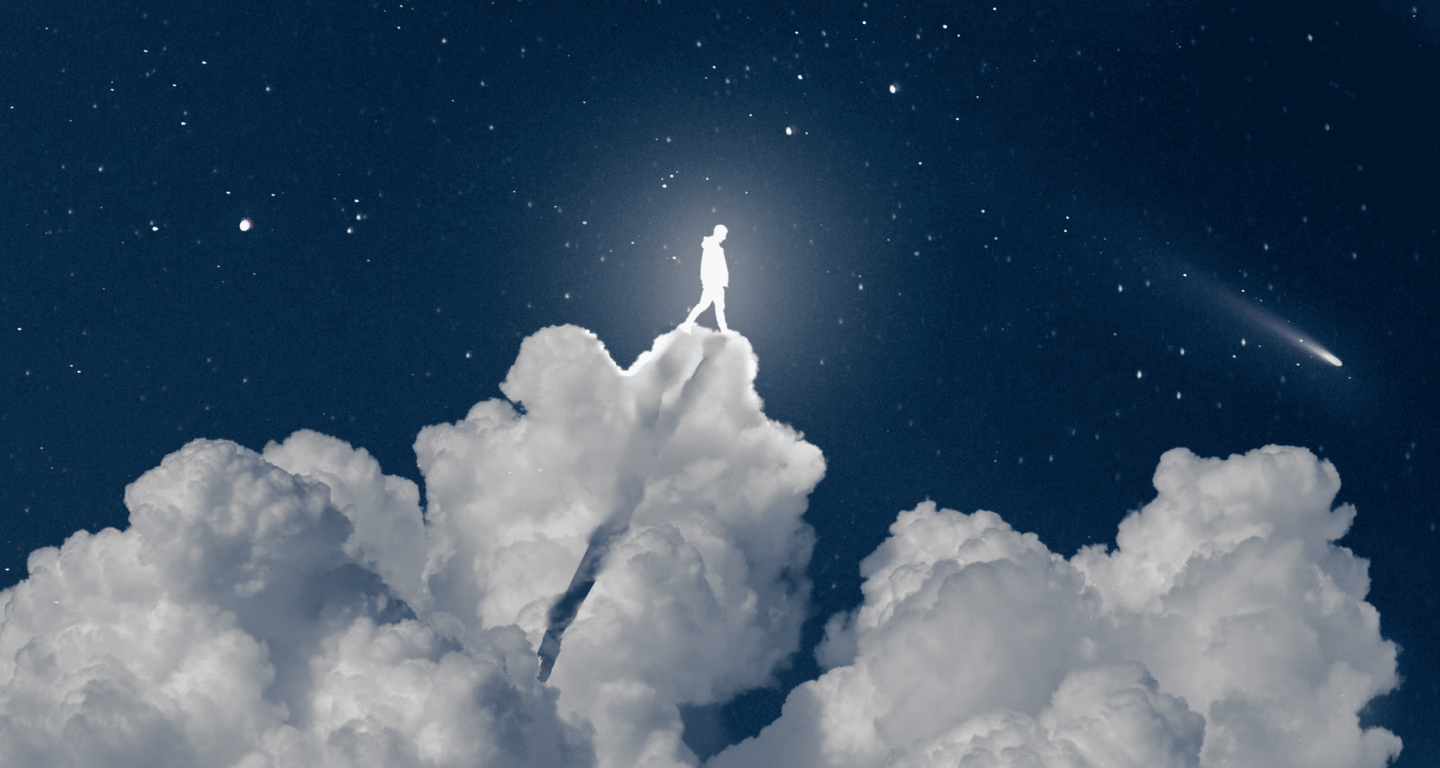
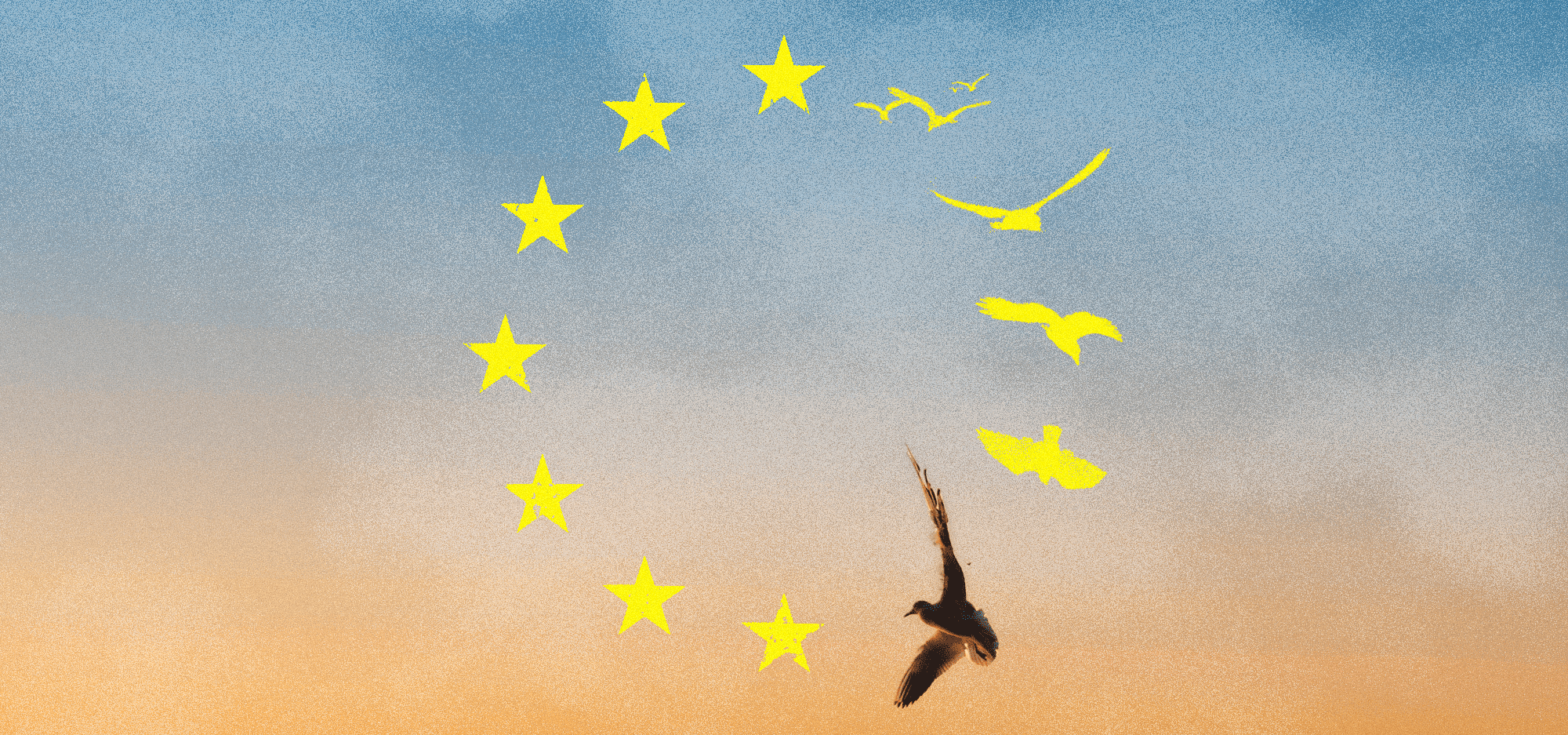
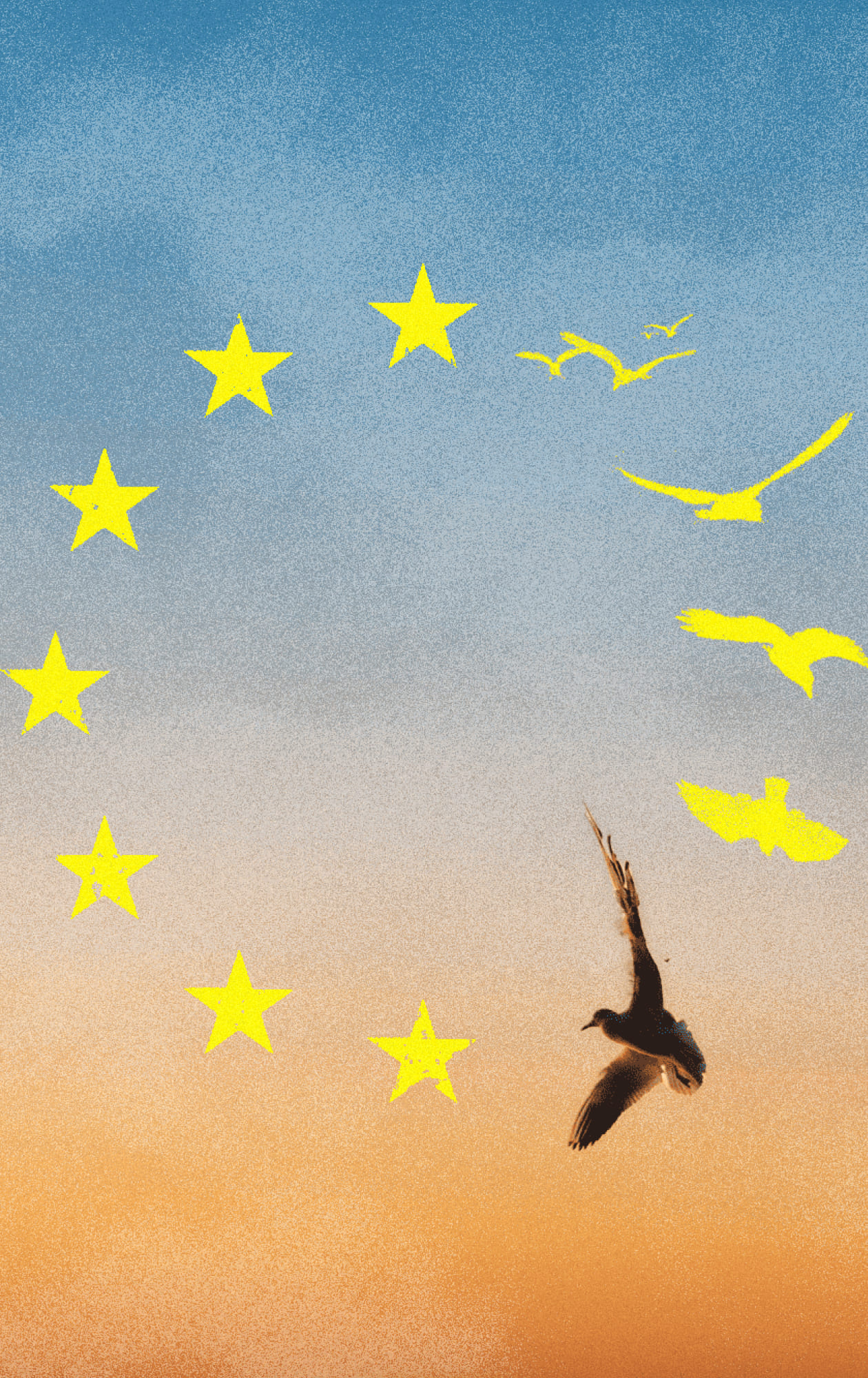
Illustration by Vadym Blonskyi. Translation from the Ukrainian by Liubov Kukharenko.
If you would like to share your thoughts, ideas, or experiences and write an op-ed, please send an email to [email protected]. The views expressed in this article do not necessarily reflect the position of The Ukrainians Media. Reprinting this text, in whole or in part, is permitted only with the written consent of the editors.