The Journalist in Captivity
This audio is created with AI assistance
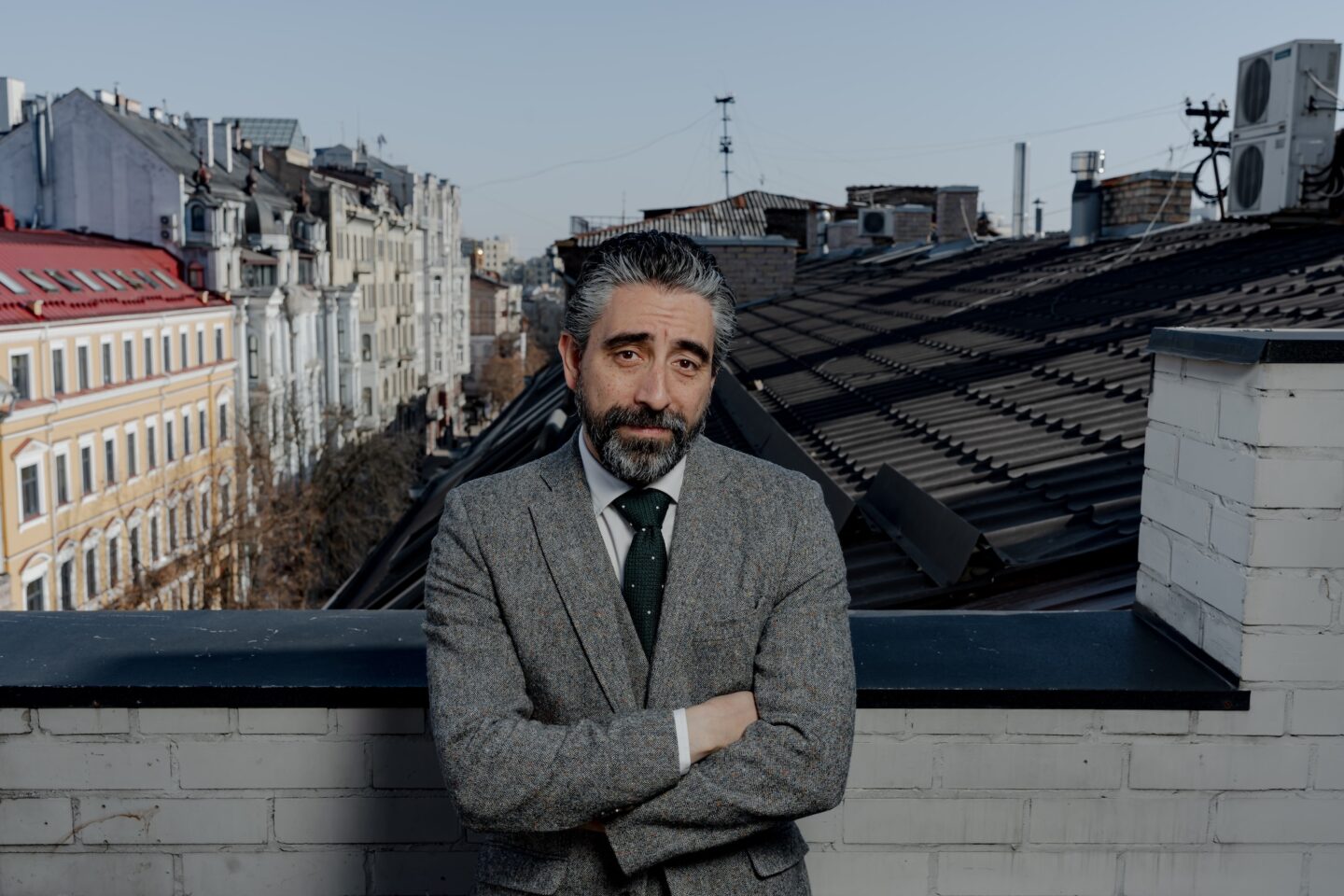
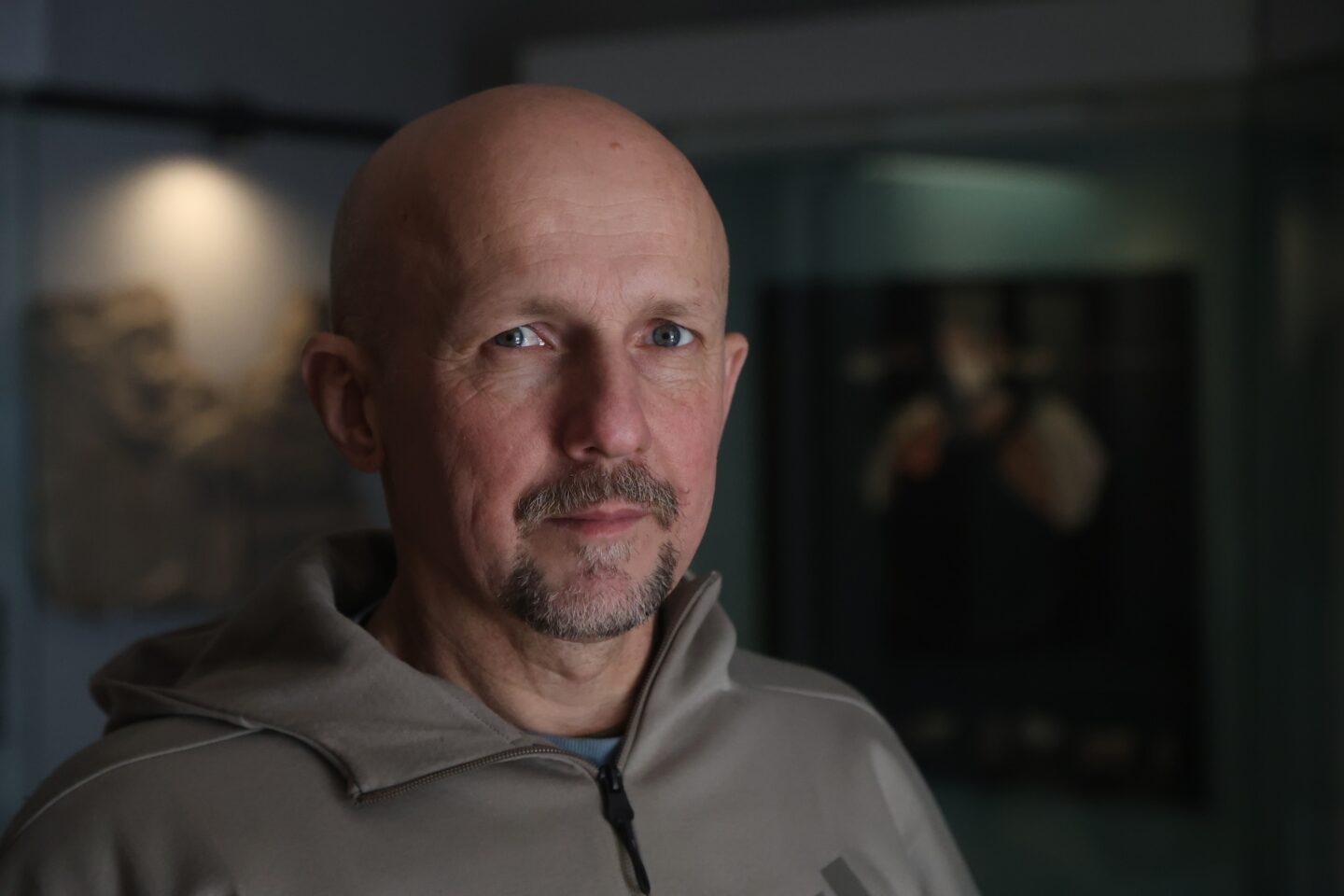
Dmytro Khyliuk has been a journalist for UNIAN, one of Ukraine’s biggest news agencies, since 2013, specializing in justice and politics. “It is important to be in the middle of events, record everything accurately, share information quickly and ask the right questions,” says Khyliuk.
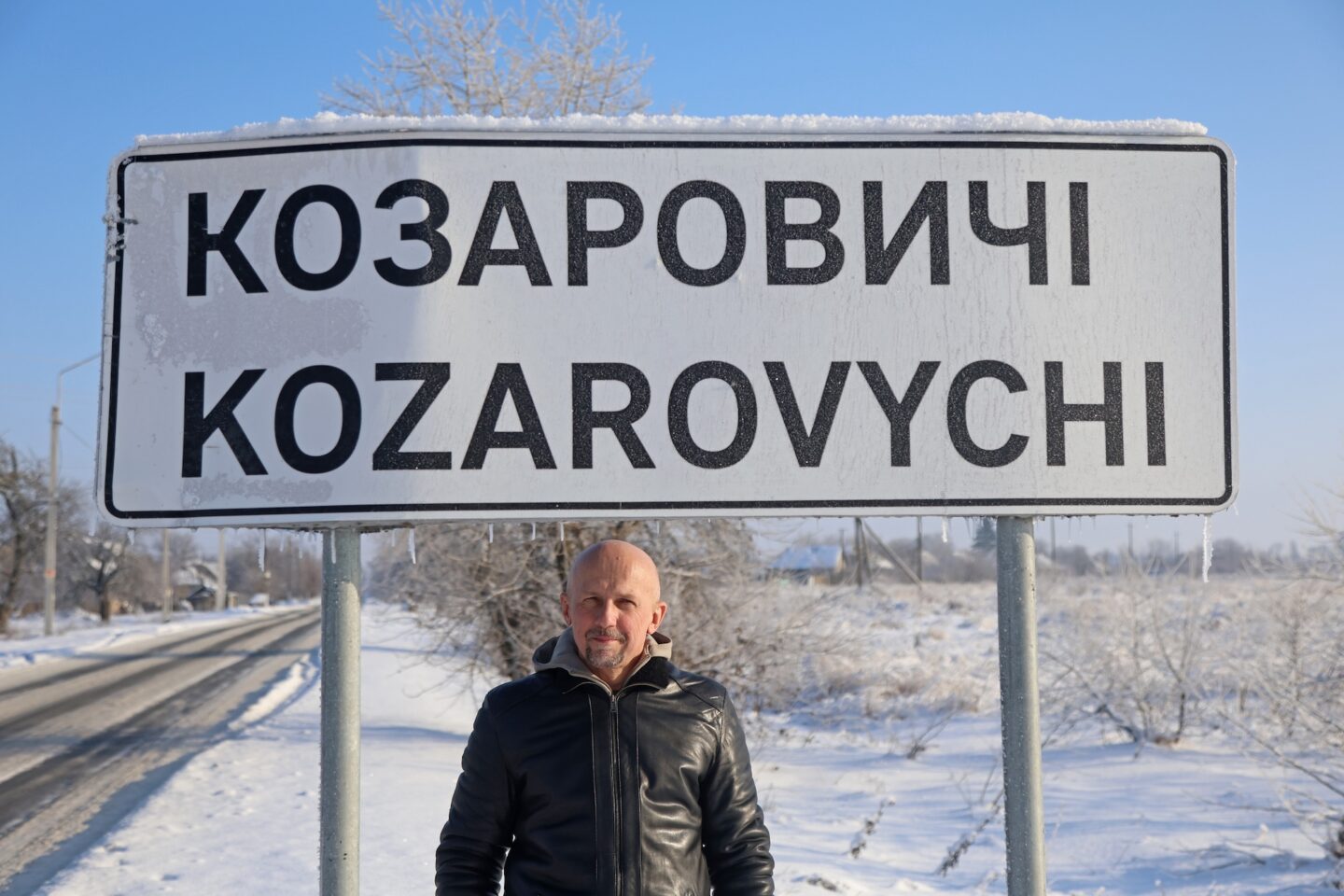
“Our [forces] blew up the bridge over the Irpin river right outside the village of Demydiv, which damaged the dam in the village of Kozarovychi. The neighborhoods on the left bank of the Kyiv Oblast are cut off from the capital. The occupiers have destroyed the electrical facilities. There is no water. Shops are empty. The internet goes in and out. The occupiers are going house to house. Residents try not to go out since the village is constantly being shelled.” That is the message Dmytro Khyliuk sent to his editors on February 27, 2022, the fourth day of Russia’s full-scale invasion of Ukraine. That was his last news report that year. A few days later, Russian soldiers arrested him. A week later, he was taken to Russia. Dmytro Khyliuk spent more than three and a half years in captivity without charge or any official explanation for his detention. It was not until the summer of 2025 that he was finally released in a prisoner exchange.
Now, for nearly half a year, Dmytro Khyliuk has been readjusting to an active lifestyle and catching up on everything he missed during his captivity. He is back at work. The most difficult part for Dmytro is realizing how many important events he missed, since no Ukrainian news reached him while he was in Russia.
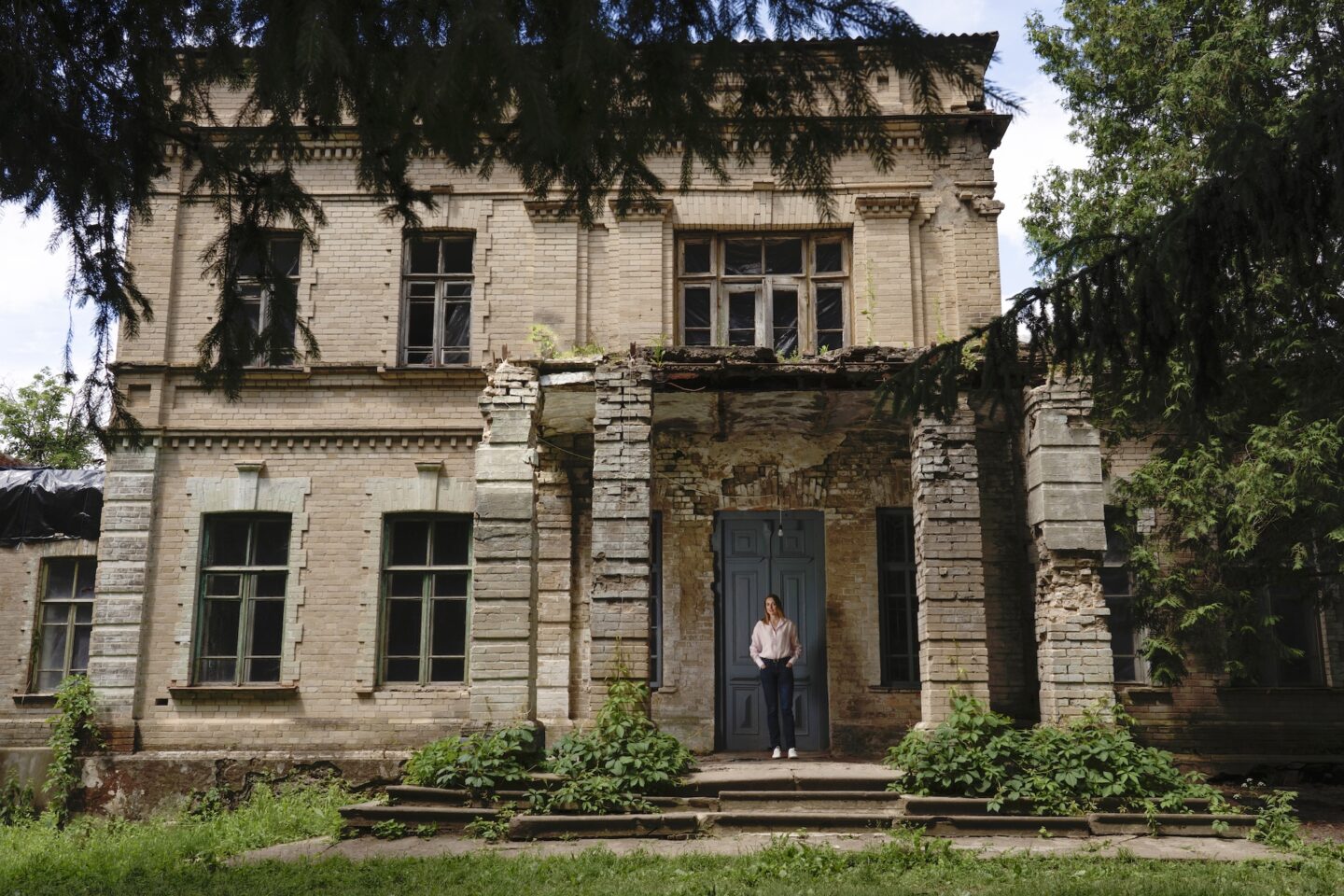
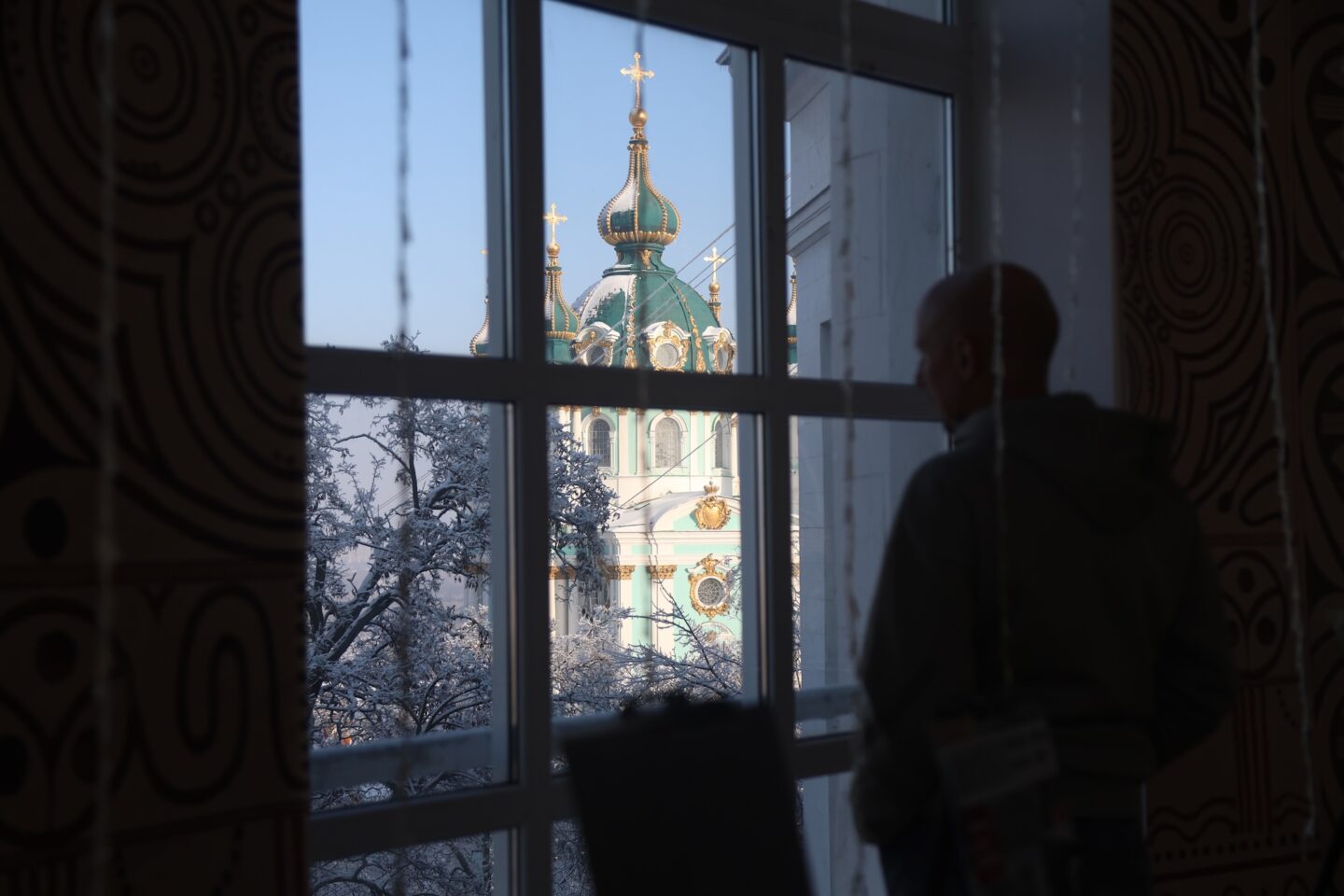
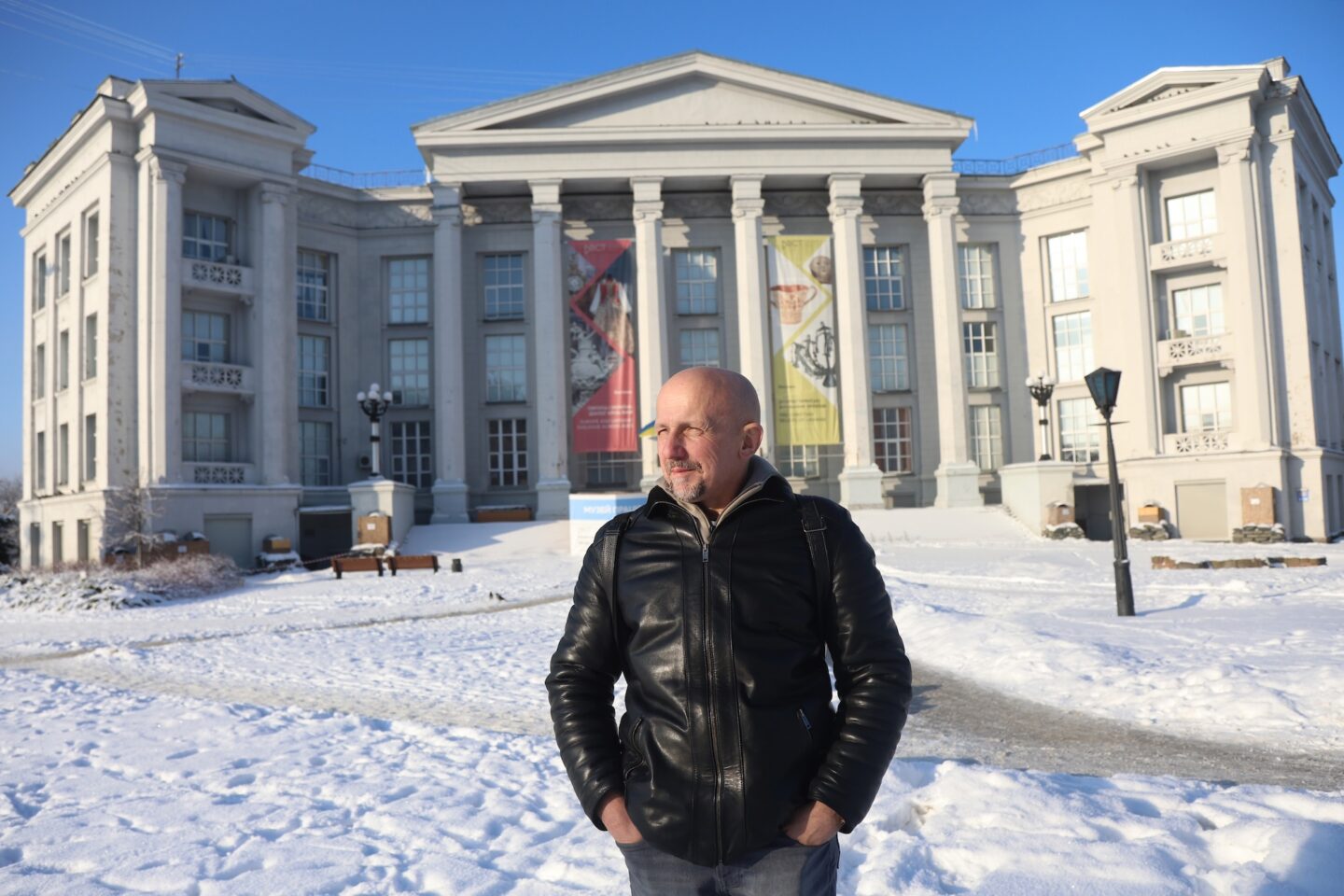
Dmytro suggests meeting and recording an interview in the square near the National Museum of the History of Ukraine.
“I want to see how the space has changed since the Moscow Patriarchate prefab church was removed,” says the journalist.
He is referring to the church of the Moscow Patriarchate, located on Starokyivska hill, built on the foundation of the Church of the Tithes within the UNESCO buffer zone. It had been operating without permits since 2006 and was dismantled one night in May 2024. Khyliuk learned that the church had been dismantled, which activists had been fighting for years, only after he returned.
But on Saturday, the day we meet, winter asserts itself with a bitter frost. Instead of freezing in the square, we are warmly welcomed by the museum.
Dmytro arrives from Kozarovychi in a light leather jacket and sunglasses, joking that spring is just around the corner. Smiling, he says he bought a new pair of sunglasses in 2022, but since that summer never came for him, he has decided not to wait until it gets warm to wear them.
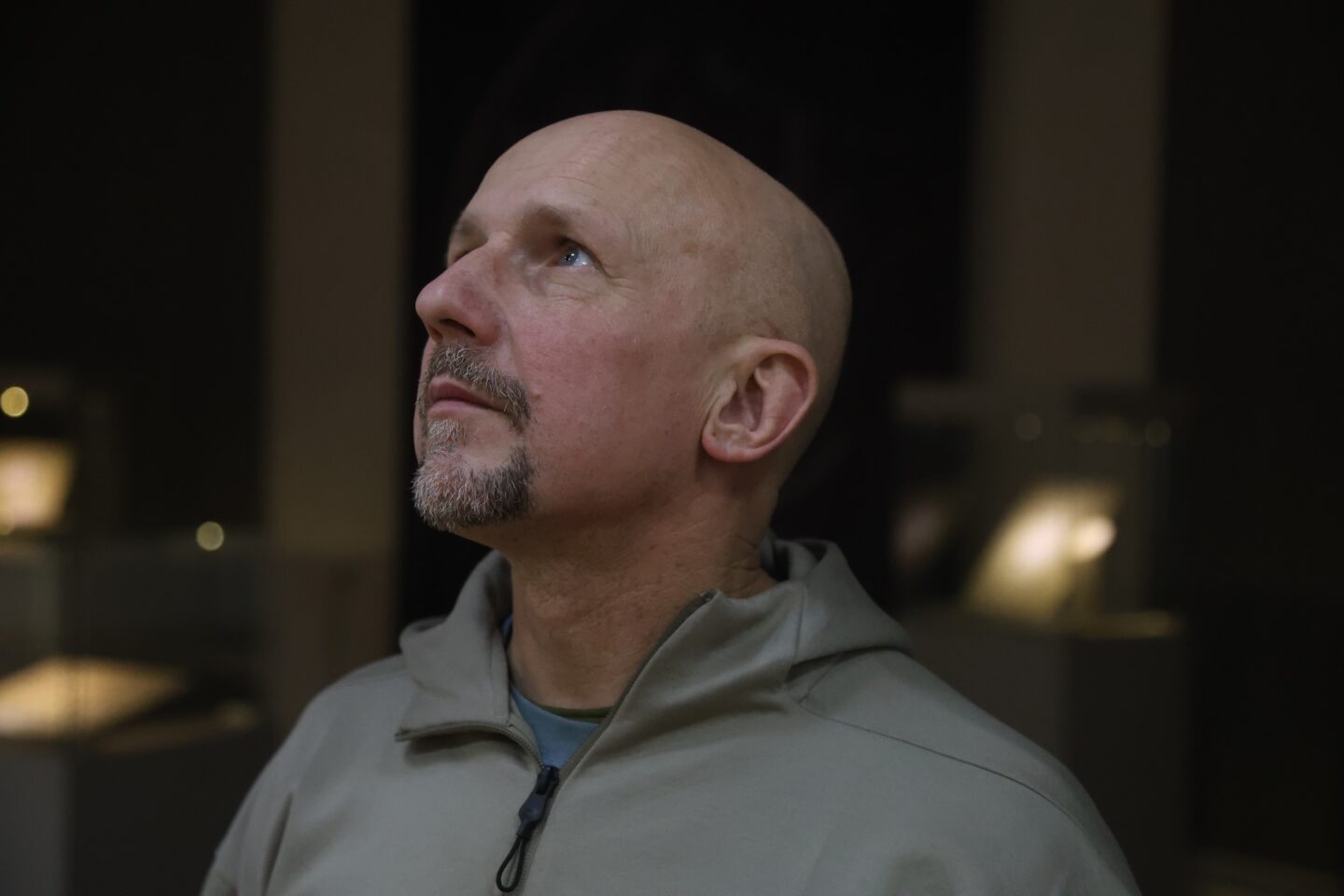
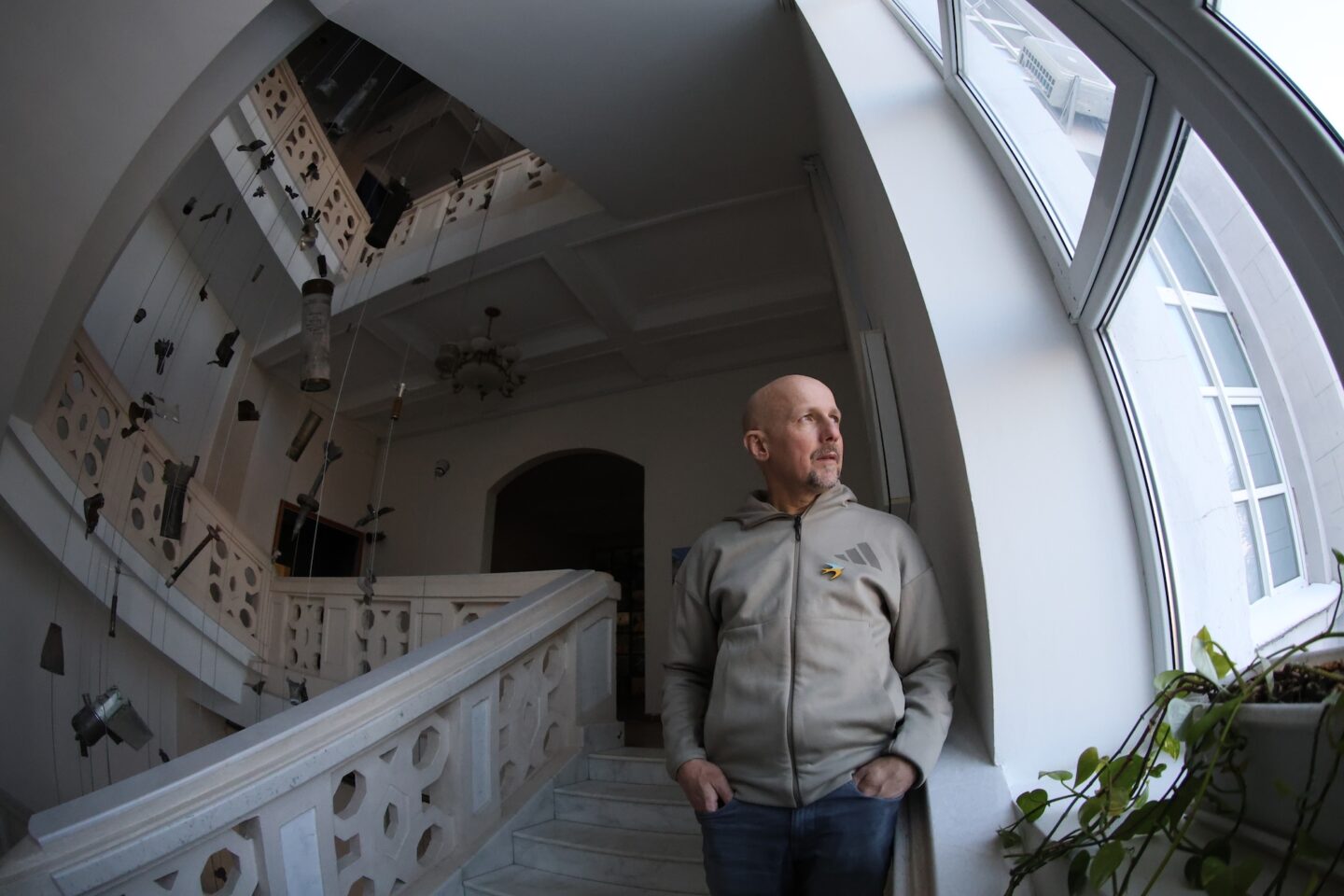
There are not many visitors to the museum on this weekend morning. The museum’s permanent exhibition has been relocated, but a few temporary exhibitions are on display. A private tour is organized for Dmytro. One floor contains confiscated artifacts — Greek amphorae, swords, coins, jewelry. These things — gained by illegal excavators, mostly in southern Ukraine, particularly Crimea — used to be in private collections. Another floor hosts an exhibition devoted to “Azovstal” — photos of perished Mariupol defenders and “Azov” soldiers, as well as objects from the factory grounds collected during Soviet-era expeditions. Next comes the story about the village of Yahidne in Chernihiv Oblast. During the occupation, Russian soldiers held more than 300 locals captive in a school basement. Among the captives were sixty children, whom the Russians used as human shields. Dmytro had not yet heard this story. He is clearly uncomfortable in these rooms, which feel like a dark basement. He passes by children’s drawings, jars of Russian shchi soup, white armbands worn by civilians during the occupation. At the exit, he sees an inscription. He stops and reads aloud: “Day 31, our own [soldiers] came.”
Silver Age
It was by accident that Dmytro Khyliuk got into journalism. At the end of 2004, he was completing his postgraduate studies at the Institute of Philology of Taras Shevchenko University of Kyiv and was mapping out his future. He did not want to teach; the salaries were too low, but he did consider positions in higher education. At that time, the Orange Revolution was underway in Kyiv, and Dmytro went to Maidan, Kyiv’s central square, nearly every day to participate in the protests. Leonid Kuchma’s presidency was coming to a close, and his “successor,” Viktor Yanukovych, was kept out of power in spite of the resources allied behind him, including a rigged election. In response to the protests, a second election was held, this one free and fair, and Viktor Yushchenko became the next president.
“By the way, all the people of our academic department supported Maidan — except the department head,” says Khyliuk. “They were decent and well-educated people, so Yanukovych was absolutely unacceptable for them. The ladies of a certain age said, ‘Look at him! He’s a gopnik, a thug!’”
Khyliuk was drawn to work in media by the changing times and his interest in Ukrainian politics. His friend suggested trying journalism, and Dmytro agreed without hesitation. “On January 23, 2005, Viktor Yushchenko became the president. I, on February 1, became a journalist,” says Dmytro with a smile. His first employment was with Context-Media news agency.
Dmytro rapidly immersed himself in his new profession, primarily reporting on politics and economics. At first, he covered the Cabinet of Ministers press conferences and the National Bank of Ukraine, and later, the Verkhovna Rada, the Parliament of Ukraine. He wrote stories on the fly. As a philologist by profession, he found it challenging at first: he had no formal journalism education or training. But the pace of the workflow captivated him.
Dmytro received his master’s degree in philology. He studied Ukrainian and Russian and wrote his thesis on the poets of the Silver Age of Russian Poetry. He justifies that decision easily: in the 1990s, Ukrainian language and literature studies were of quite poor quality even at the universities.
“Ukrainian studies were taught with a strong Soviet bias: the ‘poor Ukrainian nation,’ a writer as its ‘defender,’ everything was stereotypes and cliches,” says Dmytro.
He was more proficient in Russian literature — at school, he read a lot of it, and learned some poetry by heart. His mother, a teacher of Russian, helped him. Originally from Khmelnytskyi Oblast, she studied Russian philology at Taras Shevchenko University of Kyiv, after which she was assigned to teach at Kozarovychi.
“I liked Russian. Until 2022,” Dmytro says. Even after the beginning of the war in 2014, he despised the Russian authorities, not Russian culture. The full-scale invasion changed everything.
“When I got to know that nation better, one thing became clear — their grandeur is artificially constructed. They have been building it for decades with one single aim: to prove that anything Ukrainian is worse.”
***
Dmytro Khyliuk started working at UNIAN on December 1, 2013, during the Revolution of Dignity. He spent that winter among the protesters, in Parliament, and observing in the courts. “The judges made absurd decisions, sometimes claiming that the protesters ‘created obstacles to leisure in Maidan Square’ or ‘hindered flood relief in the town of Novi Petrivtsi.’”
***
As a news reporter, Dmytro got used to working directly from the scene. He acknowledges that in this era of YouTube, live broadcasts and Telegram channels, that skill has become obsolete.
Under occupation
On February 24, 2022, the sound of low-flying planes and the rumble of military vehicles filled the air around Kozarovychi. Dmytro rode his bicycle the two kilometers to the main road to see what was happening. He saw a column of armored cars and trucks moving towards Kyiv, the letter “V” on their sides. The Russian embassy had left Kyiv a few days earlier. “Our editors asked me to go and check it out: the tricolor had already been removed. Everyone understood: we were on the verge of a crisis, but of what kind…?”
The following day, Russian military vehicles entered Kozarovychi. Dmytro photographed the columns on their way to the Kyiv Reservoir: the first consisted of nearly 70 vehicles; the second was a little smaller. Weaponry was placed amongst the kitchen gardens, on the bank of the river. The equipment bore no flags. Instead, Russian soldiers wore St. George ribbons, a symbol associated with pro-Russian separatist movements in formerly Soviet states. Dmytro sent photos and messages to the news desk, and the story was published. Soon, the mobile service went down. Messages could be sent only rarely, and then only from the attic, so the connection with his news agency was lost.
During the first days of the occupation of Kozarovychi, the Russian soldiers were “not aggressive;” they asked for food and clothes. Dmytro says they were not ready for the cold weather. They had planned to occupy Kyiv and stay in barracks to “maintain order.” There was no artillery or tanks, just light armored tracked and wheeled vehicles.
On February 28, the situation changed. The planned assault on Kyiv had failed, the victorious march into Kyiv was canceled, and the Ukrainian army struck enemy weaponry near the Black Sea.
“The Russians began to openly loot. Switched to self-reliance mode, so to speak,” remembers Dmytro.
On March 1, Russian soldiers came to Khyliuk’s house. They forced Dmytro and his parents out of their home. They stole a clock, a flashlight and his parents’ phones. More soldiers came in the evening. They announced they would spend the night in the house and keep watch from the balcony. Armed men cannot be denied. They spent the night and left.
On March 2, the shelling intensified. The occupiers set a mortar in the neighboring courtyard and started firing indiscriminately on Ukrainian positions. They hit the Khyliuks’ house instead. Nobody was injured, but the wiring and pipes were damaged, leaving the house without electricity, gas or water. Staying in a house in this condition was dangerous in the winter, especially for Dmytro’s mother, who had recently suffered a stroke. They spent the night at a neighbor’s house.
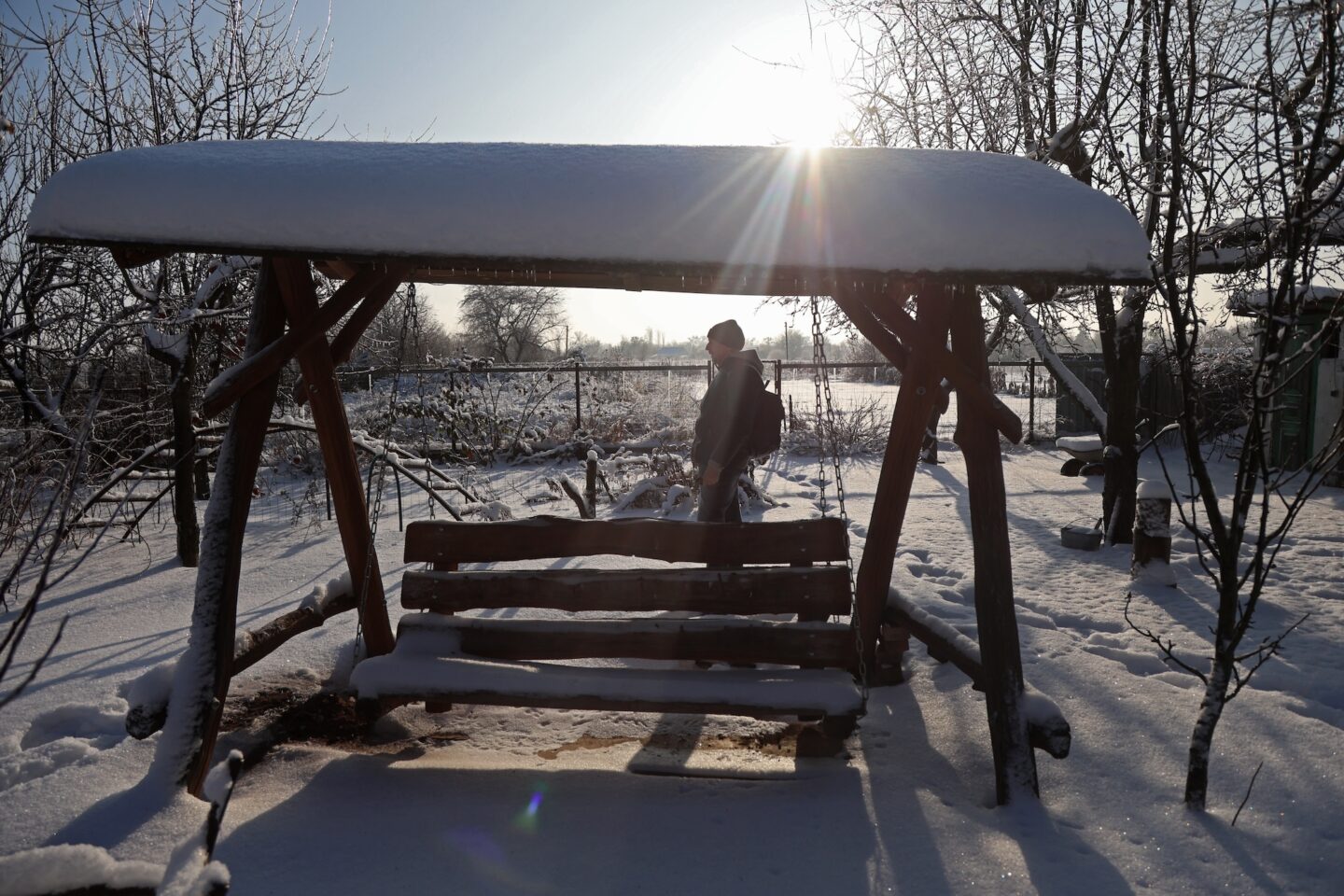
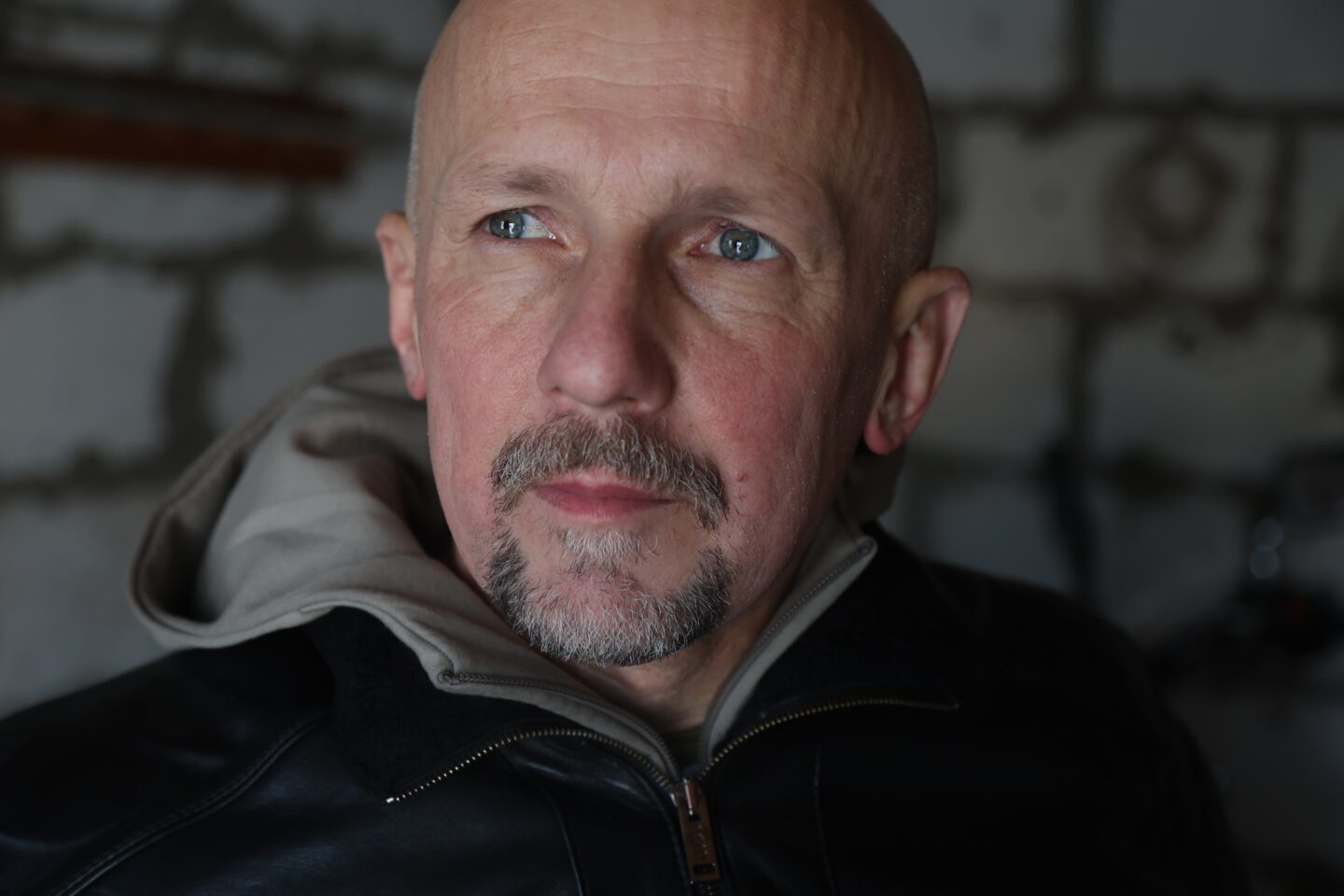
In the morning, on their way home, Dmytro and his father heard barking. They had left their dog inside the house since the explosions were louder and more dangerous outside. Dmytro ran to see who had let the dog out and heard shouting behind him. Russian soldiers, numerous and in battle formation, were conducting a sweep. They stopped Vasyl, Dmytro’s father, shouting at him.
Dmytro came quickly: “We’re locals; we live here. I have documents.”
But the camouflaged men were indifferent: Dmytro and Vasyl were forced to the ground, searched and arrested.
The civil prisoner
On the morning of March 3, Dmytro and his father found themselves led away from their home by armed men.
“I was not expecting that civilians would be arrested in their own houses. I had never heard about such a thing, not even in books,” remembers Dmytro. Maybe the occupiers realized that Ukrainians were not going to “welcome them with flowers,” and they got scared. And then the command “ replenish the [prisoner] exchange pool” was given.
On the way, they threatened to execute their captives.
“I knew they were bluffing. They would have done that without any warning,” says Dmytro.
The group was led to the appliance warehouses in Kozarovychi. Father and son were separated. They taped Dmytro’s hands, then pulled a beanie over his eyes and taped it around his head. Then, they threw him into a windowless basement where a few dozen hostages were already being held. During the first week of the full-scale invasion, Khyliuk had not heard of anyone from his village being taken captive. Still, there they were — a few dozen people already. The first hostages had been taken on February 28.
“So?” asked Dmytro. “So, nothing, just lying here,” came the answer.
A Russian soldier came over and asked for his name, surname and birthdate.
“Profession?” asked the soldier indifferently.
Dmytro chose not to lie: “A journalist.”
“Have you filmed anything?” asked the occupier.
Dmytro was trying to explain that he was a local when the soldier cut him off: “We’ll check, and then we’ll let you go.”
The hostages included a few of Dmytro’s fellow villagers — Oleksandr Yarovyi and Oleksandr Hobta — as well as strangers from other villages. One man had had his hands beaten with a hammer for taking photos of the dam near the Irpin River. He tried to tell them he was working there. The occupiers did not believe him.
The days passed, but no one was set free. On the third day, the occupiers began to take people outside, force them blindfolded into cars, and drive them around the village. Dmytro asked about his father.
“They let him go,” the Russians said.
However, it soon became clear that that was a lie: in the town of Dymer, the district center, where everyone from Kozarovychi was taken, he heard his father’s voice. The hostages were kept in the maintenance facilities of “Viknalend,” a window factory. The prisoners were made to lie on bare cement. They were given one Russian dry ration a day for six people to share, and water came from barrels. There, Dmytro and his father were reunited. Vasyl said that they had been taken out to be executed and forced to write farewell letters. Then the Russians cocked guns to their heads and fired blanks near their temples.
In a day or two, Russian soldiers came with lists, called out Dmytro Khyliuk’s name and put him into a truck. This time, the soldiers took a longer road, to Hostomel — about 50 kilometers away. They shut the hostages into refrigerated containers at the local airport. There, the prisoners were not only civilians, but military prisoners taken during the defense of Kyiv. New hostages came in constantly. Some died in a basement after being beaten.
An older prisoner said, “If they take Kyiv, they will reach Poland.” But Dmytro heard the sounds of the artillery — Ukrainian forces raining fire on the enemy.
On March 14, Dmytro and dozens of other civilian and military hostages were forced into Russian KUNGs — military vehicle trailer systems. They were taken north. Through the closed windows, the hostages could see Belarusian flags. About a hundred people spent the night in a warehouse among carrots and beetroot in the little village of Narovlia. Some military prisoners were wounded or had frostbite. Russian TV crews filmed them. Everyone was given a prisoner-of-war registration card. “I told them I was a civilian. Nobody cared,” says Dmytro.
Status: incommunicado
Dmytro could only guess that they were being taken to Russia. The journey took them nearly five hours. Then they stopped and disembarked. Shouting could be heard from outside: “Priyomka” had begun — a process of “registration” into a Russian prison involving beatings and humiliation. “You’re walking, blindfolded. They are hitting you with truncheons and stun guns. They unleashed dogs on us. One bit me on the side,” says Dmytro.
Photos and fingerprinting followed. The hostages were given prison uniforms, all of it just like in the movies. Only in the movies, there are no papers to sign: “a free and voluntary consent to cooperate with Russian law enforcement.” The signatories were expected to report on the political attitudes of others in the cell.
“The methods they used are well known,” says Dmytro. He read Leo Tolstoy in captivity: the story of the tsarist troops who took a 75-year-old Chechen villager hostage, even though he did not want to escape. “They took him anyway, saying ‘he will be good for exchange,’” remembers the journalist.
Eventually, the prisoners were taken to detention center No. 2 in Novozibkov, the Briansk region. At first, Dmytro shared his cell with civilians from the Kyiv Oblast — Irpin, Hostomel, Dymer — as well as with soldiers, predominantly those who had been defending the Chornobyl nuclear plant. Later, the marines and Mariupol defenders arrived. In the spring of 2022, over 600 people were held prisoner there.
The detention center consisted of two buildings: the new one and the old one, dating back to the early 20th century. The old building was called “starukha,” [a coarse Russian term for “old woman” in Russian — Ed.]. It was damp and cold there — windows broken, walls thick. There, in the old building, bread was baked — the lower part of the building was filled with the smell of yeast. There was also a bathhouse. Sometimes the prisoners could smell the fragrance of shampoo, probably used by the Russians. Dmytro begged again and again to be allowed to inform his parents of his whereabouts, but he was ignored. Once, a guard said, “Everything is rosy near your Kiev. Biden has restored everything.” From this, Dmytro understood that Kyiv was not occupied.
In April, for the first time, the Russians — allegedly the FSB representatives in the Briansk region — interrogated Dmytro on “the case of division of the Luhansk and Donetsk oblasts in 2014.” They asked about Tomos, the Maidan revolution, Pride Parades, Ukrainian soldiers’ “war crimes” in Mariupol and the Donbas region.
“They tried to manipulate me:
‘What is known on the white phosphorus bombs used by the Ukrainian Armed Forces?’, ‘Where are the bio-laboratories located?’
They also interrogated me on NATO exercises in Ukraine. So I told them:
‘There used to be some every year, called the Sea Breeze exercises. Our Parliament gave permission for foreign troops to participate.’
The Russians were totally perplexed. They asked: ‘Do you know the leader of the Right Sector?’
‘I do,’ I replied honestly.
‘And from Azov?’, they asked.
‘Personally,’ I said, not hiding the truth.
‘How come you know them?’
I said, ‘I’m a journalist. Right Sector and the National Corps are both political parties.’
They are so far from Ukrainian realities,” says Khyliuk, recalling the conversations [In Russian propaganda, Azov and Right Sector are frequently depicted as “neo-Nazi” organizations and blamed for fabricated or exaggerated crimes. Such portrayals often bear little resemblance to their actual role in Ukrainian political life — Ed.].
In Novozibkov, Dmytro was kept with other prisoners, but was sometimes taken to solitary confinement without any explanation. The conditions were terrible. The soldiers beat prisoners for any little thing: looking out of the window — a hit in the legs, laying a pillow on a hard bench — another beating. They once used a stun gun on Dmytro.
“I ran to the medical facility, and they were there with the stun gun.
‘I have heart disease,’ I said.
They told me, ‘Don’t be afraid, stun guns are the best medicine,’” remembers Dmytro.
Captured soldiers were particularly abused: the Russians would stun them until the stun gun’s battery went dead. Afterward, soldiers were sometimes just thrown back into a cell, unconscious. Torture was used both for interrogation and “for fun.”
“There are lots of sadists there. They know they can torture people with impunity,” he adds.
Every morning, the prisoners were forced to sing the Russian anthem while the guards made sure everyone sang — and sang loudly enough. Push-ups were the punishment for singing badly —hundreds of push-ups, until the prisoners were completely exhausted. Dmytro said the Russian guards were especially irritated by prisoners speaking Ukrainian. Among the prisoners, there were some who could not speak Russian at all or made many mistakes in pronunciation. They would yell, “In Russian! Why the hell are you speaking Khokhly!” [a derogatory term for Ukrainian — Ed.]
Far into Russia
On May 11, 2023, the prisoners received breakfast earlier than usual. Someone said, “Finally, we’re being exchanged [for Russian prisoners].” But no. Instead, the Ukrainians were forced into prison vans and given cardboard boxes — “rations for special detainees.”
“Real food, fresh, without worms. Even sugar.. From 60 grams of glucose, which I had for the first time in a year, my heart was racing. This ration impacted me like an energy drink,” remembers Dmytro.
The Russians drove them to the Vladimir region, passing through the Tula region, with a stop at a penal colony in the town of Donskoy. The prisoners were herded into the prison yard. They were forced to kneel or stand and were only allowed to change position when commanded. People fainted, like an American named Stephen Hubbard, who was there with Dmytro. On October 7, 2024, the Moscow City Court sentenced the 72-year-old American man to 6 years and 10 months in a general-regime penal colony on mercenary charges. “I remember a romantic moment from that time,” says Dmytro. “It was morning, and while they were beating us, I heard nightingales singing! For the first time in a year, I heard a bird that was not a crow.”
Dmytro found himself in a new place — the Correctional Colony No. 7 in the village of Pakino — where he was placed in a six-bed cell with fourteen other prisoners, including civilians not only from Kyiv Oblast, but from Kharkiv Oblast too.
The building was surrounded by a high fence. Dmytro believes that the part where the Ukrainians were kept was segregated from the area reserved for Russians. The treatment here was no different from the previous place, except that here, representatives of the Red Cross visited them. According to the rules of war and the Geneva Conventions, the Red Cross is supposed to constantly monitor prisoner conditions, prevent torture and report any violations — the kidnapping of civilians in particular, which is prohibited to detain during an occupation. However, those visits are quite rare: humanitarian workers claim they are denied access, while the prisoners are sure that they are not taking enough initiative to gain access.
“Tomorrow you will have guests. God forbid anyone complain about the conditions or the food. Any questions?” said a Russian guard. The journalist found the courage to clarify,
“Are those guests from Russia, some sort of international organization, or Ukraine?”
“We won’t allow Ukraine here,” was the answer.
The next day, when the door opened, two women and a man stood at the entrance to the cell.
One of them asked: “How do they treat you? Do you have medical aid?”
“We do,” chorused the prisoners.
“Do they give you food?”
“They do.”
The Red Cross representatives were interested in personal data, and the prisoners, in when the exchange was planned. The Red Cross workers assured the prisoners that they had no influence on the process:
“Ukraine wants you all back.”
They said they had brought hygiene kits, copies of the Geneva Conventions, books and board games, which would be delivered to the prisoners after the inspection. No books or board games were ever delivered, but after the visit, they received one toothbrush and one tube of toothpaste for the entire cell.
During all this time, Dmytro was cut off from any communication with the outside world. He received no news, nor did he see the calendar. He kept track of all the dates in his head, counting them every day.
“Everyone was thin. If you blew on us, we’d fall over. After the prisoner exchange in May 2024, the media published photos of the exhausted and emaciated prisoners who had been released. One National Guard soldier was from our colony. Later, the guys who were left behind said that they were forced to write a statement saying that he had refused to eat, that it was his choice to become so thin”, remembers Dmytro. After news of this treatment went public, the prisoners began to receive more food and to be weighed. At the first weighing, Dmytro was only 54 kg; before imprisonment, he had weighed 74 kg.
“A bag of bones. I think that at that moment I had put on some weight already. Before that, I weighed 45 kg.”
Dmytro was no longer taken for interrogation. Just once, he was summoned for a conversation, during which he found out that the Russians had failed to capture Kyiv and had also been defeated in the Kharkiv, Kherson and Zaporizhzhia oblasts. He did not know, though, about the liberation of Kherson.
The language situation remained the same.
“You cannot speak your language. You must speak Russian. We do not understand what you say,” said one of the guards. One of the prisoners reminded them of the Geneva Conventions. The guard went silent.
Dmytro says that after the exchange in May, the conditions became more “liberal.” The guards no longer beat them; they were allowed to sit on the floor during the day, and they were no longer made to do push-ups and squats.
However, the Russians never let go of the idea of reeducating the Ukrainians. Dmytro thinks that there was an order from the higher-ups, but the guards lacked imagination. He remembers that one day in March, the cell was opened and everyone was made to face the wall. They heard the sound of tape tearing. When the prisoners turned around, they saw a portrait of Ivan Kozhedub, a Soviet Ukrainian pilot, printed from a printer. Under the picture, a Russian caption read:
“This is Ivan Kozhedub, a Ukrainian and a hero, and you are a Bandera supporter and a Western puppet.”
People in the cell with Khyliuk were predominantly young; no one had ever heard of Kozhedub. The lesson failed. [Ivan Kozhedub was a Ukrainian-born WWII ace and triple “Hero of the Soviet Union.” Russian propaganda uses his legacy to contrast a “loyal” Soviet-Ukrainian identity against modern pro-independence views — Ed.]
Another day, the Russians hung three portraits — Konovalets, Shukhevych and Bandera, Ukrainian National movement leaders — printed out from Ukrainian websites. In large letters was a caption reading:
“The blood of thousands of Ukrainians is on their hands. Are these your heroes?”
Coming home
On August 20, 2025, the men from Dmytro’s cell heard rumors that the journalist would be taken away. They were convinced it was for a prisoner exchange. Dmytro refused to believe it; during his three years in captivity, only soldiers had been returned home. Soon it happened:
“Khyliuk, gather your belongings…” Dmytro got excited and asked in Russian:
“Can I still have lunch?”
“Yes, but be quick.”
Khyliuk was taken to the “holding cell for transfer.” He was made to read a text stating that he had no complaints against the Russian Federation. Then an evening, a night and a morning of waiting passed. No one came for him. He was given breakfast. At last, they let him into the corridor. His prison gard was waiting for him. He was then taken back to his old cell. His cellmates looked at him, surprised:
“We thought you were at home by now.”
The marine officer reassured him:
“Don’t worry, they will let you out. You’re on the list.”
The next day, Dmytro heard once again:
“Khyliuk, gather your belongings.”
Now Dmytro was sure that they were going to exchange him. As he was leaving, he was joined by the former mayor of Kherson, Volodymyr Mykolaienko.
They were driven for two hours, blindfolded and with their hands cuffed behind their backs. The journalist smelled fuel and heard the rumble of jet engines. He was at the airport. For a few hours, they lay in the plane hangar. Even in August, it was cold there. The guardians in Pakino had said there was only one month a year when jackets were unnecessary — July. Prisoners huddled together for warmth. The guardians checked that no one peeped outside.
Food was given in the morning. The prisoners were taken to eat in groups of six people. They had to look for the glass and the plate with their eyes tied.
Once on the plane, they flew for about two hours. When the ramp opened, they felt a warm breeze and heard the command:
“Untie your hands, take off the blindfolds.”
Dmytro tore the tape binding his hands with his teeth and looked around the plane. It was a double-decker aircraft. Outside, there were buses and ambulances with Belorussian licence plates. Next came the neutral zone and a return to the Ukrainian side.
“I spent 109,814,400 seconds in captivity, calculating the time difference between Kyiv and other cities in Ukraine, the one-kilometer longitudinal variance, the displacement of an aircraft flying along a meridian, the linear velocity at the equator, and so on,” Khyliuk says.
The new reality
After leaving the hospital, Dmytro was astonished by what he found in Kyiv. The metro stations are filled with advertisements to enlist in the military, taps to dispense water for those sheltering there during air raids, the streets full of power generators, public transport running infrequently. There were fewer people, offices were closed, and many buildings had been damaged by strikes.
But what surprised him most was that, despite the situation, Ukrainian society was still engulfed in complaining and quarreling. Some were spreading Kremlin narratives about the cold and lack of electricity, while others were twisting reality to blame not the Russians but the Ukrainian authorities for their troubles.
Khyliuk was once invited to meet with journalists from Africa and South America. They listened attentively to Dmytro’s stories of captivity, but it was as if they weren’t affected. He said: “I may seem to be biased and as though I hate Russia, but I have a master’s degree in Russian literature. After the pause for translation, Dmytro saw their surprised reactions.
“It seems that they, like the Russians, think that you are born a Banderite and hate Russians from birth.’”
Khyliuk acknowledges: “The Russians gave me every reason to hate them. Once, during an interrogation, I told them that my favorite period in Russian literature was the Silver Age. At that time, at the turn of the century, they had all the right conditions to become human, with the Russian empire crumbling and Europe changing. But they chose not to. And Russian propaganda exploited even the best authors. We should have known the Kyiv of Valerian Pidmohylny rather than the Kiev of Bulgakov.”
Despite all the attempts to impose their culture on Ukraine’s people, they fail, even with those they hold captive. He remembers that most of the prisoners in his cell were not active readers before their imprisonment. But in captivity, everyone started reading since books were the only entertainment. Some moved their lips like primary school students. Others began to read more and more and to share their thoughts. They were mostly given 19th-century Russian classics, as well as books by lesser-known authors who candidly described a harsh life in Russia.
“Once, my cellmate Sashko said that he had read some Russian literature. ‘Everything you pick up is just about hunger, shchi and bedbugs. No different from reality.’” There was also a book by Leo Tolstoy’s daughter on her childhood as an immigrant. The count is wealthy, but his children have toothaches, and their parents cannot find a dentist.
“Barbaric,” Dmytro concludes.
Dmytro confesses that he used to listen to Russian music before 2022; now, he would never do so. Russian music, even children’s songs, is an instrument of influence.
“[In captivity,] they played music from Soviet films and cartoons: “Man is a friend of a dog,” “In Africa of mountains,” “Song of a mammoth,” “We are a long echo of each other.” And, of course, how could we forget Kobzon? ‘My pain, leave me.’”A compilation of 40 tracks played on repeat, deafeningly, from 6 a.m. until 10 p.m.,” says Dmytro, joking darkly that he has gotten to know “the mysterious Russian soul.”
“Envious, filthy people. If they see that someone is better off, they will do whatever it takes to make that person’s life worse. They drag you down to their level and find joy in knowing you are now the same as them: filthy, poor, ragged and powerless,” says the journalist released from captivity.
When asked why Russians take civilians captive, Dmytro replies tersely:
“So that everyone here will be afraid.” He adds then: “They have a difficult task. They say, ‘Ukrainians, whatever we throw at you, just take it.’”
Russia can keep prisoners for a long time. It doesn’t cost them much: bad food, no supplies, and they have to give their guards someone to guard, as most of the prisoners have been sent to war.
“I thought it was quite clear for our international partners. But no. They don’t understand that Russia recreates the Middle Ages in the 21st century. It’s pretty simple. They lock people away somewhere where they are not considered human beings. You can compare it with Nazi concentration camps. Maybe, if we describe it this way, it will be easier for the world to understand. We deal with Nazis who torture people based on their nationality. But understanding from personal experience is a steep price,” says Dmytro.
Khyliuk is convinced that it’s not only Putin who hates Ukrainians, but average Russians too. He remembers the Russians he encountered being surprised that Ukrainians did not simply submit when the invasion began, that they were unhappy to be “liberated” by the Russians, who believe, “we are all the same!”
“From their perspective, we simply had to surrender. They asked me: ‘Why didn’t you flee?’ They came to my house, but they were the ones in charge, and we had no choice but to flee. We had to either obey or flee or die,” explains Khyliuk.
Asked what he thinks of the outcome of the peace talks, Khyliuk pauses.
“There will be no agreements with Russians. There will be war. Golda Meir said it exquisitely: ‘We want to live. Our enemies want us dead. We do not have much space for compromise.’”
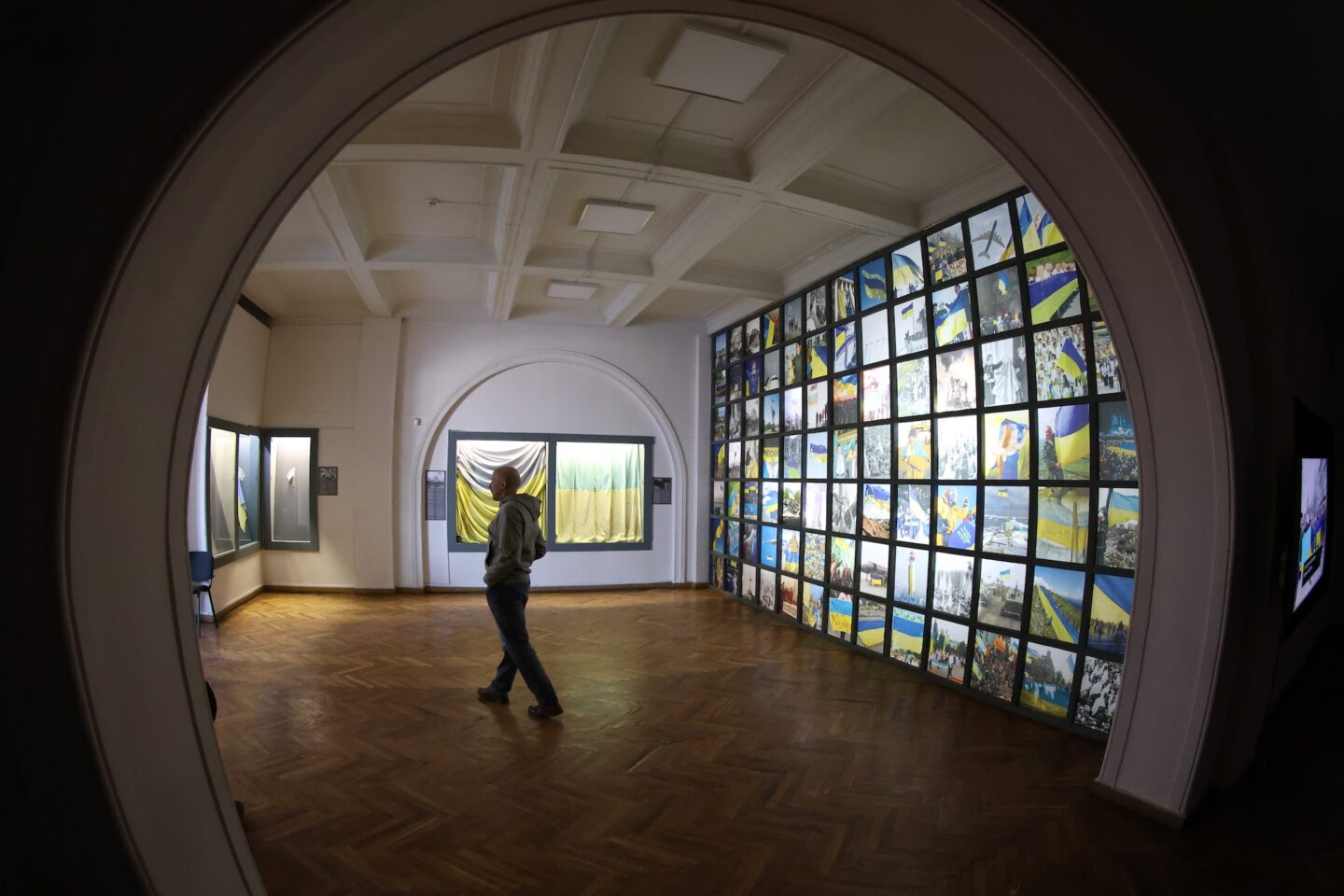
The editorial team expresses their gratitude to the National Museum of the History of Ukraine for their support during the shoot and their professional transparency.
Translation from the Ukrainian by Oleksandr Ladurenko
Literary editing and proofreading by Emilia Seay Allen