Following the Traces of the Golden Slipper
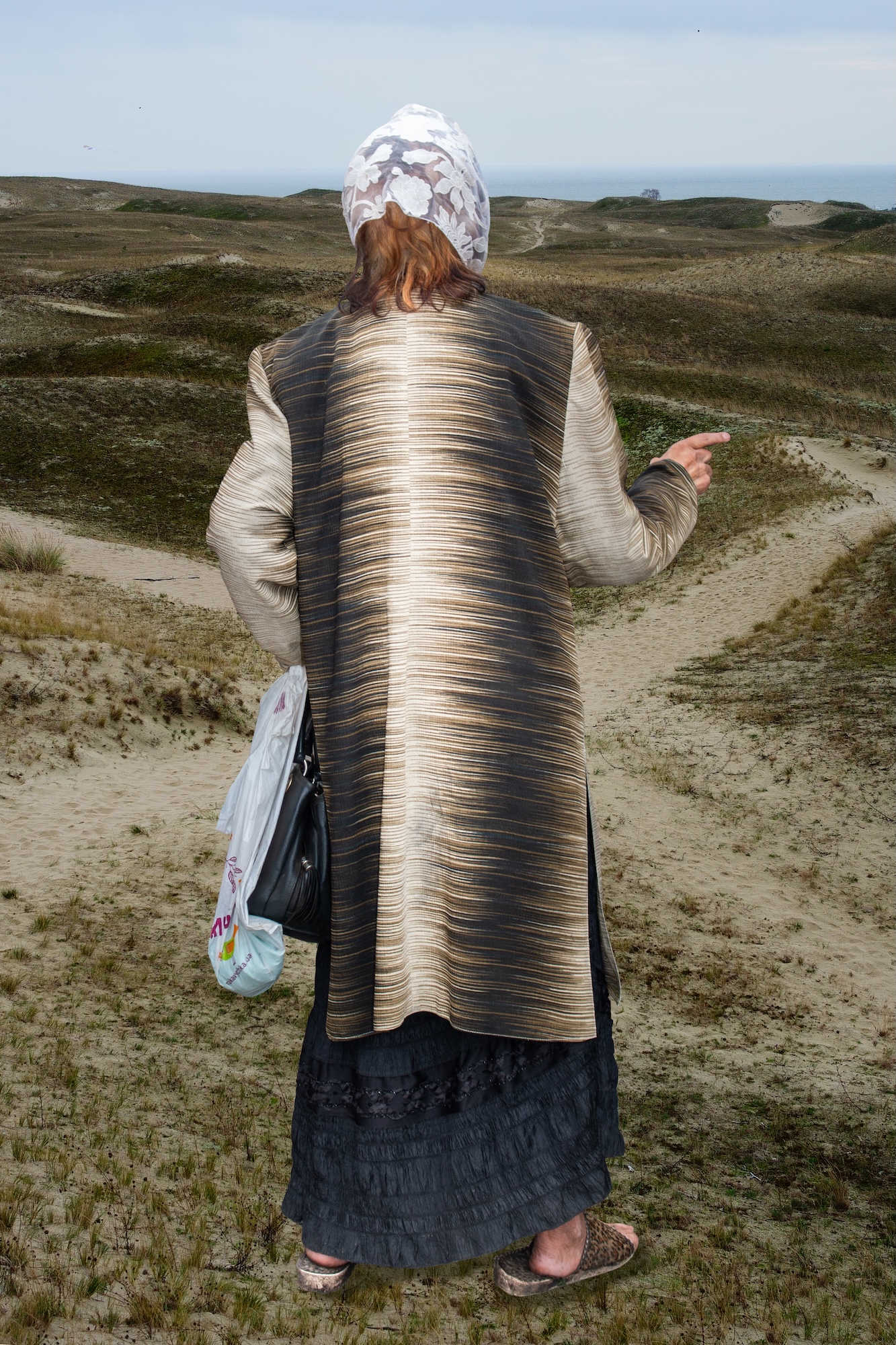
One of the most famous photographs from Elena Subach’s series “Grandmothers on the Edge of Heaven” shows an elderly woman in an elegant blue dress walking downhill. The viewer stands behind her and sees only her moving toward the horizon. From the title of the work, we understand that she is heading toward paradise and loses a golden slipper on the way.
This story, once described by Charles Perrault, became a symbol of Cinderella — a young, beautiful girl seeking happiness. But is it only youth that needs beauty, joy, and love?
In the original book, just as in this photograph, no one knows who the girl or the woman is. So I thought: perhaps the woman we see in Subach’s photographs is the real Cinderella — the one we didn’t know and didn’t pay attention to.
This Cinderella lives in a time of war. Instead of counting peas, she counts the tears of others — those who have lost their loved ones, their homes, and their health. She keeps track of it all in a notebook filled with recipes for Easter cakes. And alongside her daily routine — washing dishes, doing laundry, ironing — she attends farewells and funerals, and goes to church to support the living. She bakes pastries and carries them through the forest of sorrow to those who still remember. She does this, if not every day, then certainly every Sunday.
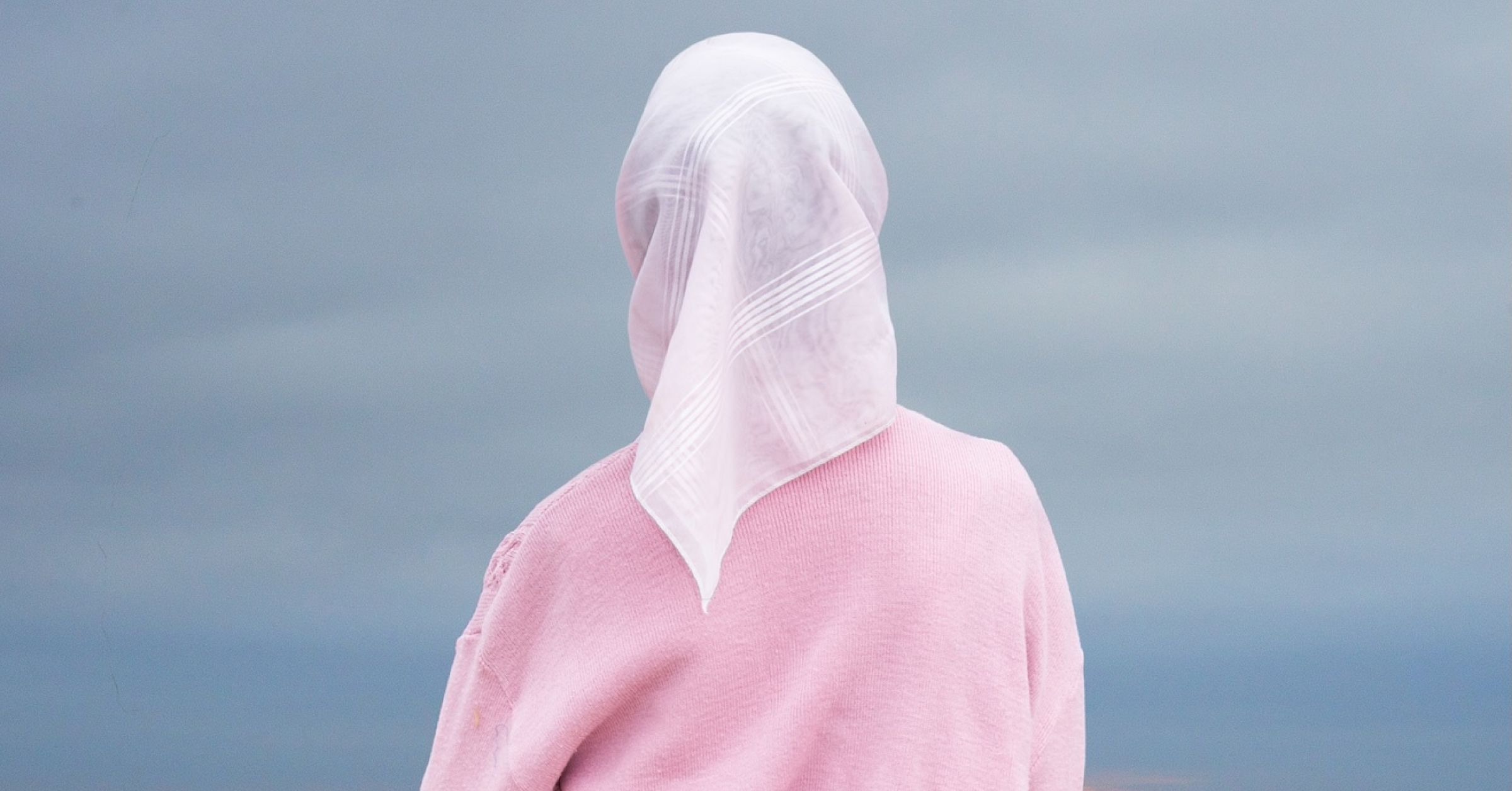
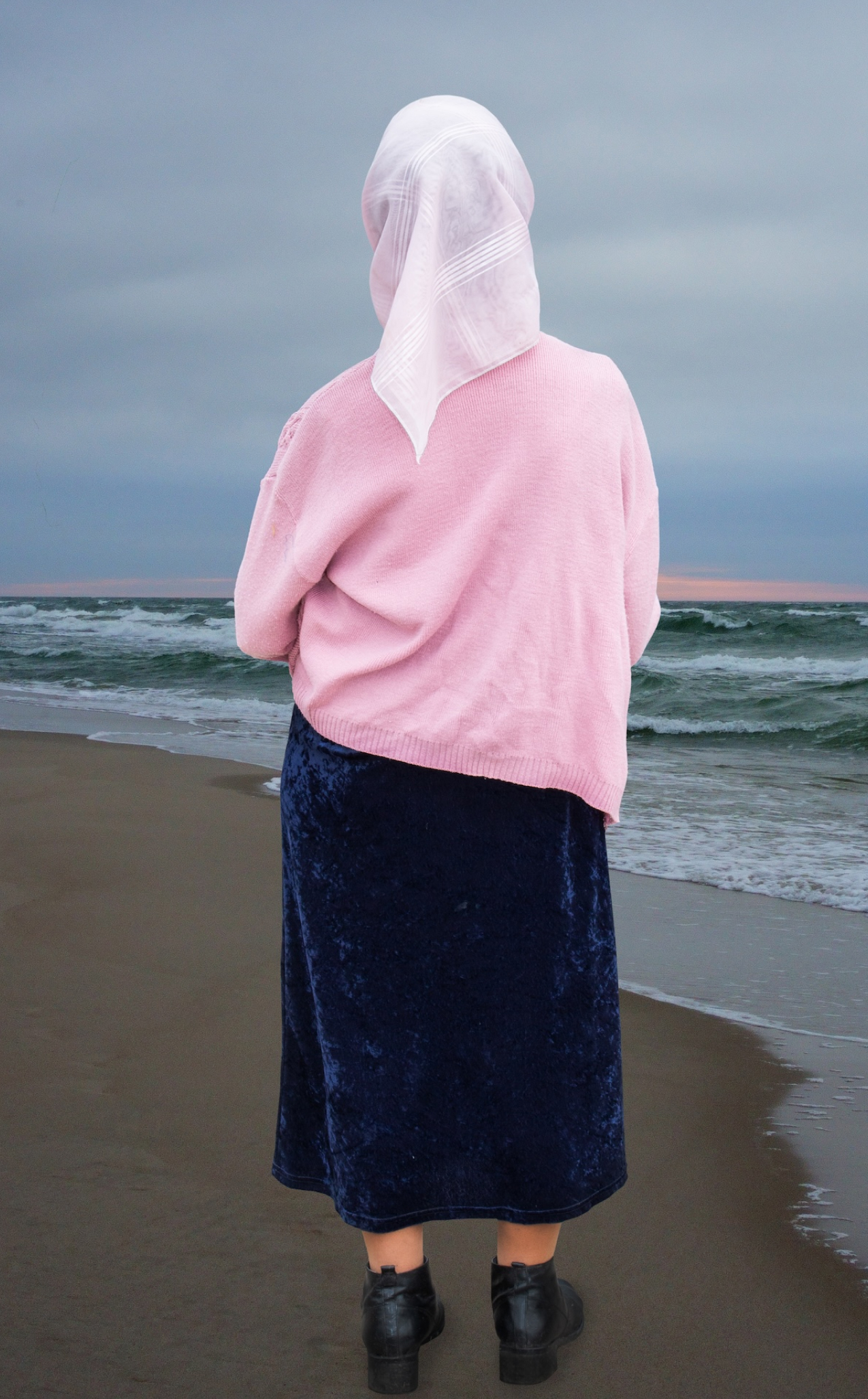
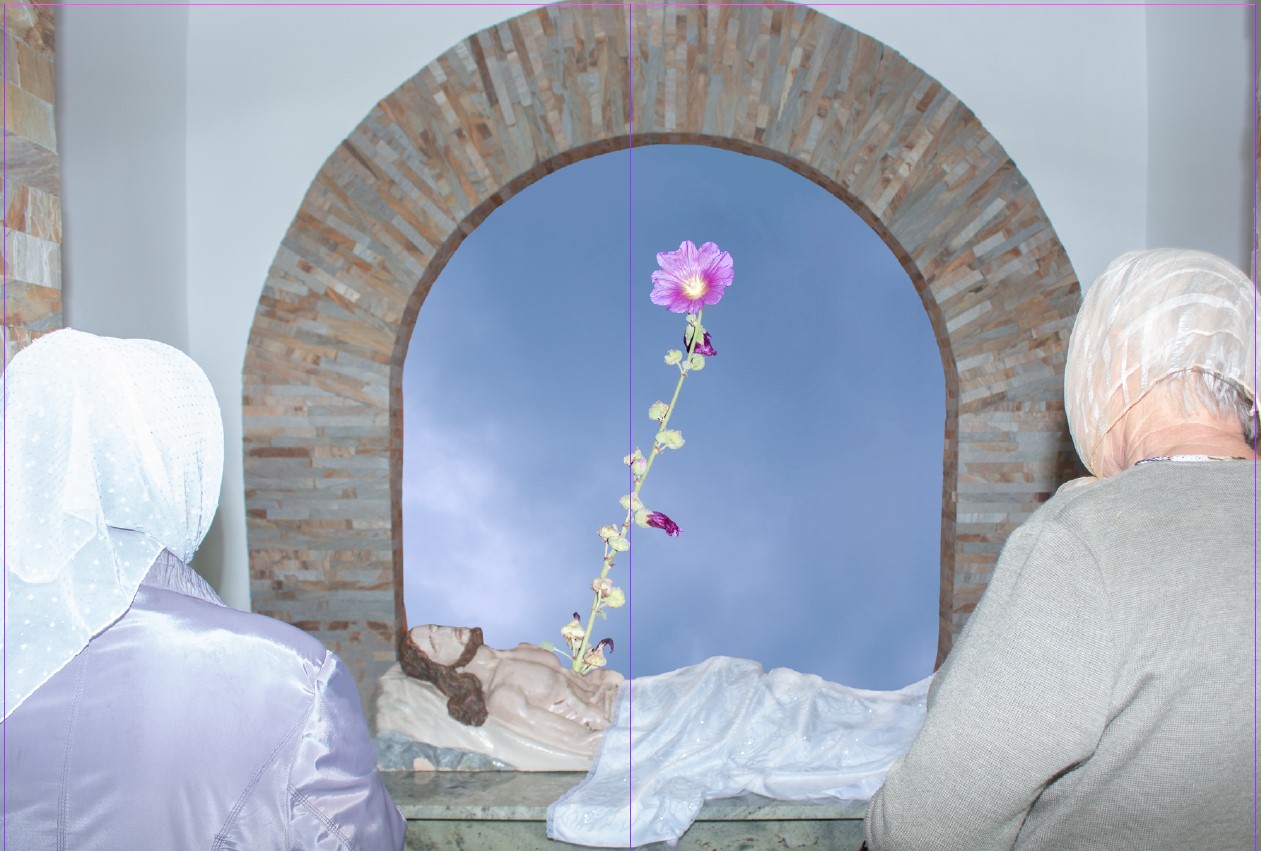
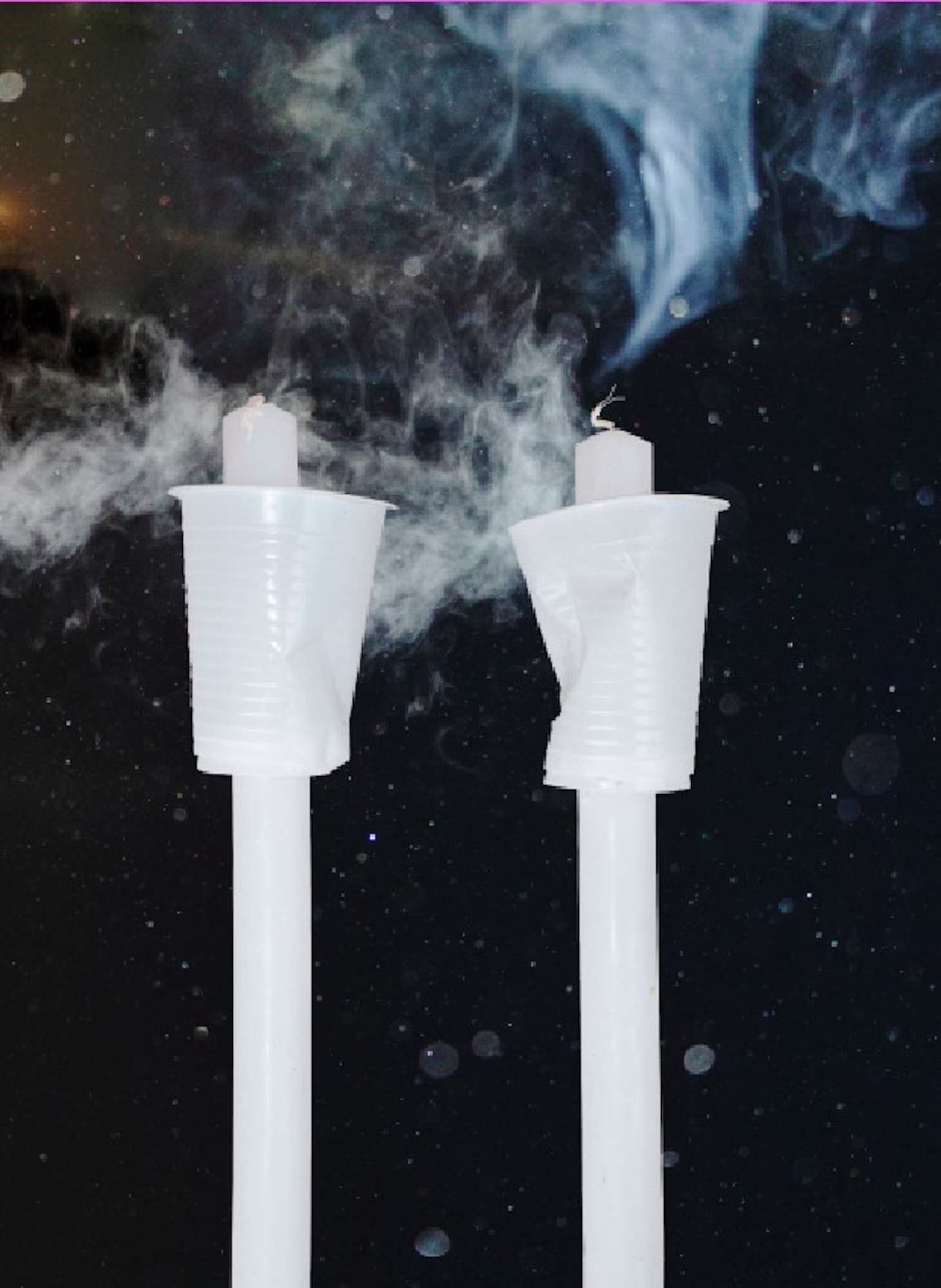
Elena Subach brought her project to life in 2018–2019, traveling through the cities and towns of western Ukraine with her colleague Viacheslav Polyakov. She captured extraordinary women, dressed in their finest dresses and suits, filled with faith in the future, as they ask God for forgiveness for themselves and their loved ones, performing all the necessary rituals of the holiday for which they had been preparing for a long time. She then “cleaned up” the photographs by removing the original backgrounds, placing the figures in idealized, paradisiacal landscapes — blessed, holy, and happy, filled with grace and light.
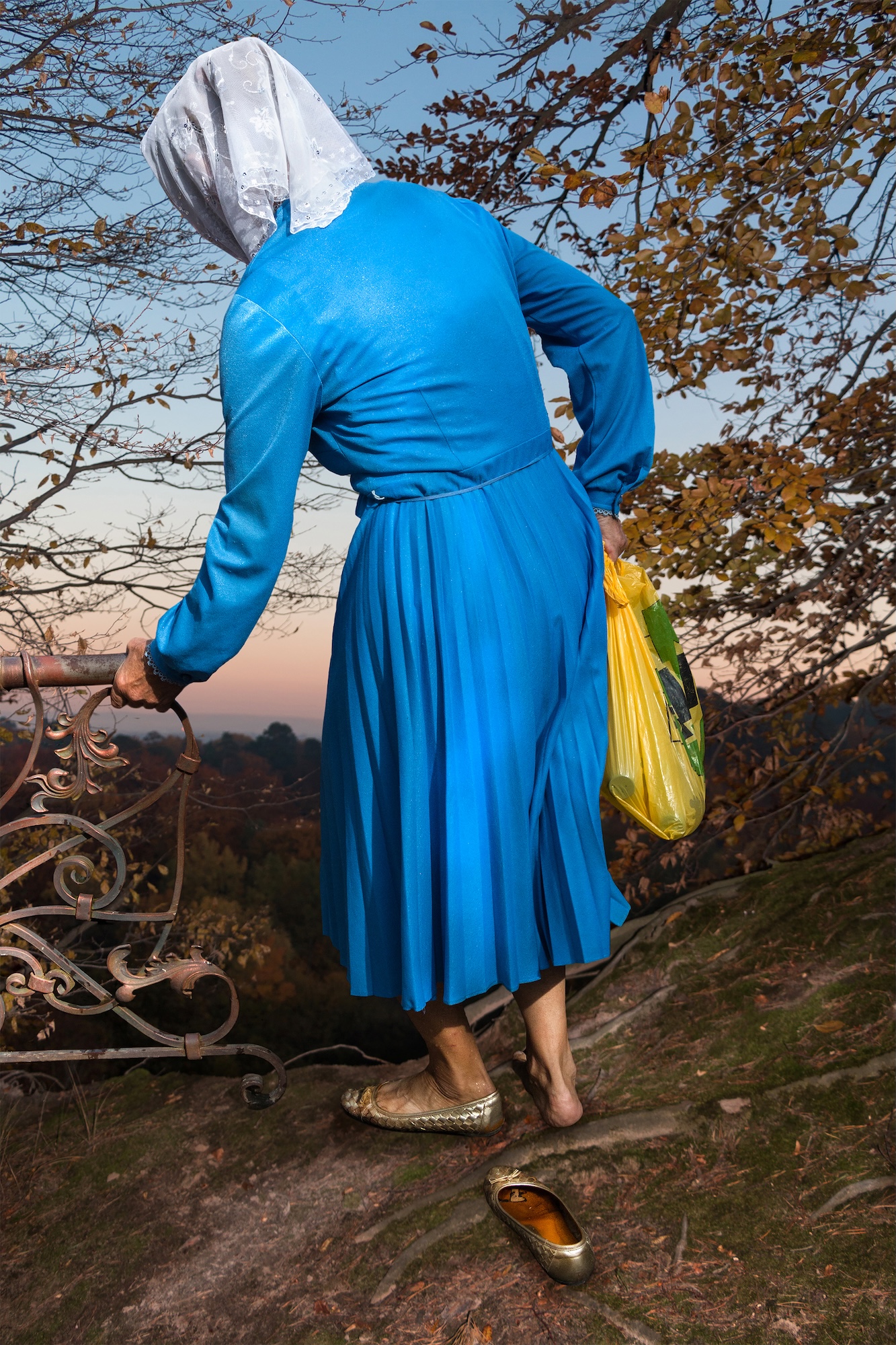
“The flash used during the shoot helped visually emphasize the references to sacred art. The flash flattened the image into a two-dimensional plane, added a graphic quality, eliminated depth, and made the colors more saturated,” says the artist.
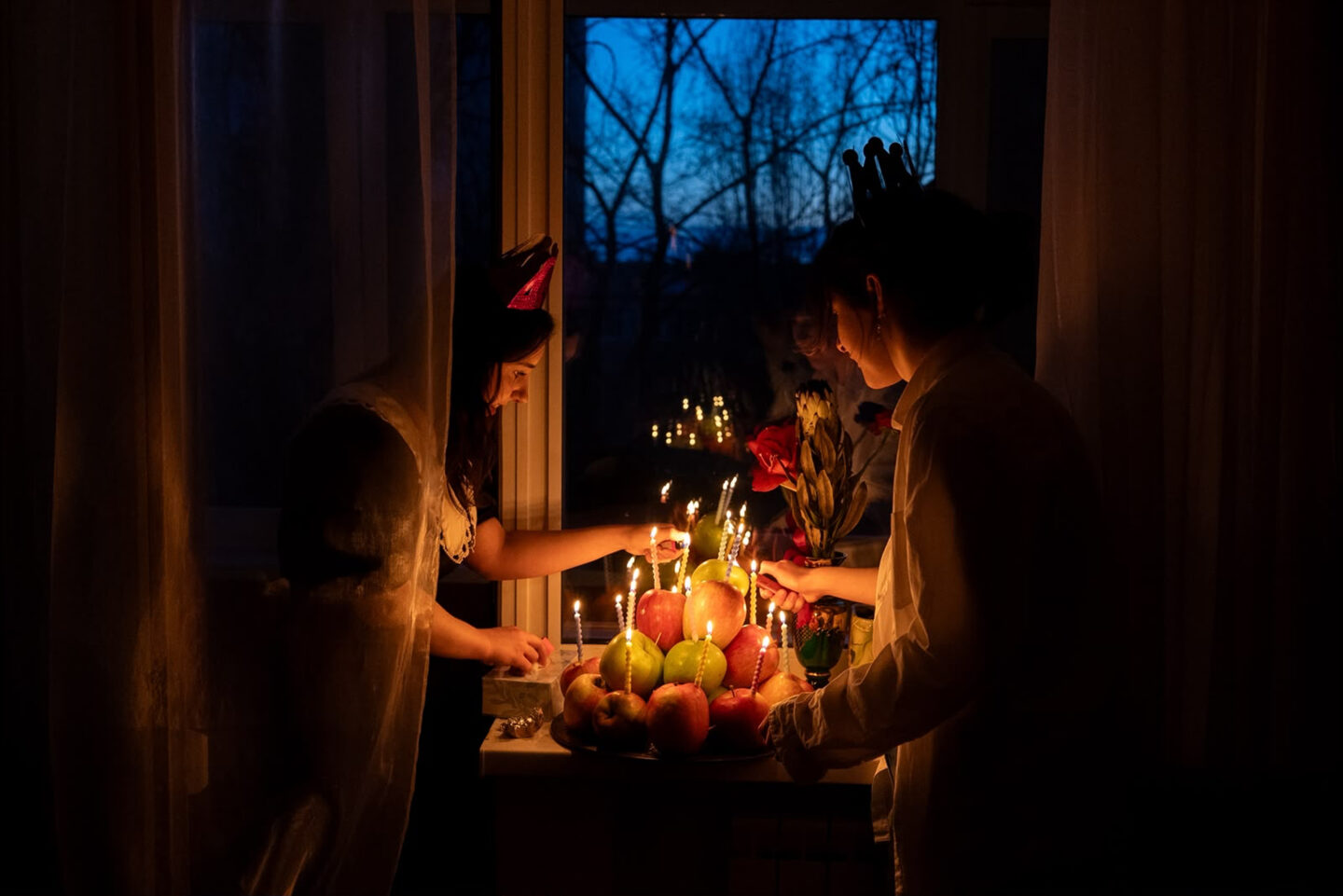
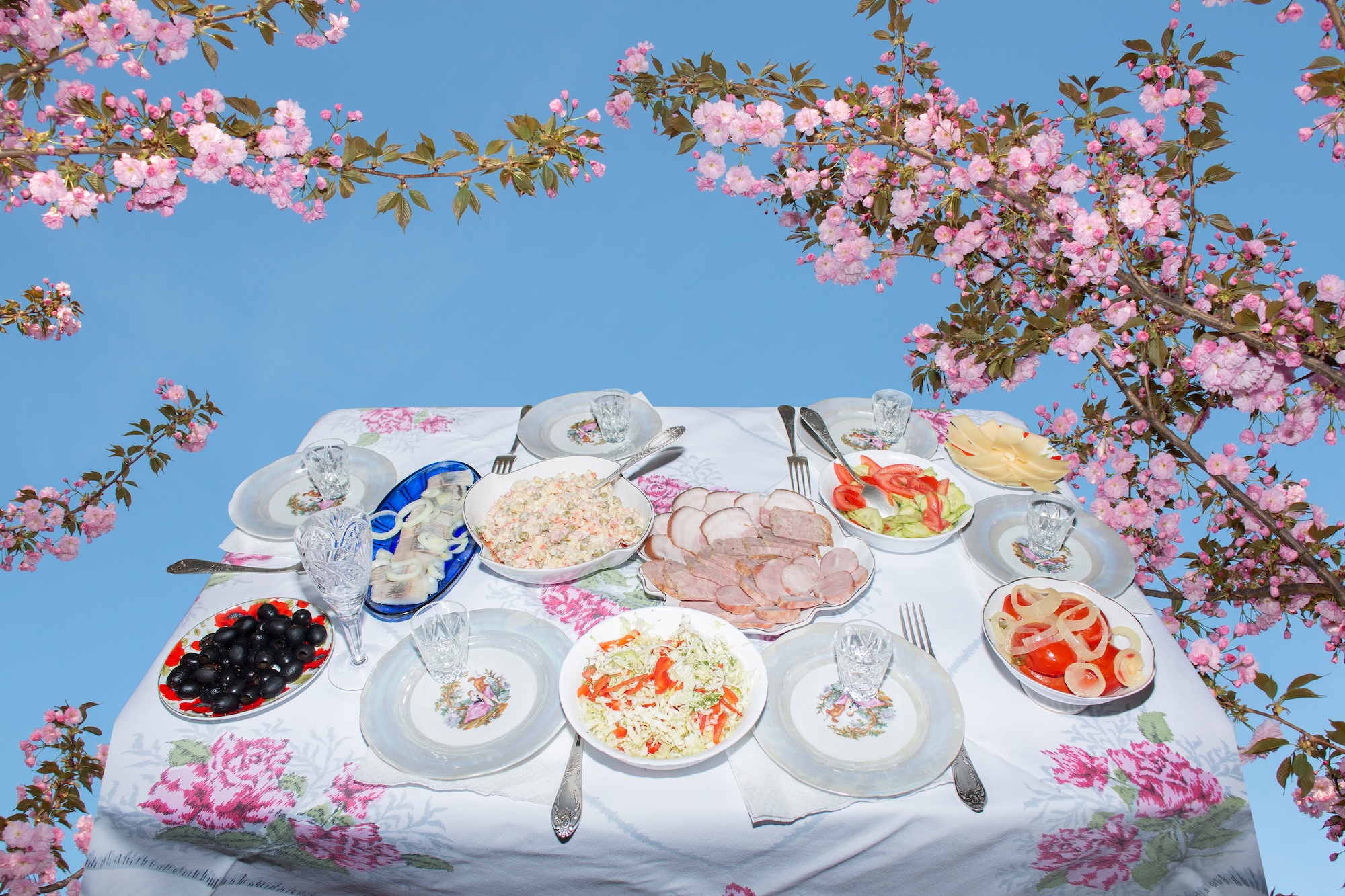
Thus, these grandmothers resemble Italian Madonnas from the Early Renaissance; the Easter table becomes a motif of the Last Supper, and the apples in the photographs allude to one of the most recognizable images of paradise. Yet these red apples, symbols of the harvest and the continuation of the family line, in these works instead point to its ending.
The artist dedicated this series to her grandmother, who passed away while she was working on the collages. As she looked at her subjects — someone’s mothers, sisters, and grandmothers — she thought of her own. As the artist herself says, creating these emotional collages became part of her grieving process, allowing her to come to terms with the death of a loved one.
Looking closely at one of the photographs, I see a table laden with festive dishes, set for six people. It’s empty. No one has touched the family crystalware. What could such a generously set table, with no one seated at it, mean today, in times of war? A bright, festive tablecloth, a fragrant spring landscape — but looking at the empty plates, you think of those who are not at the table.
It is grandmothers who teach us to recognize goodness and to see beauty. But to whom will we tell fairy tales about Cinderella, to which new generation? What if…?
“Before the threat of military aggression, my project was simply a lyrical tribute to the older generation and a reminder to support your loved ones. Today, the project is yet another opportunity to show the world this country and its people — their beauty, uniqueness, and fragility,” says Elena Subach.
Most of the landscapes in the series — images of the Kherson region — are inaccessible today. And perhaps, when we get there again, they will no longer seem so alluring and sacred. This is yet another invisible tragedy of the series: the impossibility of getting close to paradise, of constantly being on its edge, and in the end, never realizing that paradise is all around you.
Translated by Liubov Kukharenko