What Remains After Us
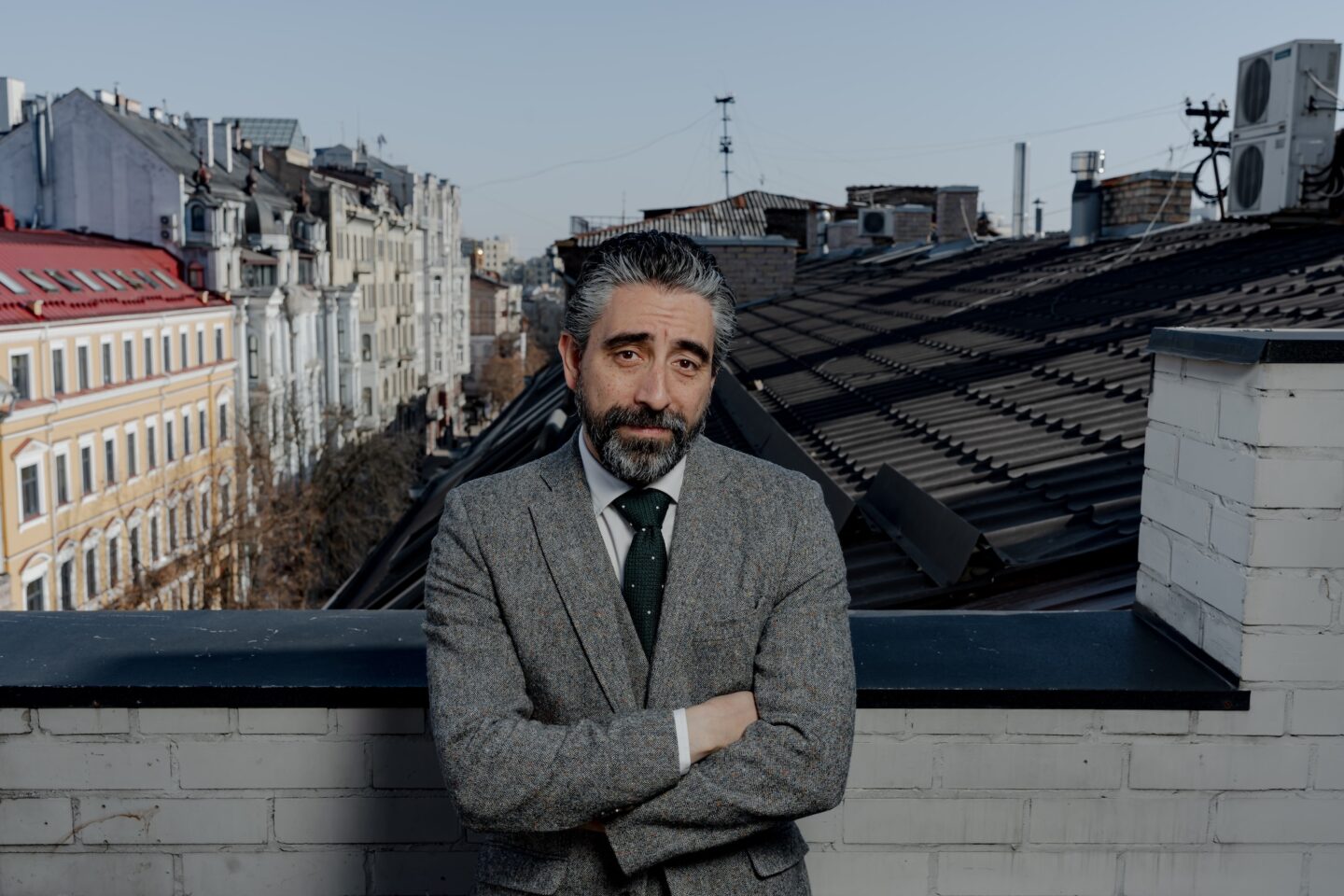
A museum employee stands in the middle of an empty hall. Behind him hangs a painting that has survived occupation, evacuation, and return. He is among those whose work in wartime becomes an act of cultural survival.
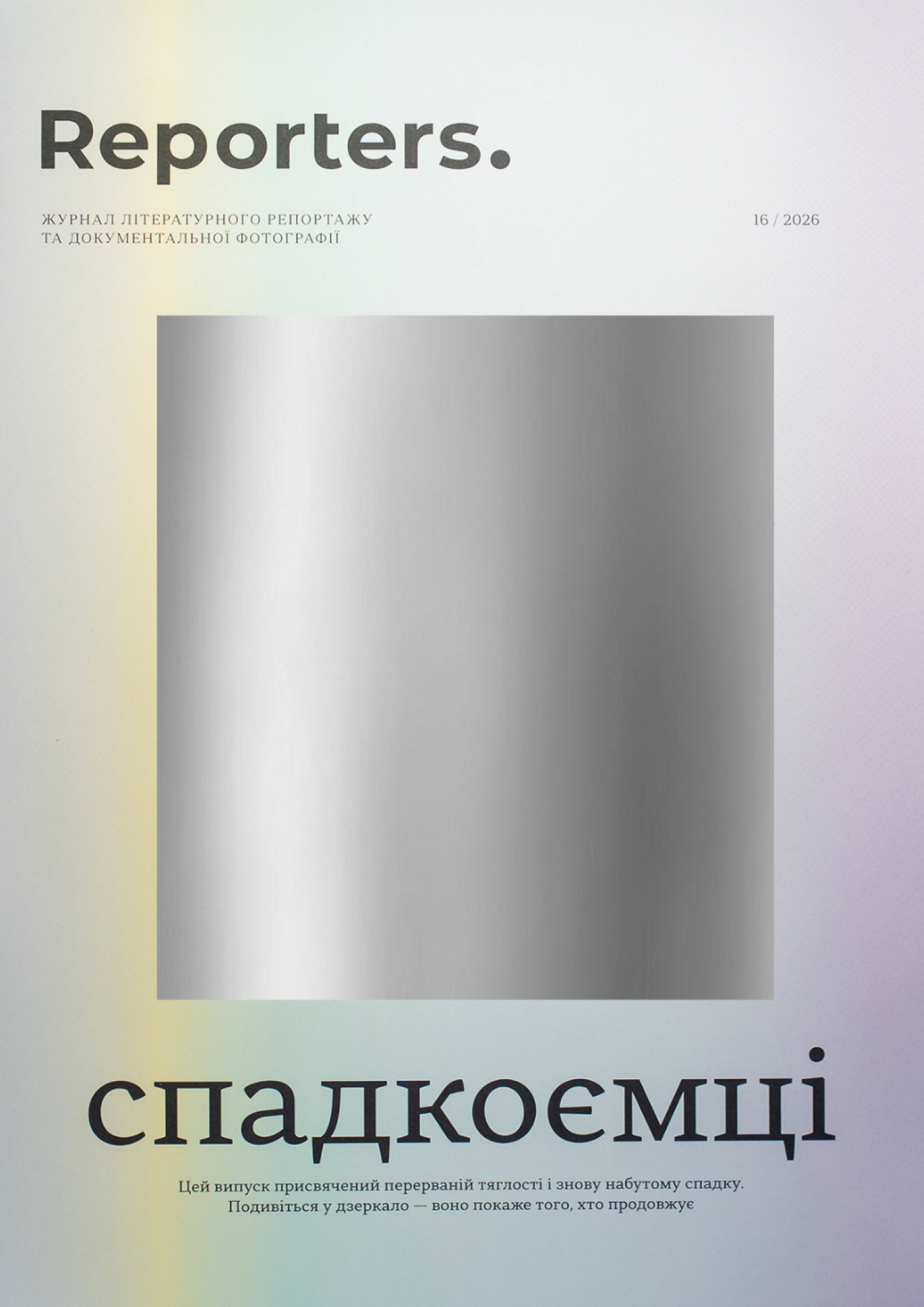
Ukrainian-American photographer Sasha Maslov visited dozens of cities, from Kharkiv to Kherson, from Chernihiv to Lviv, photographing museum directors, archivists, curators, and restorers. From these photographs, he created the series The Heirdom — about those who safeguard Ukraine’s artistic heritage, which Russia is attempting to appropriate or destroy.
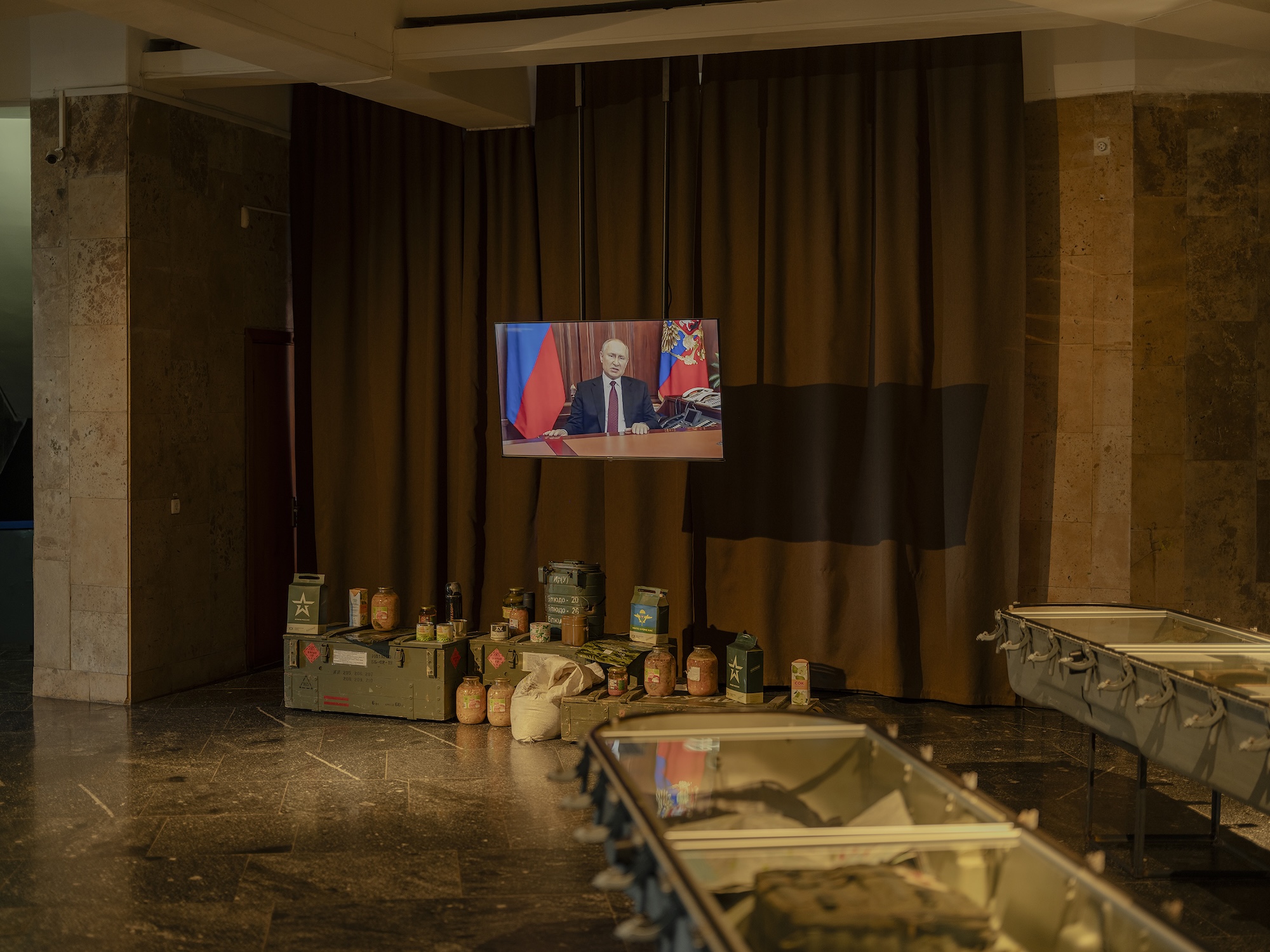
Even during the Russian Empire, and later in the Soviet era, imperial policy systematically sought to erase everything that attested to the distinctiveness of Ukrainian identity: language, folklore, architecture, and memory. The current war continues this same logic with new tools: missiles aimed at museums and lies used to rewrite history.
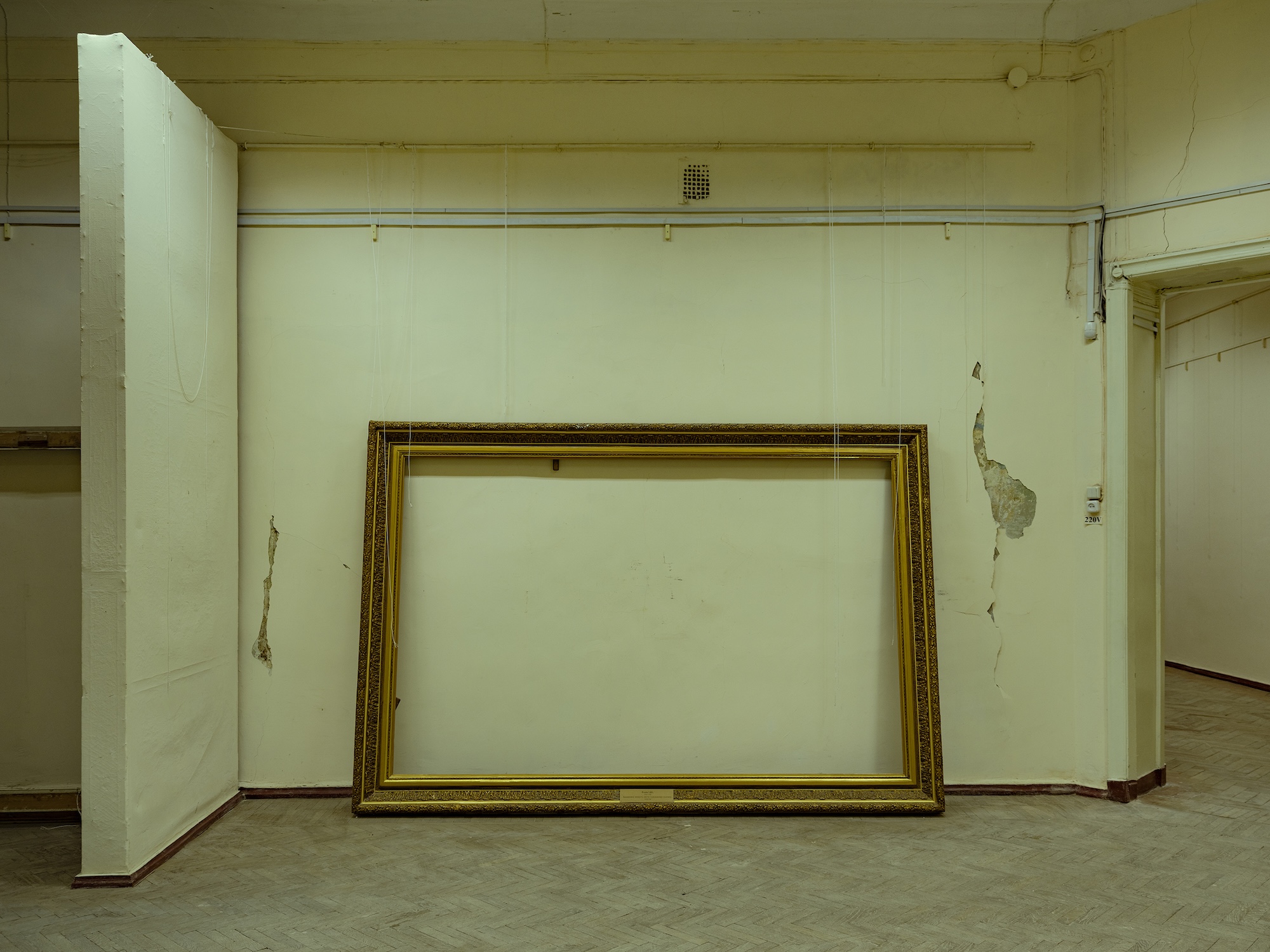
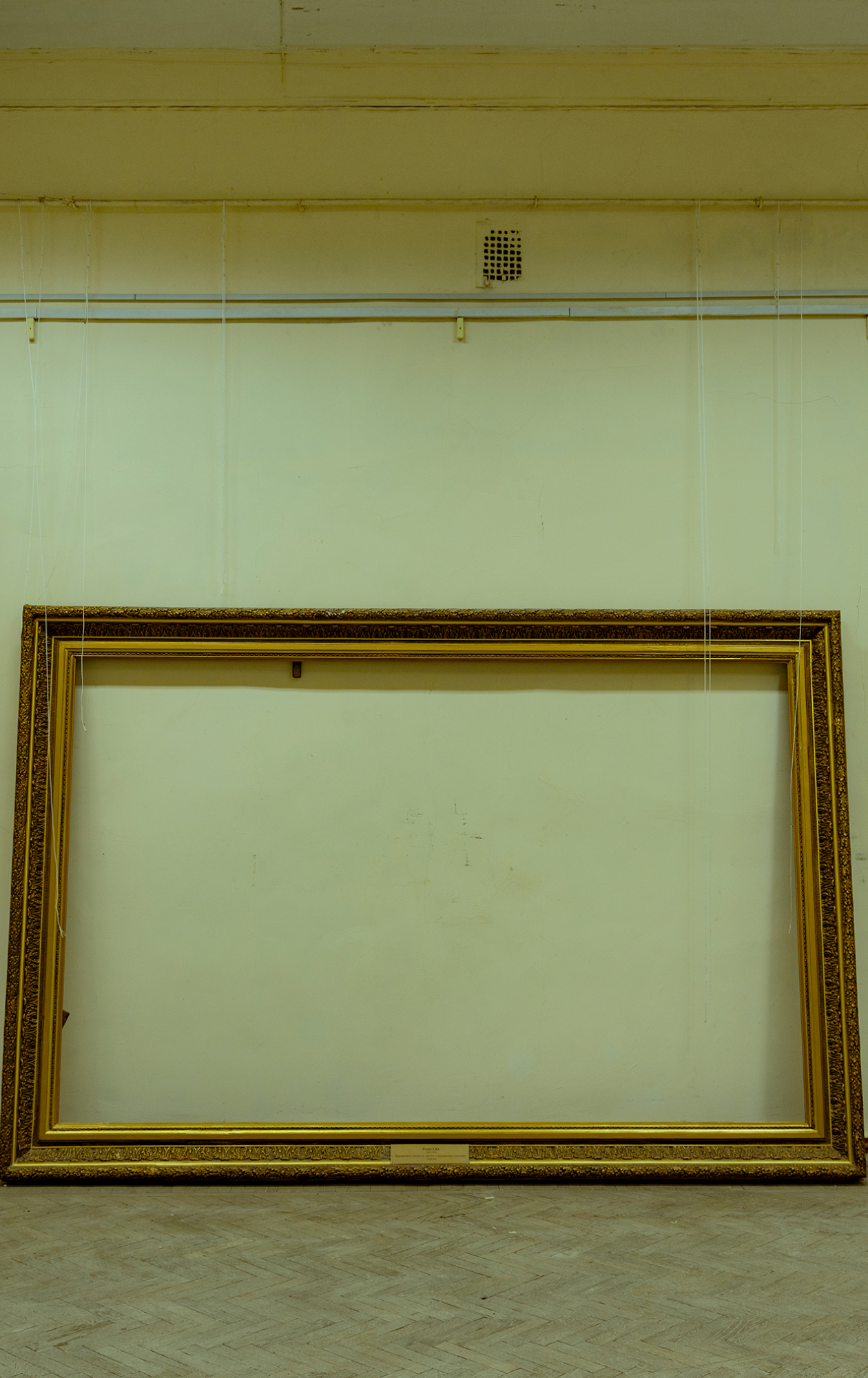
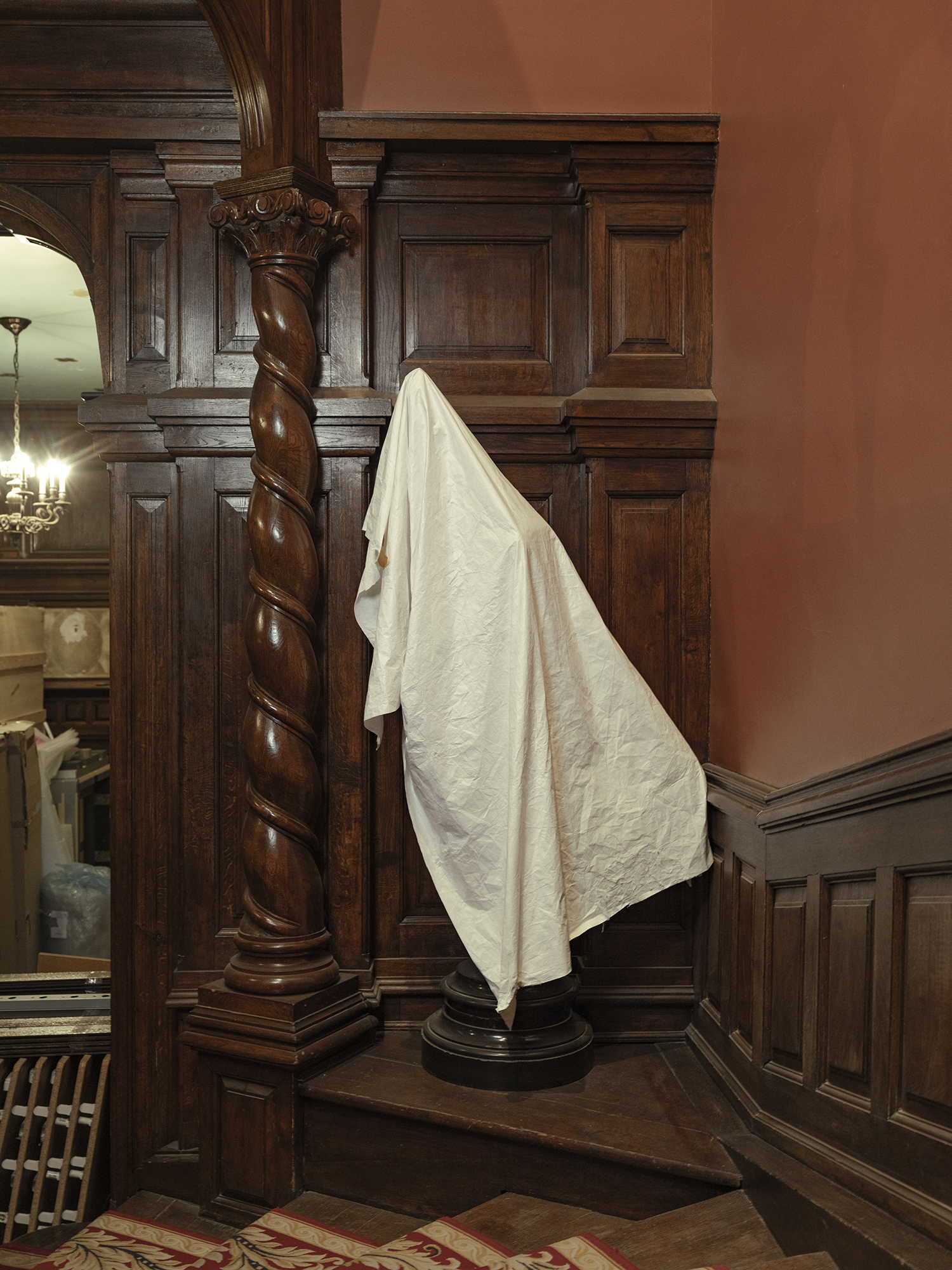
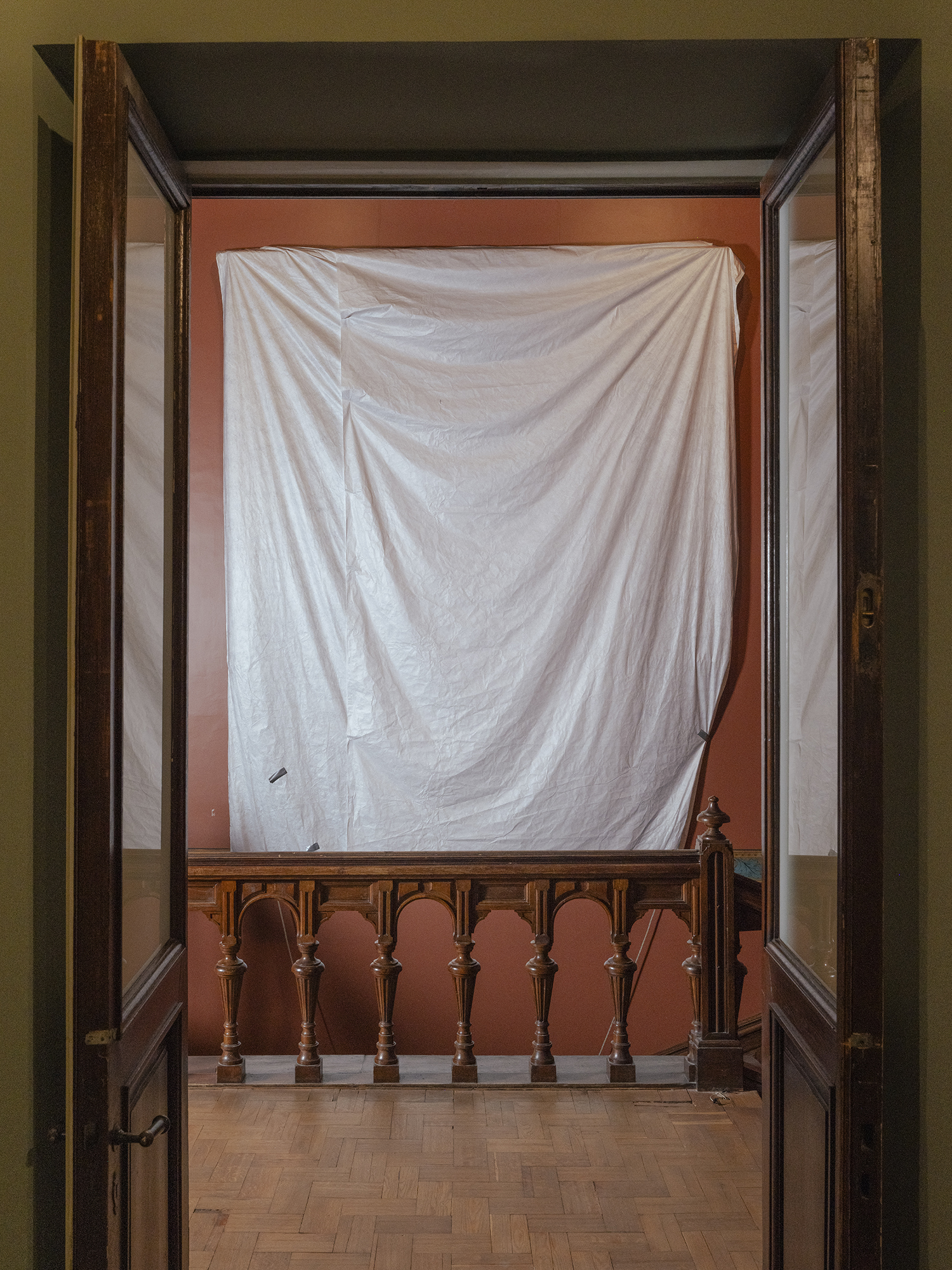
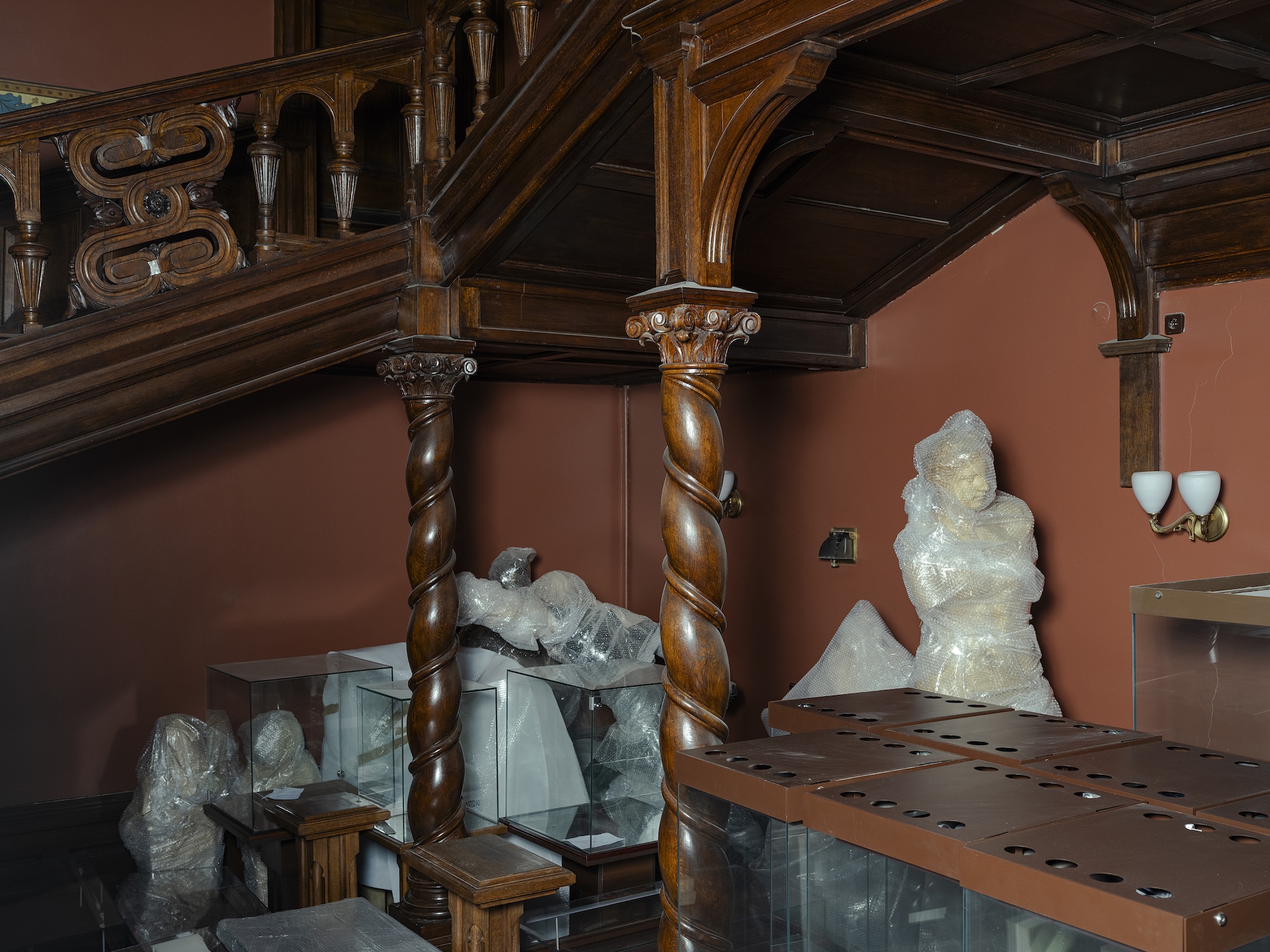
In response, Ukrainians have developed their own language of preservation. They began enclosing monuments in sandbags so they could survive possible shelling. They started taking paintings off the walls and hiding them in basements. They wrapped statues in tarps. They left empty frames on museum walls as a promise: we will return.
It is precisely these images of care and persistent presence that The Heirdom brings together.
The project encompasses institutions — museums, archives, landmarks — and the communities that gather around them. At the same time, it poses a broader question: what is heritage? A museum exhibit under a glass case, the cobblestones beneath our feet, a concrete building outside the window, a personal diary tucked in a drawer — all of these are layers that sometimes contradict one another, but together form what we identify as ourselves.
A photo book featuring the complete version of the Heirdom series will be published this year by Osnovy Publishing.
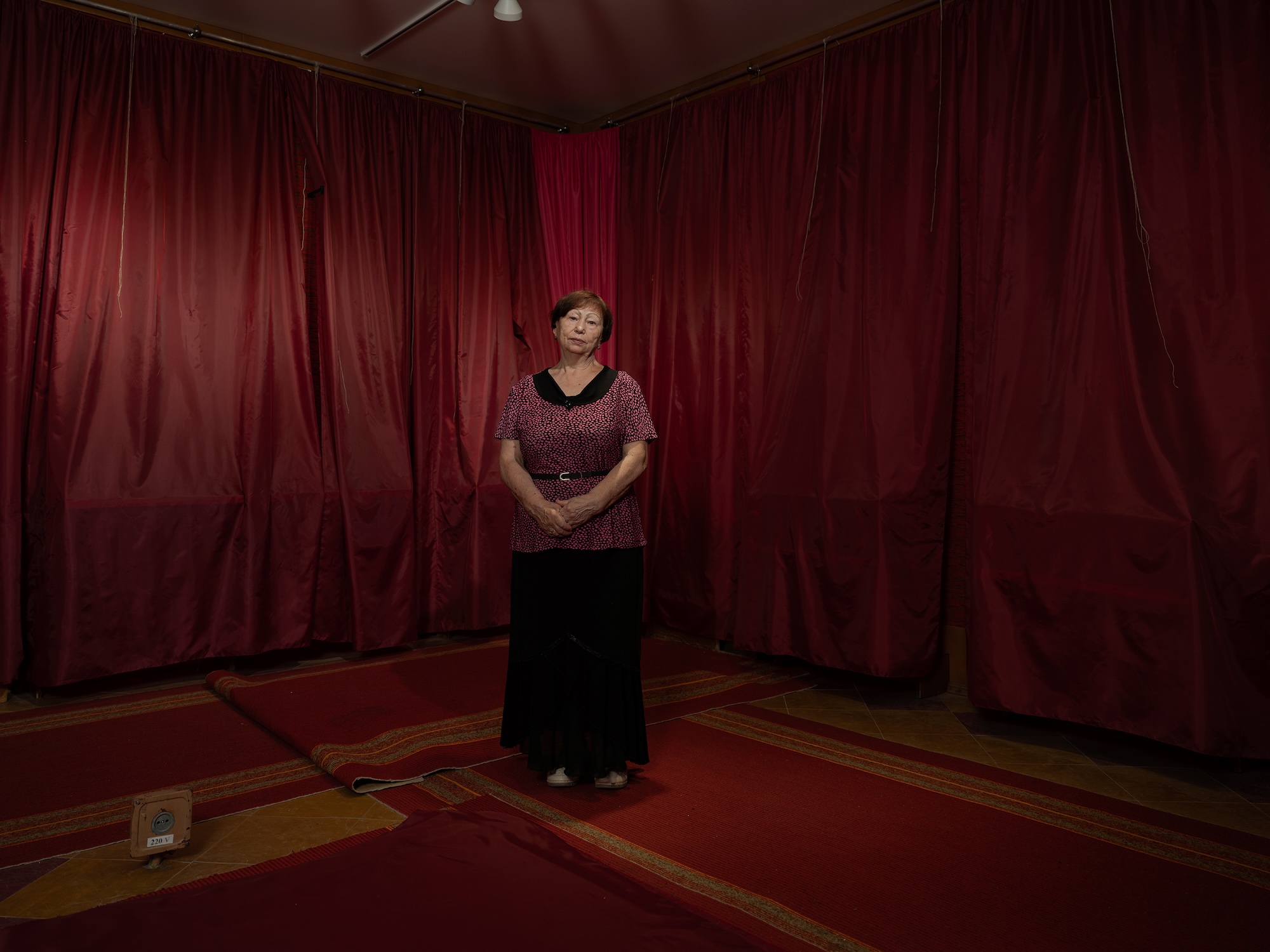
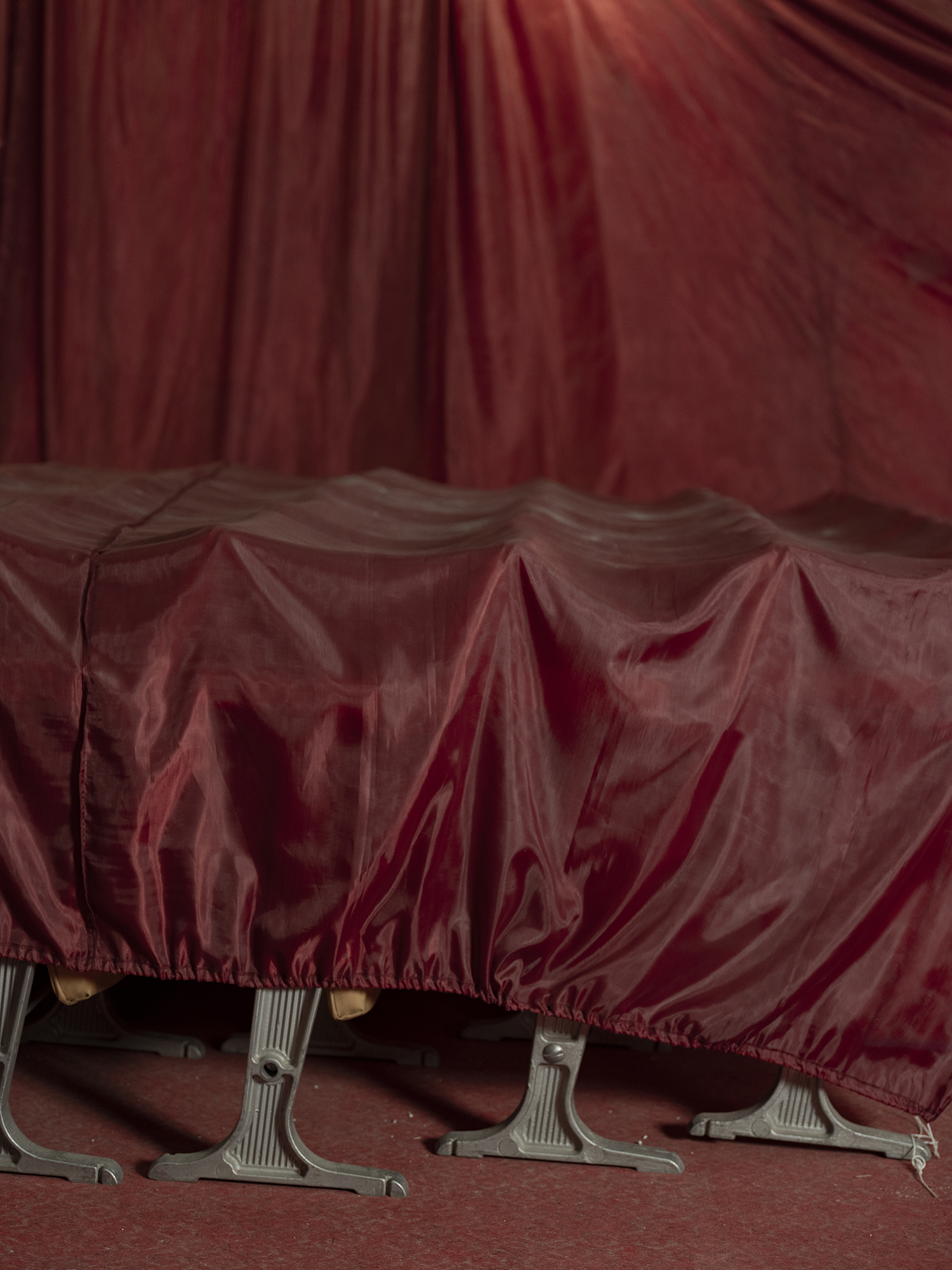
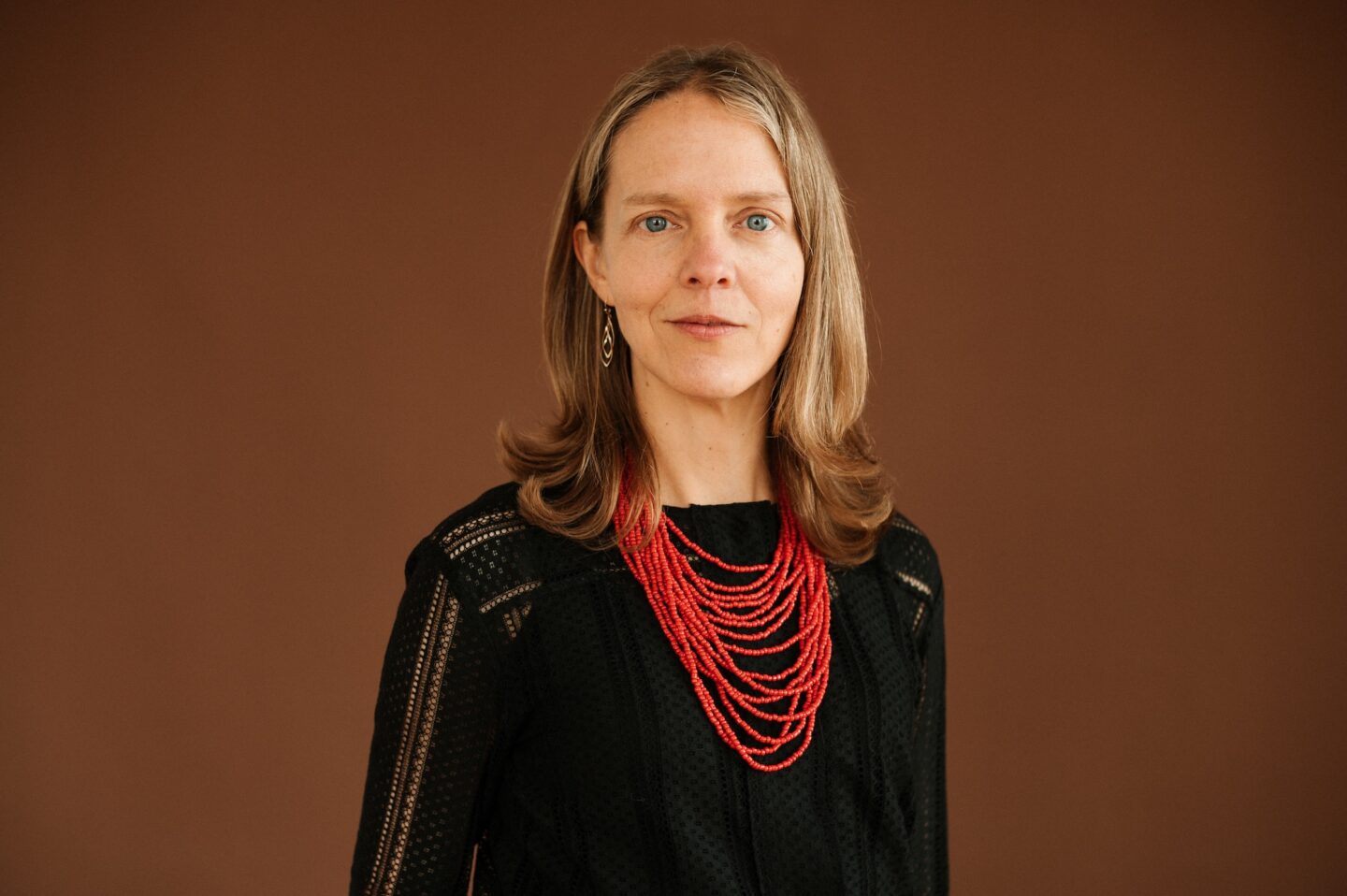
Natalia Voloshyna stands amid covered display cases and packed boxes at the Kramatorsk City Museum. Over five decades as its director, she has transformed the institution from a hall of Soviet propaganda into a public museum that documents Kramatorsk’s industrial life, its history of repressions, and its culture; she opened the archives that laid bare personal wounds, such as the story of her mother, a Holodomor survivor; and organized the evacuation of over 90% of the collection as the war closed in. Now, with most of the staff having left and the city under constant shelling, she remains the museum’s sole employee and its living memory, preserving its stories for a future revival.
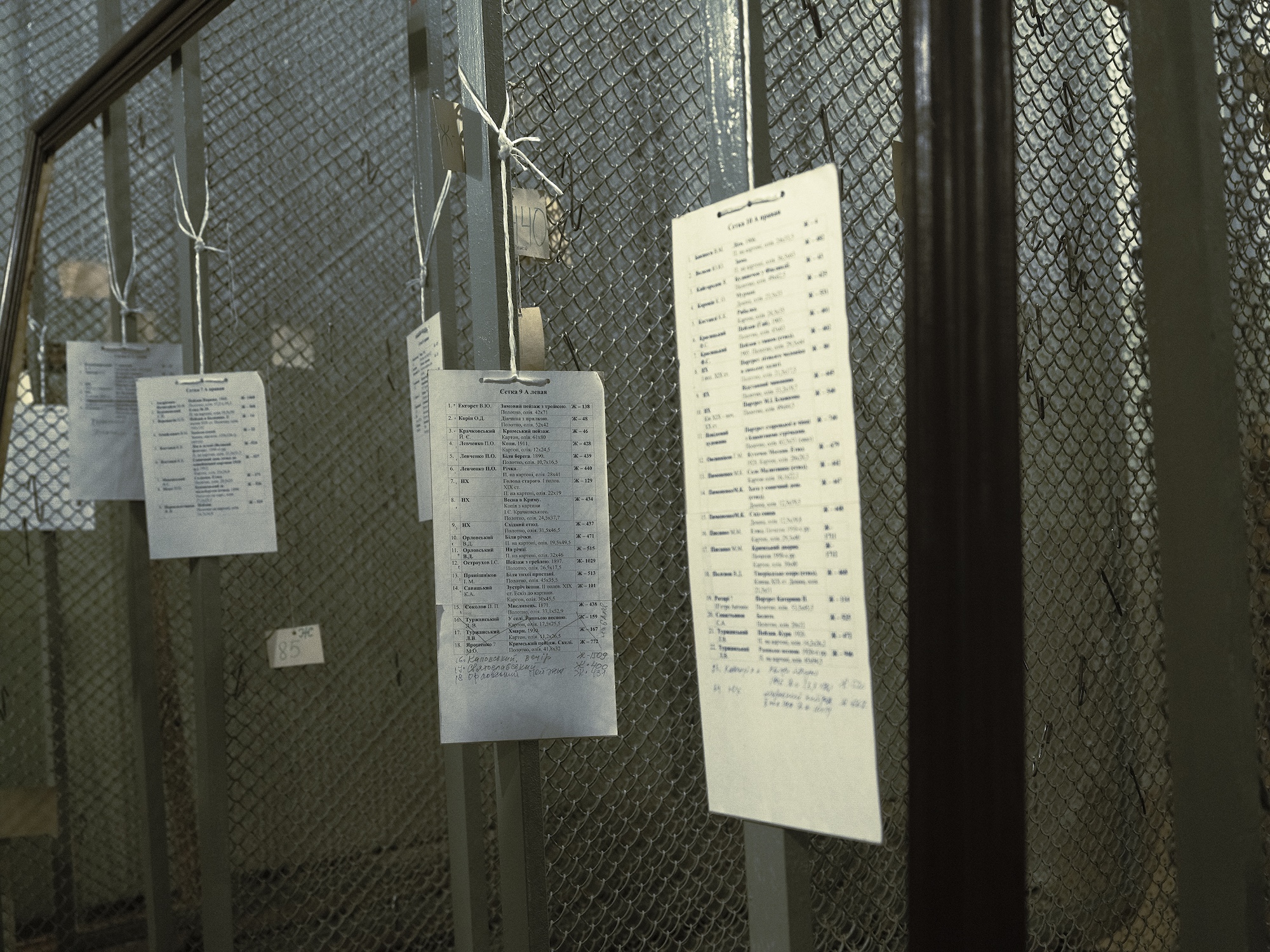
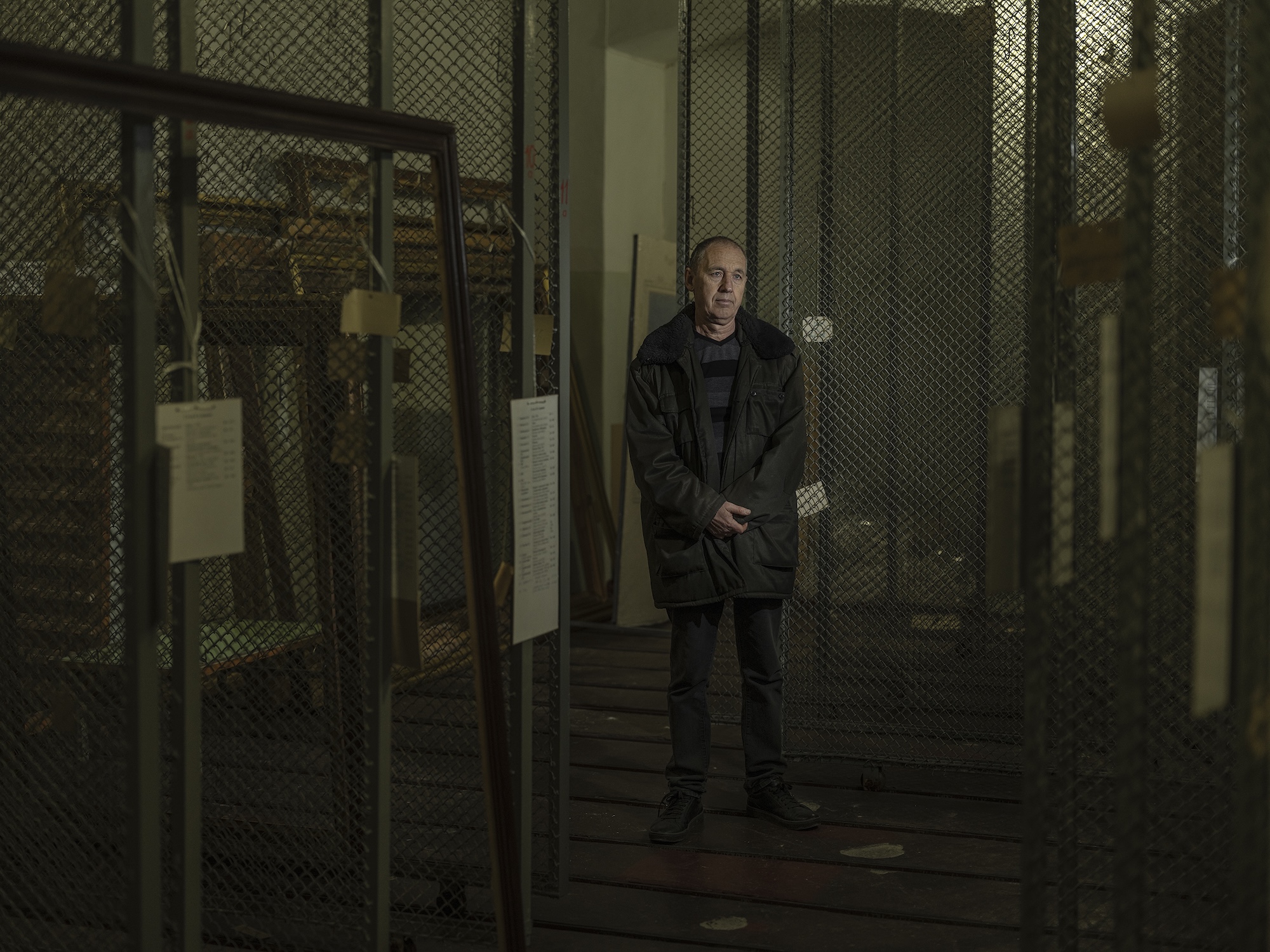
In late 2022, while retreating from Kherson, Russian troops ransacked the Kherson Art Museum. As part of a planned operation, thousands of artworks were transported to Crimea. Director Alina Dotsenko, along with a small team, secretly documented the provenance of the works, hid the documents, and smuggled the evidence out; eventually, the hiding spot in the museum’s basement was betrayed by a collaborator.
Ihor Rusol — a taciturn former factory worker who became the museum’s engineer and security guard — remained in the city throughout the occupation, refusing to participate in propaganda events and resisting by causing minor delays. The documents he and his colleagues preserved became crucial for subsequent investigations. Today, Ihor still works at the museum despite the danger: he boards up windows, repairs damage from explosions, and keeps the ravaged museum running.
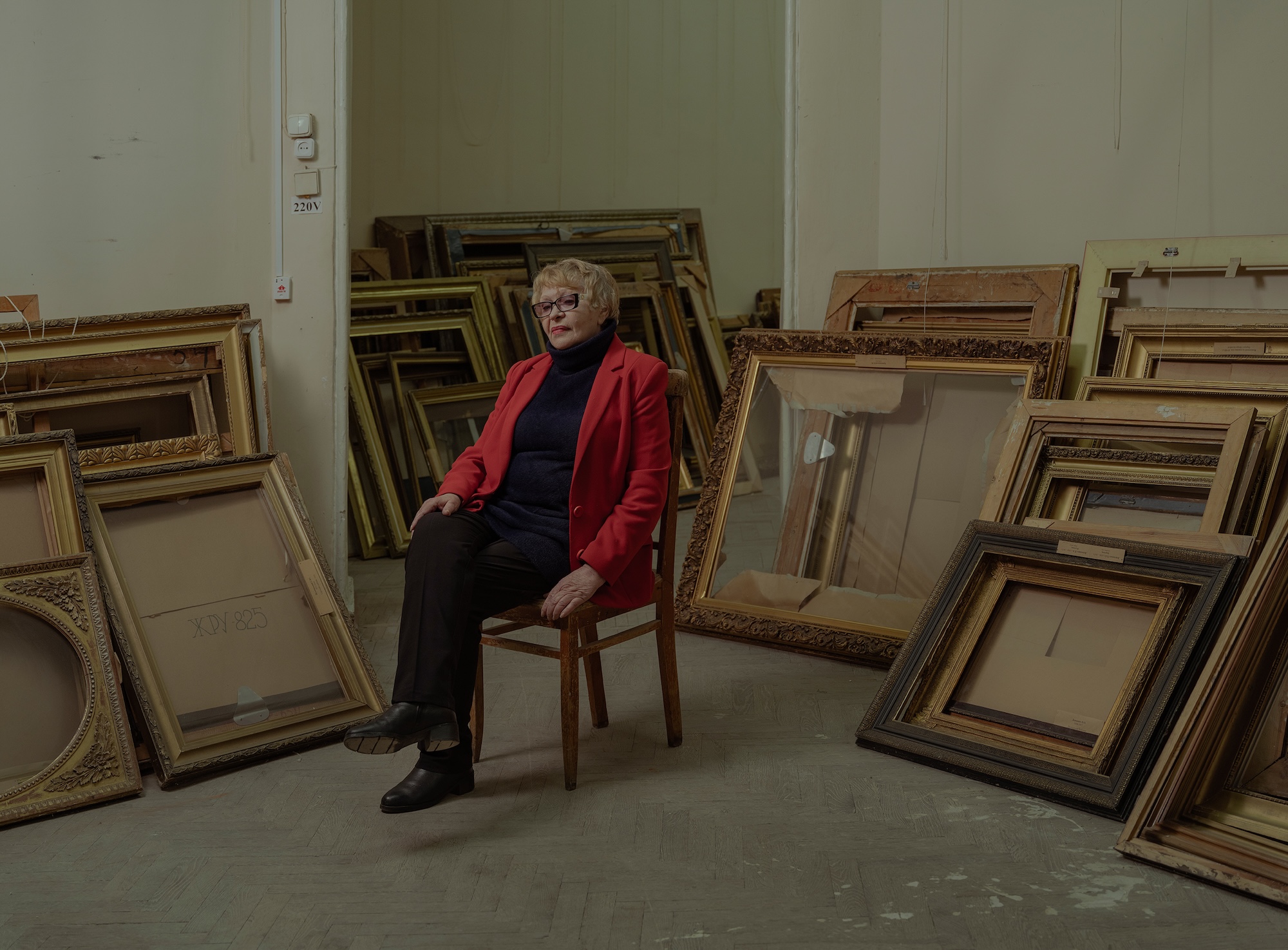
Valentyna Myzgina, who has worked at the Kharkiv Art Museum since 1970, stands among empty frames. The museum is her life: for decades, she has built up its collection, organized public programs, and fought for its funding. Before the full-scale invasion, she helped organize exhibitions and inclusive projects for visitors of all ages. When Russia invaded Ukraine, the collection, which goes as far back as 1805, was threatened with destruction; in the early days of the war, Kharkiv was under constant shelling. And unlike World War II, when the collection was evacuated to the east, this time it was moved westward. Valentyna and a small team of female volunteers carefully packed and transported priceless works, including Illia Ripyn’s “Cossacks”, to protect them from further damage. Despite constant threats and damage to the building, the museum continues its work — restoring, cataloging, and hosting online exhibitions, holding onto the hope that the cultural heart of Kharkiv will one day beat again.
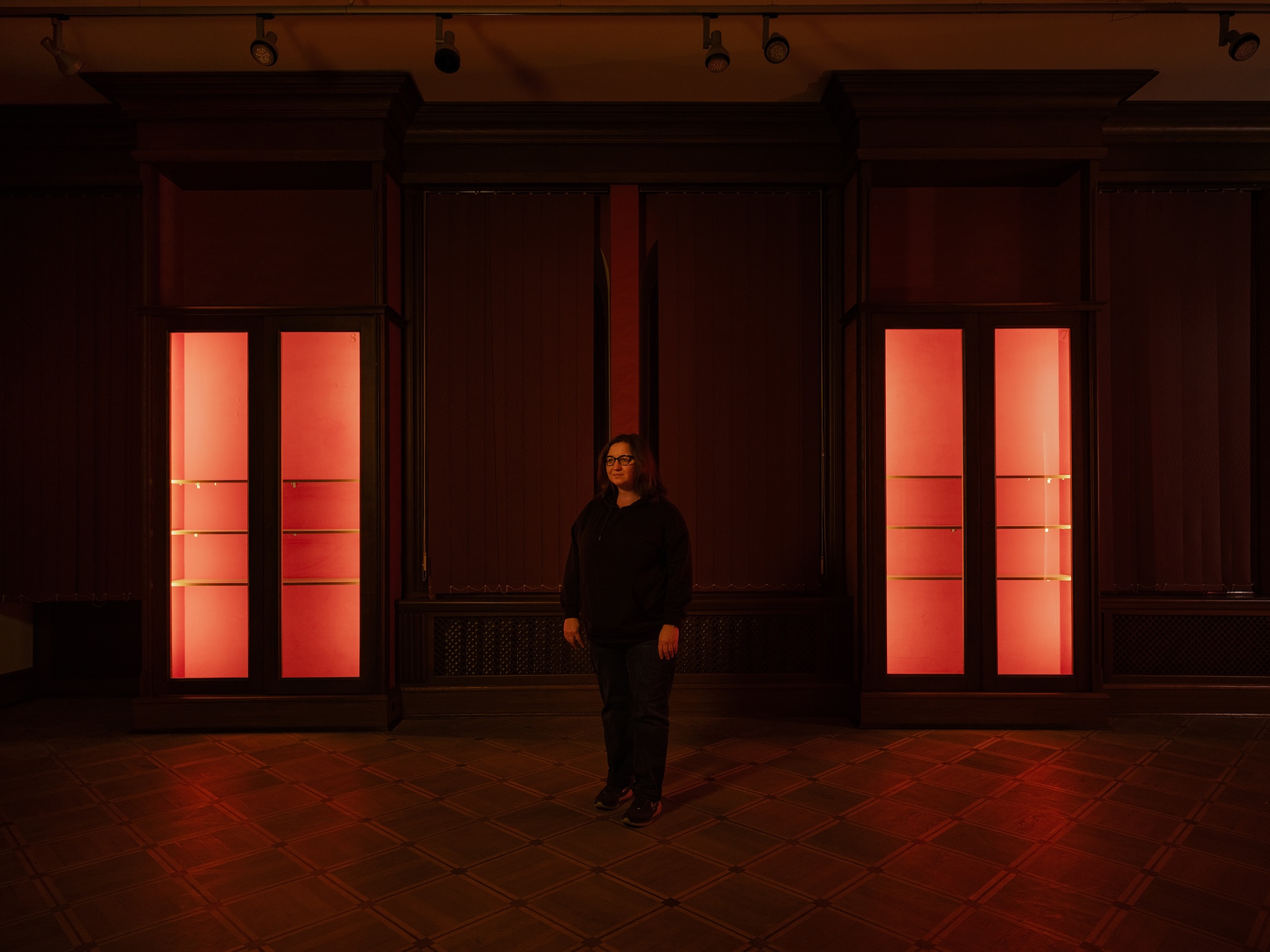
On December 29, 2023, a missile that hit just a few hundred meters from the Khanenko Museum shattered its windows, echoing the memory of the 1941 bombing. Director Yuliia Vahanova says that the shutters and the timely removal of exhibits saved them. Founded by Bohdan and Varvara Khanenko, the museum — home to thousands of Western, Asian, and Ukrainian pieces of art, including rare Byzantine icons — mobilized staff, conservators, and international partners to evacuate, preserve, and study the artworks, and reopened, emptied, but alive. Yulia is banking on distributed protection, individual loans to European museums, and global collaboration, relying on grants and painstaking restoration to preserve Ukraine’s cultural memory.
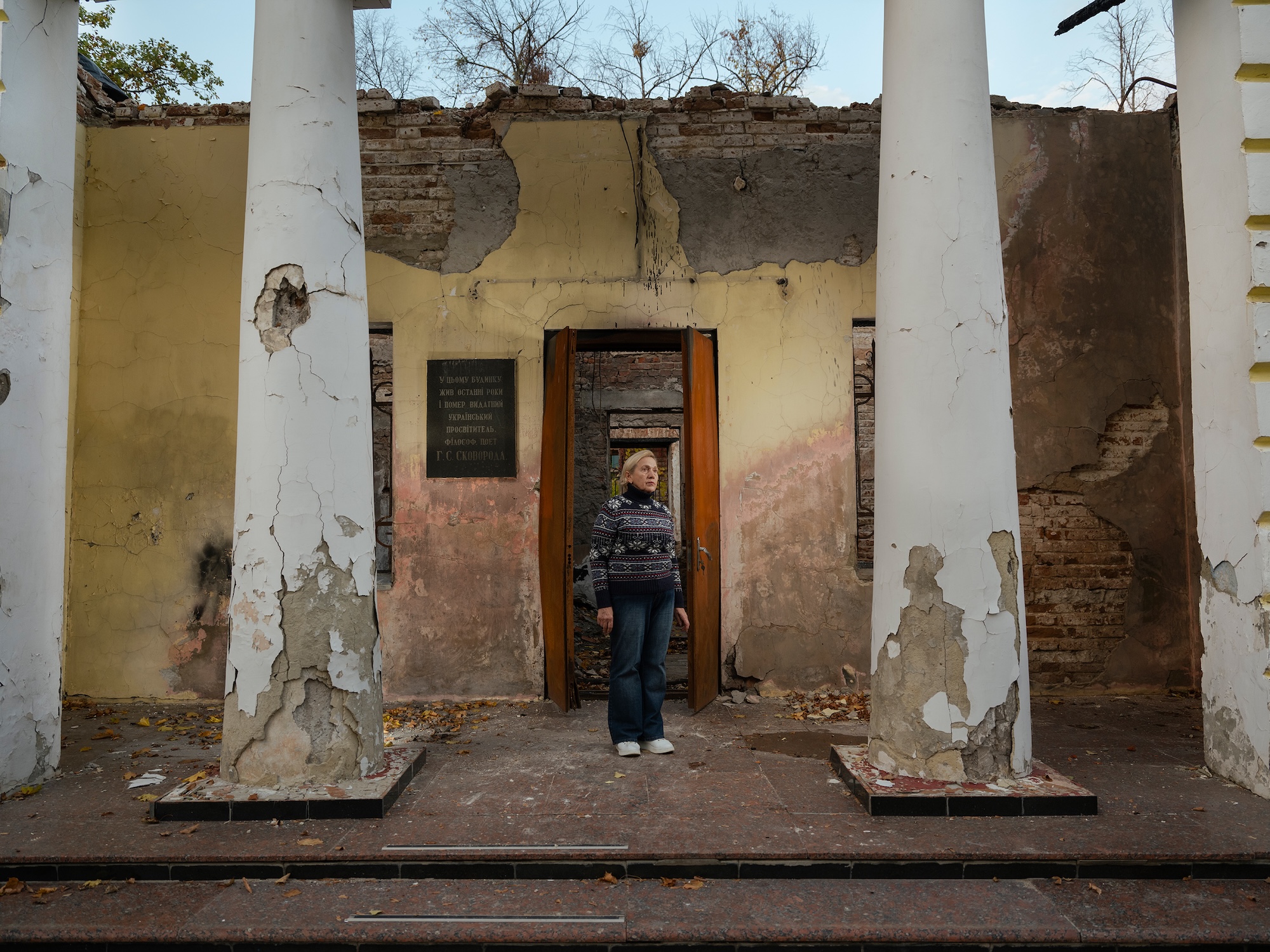
In Skovorodynivka, Director Nataliia Mytsai watched in horror as the 18th-century memorial estate of Ukrainian philosopher Gregory Skovoroda went up in flames on May 7, 2022, as a result of a Russian missile strike. Her son, the night security guard, survived but sustained serious injuries. The next day, the Russian government issued a false statement claiming that the building had allegedly housed a Ukrainian army base. The loss of the museum is seen as part of an attack on Ukrainian cultural identity. Despite the destruction, Natalia, together with UNESCO and partners, is saving the surviving artifacts in a temporary storage facility and working on the museum’s reconstruction. She is convinced that Skovoroda’s spirit and Ukraine’s heritage will endure.
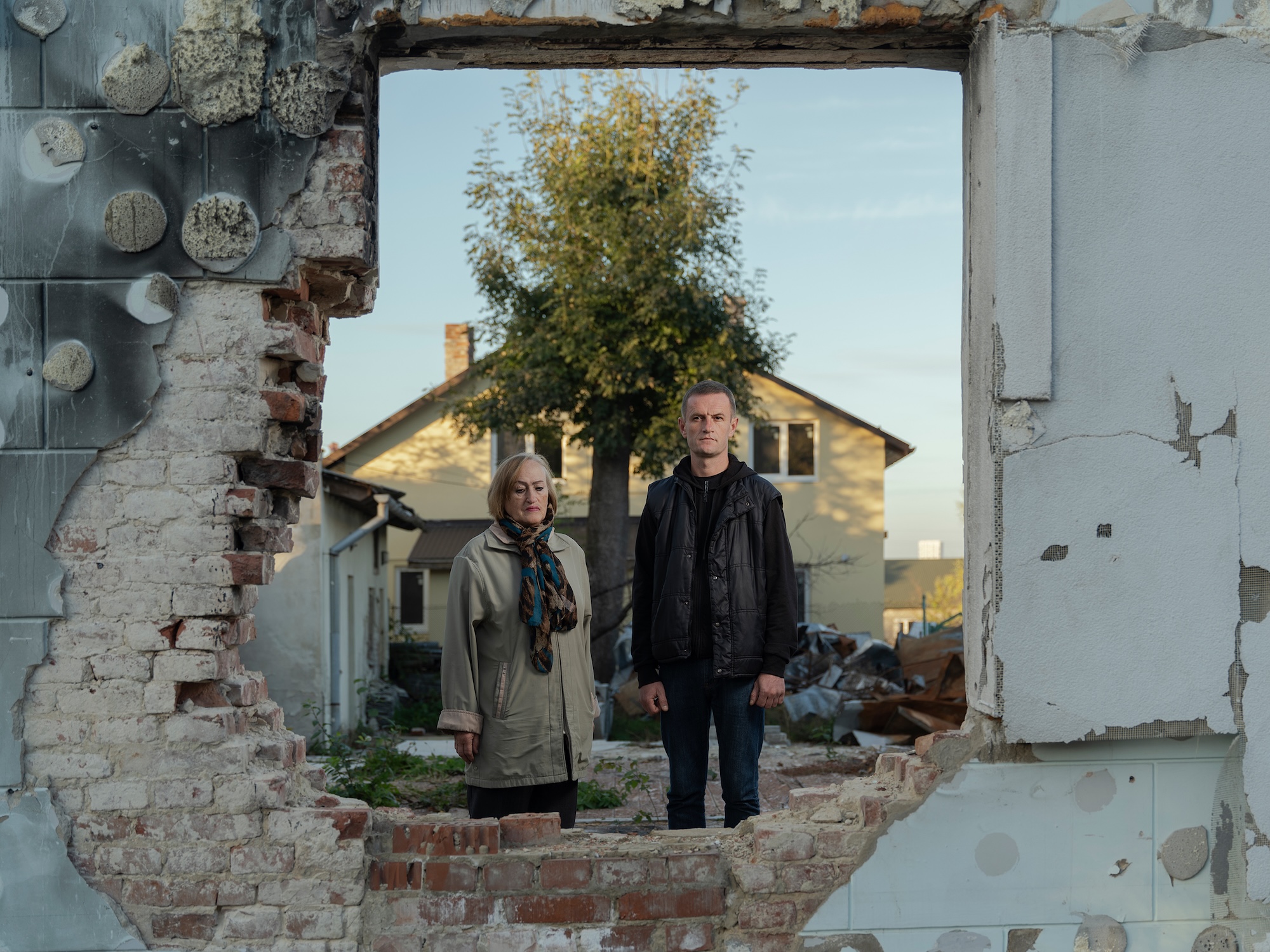
Liubov Datsko and Volodymyr Karanda, employees of the Roman Shukhevych Museum, stand amid the ruins of the building in Lviv to which they have dedicated their lives. For nearly twenty years, they have cared for the building that preserves the memory of the Ukrainian resistance and Roman Shukhevych, commander of the Ukrainian Insurgent Army — a nationalist hero whom some in Ukraine consider a freedom fighter, while in Russia he is viewed as a villain and a Nazi collaborator. A recent drone strike destroyed a significant portion of the building, but their dedication to preserving memory and history remains unshaken. They continue to work on restoring the museum, determined to keep these stories alive despite the ongoing violence.
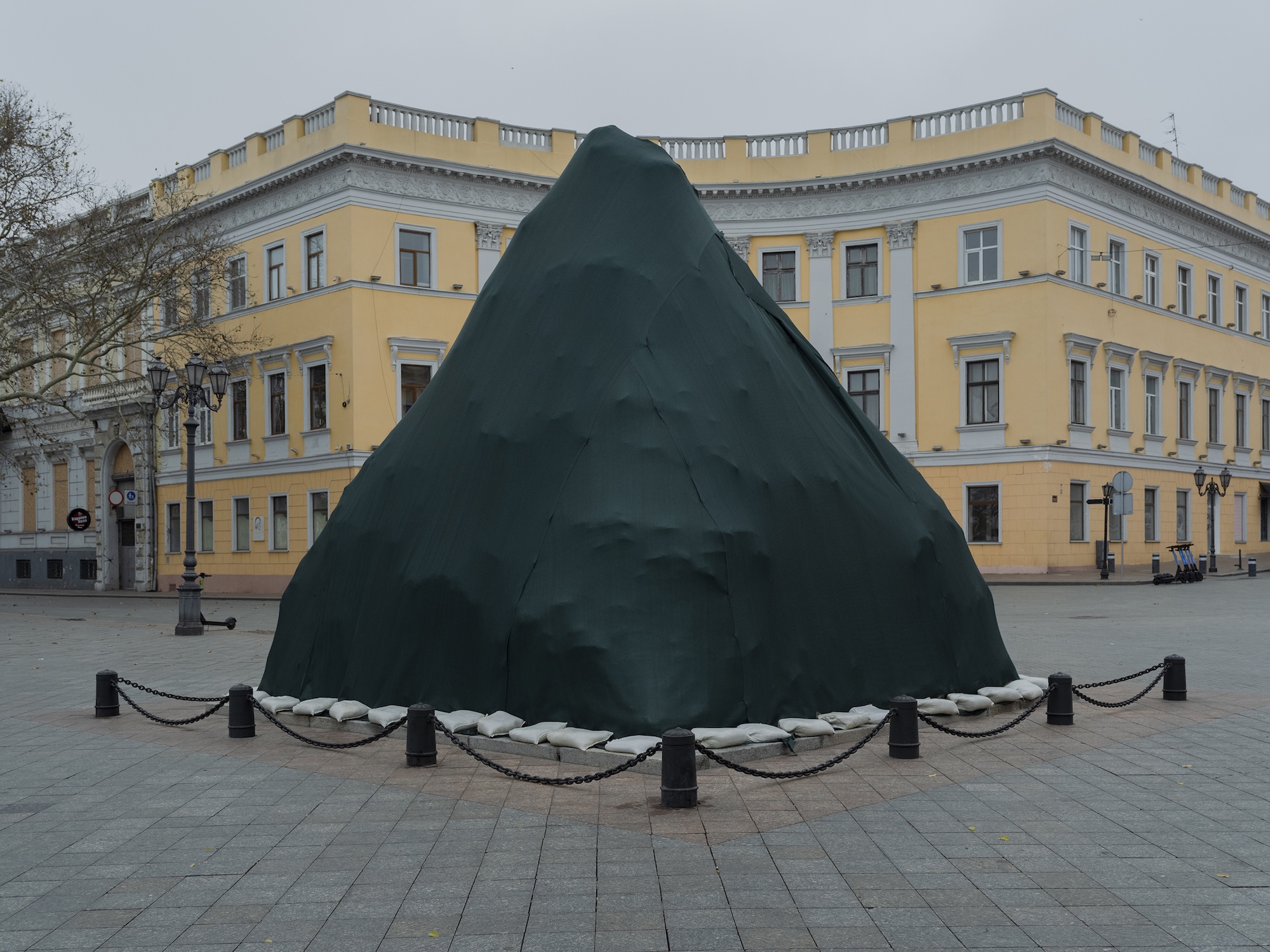
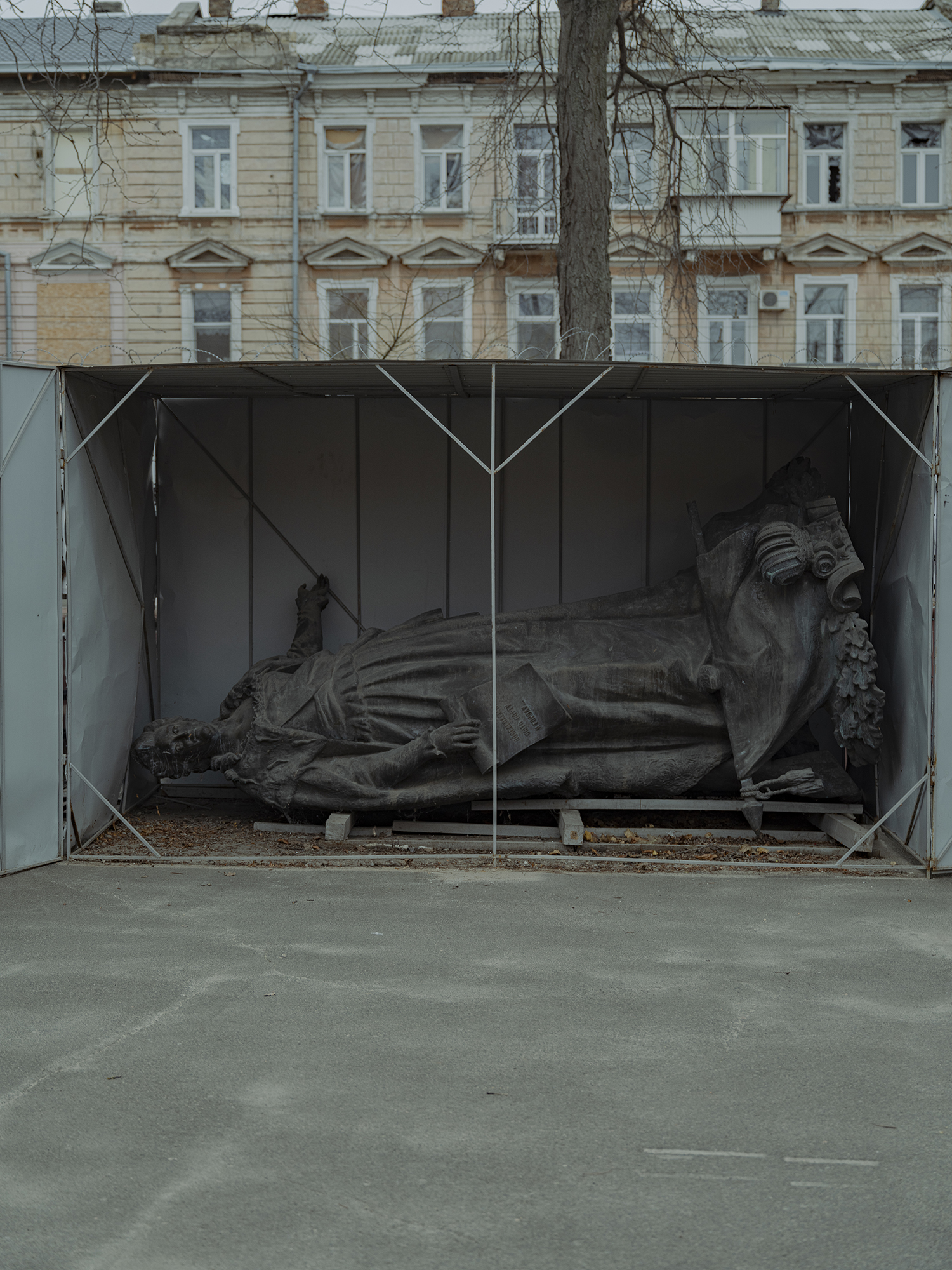
Two monuments in Odesa — and two ways in which the war dealt with their imperial legacy. In March 2022, as Odesa prepared for a possible seaborne attack, municipal services enclosed the monument to the Duke de Richelieu on Primorsky Boulevard with 1,200 sandbags. A few blocks away stood another monument — the statue of Russian Empress Catherine II, who abolished the Zaporizhzhian Sich, enserfed the peasants of the Left Bank, and annexed Ukrainian lands. Throughout 2022, it was doused with paint, defaced with the words “Catherine = Putin,” had a red executioner’s cap placed on the empress’s head, and a noose in her hand. In December 2022, the monument was dismantled and transferred to the Odesa Art Museum for safekeeping, where it remains to this day.
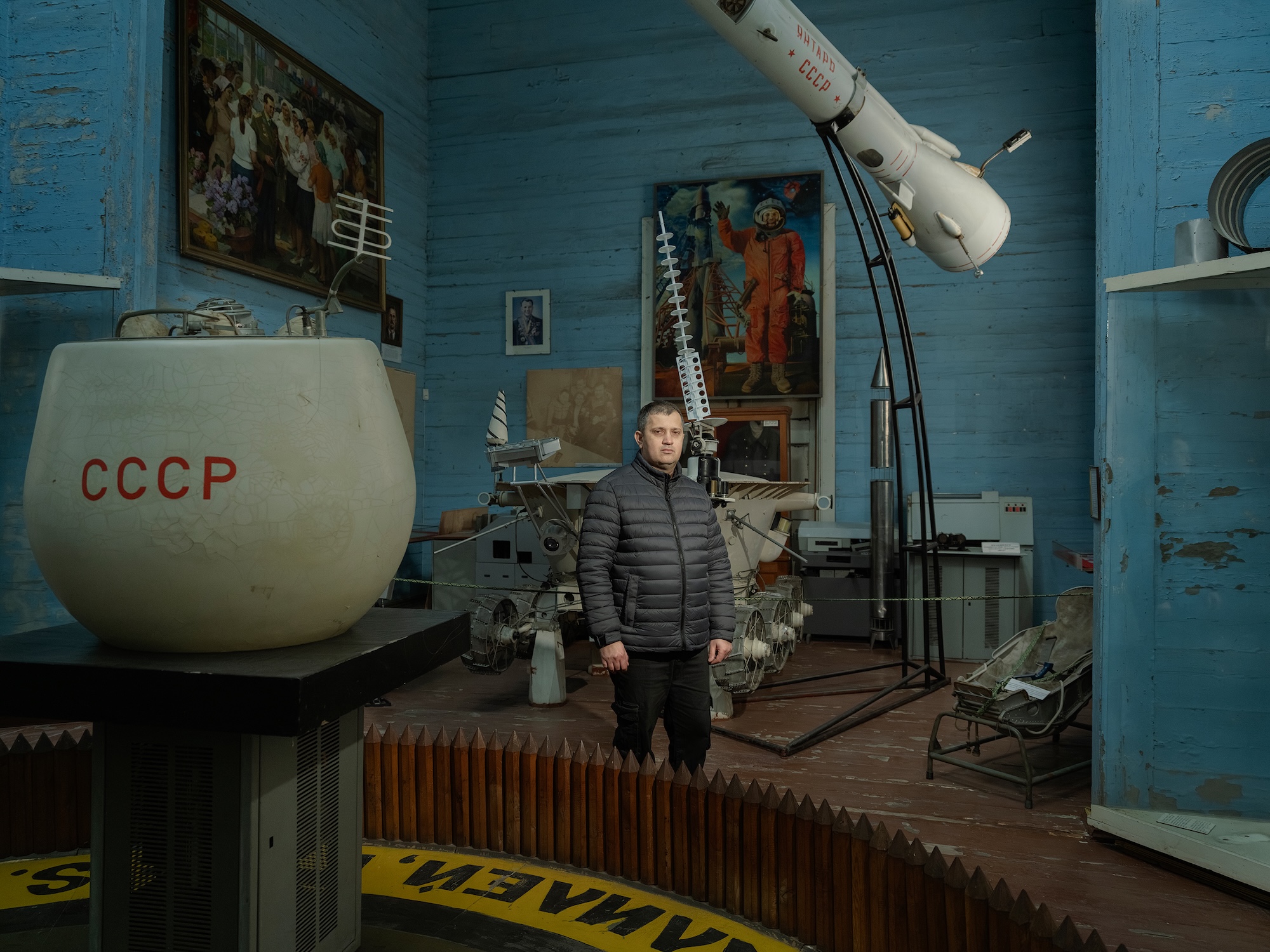
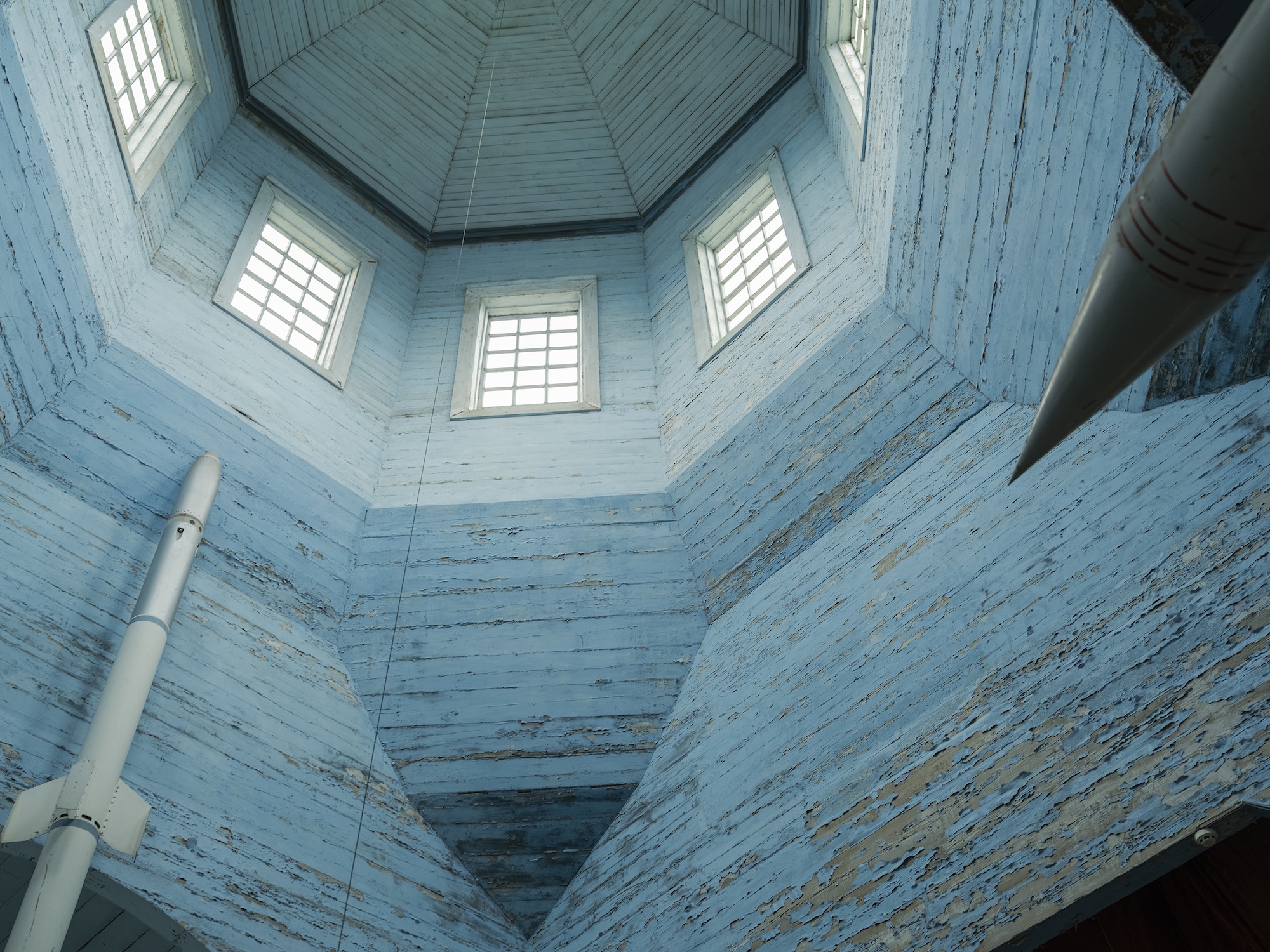
In a 17th-century wooden church rescued from a flooded village and relocated to the Pereyaslav Open-Air Museum, Ukraine’s past and the Soviet space dream collide. Under the carved beams, once intended for prayer, now hang Soviet rockets, a Foucault pendulum, models of Sputnik, Venera-7, and Lunokhod — relics of a time when Mykhailo Sikorsky, the museum’s founder, maneuvering between party lines, realized that turning the church into a Space Museum was the surest way to preserve it. “Fight it with atheism or space technology,” says Serhii Vovkodav, a senior research fellow at the Pereyaslav Museum Complex, with a touch of irony.
Today, due to the war with Russia, many display cases are empty — Serhii and his colleagues hurriedly evacuated the spacesuits and equipment while missiles barraged Ukraine. The largest engines and models remain, exposed to the elements, the cold, and the constant threat of damage. Serhii lives with this contradiction every day, looking at “USSR” engraved on museum artifacts that they preserved and that oppressed them. As a historian, he is not allowed to touch them; as a Ukrainian, he longs to paint over them. Between the sacred woodbeams and the Soviet metal, the museum poses questions to its visitors — why this space exists exactly here, and also how we choose to understand our history, and what kind of future we are building as a result.
Translated from Ukrainian by Liubov Kukharenko