After-battle Flavors
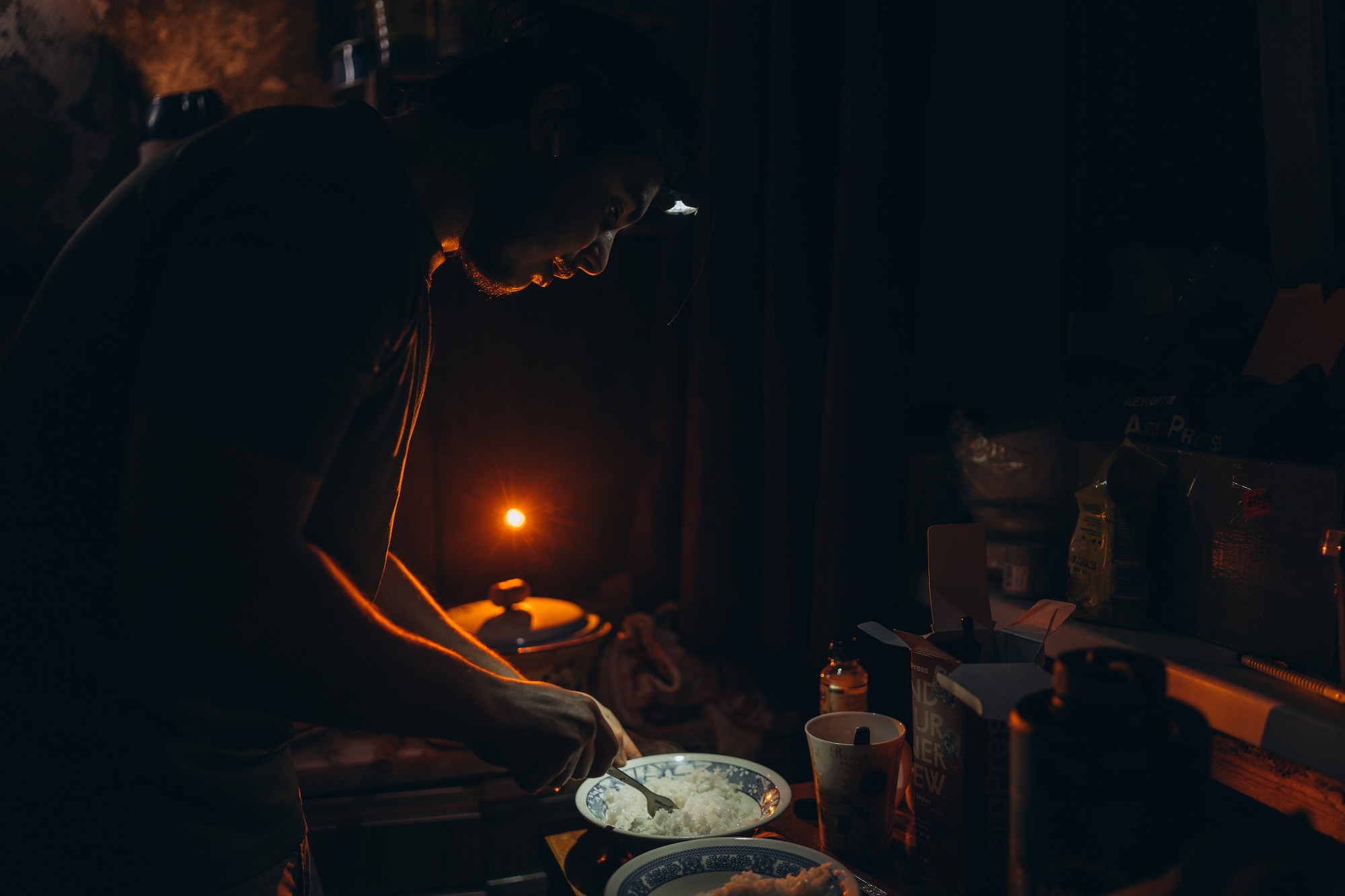
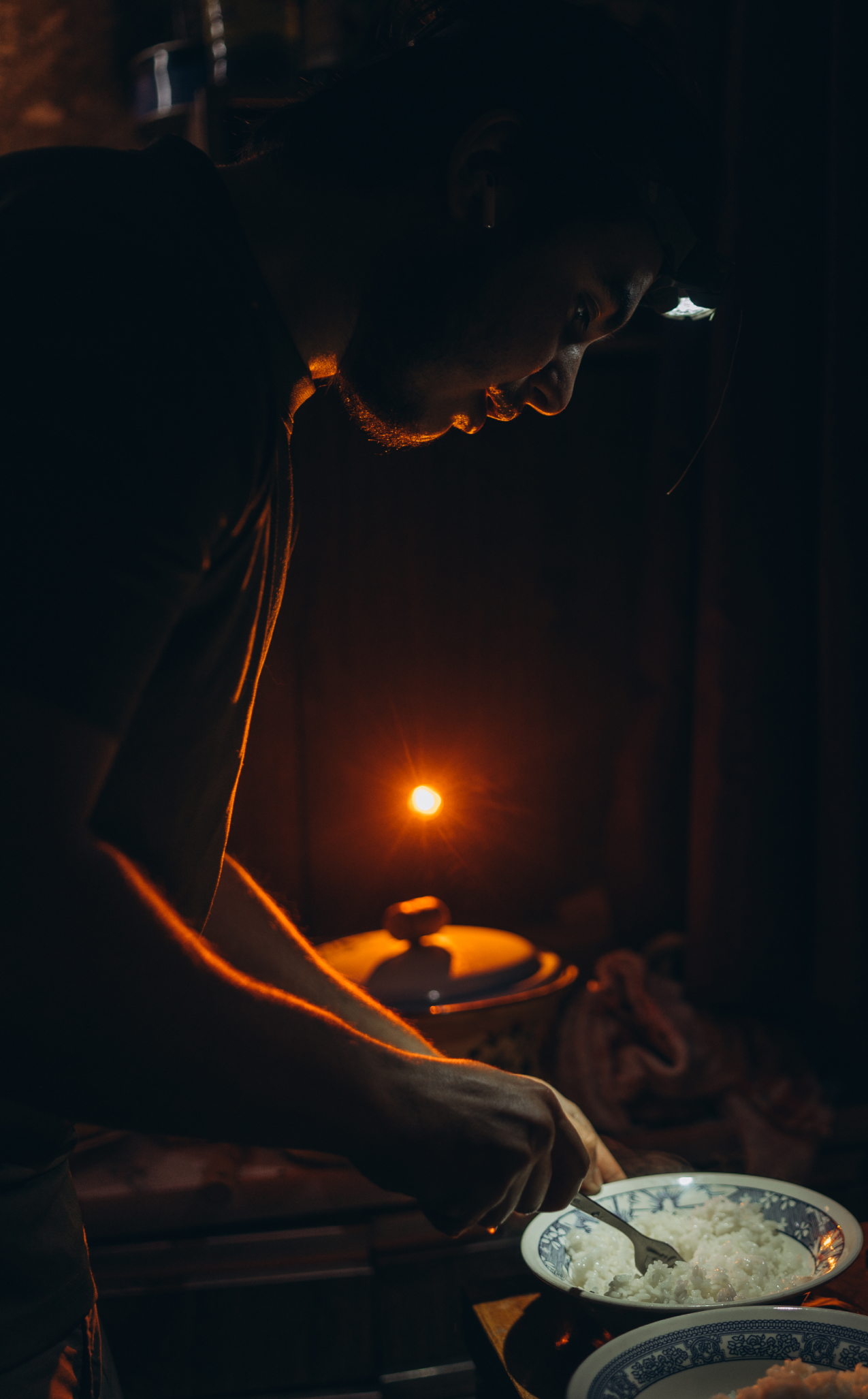
Unsalted, heavily spiced, sliced with a combat knife, fried, boiled or baked inside a field stove. In the combat zone and in their living quarters near the front lines, soldiers cook delicious meals, chasing that comforting feeling of home. Photographer and servicewoman in the Da Vinci Wolves battalion Anastasiia Verbova documents the food made by her brothers-in-arms.
Rover, sapper platoon engineer
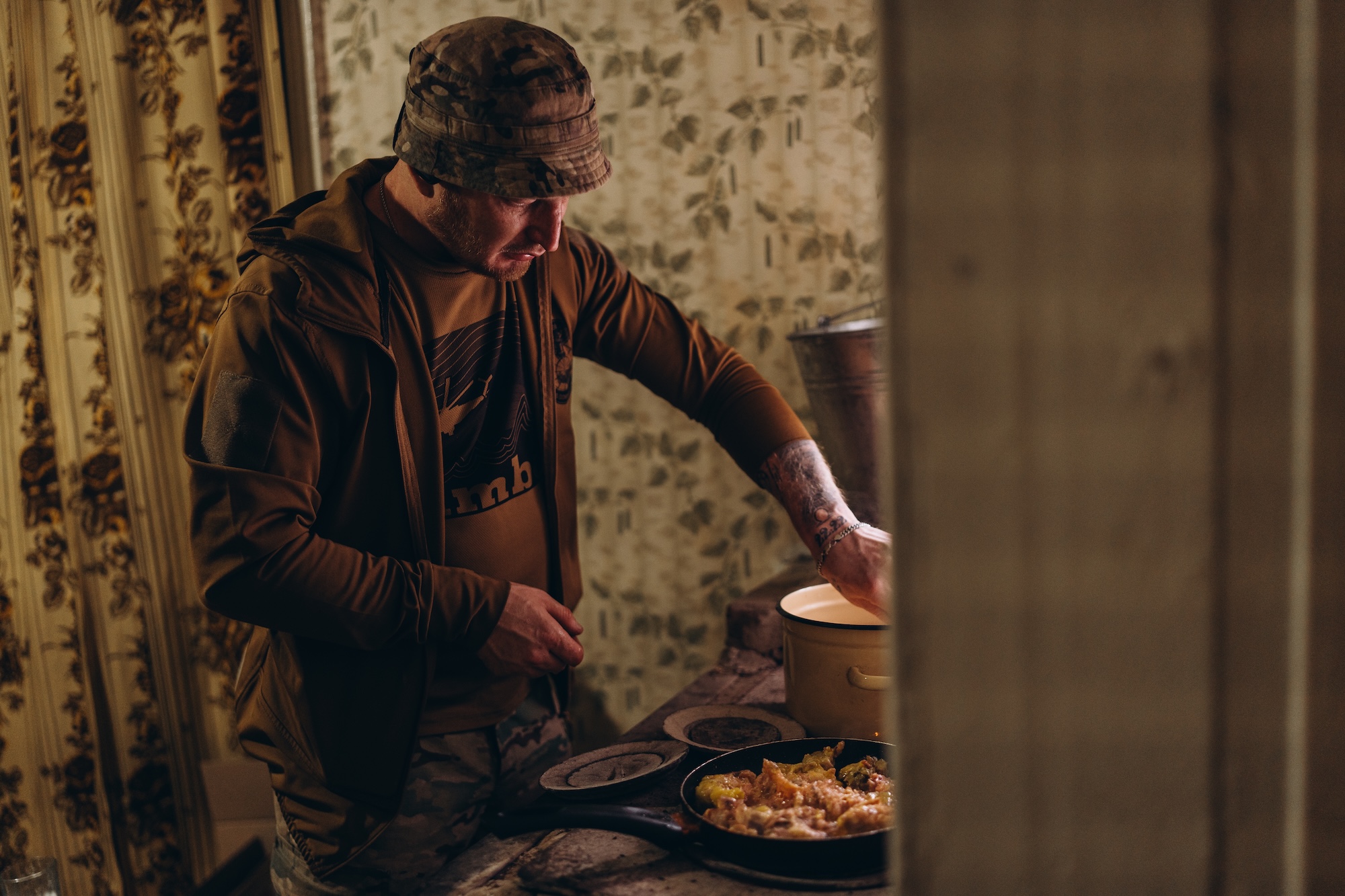
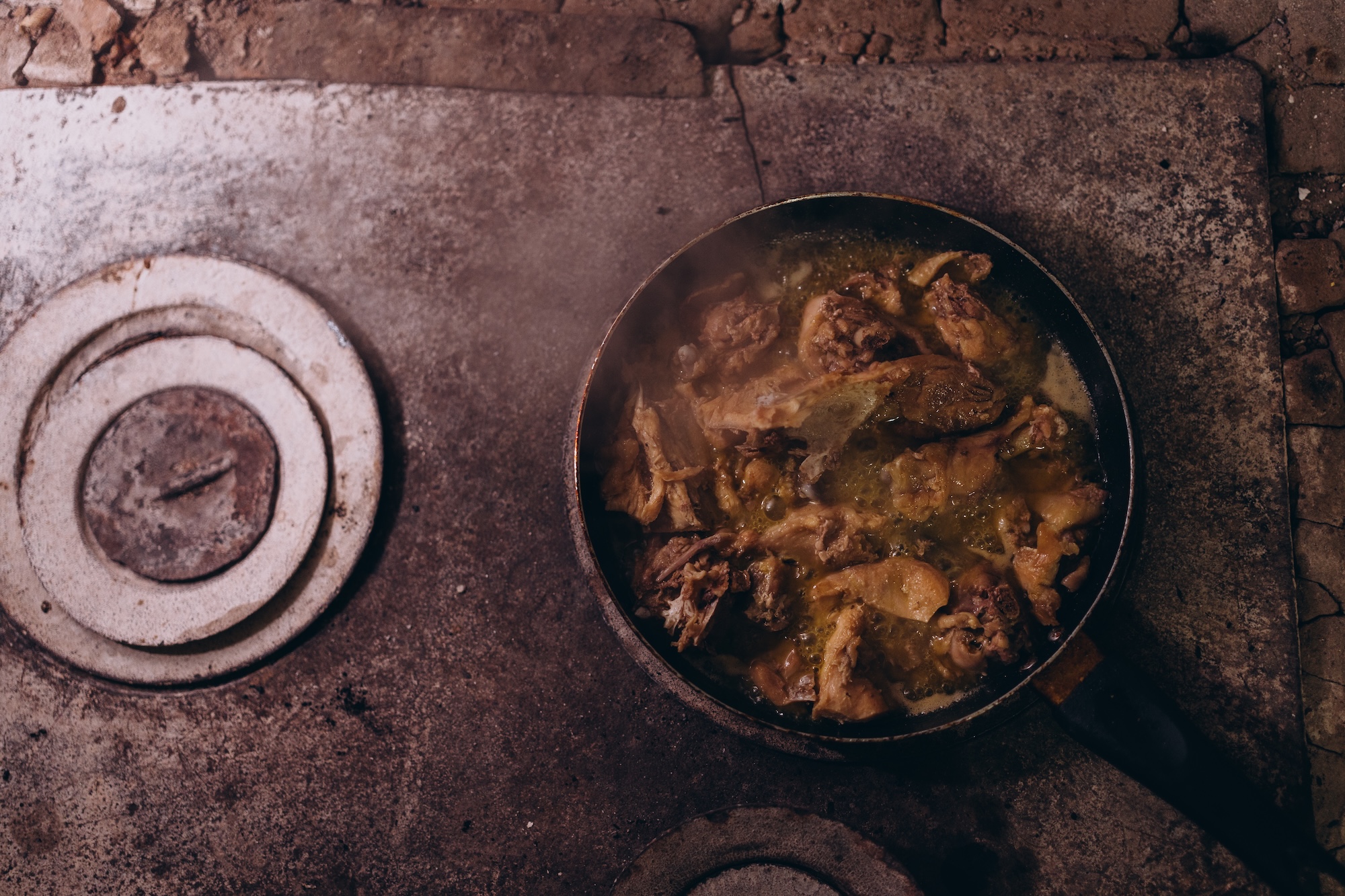
Wood crackles in the field stove, warmth slowly spreading through the room. Rover adds three kinds of meat to the cooked pasta: stewed, pâté, and chicken sent by the wife of one of his comrades. The stove both keeps them warm and allows them to cook dinner. In the summertime, the guys cook in the summer kitchen of a house nearby — the owner has temporarily given the soldiers access to his parents’ house.
Rover lives with five other guys. Sometimes, when their comrades return exhausted from their positions, they have to cook dinner for a larger group. Rover likes having dinner together — it’s a chance to chat and laugh. But such evenings are rare, since there’s never enough time.
To get the flavor just right, Rover dips a spoon into the pot every now and then to taste his dish. Today he’s making simple pasta. He used to be quite the pasta connoisseur: he always ordered carbonara at restaurants to figure out where they made the best one. For three summers, he worked part-time at a restaurant in Poland — that’s where he learned to cook and tasted “proper” carbonara for the first time, with thin, crispy strips of bacon and a generous sprinkling of Parmesan cheese.
Sol, master sergeant of an FPV assault platoon
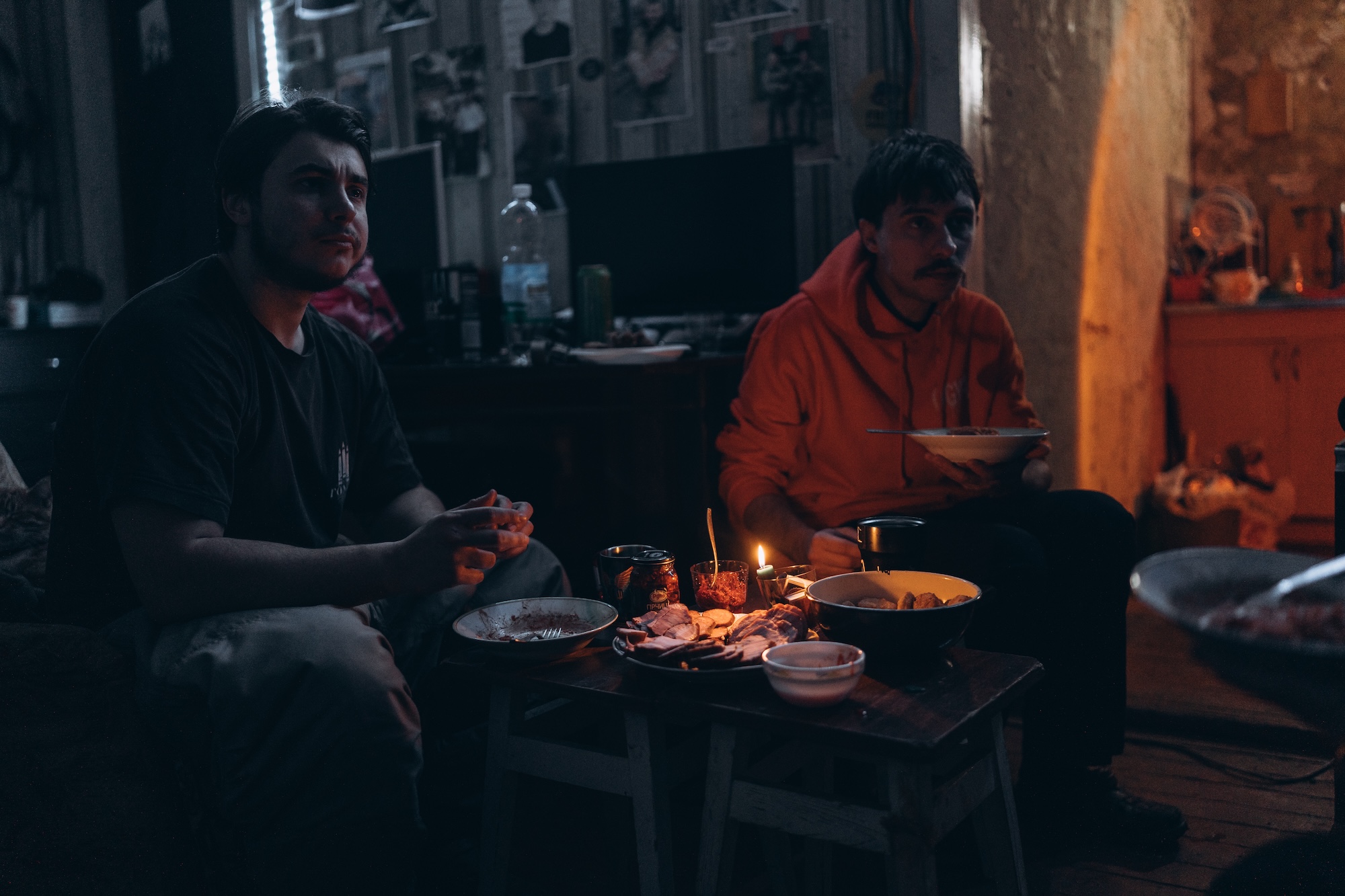
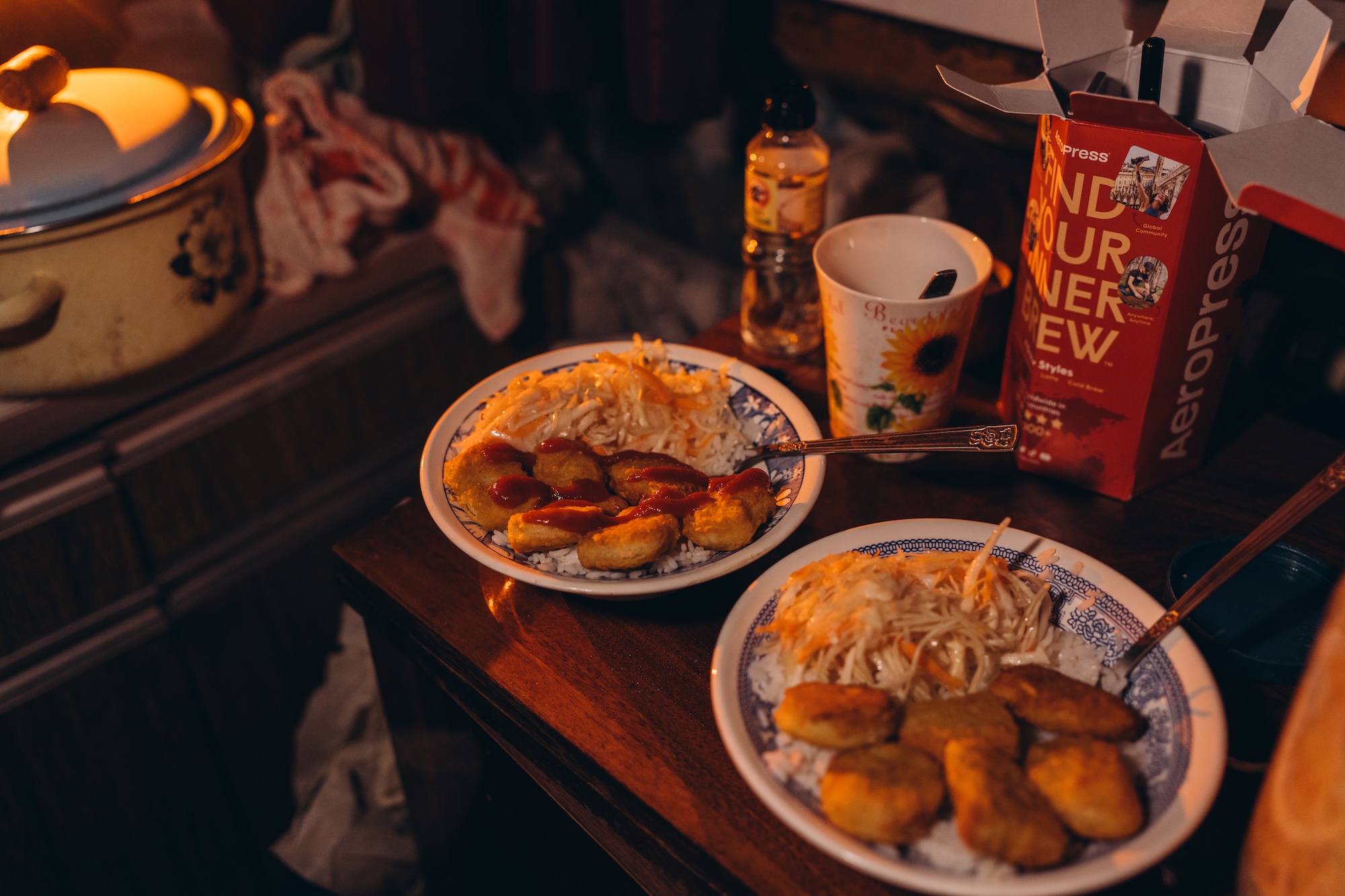
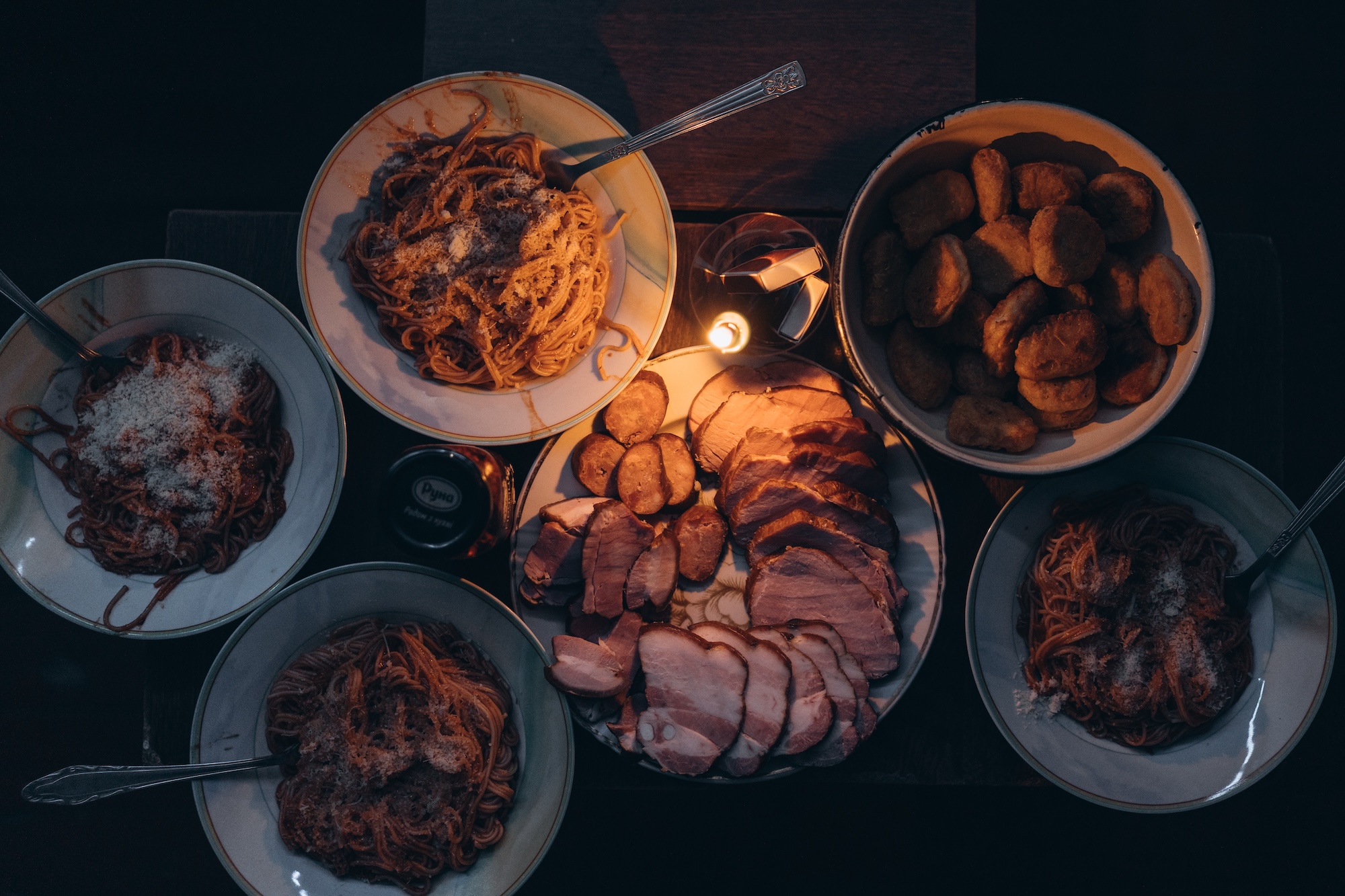
On the table are fried chicken nuggets, pasta with tomato sauce, a platter of cold cuts, and a half-burned candle. When Sol is in charge of the kitchen, he doesn’t like anyone getting in his way. At the end of the meal, though, he’ll thank you for washing the dishes.
All in all, Sol doesn’t care about flavor. To him, a meal is just a bunch of calories: carbs, fiber, and protein, low-fat and unsalted. That’s how he defines nutritional value. The previous evening, he served buckwheat with chicken breast and a tomato and feta salad.
When you’re out in the field as an infantryman, you don’t have that kind of luxury. Once, in the Donetsk sector, shelter was a hole in the ground that barely had enough room for three people. Cover was a fallen tree and a camouflage net. A liter and a half of water had to be rationed over three days. Nobody felt like eating — everybody was dying of thirst. On the third day, Sol finally opened a can of pâté. Soil crunched a little on the teeth — a mine had just exploded nearby.
There were light snacks at the positions. Sol put bread and sausage wrapped in foil into the field stove, making sandwiches.
Sometimes, out on assignment, weeks on end would be spent in damp basements. There is a lack of light and vitamins, so people bring canned fish, coffee drips, and whole jars of vitamin supplements, requesting fresh produce to be sent in with the drones. A source of fiber, as Sol would say.
Bizon, reconnaissance pilot
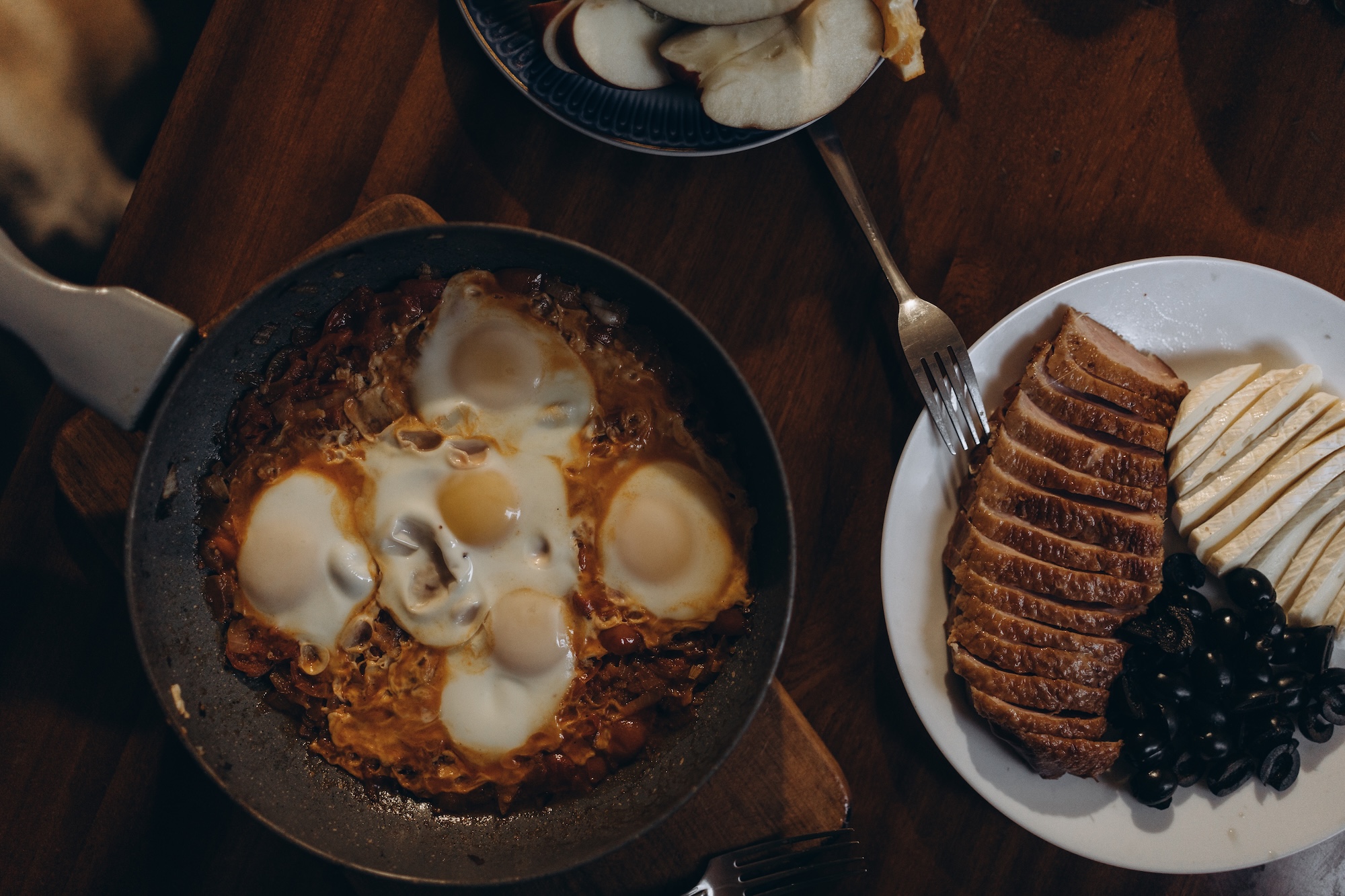
The flames of the greasy gas stove lick at the skillet of sizzling shakshuka — it’s Bizon’s special recipe. This time, finally, there was no need to borrow chili peppers from the landlady’s garden — all the necessary spices were on hand, save for peppercorns, since Bizon can’t stand them.
Compared to a makeshift countertop set up on tree stumps split in half, this kitchen is quite decent. Sure — if the idea of making Turkish dolma strikes again, there’s unlikely to be fresh grape leaves on hand, as there once were. Instead, he’ll cook ramen or chili con carne — the guys will love it.
He’s loved cooking since he was a child. He learned it at a young age, when his mom was away at work, and the three-day-old soup sitting in the fridge didn’t seem all that appealing.
When he cooks, Bizon goes into autopilot mode. His pre-war experience working in a restaurant has definitely paid off.
One time, Bizon and his comrades took over a building near the village of Moshchun. In the warehouse leftovers, they found rice, meat, and some vegetables. They decided to make borscht, salad, and pilaf. Truth be told, Bizon had never made pilaf before — he hadn’t had the chance to try it as a child, and rice dishes aren’t his forte.
Bizon and the guys found 400-liter pots, which took a little longer to heat up than a skillet of shakshuka, but they ended up feeding over three hundred people.
Today’s dinner will be instant noodles with cheese flavoring. Solyanka sounds amazing right now — though there aren’t any lemons or olives.
Kyt, logistics platoon commander
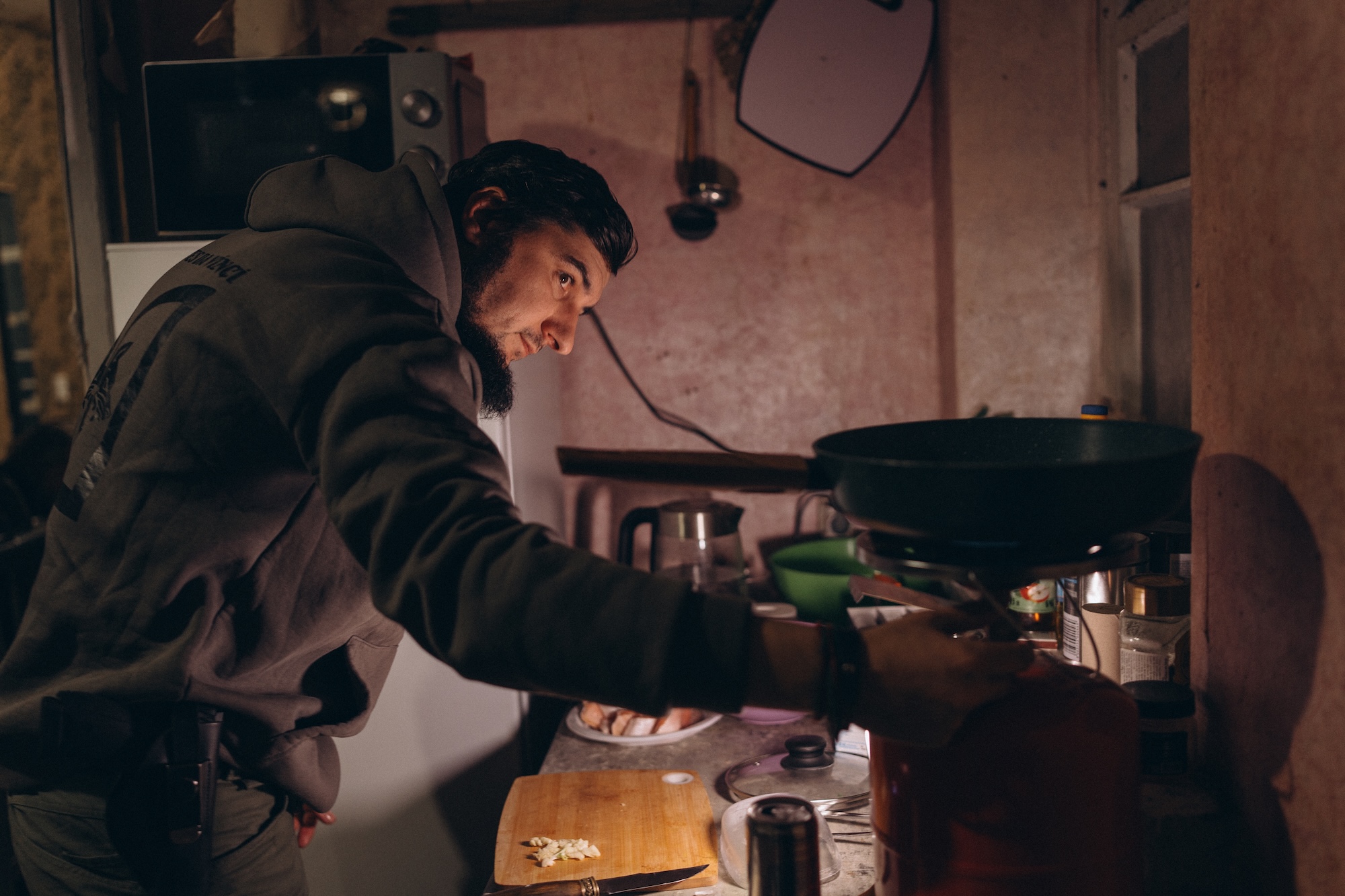
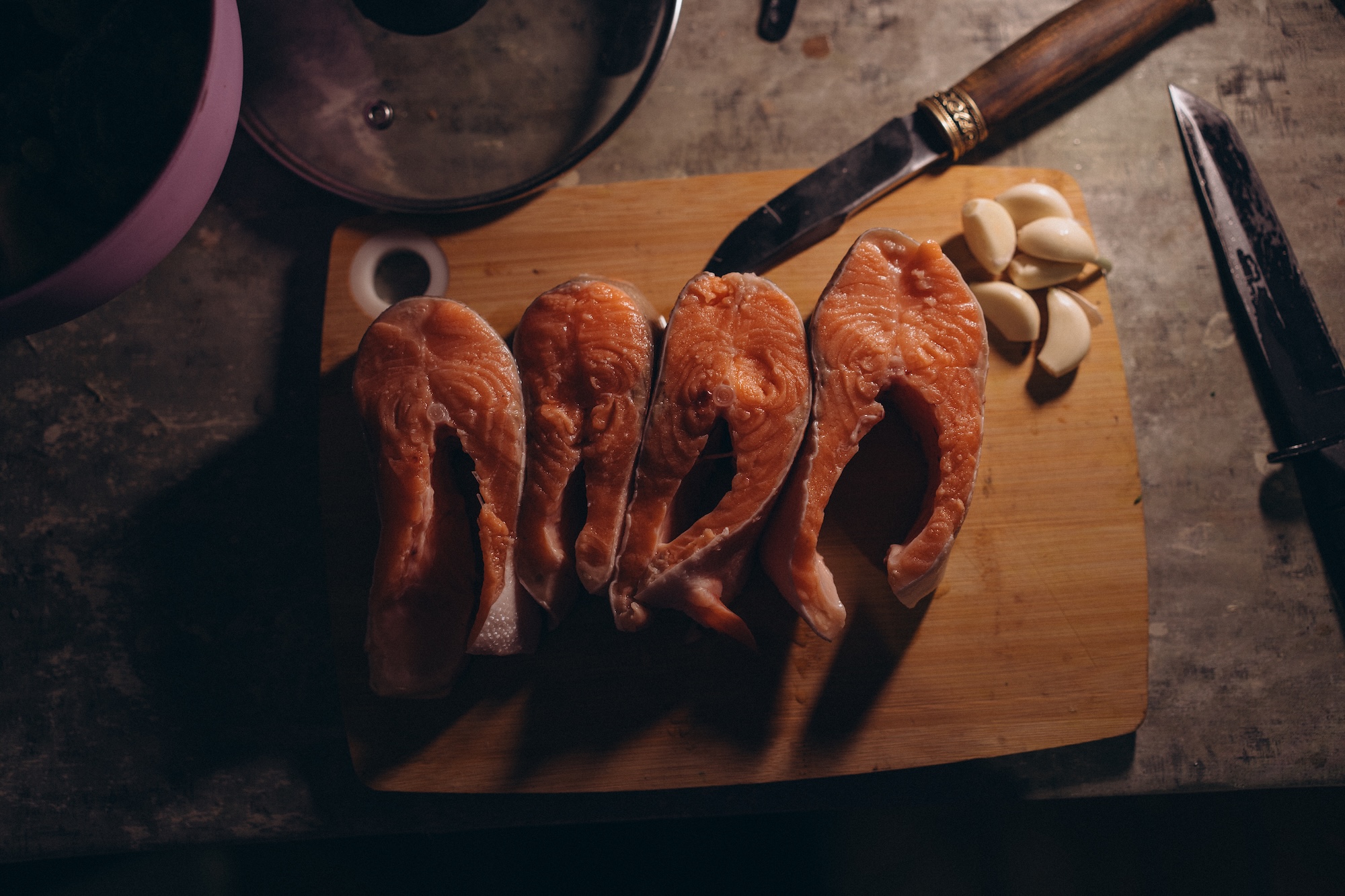
Kyt’s dream portable kitchen has a stove with a gas cylinder, enough space for a kettle, dishes, and all the kitchen utensils. Maybe even spices, if they don’t spill. Kyt is setting up his makeshift kitchen inside a shell casing so that he has a convenient place to cook at every new location. For now, though, he’s frying seafood on a gas canister. He doesn’t add salt — salty food is not to his liking.
His ingenuity once helped him make mashed potatoes — he boiled the potatoes inside a pickle jar and mashed them with a water bottle. There’s even an oven in this rented apartment — Kyt uses a frying pan as a baking dish, unscrewing its handle and placing it inside the field stove. The temperature can’t be adjusted, but that doesn’t matter.
Inside the frying pan is baked hake with broccoli, carrots, and corn; hot chili peppers and slices of butter can be added later. Kyt loves broccoli almost as much as he loves seafood. He doesn’t snack on sandwiches: he prefers home-cooked meals, unsalted, but spicy — for example, tacos with four kinds of peppers. They always take the fridge to every new apartment, but, for some reason, can’t fit in a meat grinder. There should have been ground meat; instead, the meat was finely chopped with a knife that Kyt’s father gave him at the start of the invasion. A quality knife and a quality watch serve him well to this day. Still, Kyt dreams of a blacksmith’s hatchet.
Sarmat, battalion rifleman. Koyot, grenadier’s assistant
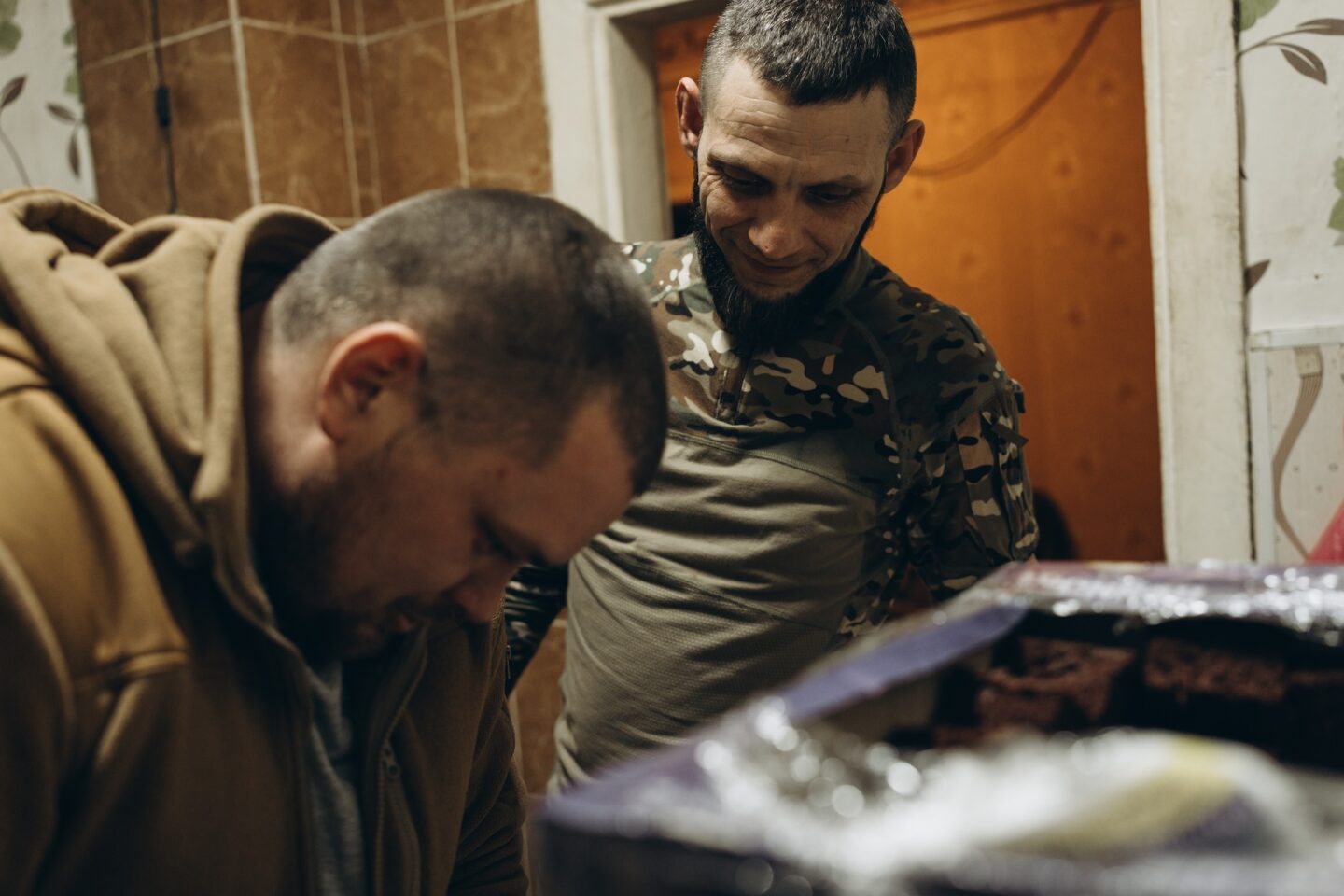
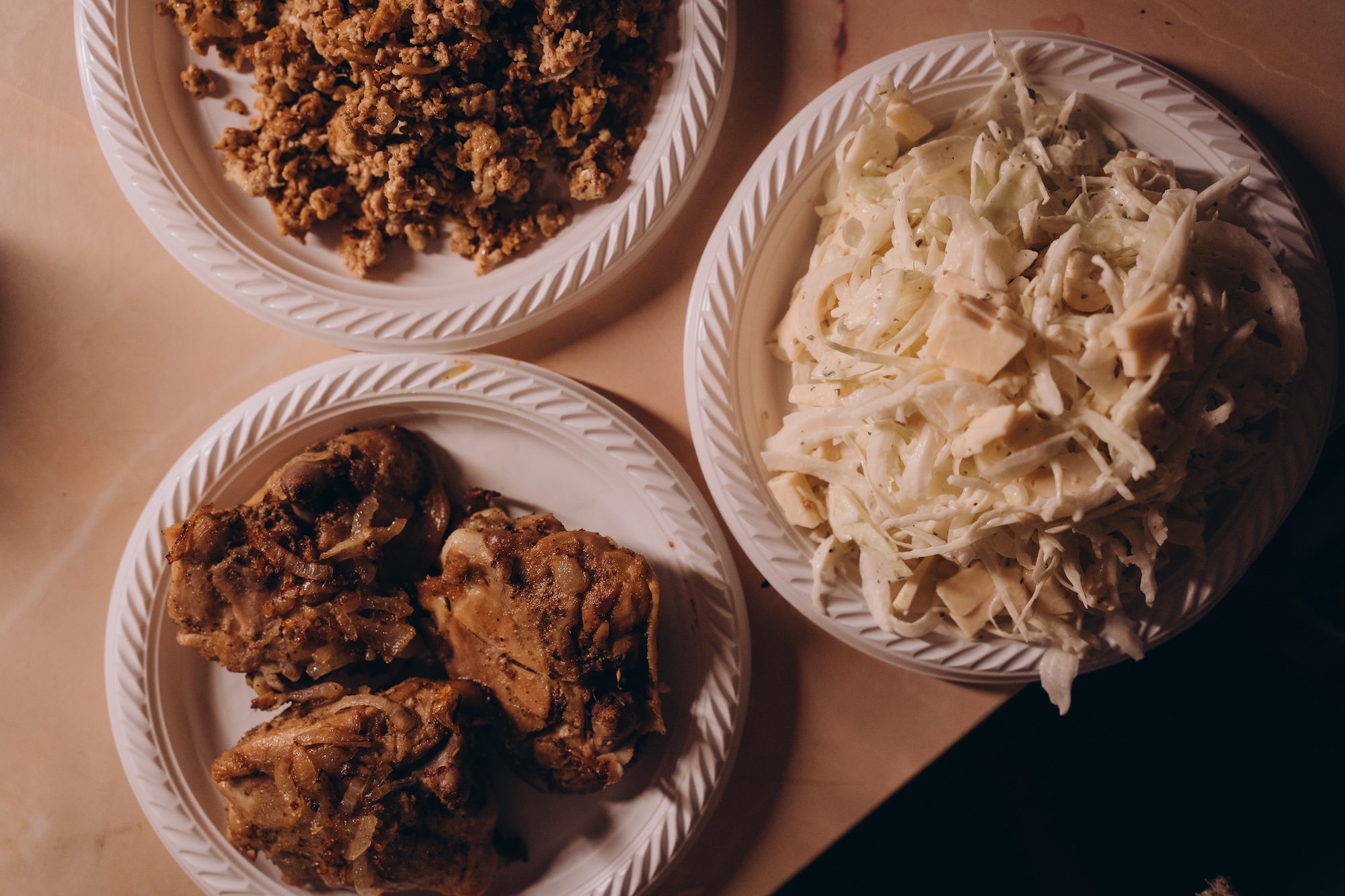
Sarmat shares the kitchen with his comrade Koyot. They’re cooking chicken on a bed of onions, with a mayonnaise salad on the side. Soon, Sarmat will make his special borscht with crunchy cabbage. It’s special because that’s exactly how his family makes it at home — the only difference is the amount of spices.
At home, Sarmat buys new spices every week, even if the old ones aren’t finished yet. He buys everything: from sweet paprika to spices for pilaf, fish, and various meats. Everything except mushroom flavoring — he loves to experiment, but doesn’t like mushrooms. There are far fewer spices here, and you can’t add much to a shared pot anyway.
But for him, making borscht is always about the warmth and comfort of home, nostalgia, and the wish to eat that borscht together with his family — his wife and child.
While the chicken is roasting, Koyot talks to his wife via video call. He thinks of her borscht and stuffed peppers; he wants to go home. Or at least to a big city — to pop into a supermarket, buy some fresh mushrooms, and cook them in sour cream.
Koyot also knows how to make shashlik. In 2014, he tried homemade grape wine for the first time. The next day, they were celebrating a friend’s birthday, and Koyot was tasked with marinating the meat. Among all available ingredients, he spotted the homemade wine, so he combined the things he loved so much into a single dish.
In truth, the wine isn’t the secret ingredient. The main thing, Koyot says, is that it’s natural. But the real secret is knowing exactly when to add it. He doesn’t share that with anyone, keeping it a mystery.
Akula, pilot of the “Vampire” UAV
Just before leaving, Akula cooks pre-made pierogies with sautéed onions. There isn’t any fish in the kitchen — otherwise, he’d make fried fish or fish soup. The spices he uses are all traditional, but fresh herbs are essential for Akula. He adds as much as possible whenever he can.
Magistr, attack UAV crew commander
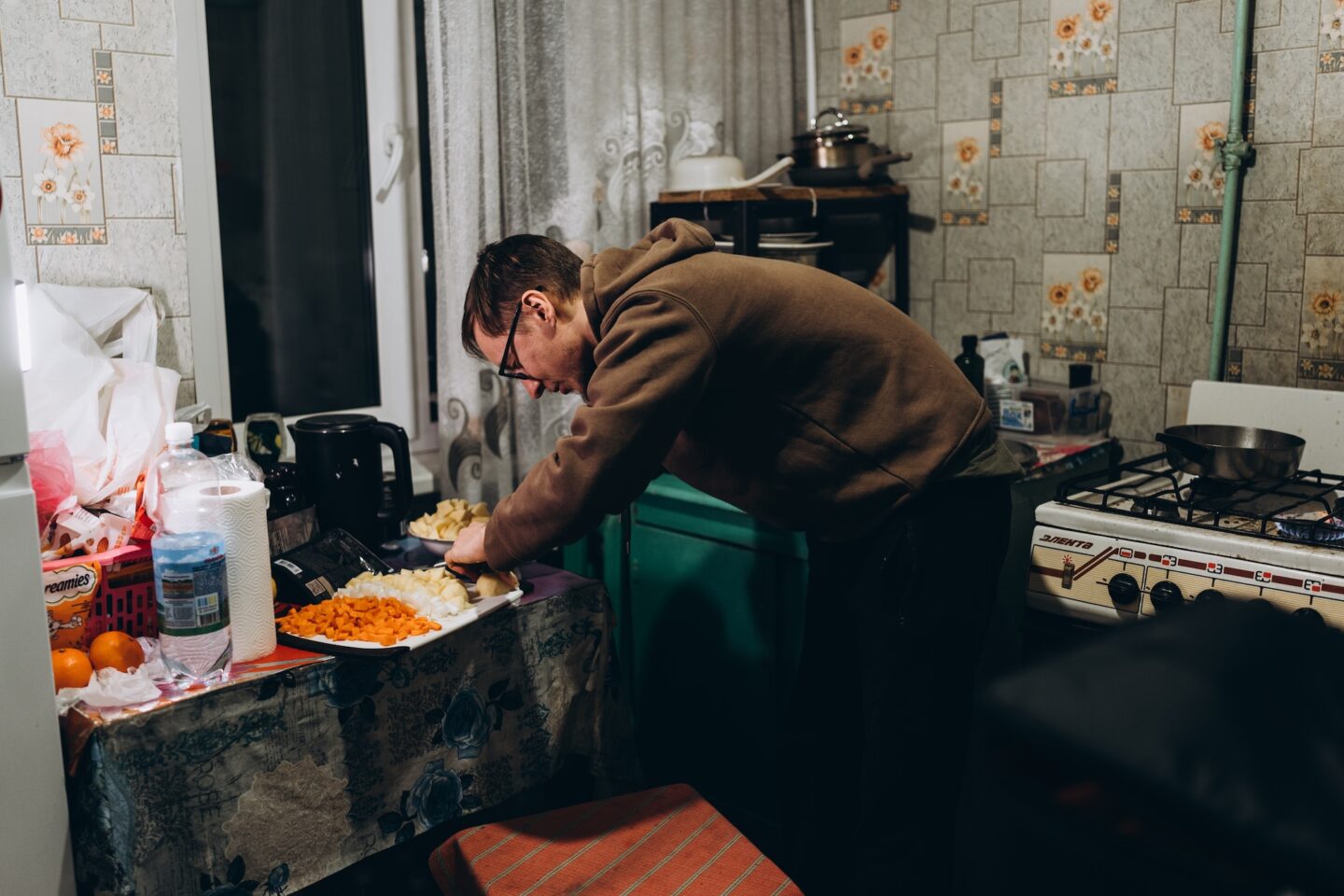
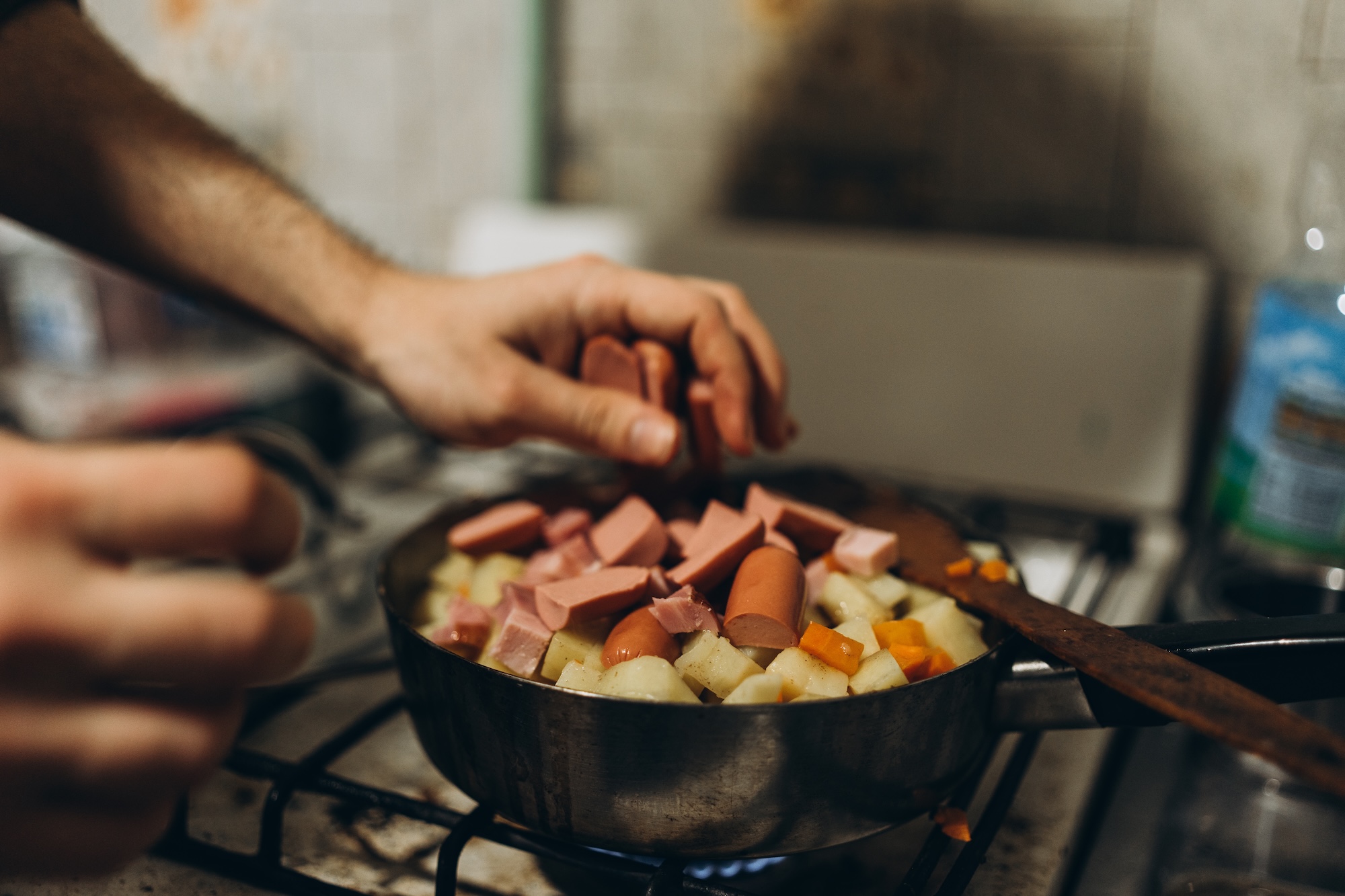
According to French culinary tradition, the pan melts half a stick of butter. Magistr considers French cuisine to be the best, so none of his dishes can do without butter. Just like this one: potatoes with two kinds of meat, all sliced with a combat knife. Sadly, there’s no bell pepper — it would have complemented the dish nicely.
A black kitten watches the cooking process closely. It’s Mara, a frontline cat that Magistr and his comrades rescued from the trenches. Mara roams the tables, windowsills, and the top of the washing machine, which didn’t fit in the bathroom, ending up in the kitchen. The only thing Mara isn’t interested in is bacon — otherwise, there are no limits to her curiosity.
Magistr learned all his cooking skills from his sister. While on vacation, they made dressed herring together, seven kilograms of it — they and their guests barely managed to finish it in four days. Magistr loves to cook elaborate ramen. Of course, it’s not quite like his sister’s: there are no pickled bamboo shoots, nor the time for a two-day egg pickle or a three-hour broth infusion. His ramen is ready in an hour and a half: military cooking, like all things military, is all about efficiency.
On Magistr’s shelf in the fridge, there’s always a lemon for tea and fresh fruit: definitely bananas, seasonal tangerines and oranges, and kiwis. Also, hummus that his comrades love, sour cream, without which Magistr can’t imagine his kitchen, and, as demanded by French tradition, butter.
When there’s time, Magistr will set up the oven and try his hand at baking creamed mushrooms or French-style meat. For now, though, he’s making sauerkraut pierogies together with his brother-in-arms — a treat for his birthday.
Translated from Ukrainian by Liubov Kukharenko