How the East SOS charity foundation helps war-displaced people settle into their new lives
Daria Svystukha, Korovaynyi Serhiy
21.05.2026
Daria Svystukha, Korovaynyi Serhiy
21.05.2026
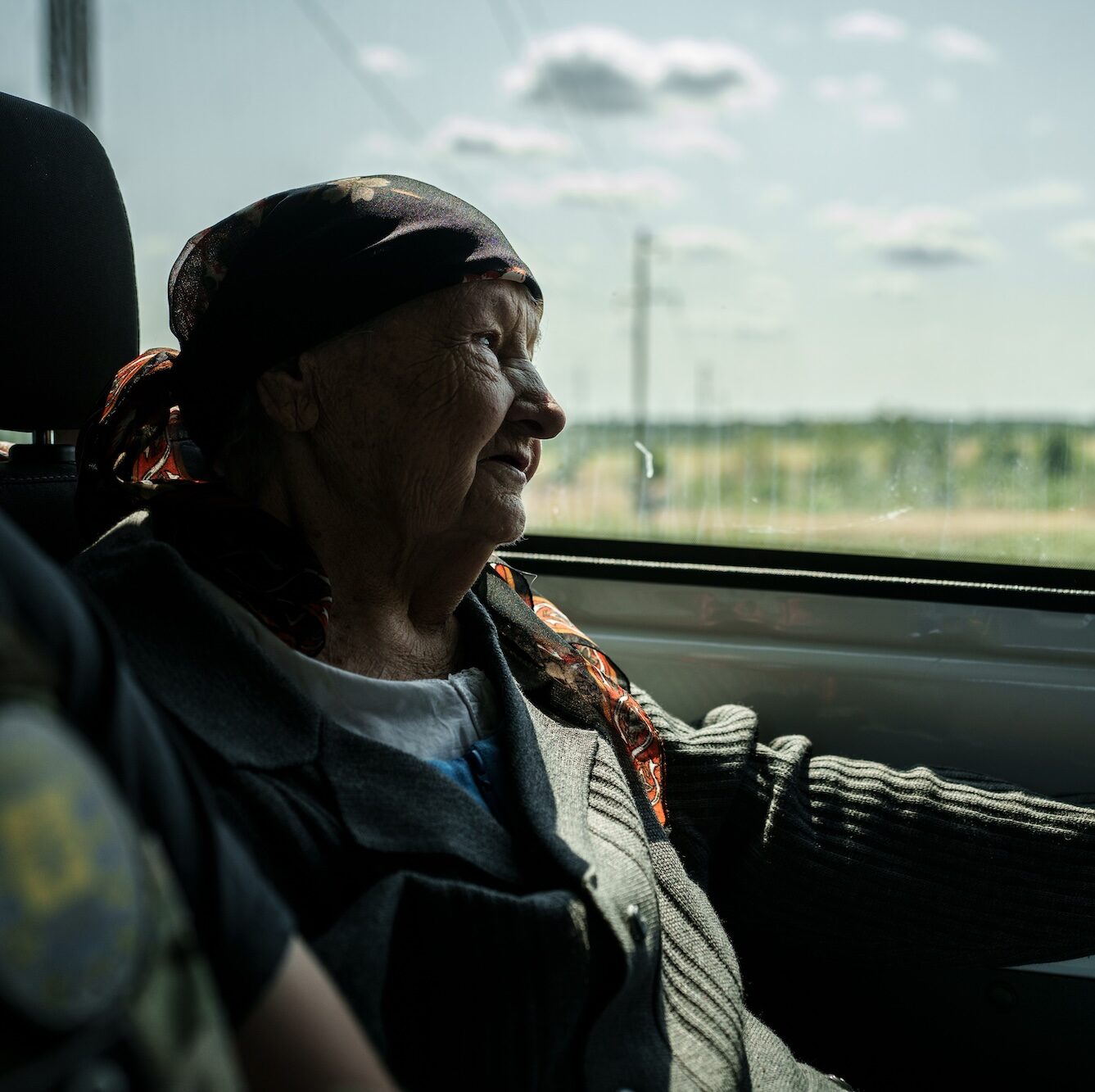
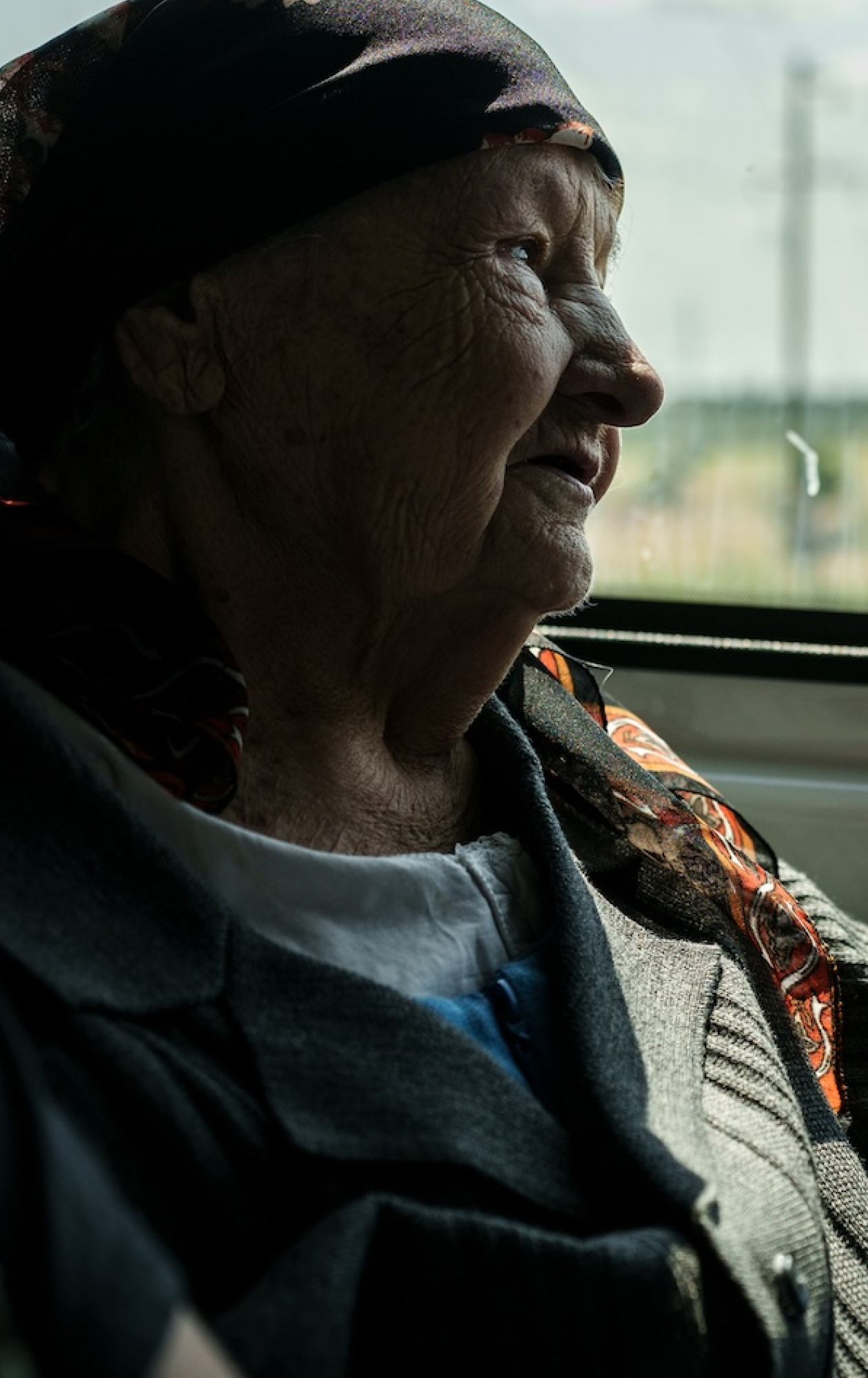
If you ask Ukrainians displaced by the war what evacuation means, they will say it is a journey from home to home.
This journey is far longer than simply traveling from under shelling to a safe place. It lasts for months and years: in strangers’ flats, rented houses, temporary shelters, hospitals, in parcels from loved ones and tattered suitcases containing family photo albums. It turns into an endless wait: one day, they will go back, home.
On this journey, it is important to have support — people who are ready not only to share your longing and pain, but also to offer solutions. For many, such people are the team of the charity foundation East SOS.
As part of the EMPOWER project, funded by the German Federal Ministry for Economic Cooperation and Development (BMZ), in partnership with the European Union, and implemented by GIZ Ukraine, East SOS provides social support to older adults and people with disabilities who are fleeing frontline areas. East SOS also trains and provides psychological support to the staff at residential care homes who look after them.
This content was produced in partnership with GIZ Ukraine
People along the roads
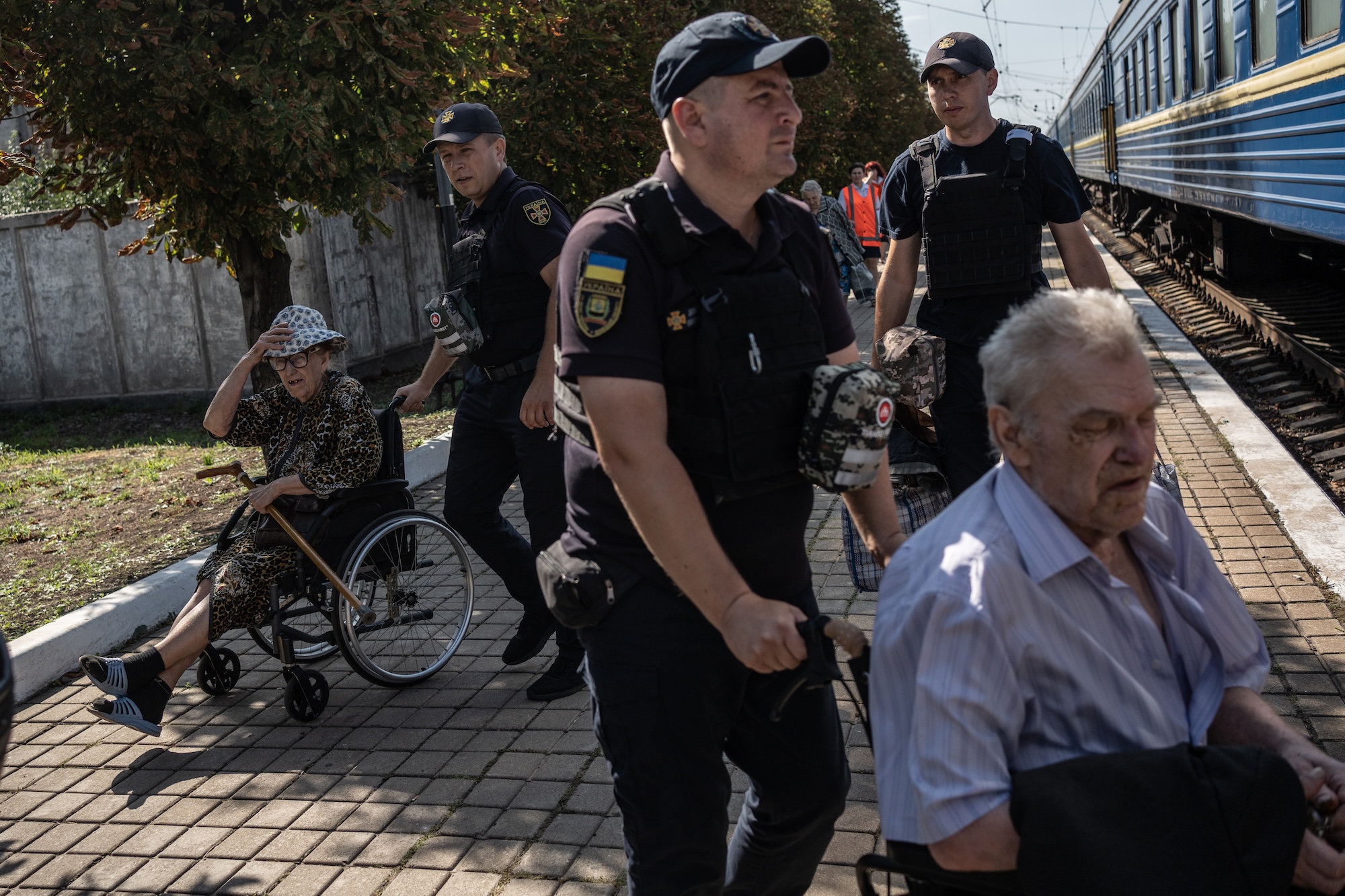
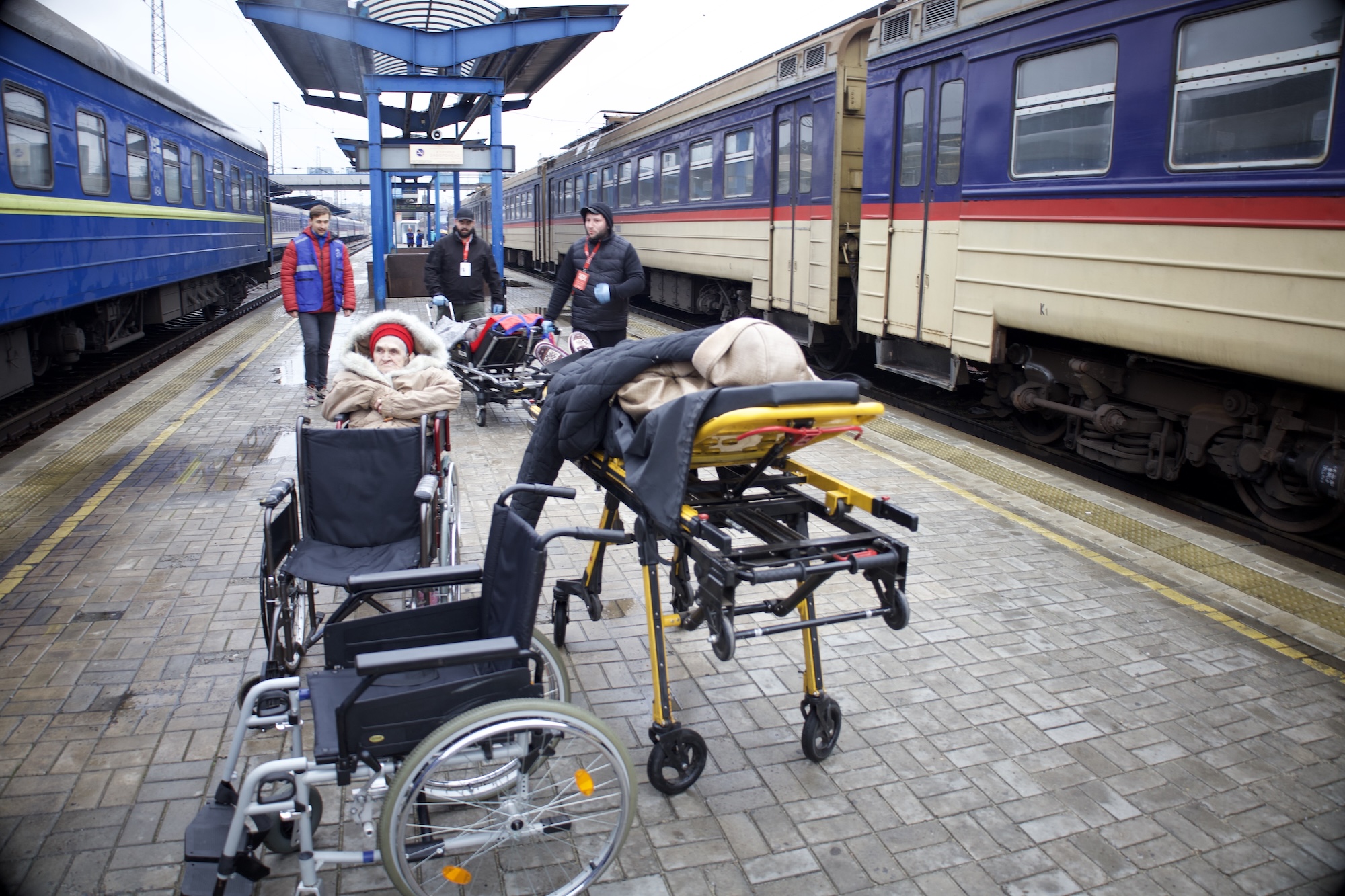
At a call center in Uzhhorod, specialists from the East SOS foundation are receiving applications from people seeking to escape danger. They then coordinate with police and the State Emergency Service to organize rescues. At transit centers in Pavlohrad and the village of Voloske in Dnipropetrovsk Oblast, Lozova in Kharkiv Oblast, Kharkiv, Zaporizhzhia or elsewhere, teams of social workers, lawyers, psychologists and logistics managers meet evacuees daily.
But the work does not stop there. It is important for the team not to abandon those in their care.
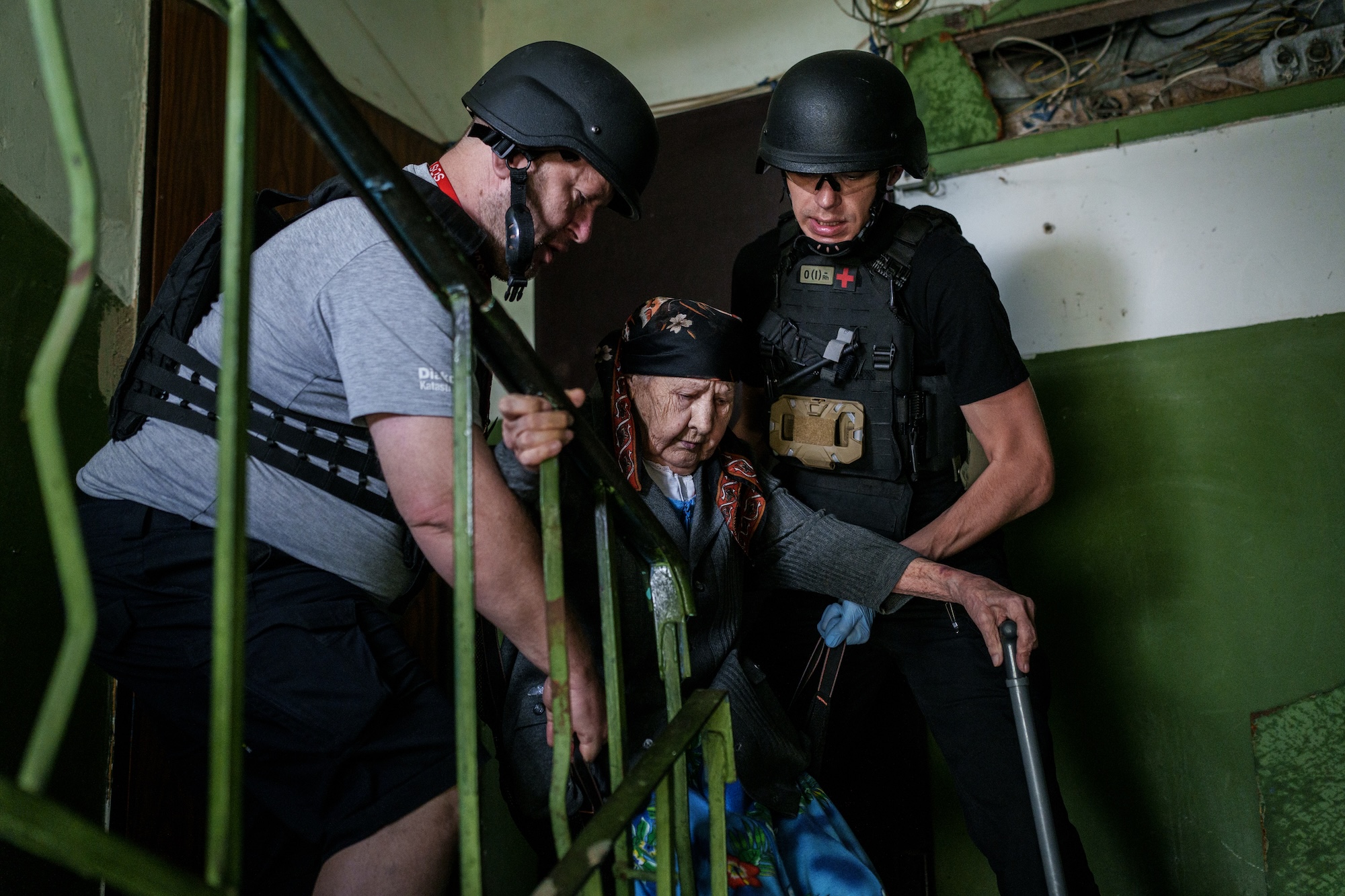
The foundation focuses on helping people with limited mobility, providing psychological support, legal and social assistance, arranging travel to family members, and, for those living alone, finding new places to live and organizing transfers to transit shelters.
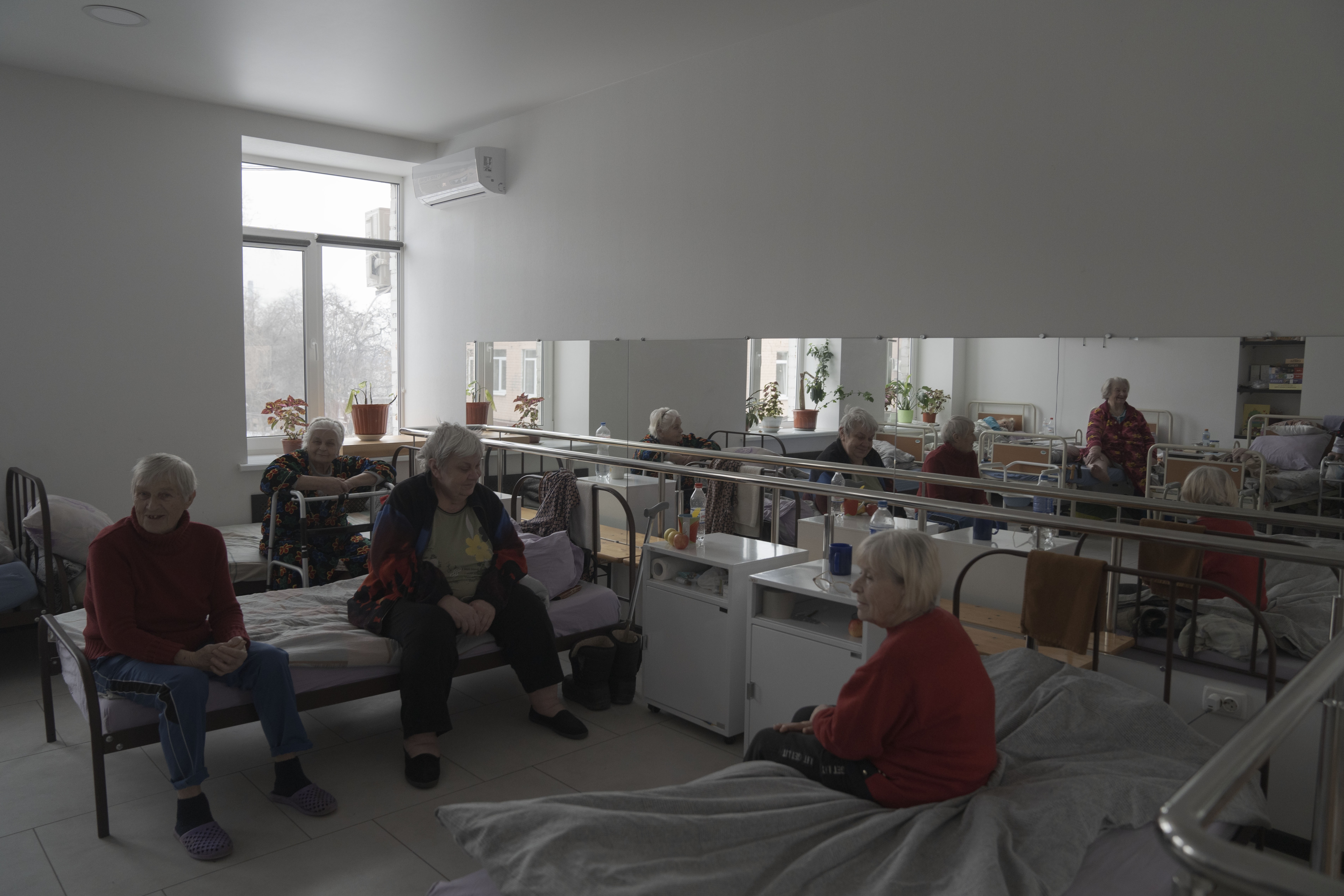
Those who have left the frontline are initially temporarily housed at the Social Adaptation Center for People with Disabilities run by the Ocean of Kindness NGO in Dnipro. This step is a necessity: there is a shortage of places in residential care homes in Ukraine. While those who have lost their homes are settling in at the shelter, the team at East SOS helps them obtain or replace lost documents, undergo a medical assessment to establish disability status if necessary and apply for social benefits, including reinstating pension payments.
At the same time, the foundation is seeking accommodation for them in safer regions of Ukraine and abroad.
“International support is vital to us. We are establishing links with reception centers across Europe, helping people process all their documents, including foreign passports and arrange transport. People rescued from Donetsk, Dnipropetrovsk and Kherson oblasts are already living in the Czech Republic, Germany, Norway, Denmark, Poland and Finland. Since the start of this year, we have helped 34 people leave the country,” says Olha Vladymyrova, coordinator of medical support and resettlement at the charity foundation East SOS.
Vladyslav. There comes a moment
An eight-year-old boy peers out the window of a van carrying him as far from the explosions as possible. Left behind are the house with his toy cars and building blocks, the yard with the bicycle that had seen a thousand falls and scraped knees. In this moment, the boy is growing up fast — he is now looking out for his mum and younger sister.
“How are you, little fella?” someone asks in the van.
“I’m glad you’re taking us away from here. I need Mom and my sister to stop being scared!”
This story is real; only the names have been changed. Vladyslav Poianskyi often tells it to others. Together with his father, he evacuates people from the frontline areas and hears hundreds of such stories along the way.
The East SOS volunteers’ van has witnessed countless faces, some laughing, some crying. They speak of homesickness: the graves of loved ones, vegetable patches with cucumbers, orchards with trees, neighbors chatting on a bench, chickens and ducks. Of what they left behind and what they took with them.
On the morning of 24 February 2022, a Russian fighter jet flew over the city of Dnipro and destroyed a warehouse in its residential area. That was how the Poianskyi family learned of the start of a full-scale war. Previously, Vladyslav had worked in sound design, and before that, he’d been a bartender, a DJ and traveled extensively. In 2023, he joined the East SOS foundation; later, his father became his partner in the evacuation team. He returned from Lithuania specifically for this.
The first stop is a shelter for displaced people, where a couple is waiting for the East SOS van: a woman in a wheelchair and a man beside her. Both are from the frontline; they met at a shelter in Dnipro and got married. They were being taken to a branch of the State Migration Service to renew their documents: there were no ramps at the building, so the woman had to be carried inside.
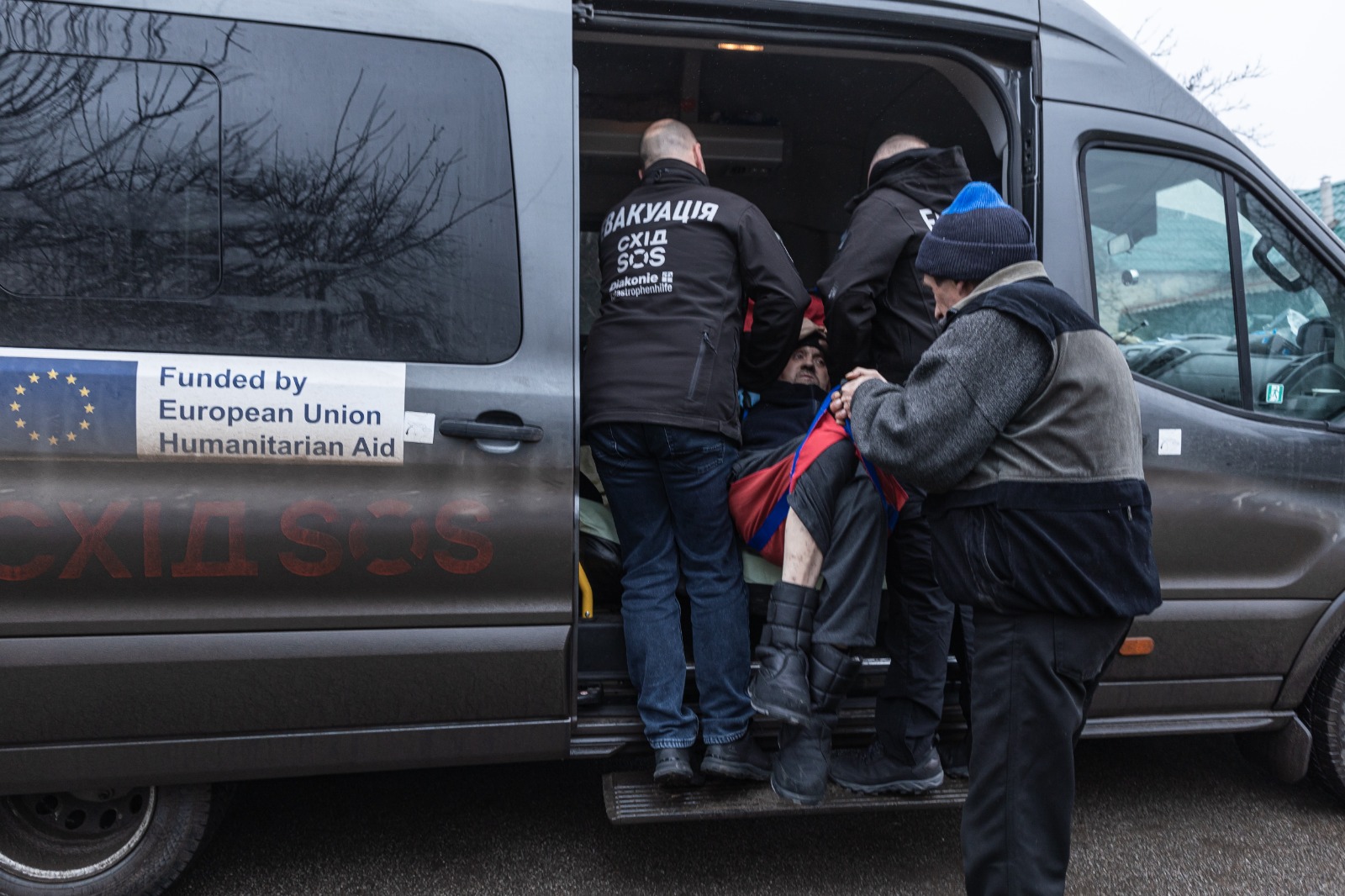
While Vladyslav and his father were taking them back, they received a message from the White Angels — a police unit that evacuates people from the frontline. That morning, guided bombs had struck a village 22 km from the front line, and so the couple’s home had been burnt to the ground. Of all the elderly couple’s possessions, only their passports and pension cards remained. The police took them to Vasylkivka and are now asking East SOS for help: to find them a place in a shelter with a shower, clean bedding and hot food. Such social transport services, provided with care for people, are supported by the German Government and the EU humanitarian aid.
Photos: José Colon
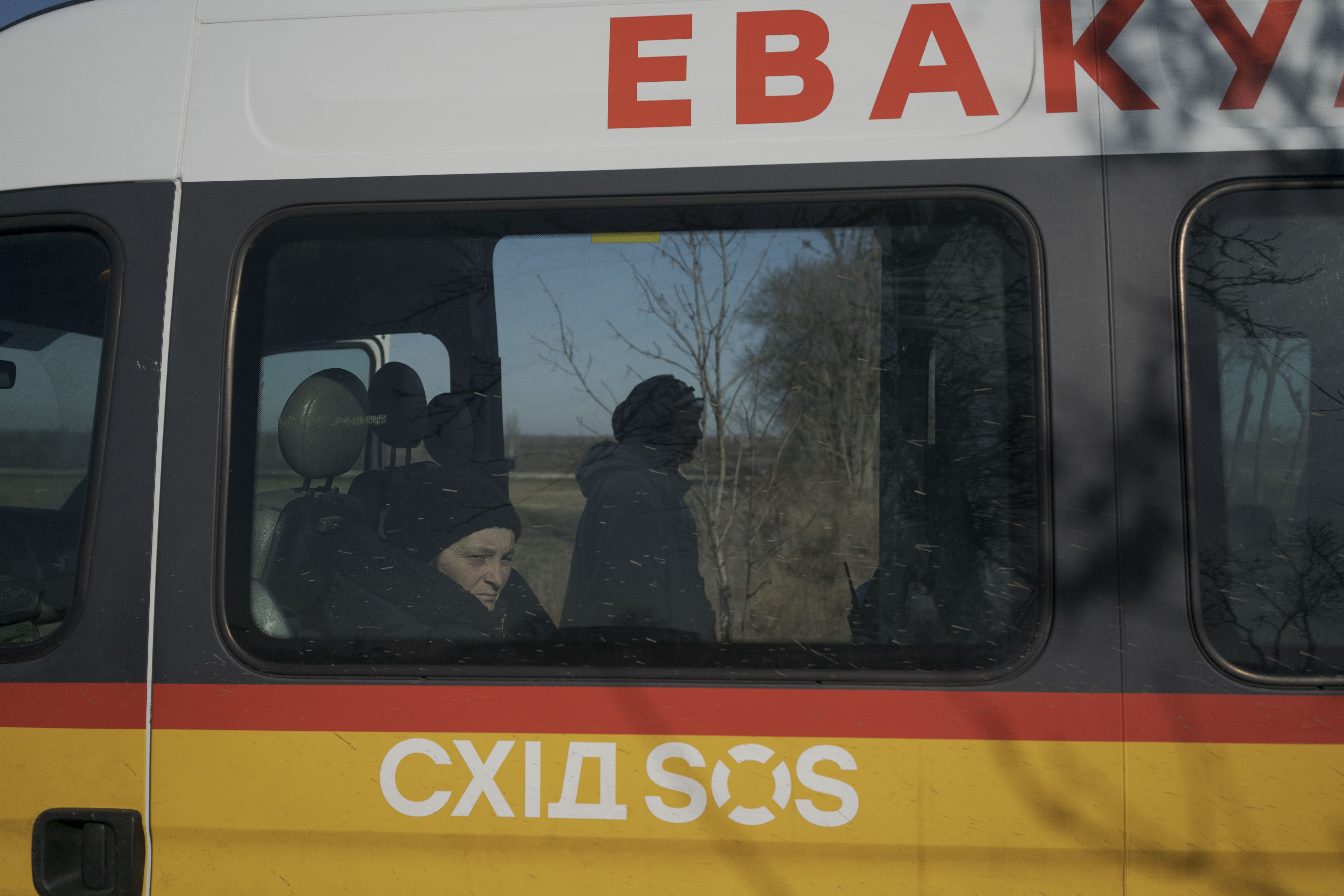
“Our vans are eight-seater Sprinters designed to transport people with limited mobility; they are equipped with stretchers for those who have to travel lying down. The foundation has five crews, with two or three people in each. Plus 63-year-old Valera — the driver of a 40-seater bus that runs between transit centers for evacuees: Pavlohrad, Voloske, Lozova…” says the man.
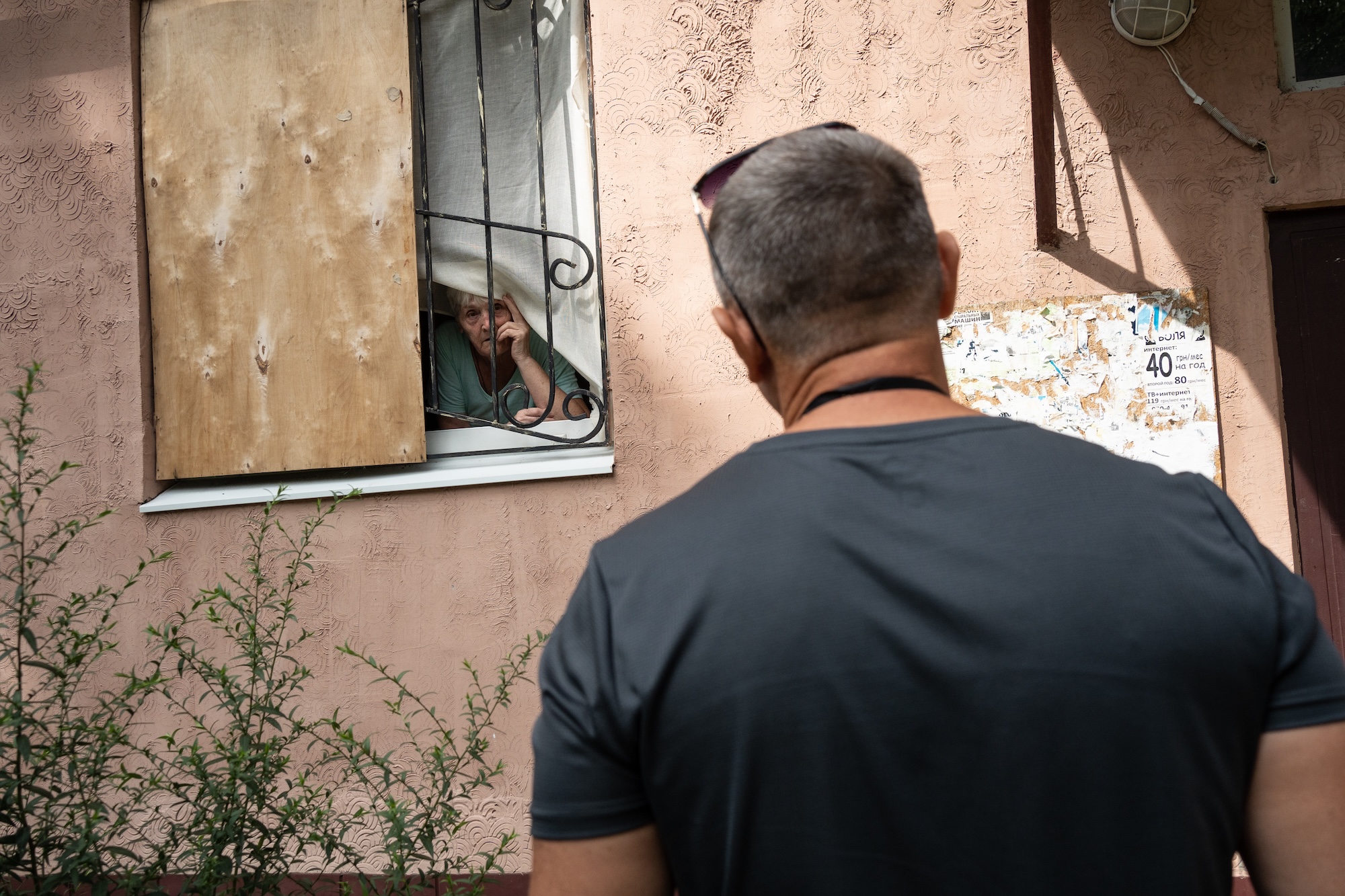
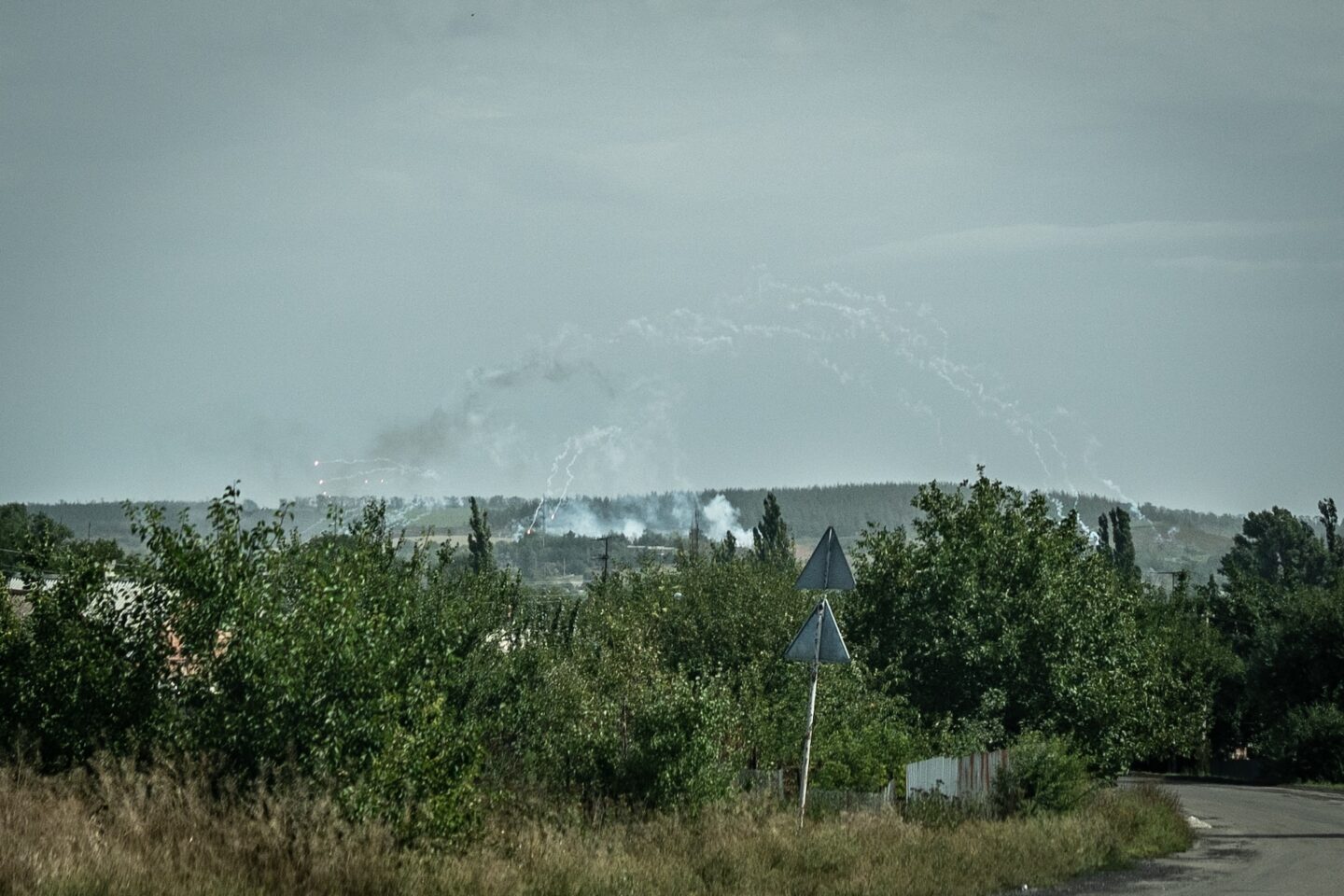
Vladyslav’s work usually begins with informing the public: the front line is shifting, so the East SOS team heads out to villages near the front to warn people.
“Grandpa, can you hear the shooting here? Get ready, we’re going to a safe place, ” he says to a pensioner on the street in one of those villages.
“Nah, son! My great-grandfather, grandfather and father were born here; they died here. And I want to be buried here! Who needs me out there?” the man replies.
“We won’t abandon you; we’ll help with the paperwork and take you to your relatives if you have somewhere to go. And if not, we’ll find you a home in Ukraine or even abroad,” Vladyslav reassures him.
“No, I’m staying here for now,” he insists.
“At least keep our number; if anything happens, give us a call!” The conversation ends there.
In villages like this, Vladyslav always pops into the grocery shops and asks the shop assistants about the locals. He admits that he always speaks honestly about the danger.
“I say straight out: I’m not here to scare you, and I really hope this will pass your village and your home by. But there comes a point when pharmacies and shops stop working in villages like this, so I advise people to leave. However, the decision is entirely up to each person. No one else can make it for them,” he says.
Over three years, he and his father have transported hundreds of Ukrainians who, despite their fear and uncertainty, have packed their bags and headed for a safer haven. One of them is Olena Lapina from Bakhmut in Donetsk Oblast.
Olena. Bakhmut — Norway
Bakhmut smelled of salty coolness and wine: grapes ripened between the steppe and the slag heaps, while deposits of salt lay hidden in the ground. The locals always had to choose between salt and grapes. Olena opted for the latter. After 20 years working at a champagne factory, her joint problems had developed into a disability. When she retired, she worked as a domestic helper, but as it became harder for her to move, she settled at home: the garden, the vegetable patch and the house in the Zakhidnyi neighborhood.
Her son had long since grown up and was working in Belgium, so Olena faced the start of the great war with her beloved dog, Simka. She thought these explosions were temporary, just like in 2014, when the Ukrainian military managed to push the war away from the city.
The summer of 2022 offered hope right to the very end. The sun, cucumbers, grapes… However, during that sweltering August, the realization finally dawned: the front line was rapidly approaching Olena’s doorstep. By autumn, the electricity and gas had gone off. Her son sent her the contact details for East SOS. She kept that number in her phone for another week while inspecting the house and yard. She would go out to feed Simka, who already sensed the impending separation.
“Mom, get out of there!” her son pleaded every day.
“Go on, Lena, why are you sitting there with your aches and pains?” her sisters called out.
At the end of October, Olena finally dialed the East SOS number. When the van pulled up to the gate, she was already standing there with two bags and a rucksack full of medicines. She didn’t take a single photo as a memento: she thought she’d be back soon. She left Simka with a friend in the hope of a quick reunion. Next stop: the train to Dnipro.
“From the station, they didn’t even take me to a shelter, but straight to a hospital. Due to the stress, my right leg had started to give out back in Bakhmut: I walked first with one crutch, then with two. Over the course of a year in Dnipro, I had four surgeries,” Olena shares.
Even now, amidst all this, she remembers Olha Vladymyrova, the medical support coordinator for the East SOS charity foundation, who was with Olena in the hospital during those first days and carried her bags everywhere: Olena couldn’t lift them on her own. And Yulia — the volunteer who helped collect receipts after the operations, submit claims for compensation and sort through the paperwork. And Lilia, too — the shelter administrator who was always by her side after the operation. And Tania — the friend she was introduced to by the Ocean of Kindness shelter.
In February 2024, Olena set off for Norway, where the snow lies until June, and the ever-present pines and birches cling to the ground with their roots.
Now the woman lives in a town beyond the Arctic Circle, which she jokingly calls an “aul”: two supermarkets, a hospital, no pharmacies — medicines must be ordered from another town, 60 km away. Over time, Olena was able to move into a separate flat; the landlord immediately asked what she needed and fitted handrails in the bathroom for her convenience. She learned Norwegian on a course for as long as she could — she attended the classes, but then broke her leg whilst in Norway. Medical issues add to her worries.
“Sometimes, for a ten-minute consultation with a doctor, you must fly several hundred km with two plane changes. Every day life takes effort: getting to the shop, coming back, resting. In summer, I can still go to the river, but in winter, there’s snow up to my waist. Still, the Norwegians are lovely: you don’t know them, but they come up to you and smile,” says Olena.
There is little in this foreign land that reminds her of her native Bakhmut, except perhaps the birch trees. She hasn’t found the inspiration for her beloved knitting yet, but Olena makes gnomes, blue tits and various figures from scraps of fabric. She found remote work. Her neighbor in the house across the street is Olena, also from Ukraine. Last year, she used to go shopping for herself while she was in bed with a broken leg, and there’s also a friend from Donetsk here.
There are difficult days, “a sort of intensification of everything,” says Olena. Before her eyes — her home, Simka, her neighbor. There’s no news from her neighbor — she’s gone missing from her own home.
“If it weren’t for East SOS, I might not be here anymore,” she muses.
Olena’s brother and his family managed to leave the city in the spring of 2023; her sisters are in Ukraine, and her son has flown to Norway twice to see her. Bakhmut is occupied. In the Zakhidnyi neighborhood, where her house once stood, there is a black field; nothing remains of the house. Olena has seen videos of her home street: potholes, water and walls without roofs.
“But I want to go home,” she repeats.
Nataliia. Being there
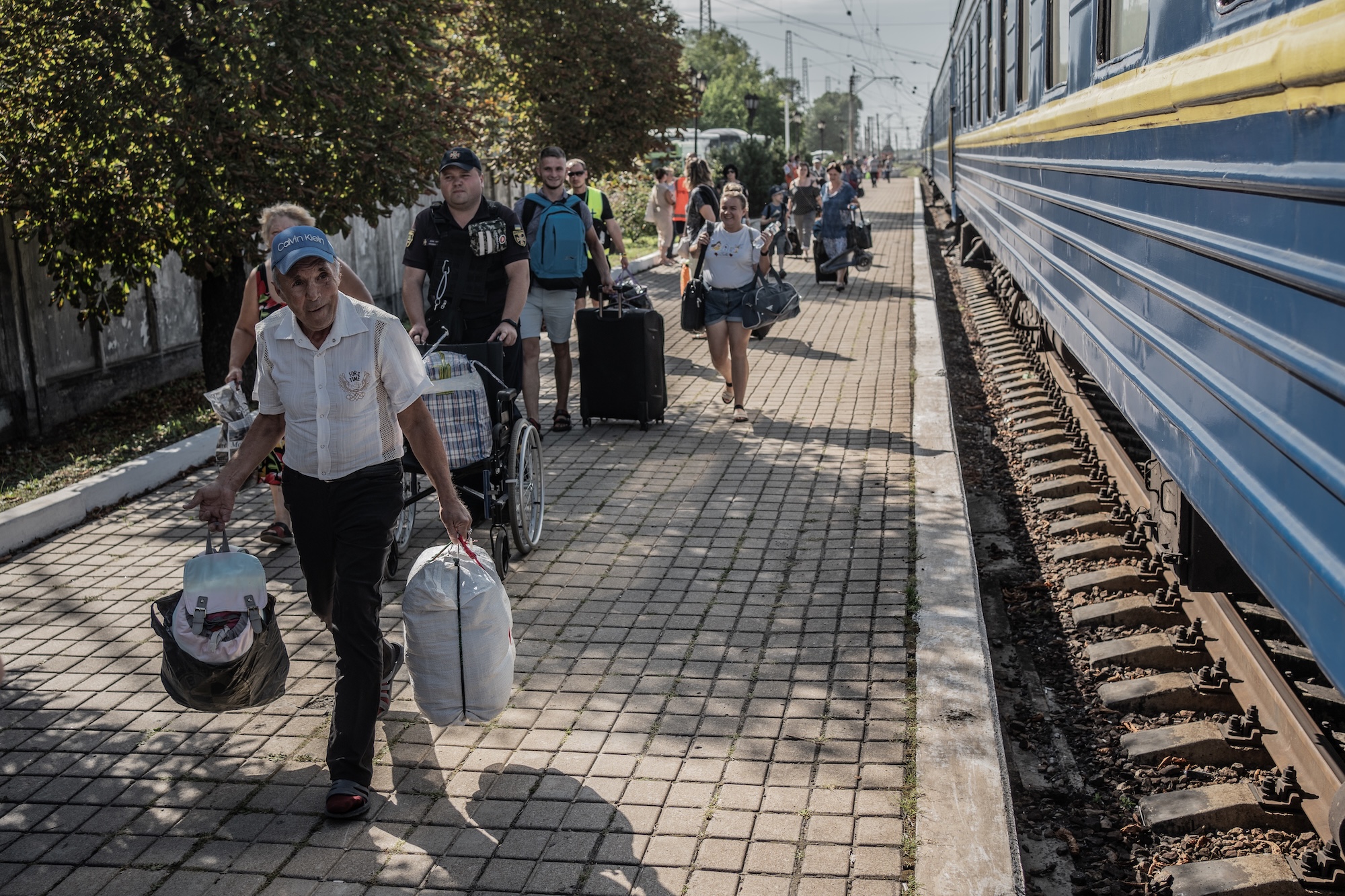
Pavlohrad. Dnipropetrovsk Oblast. Spring 2026. The transit center is buzzing like a beehive — up to 400 people pass through it every day. Older women with bundles, men with empty eyes, mothers holding their children’s hands tightly. Among them, moving from person to person, is psychologist Nataliia Natina.
“Where are you from? How are you?” Sometimes these words are enough to help a person open up.
Nataliia is from Mykolaiv Oblast; she experienced the full-scale invasion in Pervomaisk. After two years working with the International Medical Corps, in April 2025, she joined East SOS and moved to Dnipro.
Zaporizhzhia, Voloske, Pavlohrad, Lozova, Kharkiv: the psychologist travels there with a team comprising a psychologist, a lawyer, a social worker and an evacuation logistics manager. People who have just escaped the shelling are thinking about practical matters: registering, obtaining humanitarian aid, figuring out where to go next, but they do not approach the psychologist — they are shy or genuinely convinced that everyone is “their own psychologist.” Some even respond rudely or aggressively. Nataliia doesn’t take offense; she understands their confusion and fear of the unknown.
In April 2026, a mother, her son and a large dog made their way from Druzhkivka in Donetsk Oblast to Lozova in Kharkiv Oblast. They walked from a place from which there was no other way out. Nine kilometers — under drones, hiding among the trees and at bus stops. The dog signaled when it was safe to leave their cover. On the way, they were picked up by the military, who helped them reach Lozova. All three were saved, and accommodation was found for them.
“I am in awe of the resilience and strength of such people,” says Nataliia Natina.
Photo: Olha Vladymyrova
In Lozova, Nataliia approached a young woman who seemed composed and calm. The woman began to cry. It turned out that just as she, her mother-in-law and her son had left, Russian guided bombs had struck the village. Her mother-in-law’s sister had been killed: how could she break the news to her? Nataliia helped her gather the courage for the difficult conversation and then spent the rest of the day with the family.
“In transit centers, the first piece of advice is to drink some water and take a breath. Even to step outside the building, breathe in some fresh air and be alone for a while. Techniques often don’t work in those moments. What works is a quiet conversation, being there for them or switching to another activity,” she says.
The psychologist not only works shifts at the transit center but also helps evacuees at the Social Adaptation Center for People with Disabilities run by the Ocean of Kindness NGO in Dnipro.
The East SOS charity foundation reports that, according to their statistics, 1,877 older people and people with disabilities were forced to wait to leave the frontline area due to a lack of accommodation between February and December 2025. For some time, they had to wait for evacuation in dangerous conditions. Their departure was organized, but not immediately.
During the same period, the Center for Social Adaptation for People with Disabilities, run by the Ocean of Kindness NGO in Dnipro, provided temporary accommodation for 2,779 Ukrainians awaiting the preparation of documents and subsequent resettlement. Seventy people are living there as of early May 2026.
Photos: José Colon
In time, they will be found shelter in Ukraine or sent abroad. Meanwhile, Nataliia walks from room to room and often hears: “I want to go home,” “My husband is buried there, I want to be buried next to him.” The “scary words” that constantly echo within these walls are “geriatric center.” People are afraid of it: they imagine a gloomy building with indifferent staff. Then Nataliia explains what kind of place it is. Such conversations take place again and again until the fear subsides.
“To calm them in the face of uncertainty, I use the ‘What if?’ method. We go through what will happen if everything the person is worried about comes to pass. What if you lose your documents? What if you lose your belongings? And then the person has a plan for what to do in crisis situations,” says Nataliia.
Recently, a family from Pokrovsk in Donetsk Oblast was brought to the shelter. They sat there together, both crying — him and her. The man had spent his whole life repairing computers and collecting tools; he hadn’t taken a single thing with him.
“I rarely see men cry, but here, he was sobbing. On the one hand, that’s good: he’s letting his emotions out. On the other hand, I can’t give them back what they’ve lost,” says Nataliia.
One couple lived at Ocean of Kindness Center for several months. The woman moved around on her knees, leaning on a chair, whilst the man looked after her. Before they came to the Center, they weren’t married, but here they decided: it’s time. The director arranged the registration, East SOS helped them get to the registry office, found them outfits and gave them flowers.
“They were happy. Even having lost everything they owned, here they received something they might not even have expected,” she adds.
One of the most powerful stories the psychologist recalls is about a woman from Dnipropetrovsk Oblast. In a single day, she lost two homes due to the shelling: as she was running to her mother’s house, a shell hit her own. Her money went up in flames along with the house. She ended up in the hospital with burns, and on the way to a shelter, fraudsters stole the money from her bank card as well.
“She’s such a fighter!” she says. “She kept repeating: ‘It’s fine. I’ll manage.’ Our lawyers filed a report with the cyber police and we recovered some of the money. Social workers sorted out the paperwork and got her a passport.” The woman set off for Denmark. She’s now settled in, her burns have healed, and her strength of spirit remains!
Those who agree to go to Germany, the Czech Republic, Norway, Denmark or other countries keep sending Nataliia messages for a long time afterward: “I’m doing fine! Here I am walking through the city center.”
Every day after work, to dispel the pain of others that has built up inside her, Nataliia also takes long walks in the park, or diffuses essential oils at home, or has long chats with her friends — supervision sessions with colleagues help her separate her own feelings from those of others.
Yevheniia. One of them
On the morning of February 24, 2022, Yevheniia Pinchuk, a lawyer and mom on maternity leave, had planned a trip to the tax office. But, like most Ukrainians, she had to cancel all her plans that day. Her husband and his friends, who work for the State Emergency Service, were roused from their beds by an urgent call.
“Assemble! Accident! Get the first-aid kits ready!”
Yevheniia called her parents in the village, 30 km from Pokrovsk:
“Come over, but we don’t have much food left,” they said.
She popped into the supermarket — people were sweeping everything off the shelves. Two packets of buckwheat and a packet of matches — that was all Yevheniia managed to get. She and her four-year-old daughter waited it out in the village for a while, and then, as the family of a rescuer, they were evacuated to Hungary.
“We spent six months in a refugee camp, where 22 schoolchildren had gathered, from year 1 to year 9. I’m a teacher by training, so I taught all these children with a colleague in one class. We decided not to stay there for long, and in September 2022, we returned to Pokrovsk,” recalls Yevheniia.
In April the following year, the charity foundation East SOS responded to her CV. That is how she became a lawyer on the mobile team. She traveled around the villages of Donetsk Oblast to advise people. There she saw the front line advancing. Yevheniia began preparing her parents to leave and looking for a flat.
“Renting a place turned out to be almost impossible. When estate agents heard: a 4-year-old child, an 85-year-old grandmother, they would advise us to look for other options,” she recalls.
Often, the final decision to leave home comes in the middle of the night. She had already spent the night in the hallway — between two walls — telling herself out loud: “I’m not scared, I’m not scared, I’m not scared.” That was the turning point. The family began moving their belongings to Pavlohrad. That is how the East SOS lawyer herself experienced being separated from her home.
“I understand displaced people better than anyone, because I am one of them,” she adds.
Her parents’ home was destroyed, her grandmother’s house was partially damaged, and Yevheniia’s flat was wrecked: the building was blown apart from the ninth to the third floor by a direct missile hit. Now the lawyer provides services at transit centers. She helps with paperwork, opening bank accounts and gathering documents for compensation.
“Every person has their own story. I don’t always remember names, but I remember faces and every situation,” says Yevheniia.
An elderly man who walked out of Kostiantynivka didn’t have a Ukrainian passport, only a Soviet one, which he had long since lost and couldn’t even recall the name of the village where he was born. Ms. Raya, who has been sending her greeting cards via messenger for a year now. Mr. Roman and his wife Viktoria, who left a village near Pokrovsk without a single document when Ukrainian soldiers warned them via drone: “You need to evacuate immediately.”
Yevheniia restored their passports and bank accounts so they could reclaim their accumulated pension…
Dmytro. Ukrainsk — Denmark
Dmytro Spartesny from Donetsk Oblast also remembers every specialist from East SOS whom he encountered on his journey from the front line. The route from his home took him via Pavlohrad – Dnipro – Warsaw – Berlin – Rostock – St. Koln – Frederiksværk.
His hometown, Ukrainsk, is a town amidst spoil heaps, 11 km from Selidovo and 20 km from Pokrovsk. It was built in 1952 alongside the development of the ‘Ukraina’ coal mine, hence its name. It is not hard to guess that several thousand of its residents worked at the mine or to support it. Dmytro Spartesny himself worked as an underground machinery operator and an electrical fitter. The work took its toll on his health — in 2021, he had a hip replacement. A second surgery was planned for 2022, but the invasion prevented it.
The war first came to Dmytro’s doorstep back in 2014 in Maryinka, where he had lived for a time: a shell destroyed his home. He returned to Ukrainsk to look after his mother, a retired music schoolteacher with a weak heart. In 2022, the shelling reached here too; his mother took to her bed and ended up in hospital in Pokrovsk. After one of the Russian attacks, her heart gave out. Dmytro says: they managed to take his mother’s body to the cemetery by car; not all his neighbors were ‘so lucky.’
“Later, it became impossible to reach the cemetery. While the boys were digging a grave for our neighbor’s mother, a mine landed in the pit. I don’t understand how they all survived. All the others were buried in the flowerbeds by the house,” he recalls.
He decided to wait 40 days after his mother’s death and then leave. During that time, neighbors were dying before his very eyes: one of the blocks, from the first to the fifth floor, was on fire all night. That night, women’s screams could be heard from there.
“Belongings, documents, quick!” A volunteer van was driving along the streets of Ukrainsk.
Dmytro was putting family photo albums and a prayer book into his bag and wondering whether to wait. His thoughts were interrupted by a Grad rocket strike, followed by smoke, debris and concussion. When he came to, he saw a volunteer in a black vest: “You’re being evacuated! Come here quickly!”
Photo: Diego HerreraPhoto: José Colon
“I had five Soviet photo albums with family pictures, documents, a prayer book from the 1790s and an old laptop with me. I didn’t even lock the flat. So they took me, concussed, to Pavlohrad.”
There, Olha Vladymyrova, the medical support coordinator for the East SOS charity foundation, helped Dmytro with his hospital examination and passport formalities. Lawyer Oleg Bordyug sorted out the bank debt issues. Everyone was bustling about.
“Dmytro, are you going abroad: Norway?”
“But it’s cold there!”
“Germany? …There are no places left. Maybe Denmark?”
“Let’s go! Denmark it is, then.”
From the ferry, Frederiksværk was visible — a town 50 km from Copenhagen, founded in 1756 — with its canals, lakes and an old cannon factory. They found accommodation for Dmytro at a scout camp, where several other Ukrainians were staying. Among them were Artur, an Armenian from Donetsk Oblast and Andrii from Poltava Oblast, a former soldier with injuries sustained at the front. His neighbor across the fence turned out to be Carsten Dahl, a Danish jazz pianist and composer whose concerts are booked up two years in advance. He came round to introduce himself with a bottle of wine and a cake. Dmytro mentioned that he could play the synthesizer. His neighbor takes him along to his gigs in Copenhagen.
In February 2026, he had a second surgery on his hip — he’s forgotten all about his walking stick and even rides a bike. The Danish side helps with everything.
“My case worker from the local authority is Ida, a Polish woman with two children. She’s a real gem. She keeps an eye on my affairs, drives me to the doctors in her jeep and cheers me up: ‘You’ve had the surgery, we’ll find you a job — everything will be fine!’” says Dmytro.
He’s learning Danish in courses for refugees and admits it’s proving difficult. He plans to find a job and is grateful to East SOS for making Denmark his refuge.
Getting everyone back home
Nataliia Natina, a psychologist at the charity foundation East SOS, continues to travel to transit centers or visit the shelter in Dnipro. There, dozens of times a day, she asks: “How are you?” And she listens for a long time.
Lawyer Yevheniia Pinchuk only leaves work once she’s sure she’s helped everyone that day. She likes days packed with work: then she never has time to dwell on her lost home.
“There’s no time to grieve over what’s happened to you. Maybe that’s a plus, or maybe a minus — psychologists say you must live through it,” Yevheniia muses.
From time to time, she scrolls through videos in the hope of seeing her home streets, something familiar. And she knows exactly what awaits everyone arriving at the transit point for the first time.
Olena Lapina from Bakhmut, now in Norway, is determined to return to Ukraine as soon as she can. When she arrives, she’ll go straight to the doctors: nowhere you’re being treated as well as at home.
Dmytro Spartesny from Ukrainka has nowhere to return to — the war has destroyed everything. But he has an urgent matter to visit home — to repair the cross on his mother’s grave. As long as the cemetery is mined and his town is occupied, he will remain in Denmark.
Vladyslav Poianskyi and his father are on the road. They take turns driving the East SOS van, as they dream of one day taking everyone back home.
The EMPOWER project is financed by the German Federal Ministry for Economic Cooperation and Development (BMZ) and the European Civil Protection and Humanitarian Aid Operations (DG ECHO) and implemented by GIZ Ukraine.
Breathing new life into a neglected estate means recovering forgotten fragments of history
Olga Myrovych, Polina Polikarpova
The Men Who Turned FPV Drones into Weapons
Driven by a shortage of artillery shells the new generation of Ukrainian soldiers sought ways to defend themselves against the Russians — and rewrote the rules of modern warfare
Kostiantyn and Vlada Liberov, Sofiya Varzar
‘Why Don’t You Leave?’ — ‘Where Would We Go?’
Druzhkivka: yet another town in Donetsk Oblast being erased from the Earth
Mykova Oliynyk
Думки
What I Dream Of
Thinking about the future, hoping for the future, fearing the future — these are uniquely human traits
Volodymyr Yermolenko, Vadym Blonsky
Calling Things by Their True Names
Hope is not assuming that everything will be all right. Hope is a deeply held belief that all our efforts have meaning
Oleksandra Matviichuk, Vadym Blonsky
Remain Partially Soft
On Ukrainian women who grew armor over their skin
Alina Sarnatska, Vadym Blonsky
Інтерв’ю
‘What If the Roof of Westminster Abbey Were Burning?’
Charlotte Higgins, Chief Culture Writer for The Guardian and author of “Ukrainian Lessons,” on translating experience and the art that will shape the memory of war
Olesya Yaremchuk, Julia Kochetova
Fiona Greenland: ‘Documentation serves to affirm that these works and people existed’
A researcher of cultural heritage on culture as a target and literature as a weapon
Ivan Haivanovych, Iryna Dzvonkovska
Jonathan Krause: ‘People may not realize it, but they influence the war in a million small ways’
A war historian on the psychology of empire, the past and the future
Ivan Haivanovych, Valentyna Polishchuk
Спадкоємці
Шістнадцятий номер журналу літературного репортажу та документальної фотографії Reporters — про тяглість поколінь, яку в нас відібрали, і спадок, який ми знову набуваємо і прагнемо передати нащадкам.
Меншовартість, яка доймає багатьох українців, тягнеться звідти — від пограбованих і вбитих людей, наших предків, які в кожному поколінні мусили вибудовувати все з нічого, а не множити традицію.
Сьогодні ми — чи не перше за довгий час покоління, яке знову має що передати, ба більше, навіть зачерпнути трохи спадку з минулого. Покоління, якому дістанеться цей спадок, частково вже тут — і от-от прийме на себе країну. Ми ще не знаємо, якою вона стане для них: країною війни чи країною після війни. Що опиниться в руках і на плечах цих людей — матеріально й морально, — значною мірою залежить від нас.