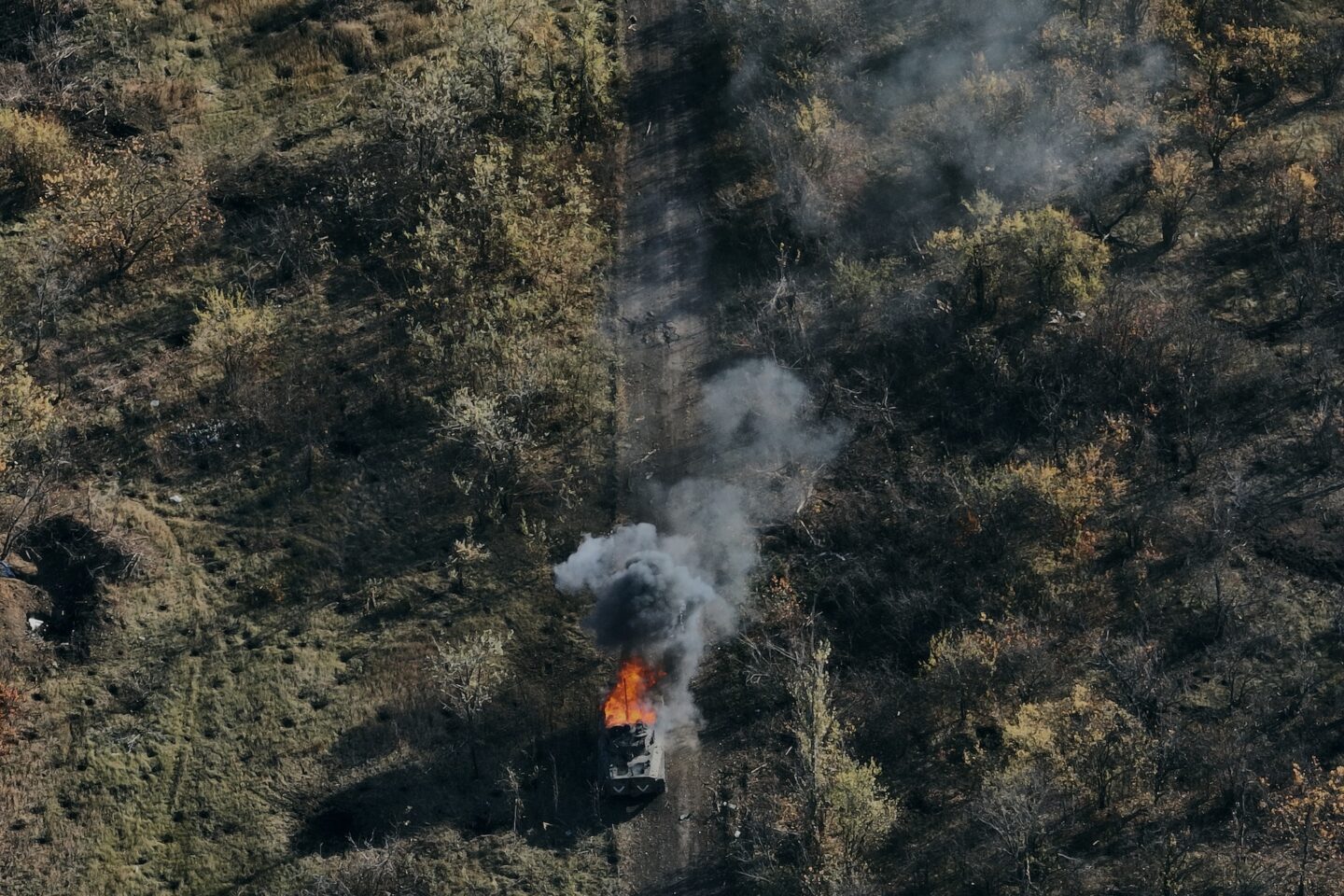
Winemaking is a perilous investment, but in dark times, it becomes an odyssey of effort and passion. Ukrainian wineries made an international splash at the prestigious Decanter blind-tasting competition in London this year, winning four gold medals — a first in the country’s history. The Shabo, Kolonist and Beykush wineries set the pace and raised the bar. We might be witnessing the beginning of a golden age for Ukrainian wine. At the same time, every bottle made in the shadow of war is a message to the world about the challenges winemakers face: people leaving the country, occupied territories ravaged by war, daily shelling near wineries and vineyards, destroyed châteaux and storage facilities, and even the glass bottle factories.
The last chance
I.
Grapevines grow in most yards in the village of Oleksandrivka in Donetsk Oblast. At the drone unit’s base, the vines were heavy with ripe grapes.
“These are grapes for red wine, and they’re ripe already,” I said to Oleksii, a serviceman. “It’s a pity no one is harvesting them.”
“Look,” he replied, “if you want to, pick them and make wine, because they’ll just dry out.
No one will harvest them now — everyone is too busy with the war.
Besides, we’ll be moving out any day now. It’s become too dangerous to use this place as a base.”
Harvesting grapes is something I’ve known since childhood. I was born in Portugal, a country that, as a winemaker from Chernihiv would later tell me, “God blessed with sun so that great wines could be made there.” My grandfather made wine. About 10 years ago, I ventured to make wine myself in my grandparents’ vineyards in the Dão region of central Portugal. My grandfather was already too old and sick to take up winemaking again, although he still pruned the vines, some of them two hundred years old, including Cerceal Rosé, a variety that has almost disappeared.
Over the following nights, Russian drones buzzed incessantly. As I drifted off to sleep, I kept thinking: “This may be my last chance to make wine in Donetsk Oblast.”
From the Steppes
In 2018, winemakers in the valley of Lake Yalpuh in Bessarabia set out to establish one of Ukraine’s first PDOs (Protected Designations of Origin) for wines made from Odesa Black (red) and Sukholymanskyi (white) grapes. PDO is the highest European quality designation for wine originating in a specific place and produced with due regard for its climate, soils and the legacy of local traditions. Such wine is authentic and unique.
Odesa Black, a red grape variety, was created in 1948 by crossing Cabernet Sauvignon and Alicante Bouschet. With its deep, dark color and unmistakable taste, it took time to become famous. The dark king of the Bessarabian steppe might have been lost to time had Kolonist winery not decided in 2007 to produce a single-variety Odesa Black wine, helping pave the way for the elevation of the Lake Yalpuh valley’s status as a terroir. Kolonist’s founder, Ivan Plachkov, comes from a family of Bulgarian settlers from northern Macedonia. Having fled war across the Danube, they became “colonists.” The founder pays tribute to his great-grandfather by placing a watermarked photograph of him on his wine labels.
This was not the first attempt to bring local wines to wider attention. Back in 1999, the family-owned Villa Tinta winery in the village of Oksamytne in Odesa Oblast created a wine called Odeskyi Step. A small batch was exported to Britain, and the family likes to believe the legend that the Queen of England tasted it.
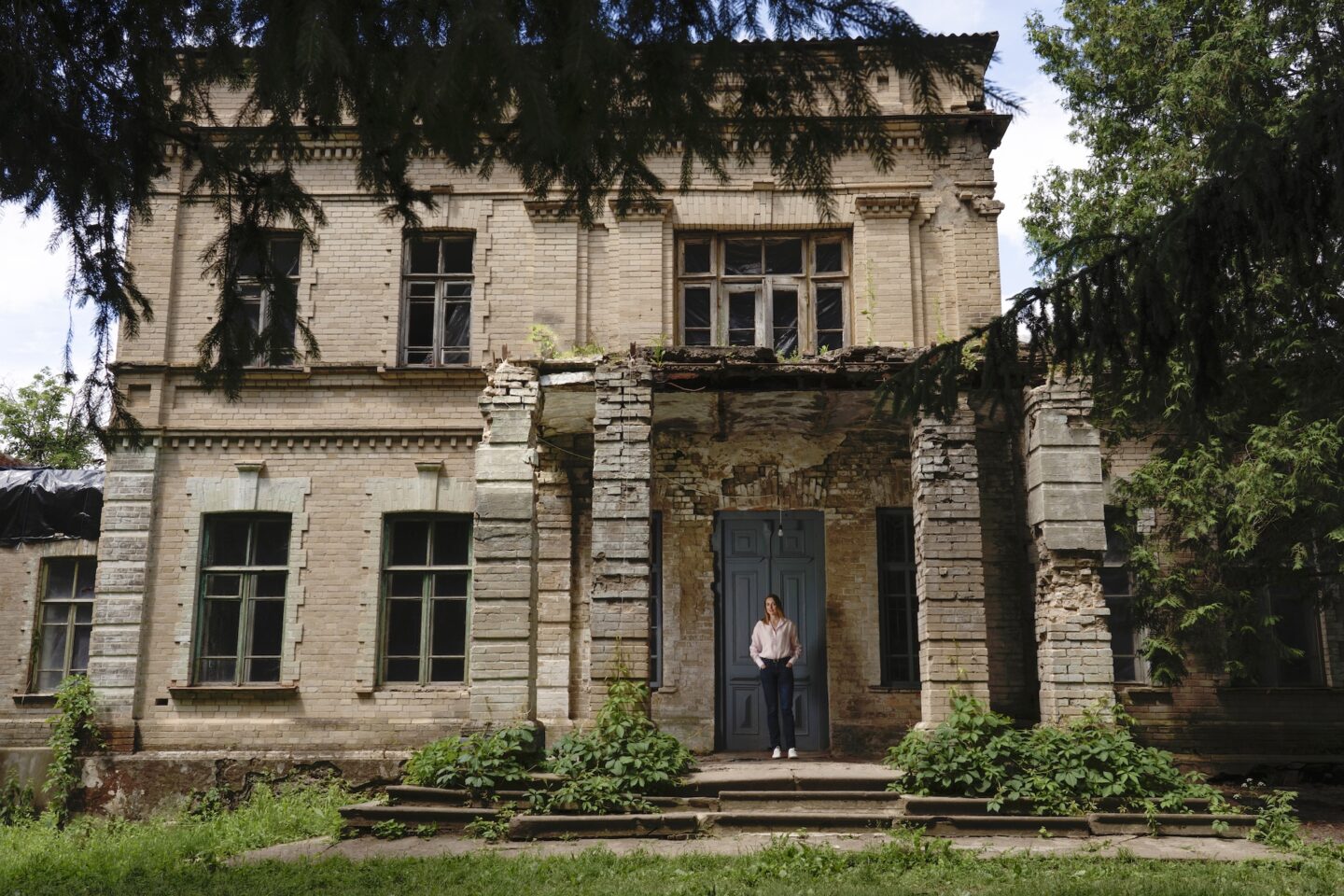
Today, following the death of its founder, the winery is run by his sons, Kostiantyn and Yurii Tintulov. Odeskyi Step has become more of a memory, much like the ruins of a 19th-century winery on these same lands. I was lucky enough to see a bottle of this wine in the final days of the Cabernet Sauvignon harvest in the family’s vineyards.
The memory of how the wine tasted survives on its label: “The freshness of the sea wind, the rustling of steppe grasses and the richness of red grapes create an atmosphere of harmony and absolute freedom, which come together in the taste of this noble wine. The deep, dark garnet color, combined with a pleasant aroma, enhances the all-encompassing feeling of a warm summer evening. A certain harmony among the red grape varieties Merlot, Saperavi, Bastardo and Odesa Black is the essence of this wine and the know-how of Tairov winemakers.”
Alongside the Lake Yalpuh valley PDO, the PGI (Protected Geographical Indication) “Danube Bessarabia” was also established. This is where Villa Tinta grows its grapes and makes its wine. PGI is another European designation that guarantees a wine’s quality and connection to a particular place, but is less restrictive than PDO when it comes to grape varieties. Danube Bessarabia lies at the same latitude as Bordeaux in France and Piedmont in Italy, offering ideal climatic conditions. This part of Bessarabia also has loamy soils enriched with the fertile southern chornozems, which are low in humus and consist of a balanced mix of sand, silt and clay. Beneath them lies a mycelial-calcareous layer that gives the grapes higher acidity, making aged wines fresher and longer-lived.
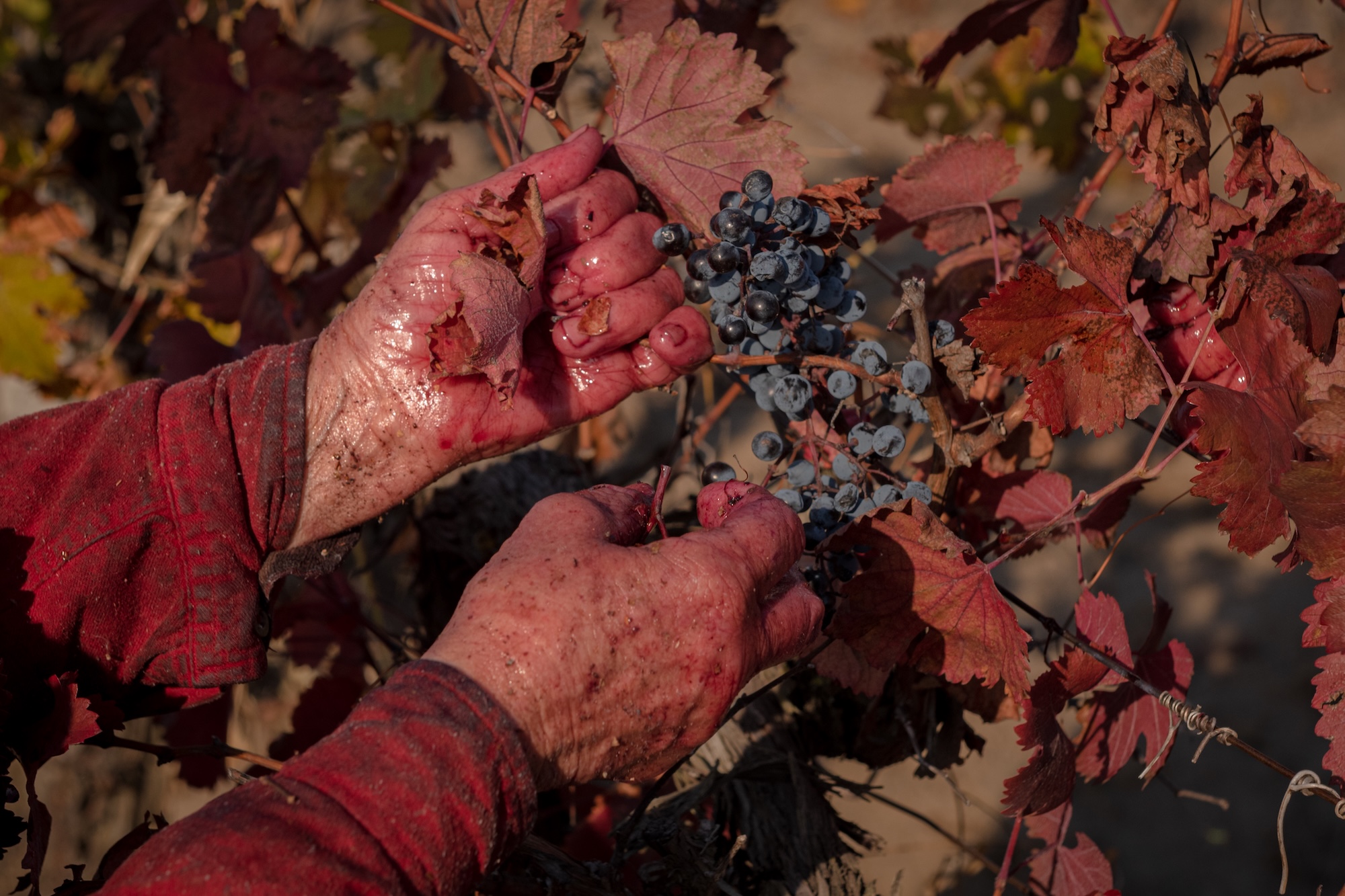
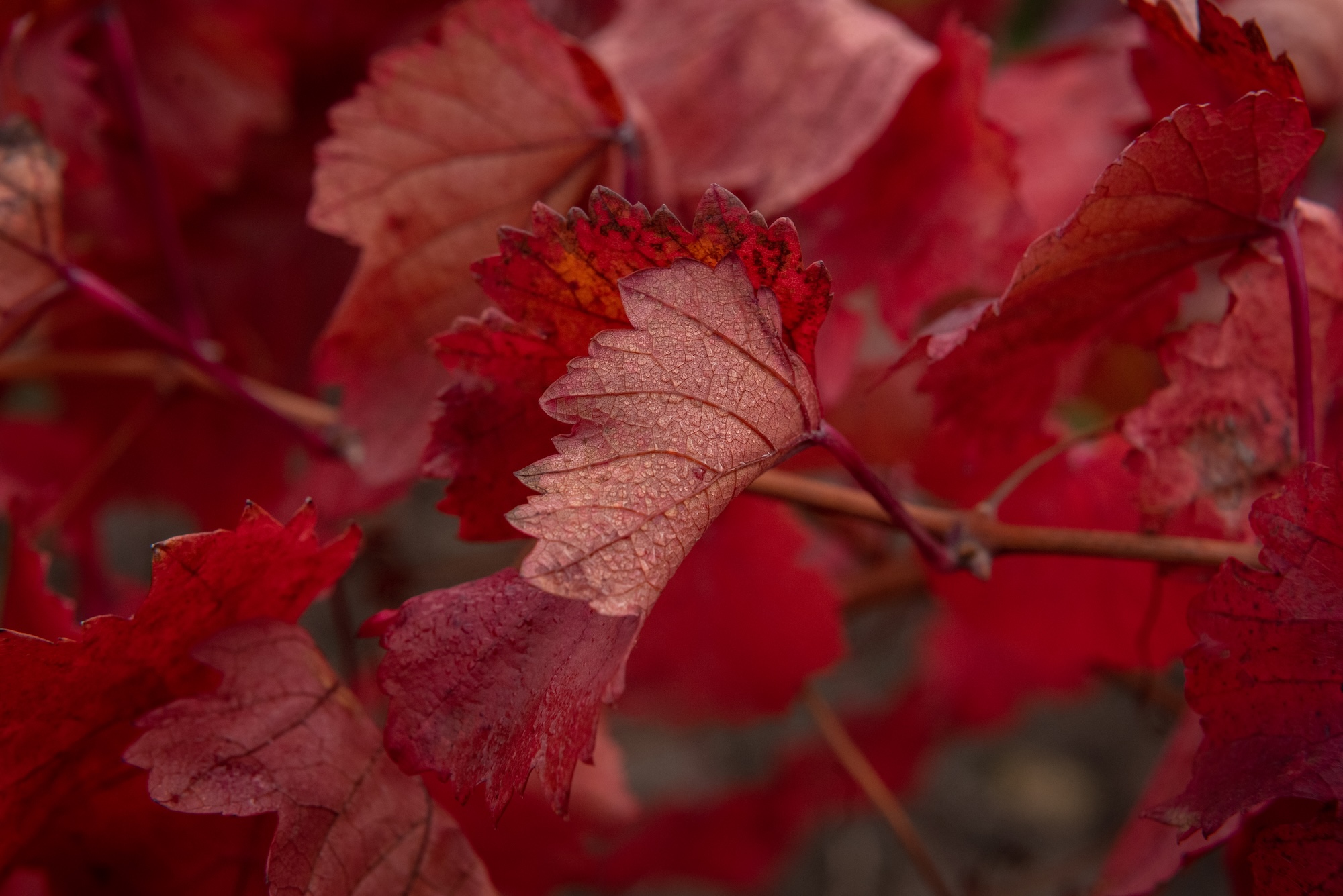
Today, Villa Tinta has the largest plantation of Odesa Black in the region. These vines differ from others in that their leaves turn light red in early autumn, while the juice and flesh of the grapes turn crimson, as if filling with blood.
Recently, the winery won a gold medal in France at the Concours des Grands Vins du Monde in Burgundy for its Odesa Black 2022. The winery produces several other interesting wines, including Irsai Olivér, which scored 88 points at Decanter, and Family Heritage, a sweet Muscat dessert wine released as a limited collection of just 6,100 bottles. Its sweet-and-salty taste reminds me of Portuguese sweet wine from a region south of Lisbon, where vineyards grow along the Atlantic coast. It is served with an ice cube and a twist of lemon peel.
Today, Yurii struggles to find enough workers for the harvest.
“Before the full-scale invasion, we had 200 workers, and now we’re lucky if we can find 60. With fewer workers, we gave our huge bus, which used to transport them, to the army.”
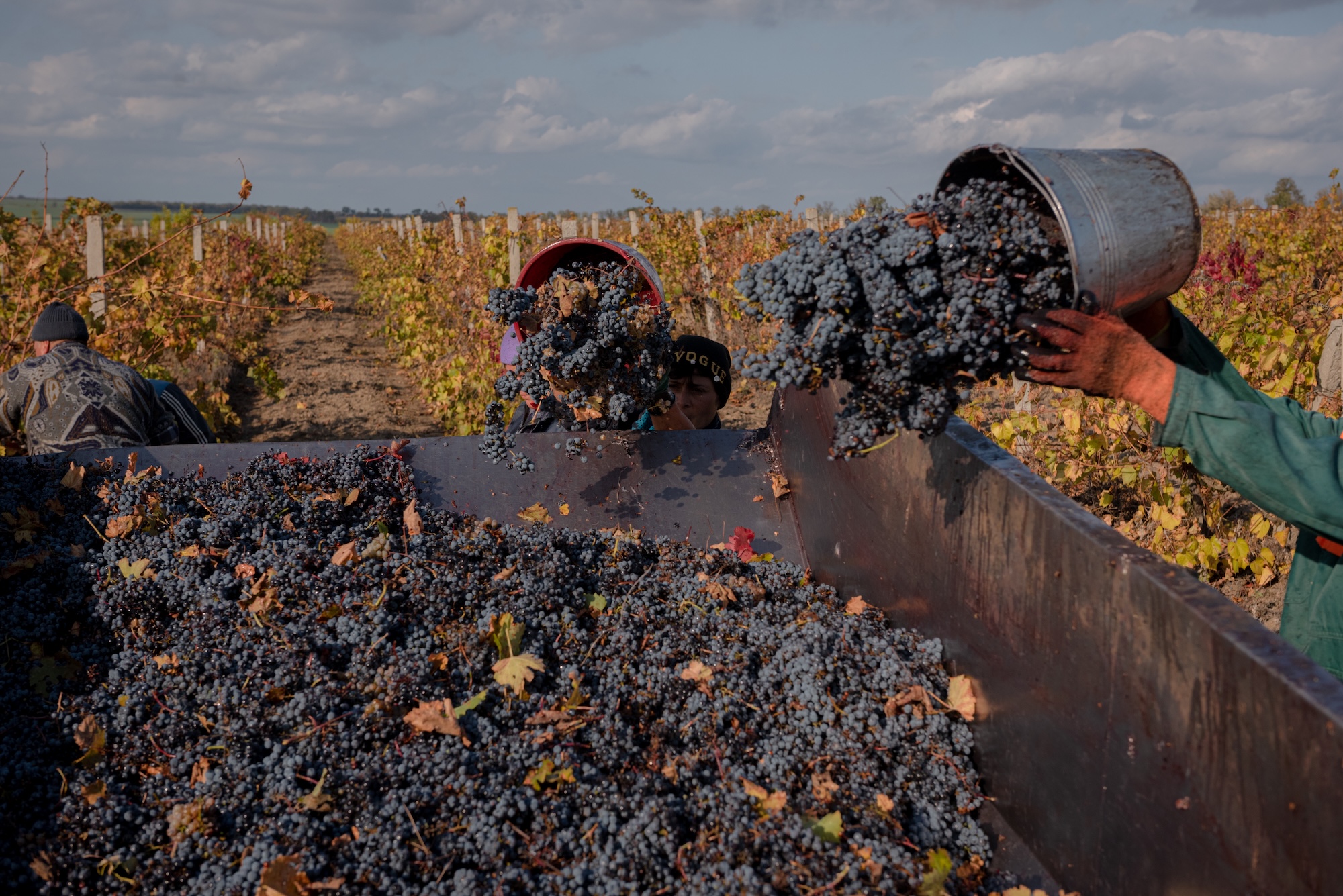
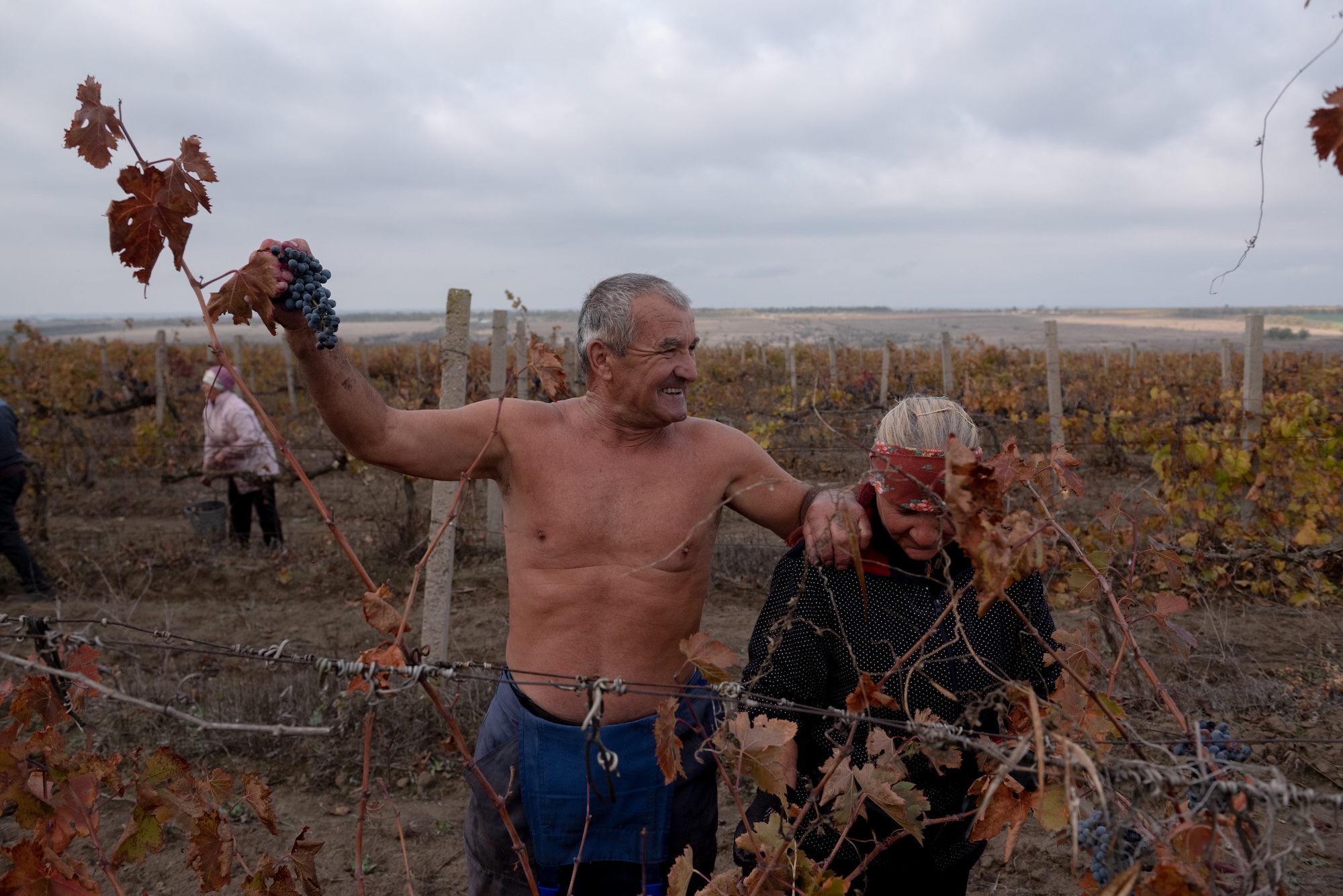
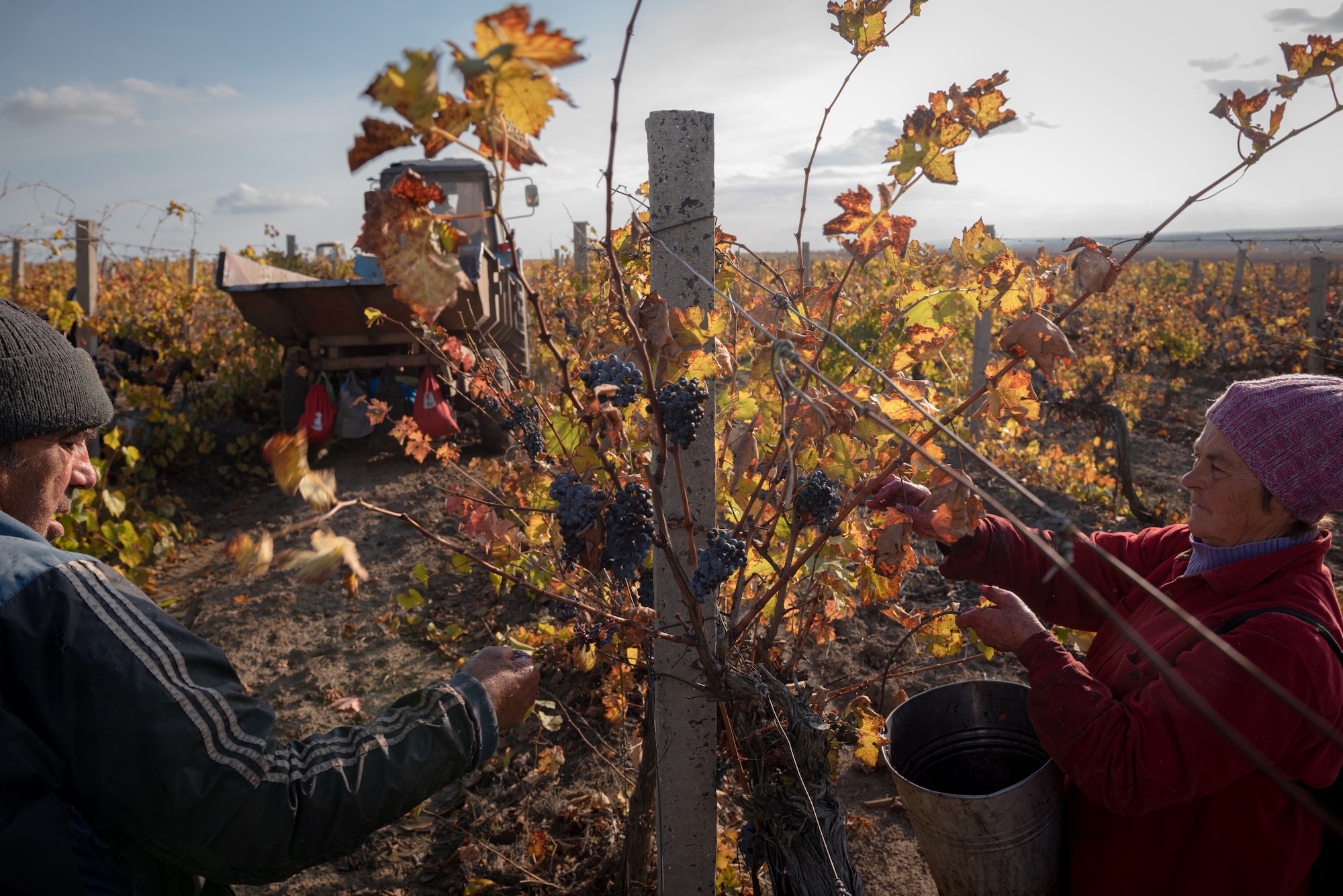
The “one brigade” of grape pickers on October 23, 2025: Borys, an Azerbaijani; Ivan, Mykhailo, Afanasii and Olha, Bulgarians; Petro, who served in Afghanistan; Yevheniia, a Roma woman and the brigade’s leader; Nadiia, a pensioner from the old Bolhrad seed-testing laboratory, who has kidney and liver problems; and Masha, Fedir Petrovych, Heorhii, Larysa and Olena, about whom we know less. Without them, several tons of grapes would be left to rot on the vines, never to become wine. Despite the autumn chill, Borys takes off his shirt. He clearly wants to impress Olena, who wears a floral headscarf. Some things about the grape harvest never change: it is still part work, part Dionysian celebration.
“Oh, there’s a Lenin statue dressed in a Bulgarian costume not far from here, in the village!” Yurii says.
The monument, which was apparently supposed to be demolished, has been dressed in Bulgarian attire and given a young vine cane for grafting and grape-harvesting shears to hold. The inscription reads: “Monument to the first Bulgarian settlers who founded the village of Bolgariika in 1861.” Nearby stands a memorial to five local servicemen who died in the war. Some served in the local 88th Brigade from Bessarabia and were killed in Zaporizhzhia and Donetsk oblasts between 2022 and 2024. Wineries, too, lose their people to the war. Arsen Fedosenko, a well-known local winemaker and photographer who loved taking pictures of vineyards, was killed defending Ukraine.
Before leaving the Yalpuh region, Yurii and I walked through the vineyards along the lake and came across a place that looked like an enormous field of abandoned grapevines. “It’s a Moldovan variety. High sugar content,” Yurii said. The owner came out of a neighboring house.
“Come over here! Would you like to taste this grape as wine?” the man called out. He turned out to be an Orthodox priest. He brought out two jars and a plastic bottle containing different wines, along with a plate of homemade white bread and fresh goat cheese.
The white wine was fresh and quite acidic. Then came the red, which the priest explained was Moldovan Cahor, the wine he used in church during festive services: dark red, intense in flavor, sweet as honey, and fairly strong, yet balanced by notes of plums and blackberries.
“Good,” I said.
“If it’s blessed by God, it can’t be bad wine,” the priest replied.
North of the 50th parallel. Uncharted territory
I.
Not every region is suitable for growing wine grapes. Low temperatures and humidity weaken the vines, causing them to rot and the grapes to spoil. So everyone told Borys that growing wine grapes in Chernihiv was a bad idea.
The world’s premium wine production takes place at latitudes between 30º and 50º, in both the Northern and Southern Hemispheres. Vinoman winery lies at 51.435ºN, near Chernihiv — beyond those limits — and has a small vineyard beside a lake and the floodplains of the Desna River.
Borys Slaboshevskyi has been raising sturgeon at his fish farm for twenty years; it is his main business. In the 1990s, he imported cognac into Ukraine. Borys proudly shows me a bottle of Larsen Cognac – France, shaped like a Viking ship.
“Made in Norway,” Borys says proudly.
One day, he tried this famous vintage from colder climes and decided he wanted to make his own wines — in northern Ukraine. Everyone thought it was a crazy idea, Borys included. Today, wine enthusiasts are thrilled with his Vinoman wines.
“There was no one I could consult. Nobody here knew how to grow wine grapes in our region. So, 15 years ago, my very expensive hobby began, and we made plenty of mistakes along the way. The vines froze. In 2021, the temperature stayed at -25ºC for three days. This year, we had snow in May. Fortunately, we have a lake: the water had already warmed up, so all the cold went toward the river.”
Borys also has vineyards in Bessarabia. Today, grapes from Chernihiv account for around 5 percent of his production. The grapes from the south are harvested by hand and transported by refrigerated trucks for 20 hours to prevent them from spoiling.
Every year, Vinoman produces 10,000 bottles. That is why the 2023 Pinot Noir, which won a silver medal and scored 90 points at Decanter 2025, is a limited edition of just 297 bottles. That is all he can produce.
“The climate here is better suited to white wine, and the white wines are good. Summers are hot, around 30ºC, but temperatures drop to 16ºC at night, which is very good for developing aromas.”
Borys pours the wine in a room overlooking the vineyards, surrounded by stainless steel vats. He begins by uncorking a bottle of his award-winning 2023 Pinot Noir from the Chernihiv terroir. This wine needs twenty minutes to reveal its full character. An elegant Pinot Noir, with delicate meadow notes. Next comes the 2024 Merlot, made with grapes from Bessarabia. An intense wine that, despite its high alcohol content, retains its fruitiness.
Then we taste the 2024 Odesa Black, made from the Odesa Black grape variety and aged for six months in a barrel of Ukrainian sessile oak. I immediately feel that this is the best Odesa Black I have ever tasted. This wine alone is worth the trip to Chernihiv.
“I’ve always thought of Odesa Black as a wild bull that needs to be tamed to reveal its full potential,” Borys replies to my enthusiasm.
After another 20 minutes, the pepper aromas have almost disappeared, vanilla becomes apparent, and the taste recalls pure honey. Vinoman still calls Odesa Black by its international name, Alibernet, even though the grapes come from the Odesa PDO. A note of ripe red viburnum emerges. On the palate, I can almost discern notes of Cabernet Sauvignon and Alicante Bouschet. Sometimes the taste of Odesa Black seems blurred, but not in this wine.
Borys’s favorite wines are Chablis, Burgundy and Pétrus, grown in Pomerol, Bordeaux, on blue clay soils. They are among the most expensive wines in the world. Borys brings the same exacting standards of quality and craftsmanship to Vinoman.
Christina, Borys’s colleague and head of communications at Vinoman, says that their foremost ambition was to make the best Ukrainian wine from native grape varieties.
“It’s a story inside the bottle. Something we should use to promote Ukraine.”
II.
The Biologist vineyard covers three hectares and is located in Lisnyky, Kyiv Oblast, at 50.304º N, on a high hill that slopes down into a gentle valley. The vines are planted in terraces along the steep slope, which gradually gives way to flat land.
Ihor Petrenko, 57, is an economist who spent 30 years importing foreign wine into Ukraine.
In 2019, he learned to make his own wine using traditional methods. Ihor believes that organic wine and the lifestyle associated with it are becoming fashionable, and that this will influence even the larger producers. Biologist wines are honest wines. They reveal themselves fully. Neither complex nor heavy, they aim for a lightness that wine sometimes seems unable to tolerate.
“I’ve lived in Lisnyky for 25 years, 20 kilometers from the center of Kyiv. At first, I had a house in the northern part of the village, on other hills, and then I moved here. I built this house and realized that the place was very interesting. ‘Why not grow vineyards here?’ I thought.”
Before the Soviets arrived, Lisnyky was part of the Vydubychi Monastery, founded in the 11th century. The monks grew grapes on these very hills. An elderly local woman once told me, “My mother worked at the monastery, helping to grow grapes. This is a historic place.”
“Let’s try Telti-Kuruk from Kyiv Oblast,” says Oleksii.
“This grape variety is one of my favorites in Ukraine. There’s something archaic about its taste.”
Both Borys and Ihor experiment to express their own tastes and lifestyles through their wines. Vinoman is a more mature project, already producing more consistent results, but Biologist has a broader terroir in Kyiv Oblast than Vinoman does in Chernihiv. One focuses more on the finished product — the wine — while the other focuses on the process of making it. But both are undoubtedly exploring uncharted territory in the regions where they live.
The Last Chance
II.
The basics. A Swiss Army knife and a clean vessel in which to ferment the grapes. I began harvesting, filled with joy, remembering harvest seasons in my home country, Portugal.
I harvested the grapes every morning for a week and pressed them in the evenings before sunset. During the day, I photographed and worked as a war correspondent. The guys were amused by my attempt to make wine in a war zone. I was happy: making wine in the east had probably been my dream ever since I first arrived in Ukraine at the beginning of the full-scale war.
The local grapes were Isabella (Vitis labrusca), an American variety once widely popular in the Soviet Union. Looking at the vines, I estimated they were around 30 to 50 years old. Today, this variety is no longer used for winemaking because of its low alcohol content, which no longer mattered to me.
Let it be a wine far from perfect, a harvest that stumbles on war, and a reporter who loves wine.
Occupied grapes
I.
There is wine made just before the occupation, but there is also wine from Izium, made after its liberation. A team of volunteers, including Tetiana Burianova, arrived with humanitarian aid soon after the town was liberated. Among the ruins of the city, devastated by the occupiers, they found grapevines and decided to harvest the grapes that had grown during six months of occupation. It was a sign of life, a remnant of peacetime, a blind witness to the horrors.
Izium is a beautiful, hilly city, with the Siverskyi Donets winding south of it. It is easy to imagine vineyards growing along the river in Cossack times, or even long before. In fact, the name Izium most likely comes from Turkic languages and means “grapes.” The word survives in modern Crimean Tatar and Turkish as üzüm, with almost the same pronunciation. The city’s old coat of arms, dating from 1787, features three bunches of grapes.
The wine was bottled in Kyiv Oblast: 200 numbered red wine bottles in total. It was named Decoupage — a play on words combining pinotage, a grape variety from South Africa, and de-occupation, the more fitting term in this case. A mass grave containing local people killed by the Russians was discovered in a forest near the city. The wine is a symbol of resilience, but also a lament for the dead.
II.
A treasure of Ukraine’s wine history was the cellars of Château Massandra in Crimea. The winery was founded in 1894, when the region was once again under Russian control. Its ancient cellars held some of the oldest wine bottles, dating back to 1775 and corked before the Russian annexation of the Crimean Khanate in 1783. Massandra had such a strong reputation that when Gorbachev began ordering the destruction of old Ukrainian vineyards in the 1980s, this one survived.
After Russia’s second annexation of Crimea in 2014, the château began to change, and its future became uncertain.
III.
Artwinery’s story began in 1950. It was founded to produce Sovetskoye Shampanskoye (Soviet Champagne) for Stalin’s anniversary. Yet almost no one in the Soviet Union knew what champagne was really supposed to taste like. Millions, however, knew the joy of Stalin’s death three years later.
In December 2022, I spent the night with a family from Zabakhmutka in the eastern part of Bakhmut, beyond a bridge that had already been destroyed, just 1.5 kilometers from the front line. Toward evening, we went down to an underground repair workshop for trucks and mining machinery. The family served borscht to me and the volunteers, then opened small bottles of sparkling Artwinery wine. It was wonderful wine. As I was leaving, they gave me one of the finest bottles from a collection that no longer exists. I brought it to Kyiv as an artifact.
Today, Artwinery’s gypsum caves, used to store wine at a depth of 72 meters, have been damaged and occupied by Russian forces — specifically, the Wagner Group. The winery has continued its life in Odesa.
The Last Chance
III.
I found a 100-liter plastic water container and used it to crush the grapes. To start fermentation, I added some spoiled grapes I had bought a week earlier in Druzhkivka. They had spent the entire week in the car under the sun.
During the day, I left the vessel out in the sun to raise the temperature and speed up fermentation. At night, I moved it and shook it vigorously to introduce oxygen, then left it to breathe, covered only with a T-shirt.
I needed a fine mesh to filter the must. At the local market, I found a handmade wooden flour sifter. It was perfect and cost 42 hryvnias [~USD1 — Ed.]. When the woman selling it learned I was making wine, she gave me a funnel.
“We have good grapes here, but now almost no one harvests them.”
I bought five large bottles of water to store the wine. I fashioned a manual crusher from a plastic bucket and a glass preserving jar because, after two days of crushing the grapes by hand, my hands were in a terrible state. With these simple tools and a little patience, I squeezed out 25 liters of this precious nectar: a wine born from coal- and chalk-rich soil.
We shared a cup of young wine with the soldiers. It was probably the last wine from this village for years to come.
*
It all finishes as it started. How the yellow, red leaves of the vines linger before falling in autumn, leaving the plant naked. At this stage, the vine is dormant, and vignerons prune it, leaving only the trunk and canes that will determine the quality of the next year’s harvest. In winter, the vines look truly dead, but they are not.
Warm spring arrives, and life awakens the xylem in the vascular tissue once again. Buds burst, and the first leaves appear. The growing season has begun. Shoots hurry to unfurl their bright green leaves. A lushness of green: the precondition and promise of another harvest. In early summer, flowers appear, transforming almost magically into tiny green berries. The berries grow, developing the structure of the grapes to come.
By midsummer, the grapes acquire their final color: golden for white varieties, deep shades of blue for red. Ripening begins as sugar levels rise and acidity decreases, while aromas develop through sunny days and cold nights.
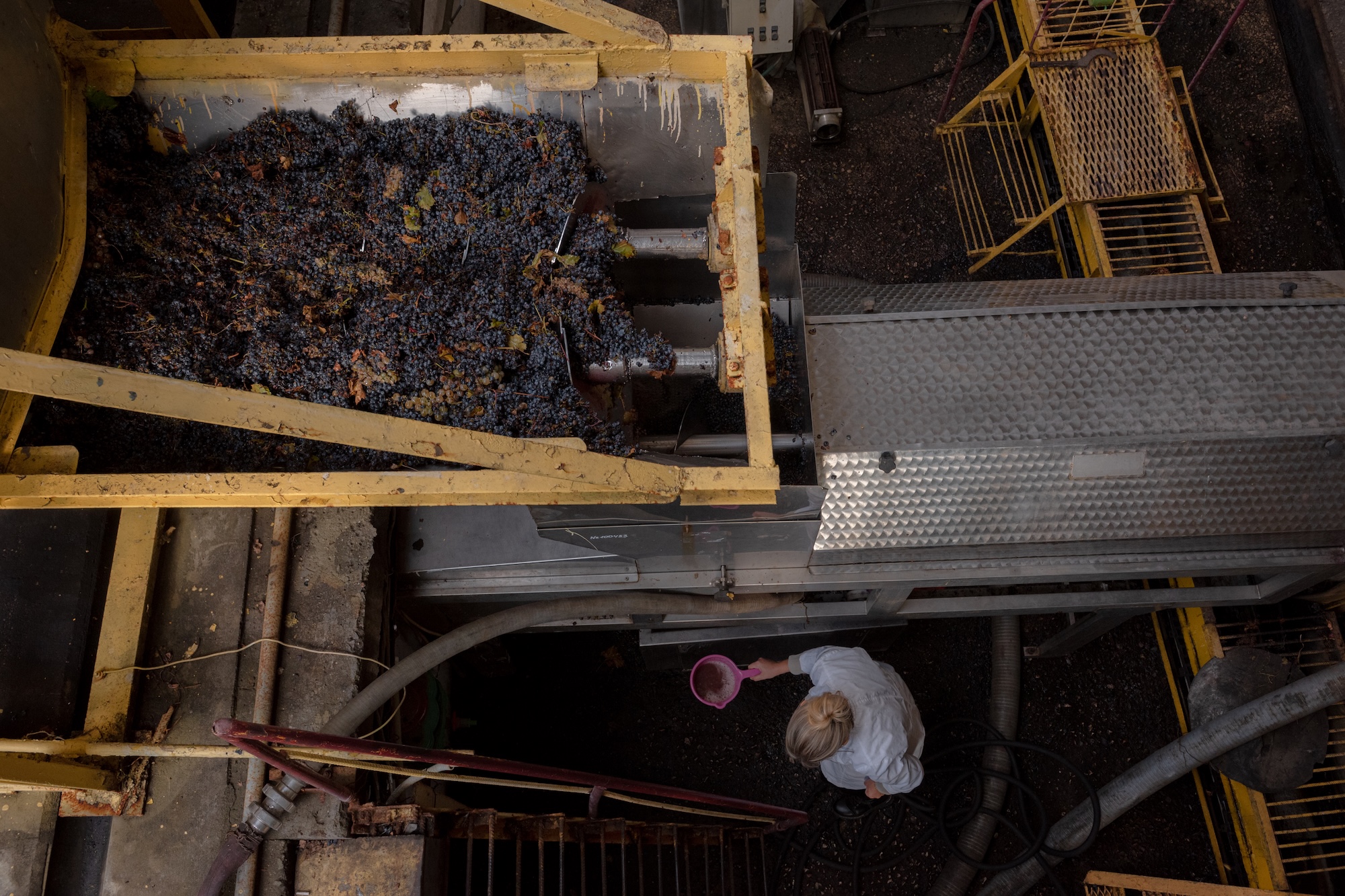
Harvest begins in late September. The grapes are picked, sorted, pressed and fermented in large vats. Later, the wine is poured into bottles, and the land delivers its message to us in glass.
Photos and text by André Luís Alves